Forty years ago, the future seemed just around the corner—and the vehicle that was going to take us there was NASA’s Space Shuttle. Originally envisioned as part of a larger integrated space transportation system, the shuttle was billed as a fully reusable vehicle, totally unlike the one-and-done capsules of the fading Apollo era, capable of making monthly (and perhaps even weekly) ferry flights to low Earth orbit.
The shuttle, it was hoped, would transform human space flight from extraordinary to mundane. Brands like Coke and Pepsi were quick to hop aboard and expand the Cola Wars into space, and there were even plans to blast Sesame Street’s Big Bird into orbit.
The loss of Challenger in January 1986—carrying educator Christa McAuliffe, who would have been the first private citizen in space—put the kibosh on all of that. The shuttle, while fantastically advanced, would never be the vehicle to help humankind slip all of our surly bonds, so to speak. Even operating at its most frantic peak in 1985 just before Challenger’s loss, the shuttle hardware managed a maximum of nine flights in one calendar year; for most of the 1990s, it performed at five or six flights per year. Civilians in space—to say nothing of Big Bird—would have to wait.
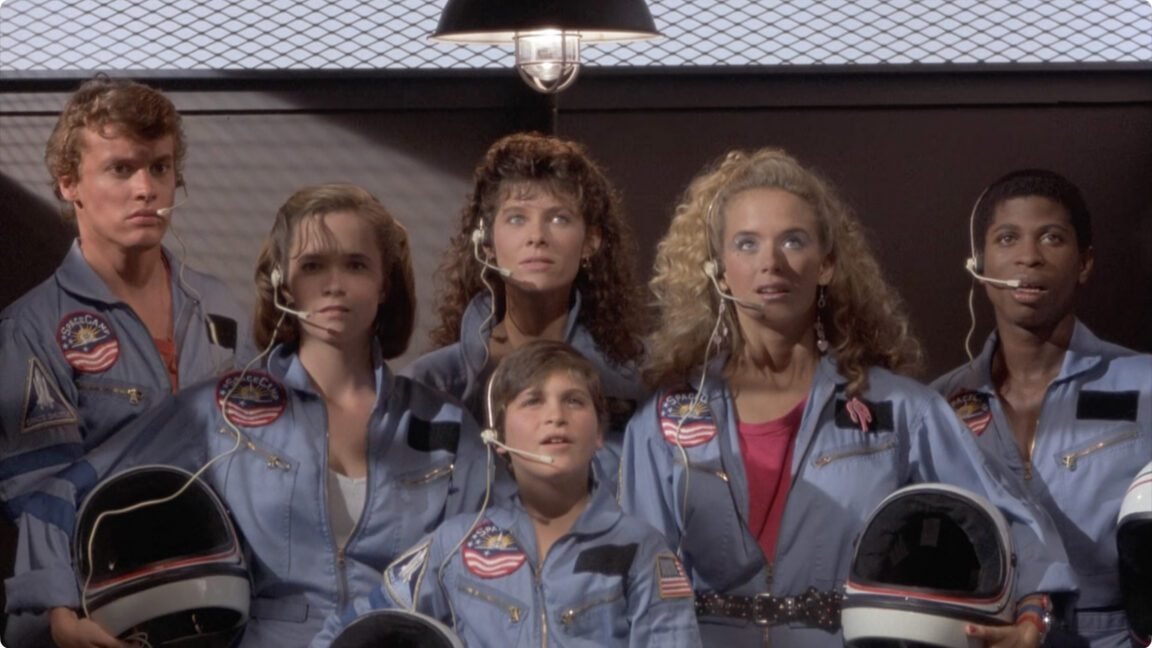
And into that post-Challenger disillusioned summer of 1986, Hollywood brought us SpaceCamp. It had all the right ingredients: A stacked cast with a solid leading duo (Kate Capshaw and Tom Skerritt), tons of real NASA location footage, and a big, brassy score by none other than John Williams. The film was completed before the Challenger disaster, leaving 20th Century Fox with something of a nightmarish choice on their hands—to shelve the film and lose millions, or send it to theaters and risk a PR disaster.
For better or for worse, Fox chose to release the film, which ultimately made about $9.6 million on a reported $25 million budget. Ouch. Audiences, it seemed, weren’t really interested in watching a bunch of kids in peril on a space shuttle. Today, on the rare occasions SpaceCamp comes up in film discussions at all—usually among geeks of a certain age who encountered it when they were younger—it’s often spoken of with derision. Kids! Robots! Thermal curtain failures! Preposterous!
But is it really a bad movie? It’s not currently available for streaming, but this is exactly the kind of scenario that physical media is made for. And so, with the movie’s 40th anniversary looming, Senior Space Editor Eric Berger and I grabbed the DVD and watched our way through it—and this is what we thought.
Lee: It’s been about 18 hours since we watched SpaceCamp, which is maybe just a bit longer than the kids spent in orbit. What did you think? Are we tearing the film apart here, or praising it?
Eric: We are bearing witness to it, I think. I had never seen the movie before, and as a 53-year-old who has read about and written about space for decades, the movie was clearly not made for me. But for what it was, an ’80s dramedy aimed at kids and teens, I think it did an admirable job of engaging its audience and building interest in the space program. You know, we decided to watch it because I wrote about the real Space Camp a couple of weeks ago, and we’re coming up on the 40th anniversary of the movie’s release in early June. All in all, it was fun to experience.
How about you? You watched it a lot as a kid and were right in the key demographic, a pre-teen in Houston. Does it hold up?
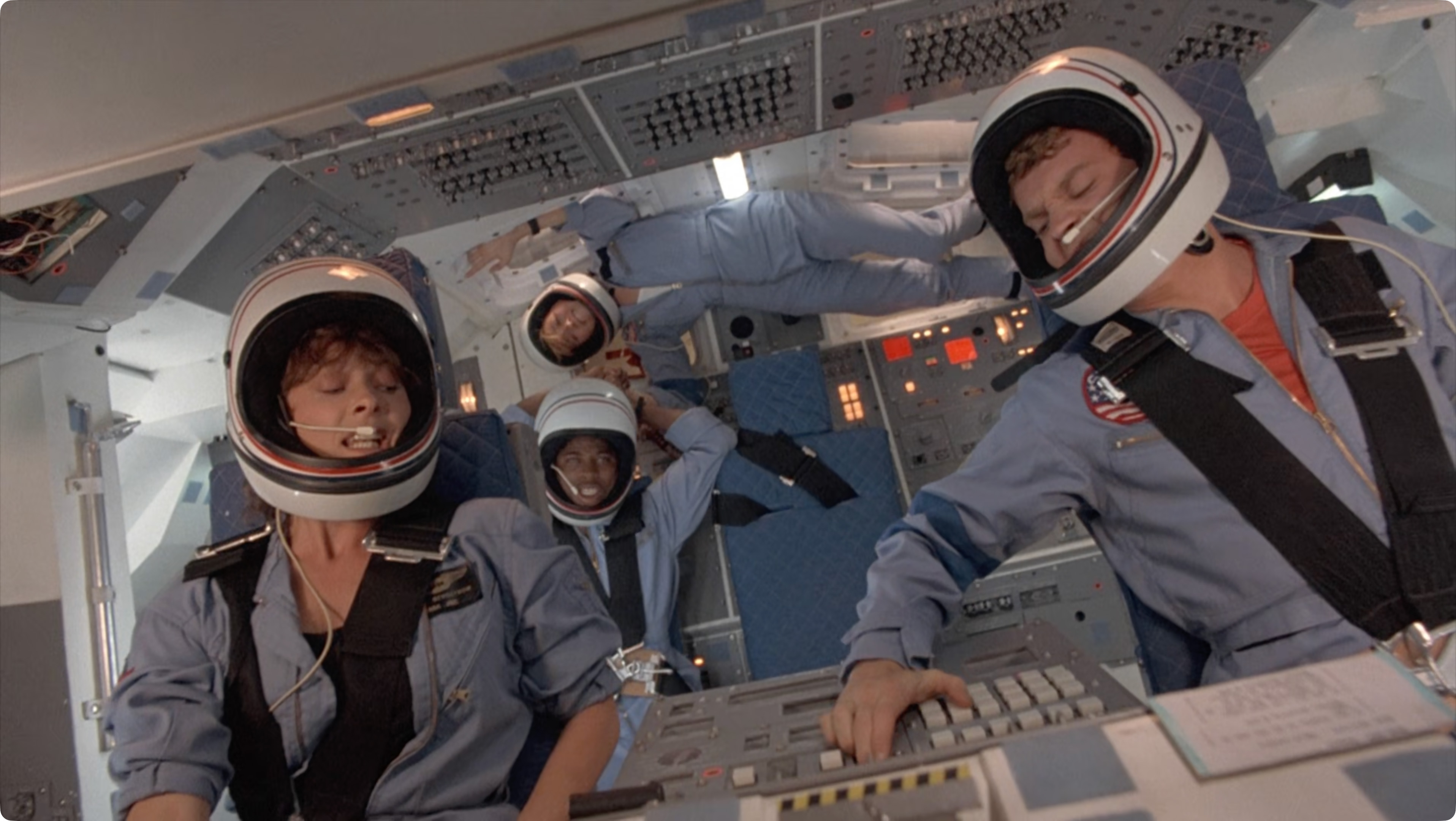
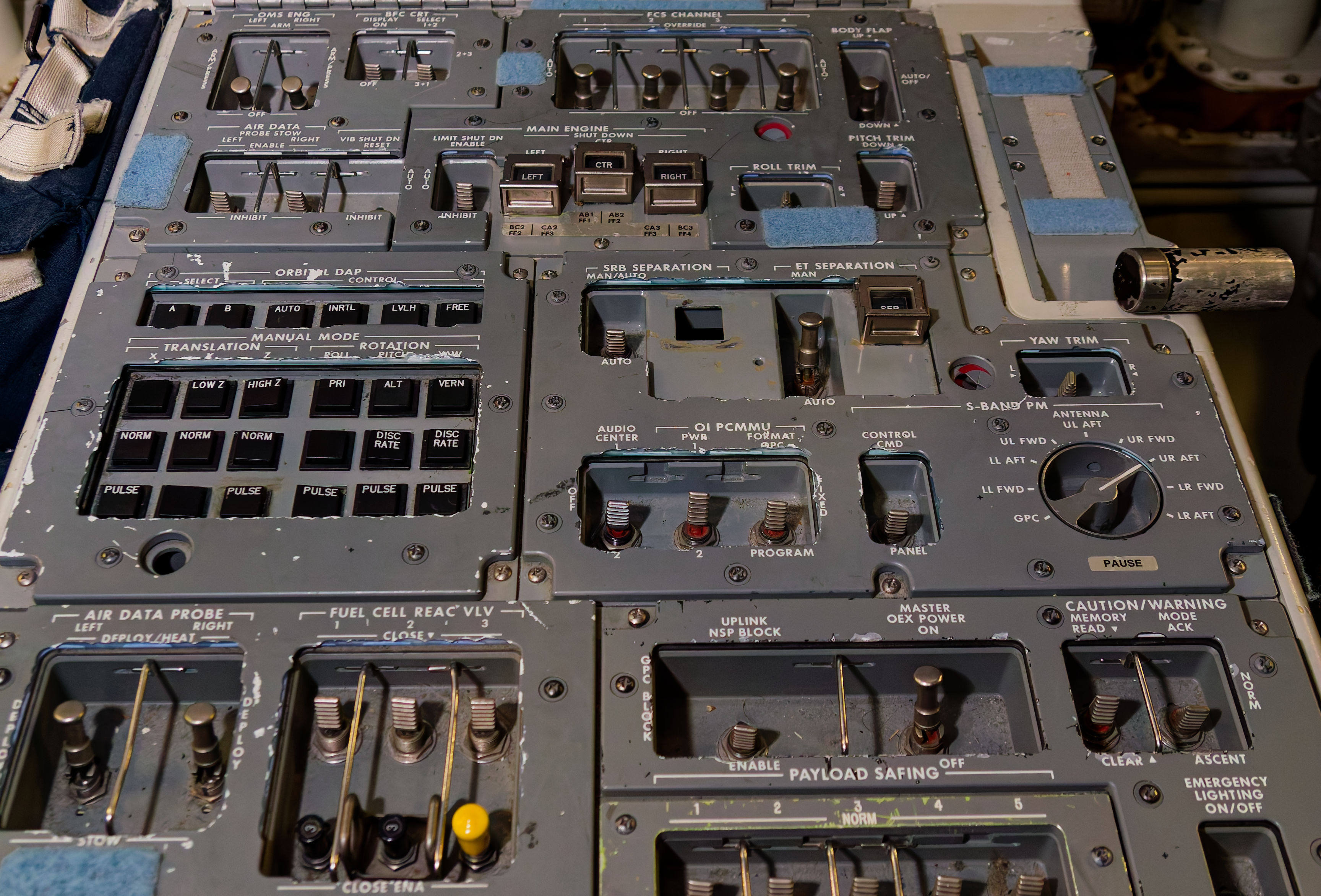
Lee: I damn near wore the VHS tape out watching it as a kid, so yeah, I was coming into this with a lot of old memories. It honestly held up a lot better than I was expecting it to! There’s epic levels of cheese—and we’ll get to that—but even in spite of the cheese, I don’t think anyone can deny that there was a lot of love put into this movie. For every huge detail they get wrong (why does the shuttle keep shaking after MECO?), there are countless minor details that they nail. Tiny stuff, that no one except insiders would notice—shuttle cockpit switch positions, authentic uniform patches, terminology. This was not a B-movie—money and care were spent, and that money and care are visible on-screen.
Eric: There were also some cringeworthy details they missed, though. One jarring example for me was a reference to a “180×33” orbit shortly after Atlantis reaches space. I mean, that’s definitely an orbit. But it’s not a stable orbit. 180 miles is pretty low for an apogee to begin with, and 33 miles is, umm, not great. At perigee the shuttle would experience pretty serious atmospheric breaking, rapidly lose energy, and would definitely not be going back up to its apogee. It would meet a bad end. Regarding it being a B-movie, all you have to do is look at the cast, a mix of established actors and young up-and-comers (Joaquin Phoenix, lolwut??!) to know that this was a serious effort. But it had poor timing.
Lee: Poor timing is the understatement of the (last) century. SpaceCamp made its theatrical debut on June 6, 1986, barely four months after the very public destruction of Challenger. A movie about a space near-disaster coming so soon on the heels of an actual space disaster proved to be box office poison—which is unfortunate, because there’s a lot to love about SpaceCamp. Especially if you’re a fan of both “space” and “camp.”
For folks unfamiliar, the film depicts a group of five kids and a rookie astronaut who are accidentally shot into space when a routine main engine test of the orbiter Atlantis goes sideways. (The root cause of the problem is Joaquin Phoenix’s robotic best friend Jinx, which…well, we’ll get to Jinx in a minute.) Stranded in low Earth orbit without a functioning space-to-ground voice link and with dwindling oxygen, it’s up to lone adult astronaut Andie Bergstrom (Kate Capshaw) and her husband, camp director Zach Bergstrom (Tom Skerritt) to bring the stricken shuttle home.
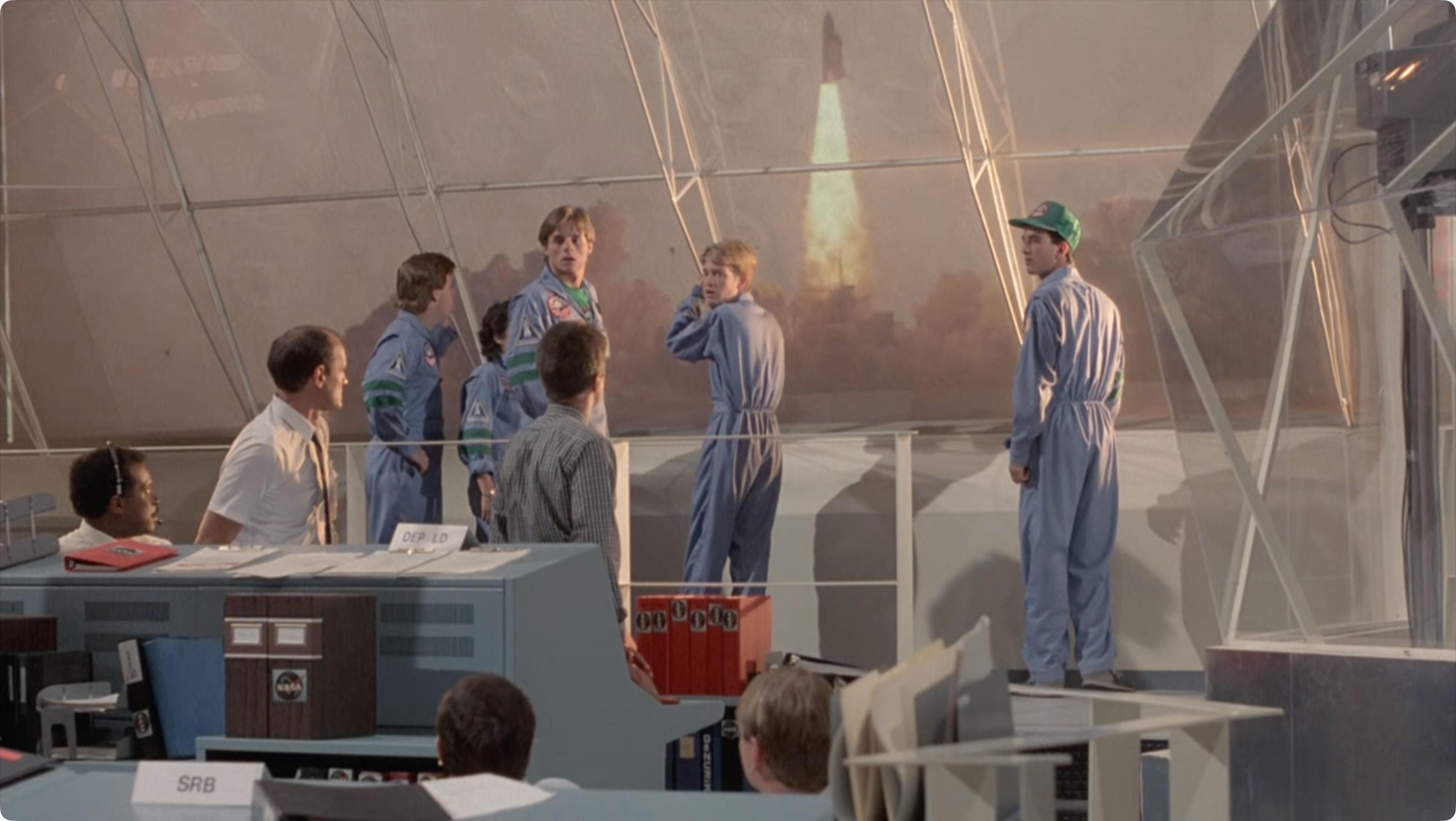
It sounds like an ’80s-flavored recipe for success! And, shot on location at the actual Space Camp facilities in Huntsville and the actual Launch Control Room at the Kennedy Space Center in Florida, it should have performed well—except for that pesky real-life shuttle explosion.
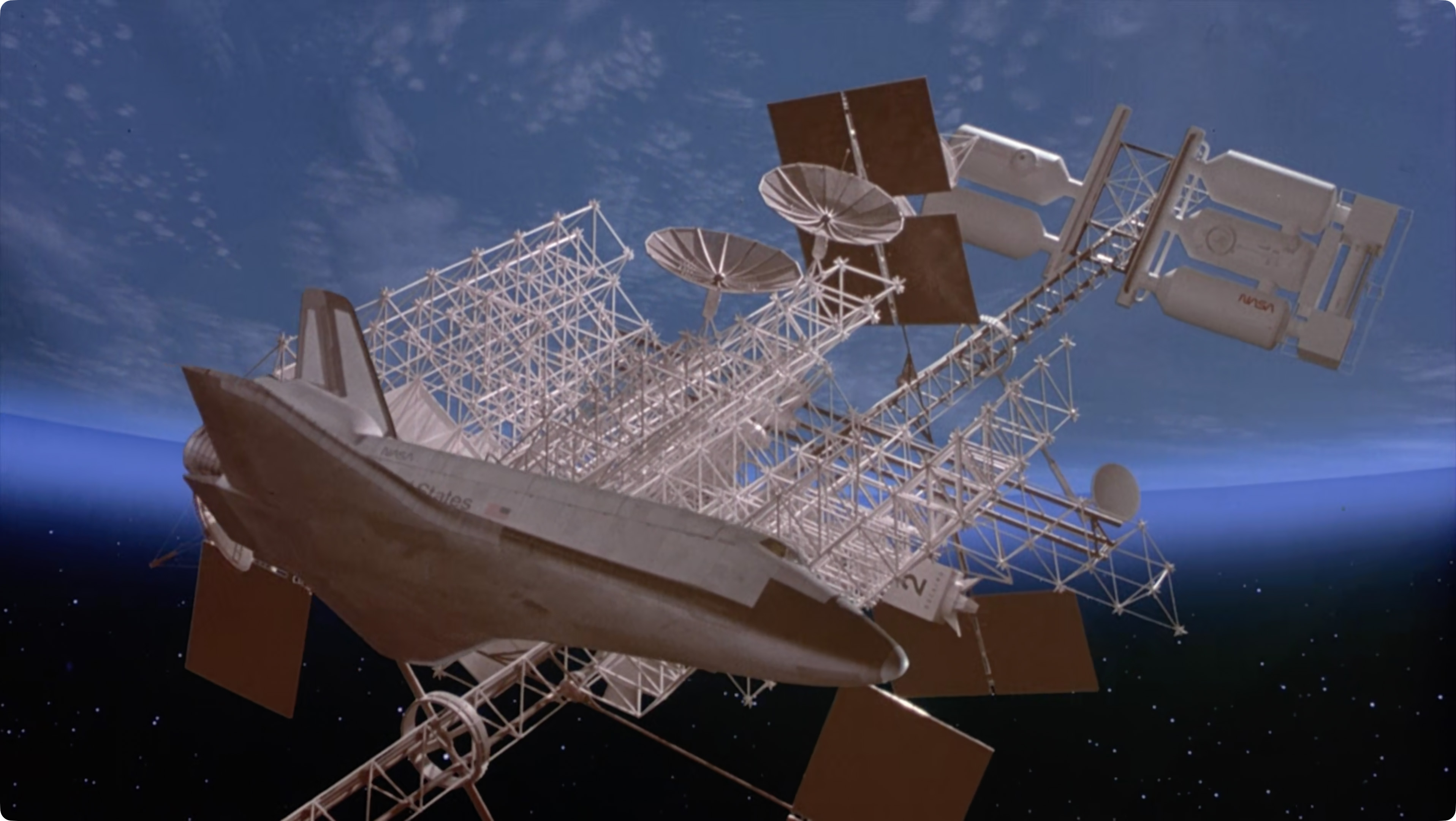
Eric: What is striking to me is that, despite the movie’s poor timing, it has had a long shelf life. It only came out four years after the actual Space Camp opened in Huntsville, and I’ve spoken with more than one space enthusiast who watched the movie and then signed up for a week in Alabama. In its own way I think the film helped to fuel interest in the space program at a time, the late 1980s and 1990s, when quite frankly there was just not that much exciting happening in human spaceflight. The movie also correctly anticipates NASA having a large space station in orbit, called Daedalus, nearly a decade and a half before one exists. Man, I’ve got to tell you I could not get over the station’s truss design. There was so much metal for no apparent purpose, other than serving the plot I suppose.
Speaking of liberties taken by the writers, shall we talk about the biggest one? As an adult, what did you think about the mechanism by which NASA launched five kids into space?
Lee: THERMAL CURTAIN FAILURE! I’d have to leave it to you as the resident shuttle expert about whether or not there’s a thing called the “thermal curtain” that stops the shuttle’s solid rocket boosters from overheating during a Flight Readiness Firing—or maybe toss that to collectSpace’s Robert Pearlman, who basically knows everything about everything. I remember when I was younger scoffing at the idea that the SRBs would be fueled during a main engine test, but now that I’m older, I’m pretty sure that particular detail is accurate, and that the solid propellants are essentially “manufactured” into the boosters during their refurbishment between flights.
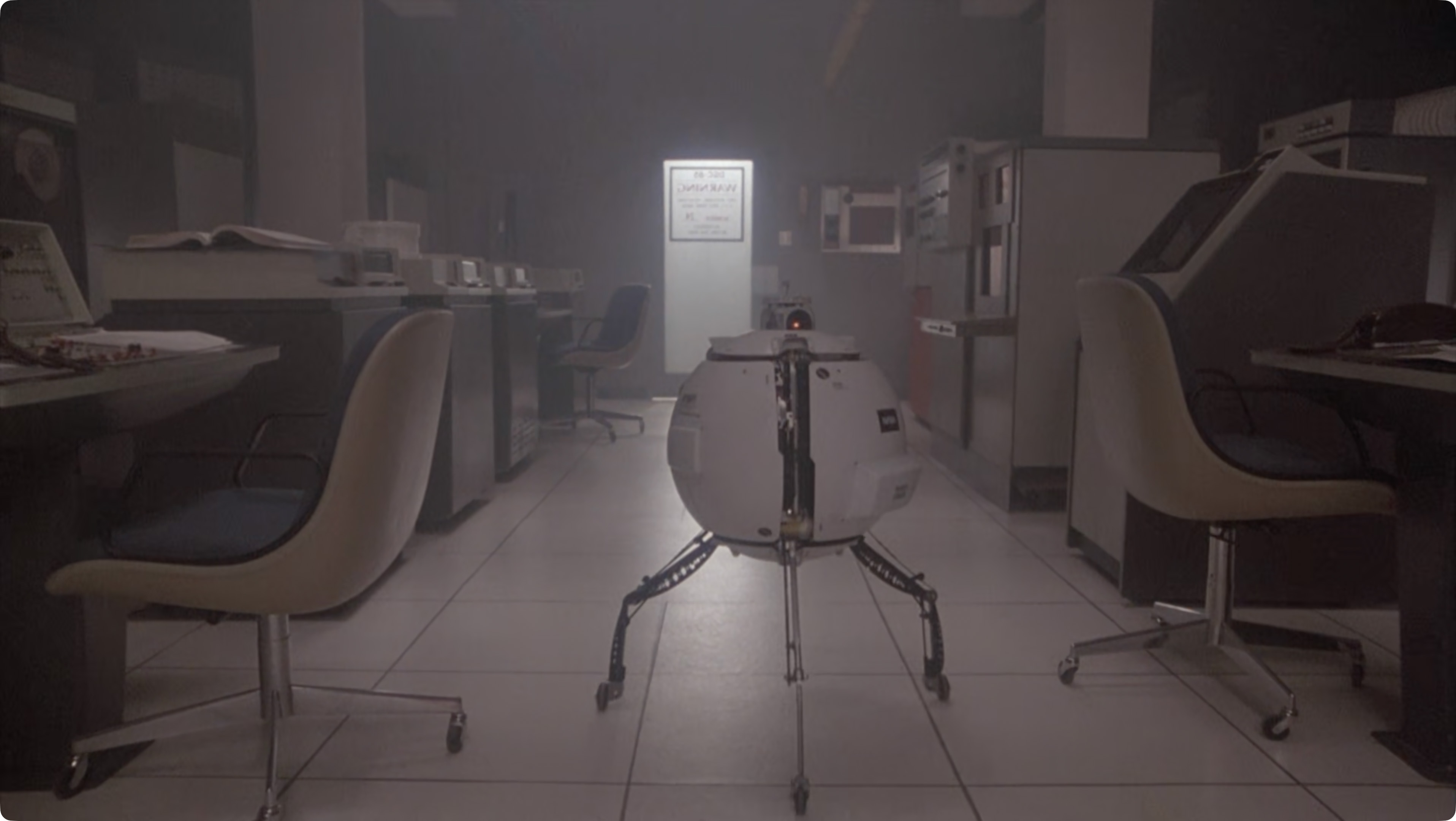
Of course, as noted above, the conversion of “FRF” into “actual launch” is the fault of Jinx, a spherical maintenance robot apparently exhibiting full artificial general intelligence (in 1986, no less!) and seemingly given unrestricted access to the entire space center. Jinx and Max (the aforementioned Joaquin Phoenix, credited as “Leaf Phoenix”) are friends forever, and Jinx conspires with the all-powerful NASA mainframe computer (another runaway AGI!) to arrange a “THERMAL CURTAIN FAILURE.” And just like that, Jinx puts Max in space, along with Bergstrom and four other campers chosen to ride out the FRF on board Atlantis.
I have to wonder if Jinx is supposed to be under the control of a project officer or a principal investigator somewhere, and if that person’s career survived this incident.
What’s your take on the FRF shown in the film? Did NASA do these kinds of tests on the shuttle fleet, and how often?
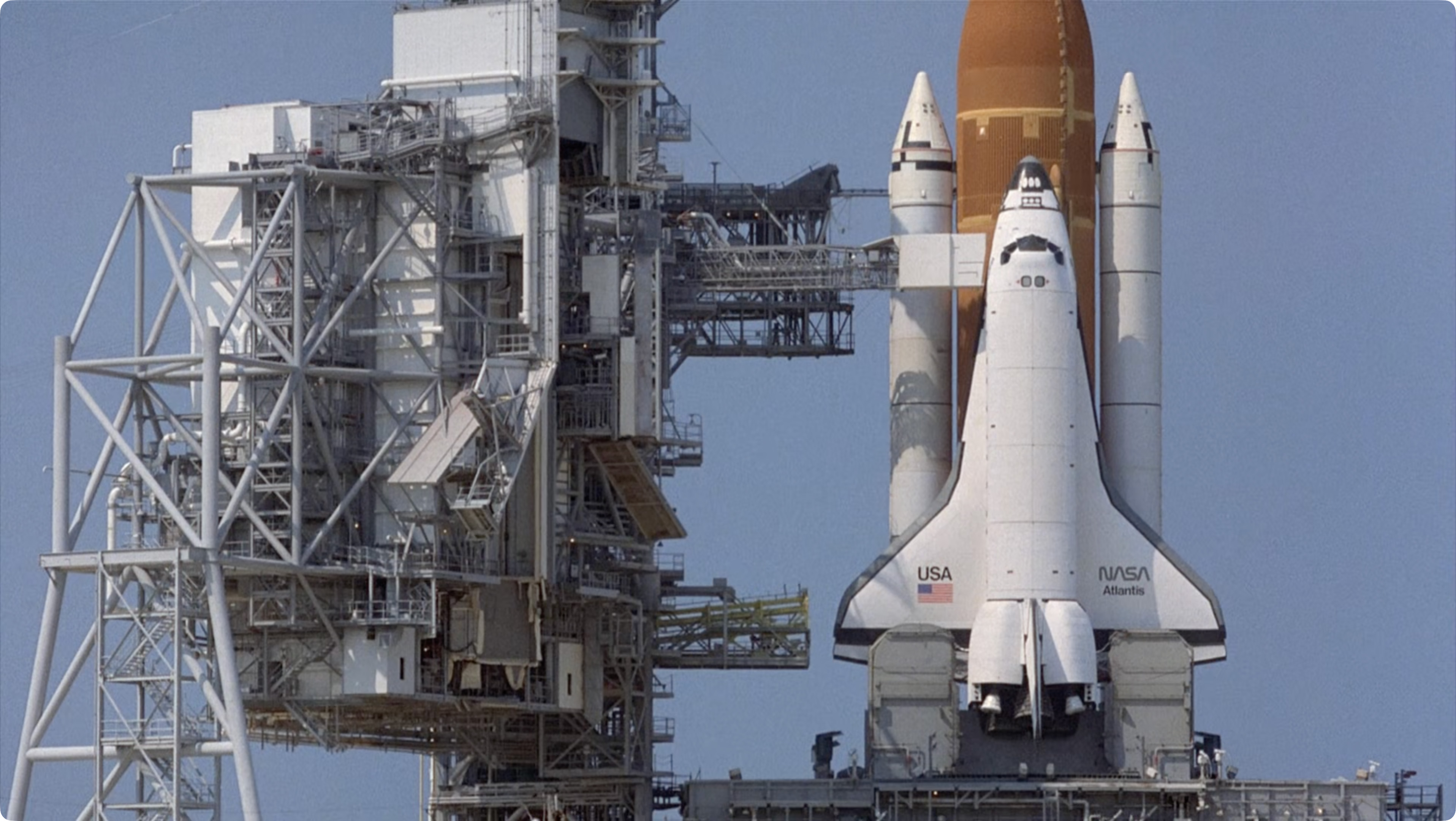
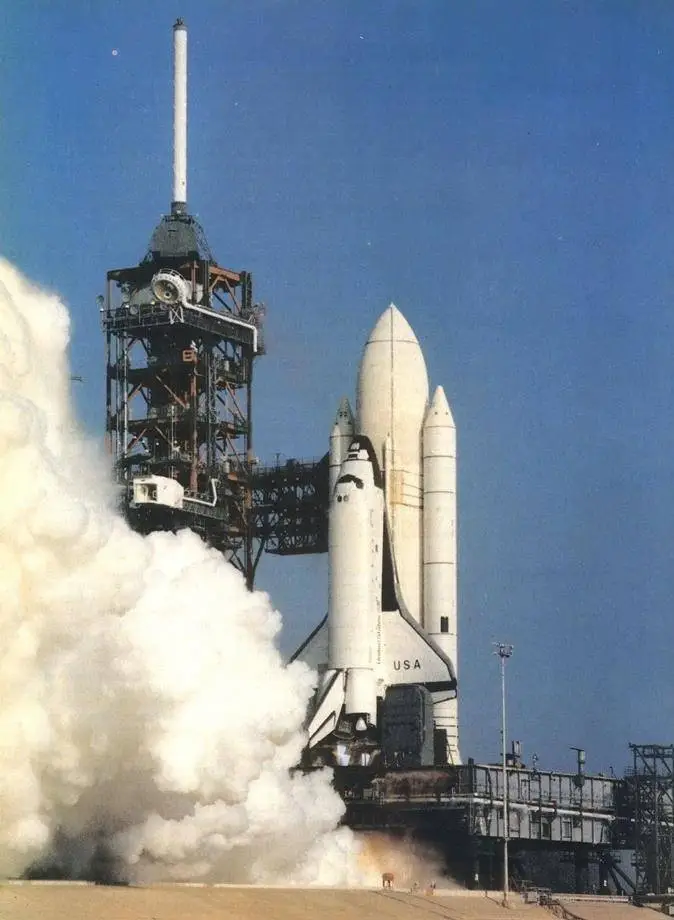
Eric: Yes, NASA did perform FRFs in the early days of the Space Shuttle program, igniting the main engines on the pad for about 20 seconds. This happened for the first time in February 1981, in advance of the first shuttle launch, and maybe before half a dozen other launches. It’s common practice for a lot of new rockets, but once engineers are comfortable with a vehicle, they typically stop doing them unless there are anomalies to resolve.
Astronauts were typically on board for these tests, so the idea that people would be on the shuttle during a flight readiness firing is plausible. However, I think you and I both know just how restricted access to the Space Shuttle was during the run-up to missions, so “campers” from Space Camp never would have been allowed near the vehicle, let alone on board during such a dynamic test. And don’t get me started on “thermal curtain failure.” The solid rocket boosters were, of course, never ignited during a test like this, and I can’t really see how one of them could be ignited. There are a lot of other plot holes (like the total loss of voice communication with a hapless “Mission Control” being run out of the firing room at KSC), but all in all it’s good fun.
One theme of the movie is the desire of Lea Thompson’s character to become a space shuttle commander, and as part of that she has to learn to rely on other teammates. She also has trouble learning to fly the shuttle during reentry. And this represents the climax of the film, when Thompson (Kathryn Fairly in the movie) must pilot the shuttle during peak heating. How did you feel about this?
Lee: I mean, it’s screenwriting 101: If we seen the gun (or in this case, the multi-axis trainer) on the mantlepiece in Act 1, then chances are that gun’s going to shoot someone by Act 3. We see Thompson’s Fairly struggle with spin recovery on the ground, and so of course Atlantis gets away from her just before re-entry. Contrived, silly, unrealistic, but definitely genre-appropriate!
But like you said at the outset, this movie wasn’t for us, the two old farts who can quote shuttle abort mode procedures at each other—it was for the kid I used to be in 1986, the kid who positively knew he could do a way better job in space than Phoenix’s Star Wars-obsessed Max, if only I’d been given the chance. The movie has faults, giant gaping faults, but it’s also trying to condense a ton of real (or at least reality-adjacent) space flight concepts into forms that are understandable by viewers who can’t tell an AJ10-190 from an RS-25. Which is most people! Some glossing over of the details is expected.
…though I still don’t like the autonomous AGI-exhibiting robot who can infiltrate NASA systems and launch shuttles at will. Seriously seems like someone would get fired over that.
When the film was done, we talked for a bit about what the aftermath of SpaceCamp might be like, if something as ludicrous as happened in the film had happened in real life. In a lot of ways, gaming that out was as fun as watching the movie. As someone who actively reports on NASA policy, what do you think might have happened if the agency had in fact accidentally shot five American teenagers into LEO?
Eric: What I know for sure is that it would be one hell of a story to cover. Not that I want NASA to accidentally send kids into space, but whooboy that would be extremely fun to dig into as a reporter if they did.
If such a thing happened today, I have to believe the NASA administrator would be fired or resign, and similarly the launch director at Kennedy Space Center. Also whoever was responsible for the SRBs igniting. Then, as you say, there would be the program manager or PI responsible for a robot that, in 1986, can magically communicate wirelessly with NASA’s mainframe. Even R2D2 required a scomp link to plug into computers back in that era’s movies. That person may end up in jail.
It would be devastating for NASA in so many ways, and it would undermine the trust the public has long held in an agency known for having the right stuff. I wish we had seen how the movie handled this, but it cuts to the credits after the shuttle lands in White Sands, New Mexico.
Lee: I’d have to imagine that if anyone comes out of it unscathed, it’d be Capshaw’s Andie Bergstrom, the one adult on board Atlantis. She survived injury and nearly lost her life bringing her crew home; that’s a solid PR opportunity if ever there was one. I’d figure Andie ends up with the Presidential Medal of Freedom or something similar, presented in a big fancy White House ceremony. The presidential speech practically writes itself: “Astronaut Bergstrom represents the highest ideals of the astronaut corps and of America—bravery, dedication to duty, and unwavering resolve…” Also, I’d bet she never flies in space again—her name attached to any shuttle flight from then on becomes a lightning rod of media attention. They probably park her in a senior position where she can be paraded out as needed and otherwise kept quiet.
I also have to imagine that SpaceCamp 2: The Joint Congressional Inquiry would be fascinating, as such things go. Watching the chairman of the Senate Committee on Commerce, Science, and Transportation rip Tom Skerritt’s character to shreds on live TV would make for extremely spicy viewing.
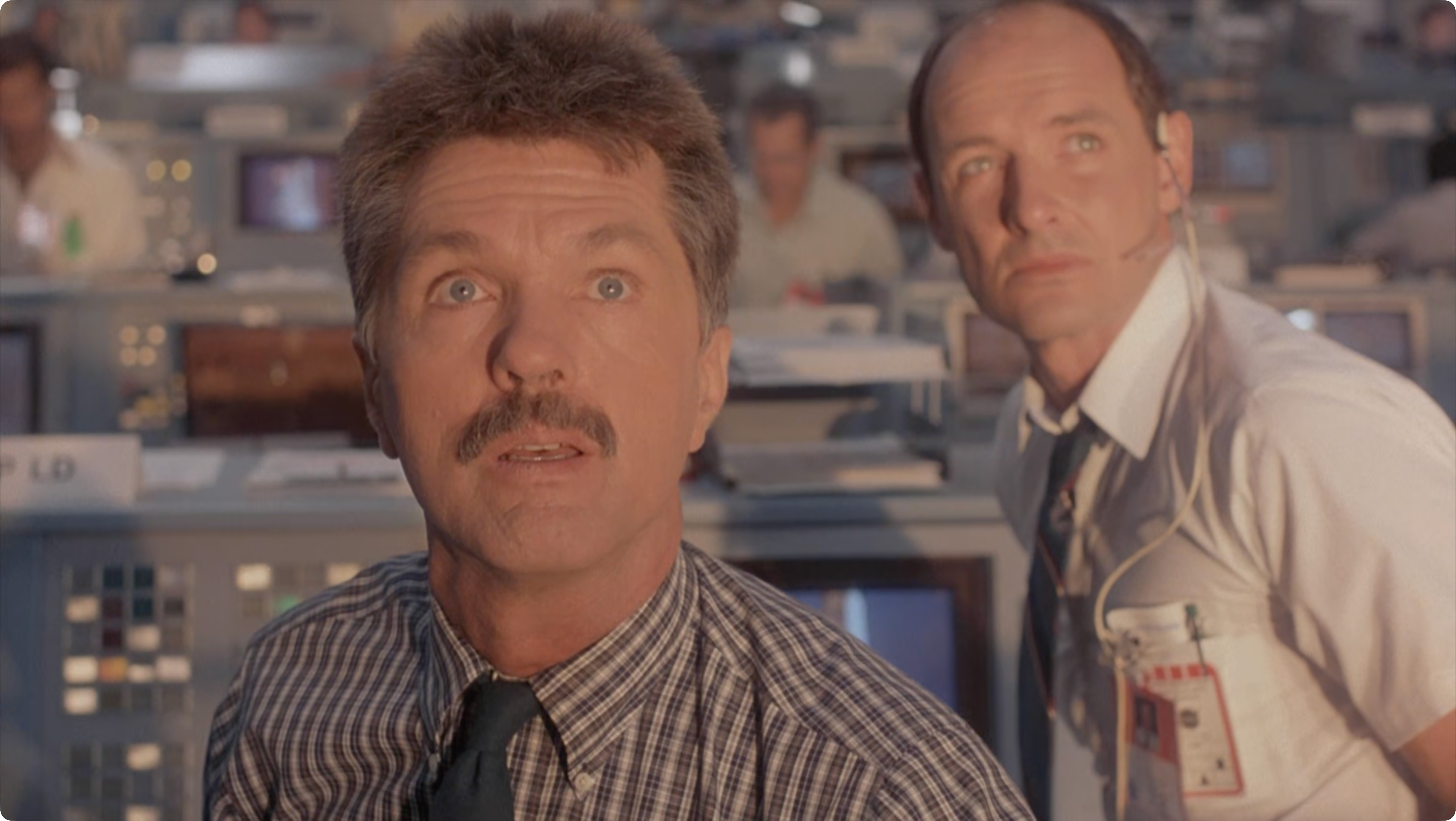
Eric: Skerrit’s character was, as best I can tell, an astronaut who had recently flown to space, the head of Space Camp, and also apparently the mission director. He had a lot going on. Safe to say he probably never would be going to space again. Conversely, the delight of the movie for kids of all ages is that it allows us all to imagine, however briefly, how we might act were we accidentally launched into space. Speaking for myself, I’d have to say I’d hope it would be on Crew Dragon, which flies autonomously, and does so very well.
Lee: Coming back to the movie after decades away, I enjoyed it a hell of a lot more than I thought I would. It’s fun, it’s silly, and the inaccuracies ultimately serve the audience and solve narrative problems. Could they have tried harder? Sure—but it was the ’80s, and the cinematic bar for realism in summer blockbusters-to-be was, shall we say, perhaps a bit lower than today. I give the movie a final rating of two flaming SRBs up (which is a good rating on the flaming SRB scale that I just invented). Any final words from our space editor?
Eric: The movie was campy fun—see what I did there? I’m glad to have finally watched it, and I’m glad I’ll probably never watch it again. If I’m going to spend a couple of hours with a space-based movie that stretches the bounds of reality, give me Gravity.