Taiwanese authorities have busted a smuggling ring that used Japan as a waypoint to funnel Super Micro Computer servers loaded with high-end Nvidia artificial intelligence (AI) chips into China, arresting three suspects and seizing roughly 50 servers worth more than US$15 million.
It is the first time that smugglers have been found to be using the Japan route. In March, a US police operation exposed a separate transshipment network running through Taiwan, Thailand and Hong Kong, in which a co-founder of Super Micro Computer was arrested.
Taiwan’s Central News Agency (CNA) reported on May 21 that the Keelung District Prosecutors’ Office was investigating three suspects, identified by the surnames You, Wang and Chen, for allegedly using falsified export documents to ship Super Micro AI servers loaded with restricted Nvidia chips to Hong Kong and Macau. The trio allegedly knew that the servers were subject to strict US controls and that the devices were banned from being sold to mainland China, Hong Kong and Macau.
Seeking illegal profits, they allegedly conspired to buy dozens of servers in Taiwan, each priced at over NT$10 million (US$312,000), and ship them from a northern port under falsified cargo descriptions, prosecutors said. During an operation on May 20, Taiwan’s coast guard searched 12 locations, including the defendants’ residences and related companies, and seized 50 servers along with mobile phones, computers, account books, luxury cars and NT$9 million in cash.
In the export documents, the defendants listed a Northeast Asian country as the destination. Bloomberg on Wednesday identified the destination country as Japan.
Citing people familiar with the matter, Bloomberg reported that at least one shipment had already passed through Japan and reached Hong Kong, with investigators suspecting mainland China as the final destination. A second planned shipment was intercepted before it left Taiwan.
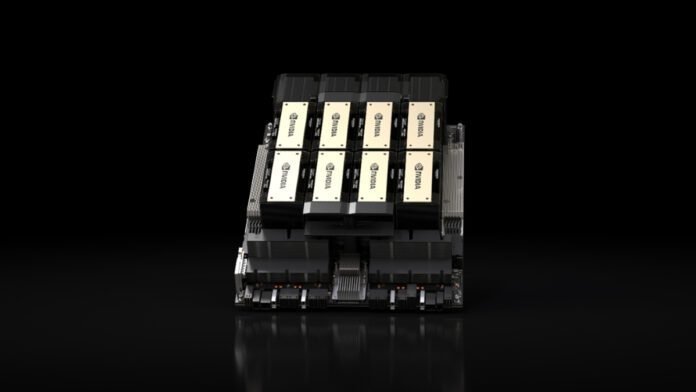
Super Micro specializes in building AI servers powered by Nvidia’s most advanced chips, including the GB200, B200, H200 and H100. The company’s global brand name is Supermicro.
“Ultimately, Super Micro has to run their own company. I hope that they will enhance and improve their regulation compliance and avoid that from happening in the future,” Nvidia chief executive Jensen Huang told the media during his trip to Taipei on May 23, adding that Nvidia rigorously explains export regulations to all its partners.
“Supermicro is committed to protecting our advanced technologies and intellectual property, and we are proud to have worked closely with Taiwanese authorities on the recent event, helping to prevent the illicit diversion of our highly sought-after systems into the restricted China market,” the Nasdaq-listed company said in a statement on Thursday. “Our collaboration with authorities in Taiwan resulted in the arrest of three suspects and the seizure of 50 servers that had been deceptively acquired after being sold by Supermicro to an authorized reseller.”
Beijing appeared to play down the arrests. When a foreign journalist asked about the incident, Chinese Foreign Ministry spokesman Guo Jiakun dismissed it in two sentences during a regular media briefing on May 22.
“It is not a question about foreign affairs” he said. “I’m not aware of that.”
“The case was widely seen as Taiwan’s first major enforcement action against semiconductor smuggling, coming as gray-market activity had risen in response to tightening US restrictions on high-end chip exports to China,” a Zhejiang-based columnist says in an article published on May 24.
“Taiwan’s detention of the three suspects sent a clear signal against potential violations in the semiconductor and AI supply chain, and was putting greater compliance pressure on technology giants such as Nvidia and Super Micro.”
After Bloomberg identified Japan as the transit country in the new smuggling route, China-based columnists and news outlets went completely silent on the story.
Beijing claims victory
The crackdown comes against a backdrop in which Washington’s approval of Nvidia H200 exports to China has been nullified by Beijing, which has urged local firms to buy from domestic chipmakers such as Huawei Technologies instead. The result has been zero H200 shipments to China and a rapid erosion of Nvidia’s market share.
In an interview with CNBC on May 20, Huang acknowledged that the company’s share of China’s AI accelerator market has collapsed from roughly 95% to effectively zero after successive US export restrictions, with Huawei emerging as the main beneficiary and its Ascend chip line on course to generate $12 billion in revenue in 2026.
“The demand in China is quite large,” he said. “Huawei is very, very strong. They had a record year, they’ll likely, very likely, have an extraordinary year coming up, and their local ecosystem of chip companies are doing quite well, because we’ve evacuated that market. We’ve really largely conceded that market to them.”
Huang said he had told analysts and investors to expect nothing regarding approvals to sell advanced chips into China, but added that Nvidia remained eager to return should conditions change.
Huang’s last-minute inclusion in US President Donald Trump’s delegation to China from May 13 to 15 had once fueled market expectations that he might secure Beijing’s approval to sell H200 chips in the country.
Beijing not only withheld a green light for H200 imports but also reportedly banned Nvidia’s GeForce RTX 5090D V2, a graphics card specifically engineered for the Chinese market to comply with US export rules.
Some Chinese commentators seized on Huang’s remarks as proof that China had won the chip war against the United States, and that American chip dominance in the Chinese market had ended.
“Huang had laid bare a truth that many had pretended not to see,” says a Gansu-based columnist. “The original intention of US restrictions was to prevent China from obtaining high-end AI chips and curb the development of Chinese AI, but this goal was wrong from the very beginning,” he adds.
“US policymakers believed China needed American chips to develop AI. But Huang told them: with or without Nvidia, China will move forward on its own,” he continues. “China’s researchers have turned to their own chips and technology. China’s domestic computing ecosystem has already taken shape and can function without external supply.”
Some observers pointed out that Beijing’s rhetoric about winning the chip war sits uneasily with reports that Chinese tech giants still have strong demand for Nvidia’s high-end chips, and that some have sought to obtain them through smuggling or by setting up AI data centers overseas.
On March 19, US authorities charged Yih-Shyan “Wally” Liaw, a co-founder of Super Micro Computer, along with two associates, with conspiring to divert US-made AI servers fitted with restricted graphics processing units (GPUs), including A100 chips, to China. Liaw and one co-defendant were arrested in California, while a third remains at large.
Bloomberg reported on May 9 that the Southeast Asian company at the center of that smuggling network is Bangkok-based OBON Corp, which allegedly helped move billions of dollars worth of Super Micro servers containing advanced Nvidia chips to China. The report named Alibaba Group as one of multiple end customers.
Alibaba denied any involvement, saying it has no business relationship with Super Micro, OBON or any third-party brokers mentioned in the indictment, and that it has never used banned Nvidia chips at its data centers.
Read: Beijing bans Nvidia’s top graphics card to back domestic rivals
Follow Jeff Pao on X at @jeffpao3