US policy toward Iran is being framed as a broad campaign combining military leverage, economic pressure, regional diplomacy, and domestic political calculations
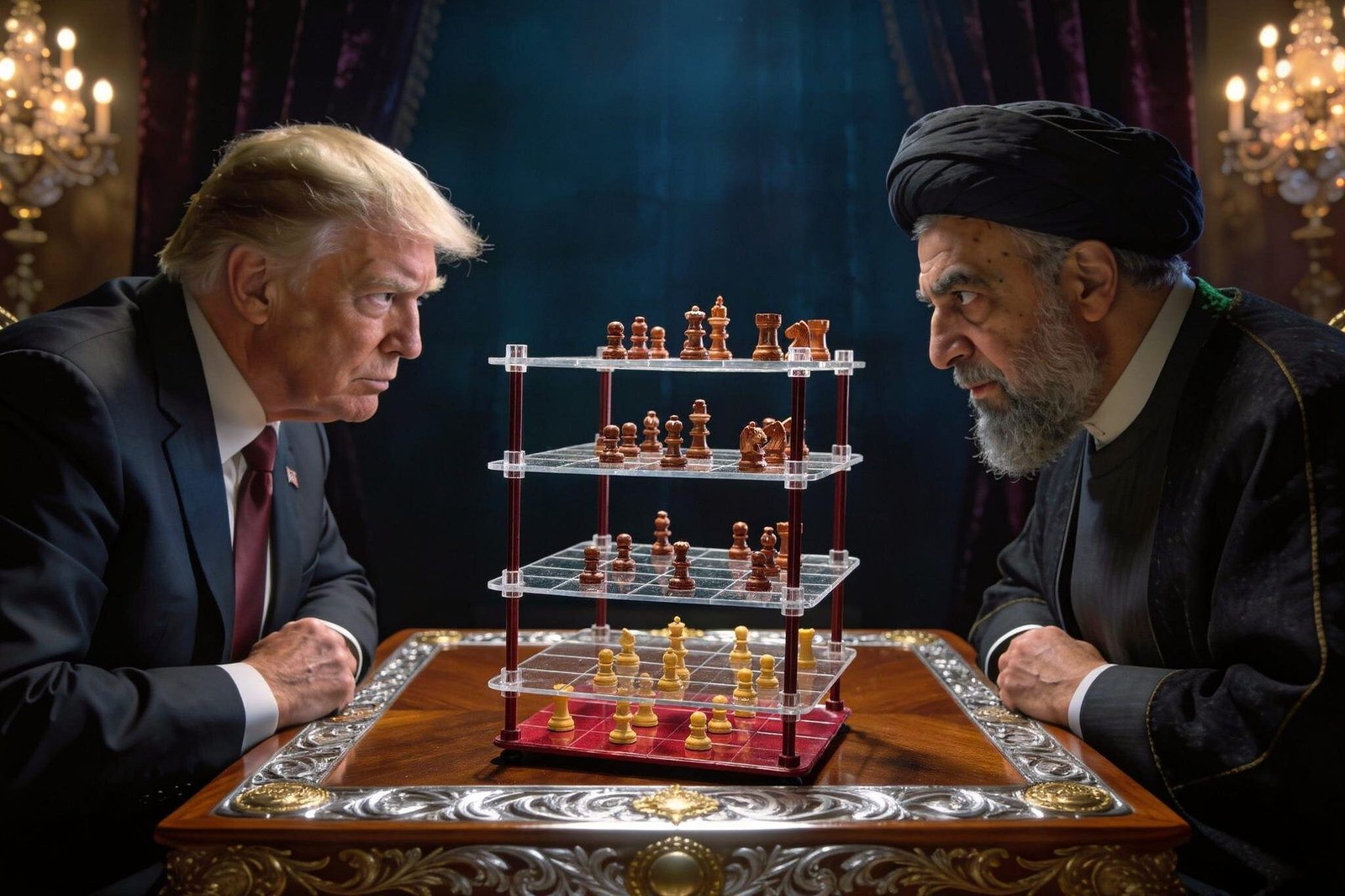
Let’s look at the facts of this very complex, multidimensional chess game that President Donald Trump appears to be playing.
The United States needs to secure control over hundreds of kilograms of enriched uranium without deploying large numbers of American troops on the ground.
President Trump needs to reopen the Strait of Hormuz as quickly as possible to reduce oil prices before Labor Day and ahead of the midterm elections.
At the same time, the US president is attempting to reshape the global balance of power through leverage over the Strait of Hormuz, placing pressure on both Europe and China, whose economies remain deeply dependent on Gulf energy flows.
The United States is not pulling back its Middle East armada. In fact, it is moving some of its most sophisticated military assets into the region as tensions continue to rise.
President Trump has repeatedly spoken about the Islamic Republic’s massacres and executions of unarmed Iranian civilians, portraying himself as sympathetic to the suffering of the Iranian people.
Israel and Prime Minister Benjamin Netanyahu have argued on numerous occasions that regime change in Iran is ultimately necessary. Reza Pahlavi has increasingly emerged in discussions surrounding a possible transition scenario.
Yet President Trump does not appear to want to be publicly perceived as the architect of regime change in Iran. That may explain why he has avoided explicitly calling for it or formally meeting with Pahlavi, even though figures such as Marco Rubio and Lindsey Graham have long expressed support for stronger pressure on the regime and sympathy toward the Iranian opposition.
With a new Federal Reserve chair eventually in place, interest rates could begin to decline. Combined with lower oil prices, that would strengthen the US economy.
A stronger economy—combined with ongoing political investigations, continuing debate over the 2020 election, and recent Supreme Court rulings on redistricting and gerrymandering—could help Republicans gain additional seats in Congress. That, in turn, would give President Trump more room to pursue his broader foreign policy agenda, including pressure on Cuba and support for movements aligned with Israel and elements of the Iranian opposition.
The Islamic Republic understands all of this and appears determined to stay in power at any cost. The regime continues to face enormous economic pressure from sanctions, blockades, and restrictions, which Washington appears in no hurry to ease.
Some Arab neighbors may privately prefer a very weak Islamic Republic remaining in power over the rapid emergence of a strong, democratic Iran. Israel, by contrast, may see the situation differently, given the deep historic and cultural ties between Persians and Jews spanning centuries.
China may prefer the continuation of the current Iranian system, but Beijing’s top priority remains stable access to Persian Gulf oil.
Russia, meanwhile, remains deeply consumed by the war in Ukraine and is not in a strong position to become heavily involved in another major regional confrontation.
The Islamic Revolutionary Guard Corps and hard-liners inside Iran cannot easily accept all of President Trump’s demands. That is partly why negotiations continue to drag on against the backdrop of internal regime power struggles.
At this stage, President Trump and the United States appear to hold most of the leverage and to be operating through a wide range of strategic, economic, military, and geopolitical tools.
The US president is playing an extraordinarily sophisticated strategic mind game—not only with the Iranian regime, but also with global powers and regional actors—keeping adversaries constantly off balance.
Sooner rather than later—perhaps after the midterm elections—Israel may intensify efforts against remaining regime power centers while supporting a final uprising by the Iranian people under Pahlavi’s leadership, ultimately leading to the fall of the Islamic Republic.
Meanwhile, tragically, more innocent Iranians continue to be executed by the regime in an effort to intimidate the population and prevent another nationwide uprising.