27.2 C
London
Tuesday, May 26, 2026
Home Blog

Israel Intensifies Lebanon Operations While Avoiding Beirut Strikes Amid Iran Talks 

0
israel-intensifies-lebanon-operations-while-avoiding-beirut-strikes-amid-iran-talks 
Israel Intensifies Lebanon Operations While Avoiding Beirut Strikes Amid Iran Talks 


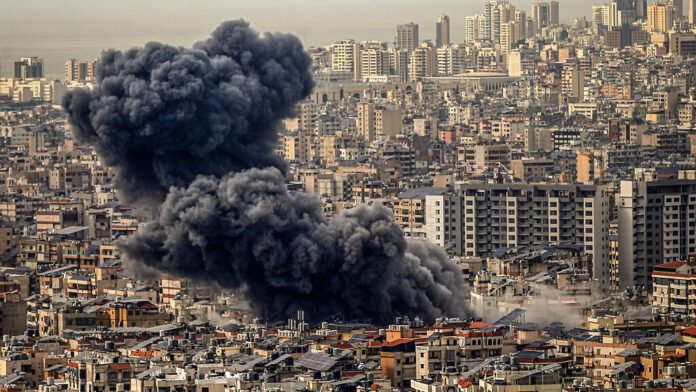
Prime Minister Benjamin Netanyahu said Tuesday that Israel was intensifying military operations in Lebanon by reinforcing the security buffer zone and securing strategic positions as the Israel Defense Forces (IDF) expanded operations beyond previously held lines in southern Lebanon following a recent increase in Hezbollah drone attacks. 

Separately, Israel’s political-security cabinet discussed efforts to avoid actions that could be seen as disrupting US negotiations over a proposed agreement to end the Iranian conflict, according to officials familiar with the discussions. 

Senior political officials told top IDF commanders they did not want Israel “to be perceived as those sabotaging Trump’s agreement,” the officials said. 

According to participants in the meeting, “freedom of action in Beirut is limited,” and the political leadership rejected a proposal by Chief of Staff Lt. Gen. Eyal Zamir to demolish buildings in Beirut’s Dahieh district. 

An Iranian source told Al Jazeera that Tehran warned the United States that any Israeli strike on Beirut would seriously damage ongoing peace talks aimed at ending the conflict. 

The Israeli military has so far refrained from striking the Lebanese capital. 

The IDF said troops had expanded ground operations in several areas outside the established security perimeter in recent days in an effort to push Hezbollah operatives farther north and reduce the threat posed by explosive drones targeting northern Israeli communities. 

Meanwhile, the Israeli Air Force intensified strikes against Hezbollah positions elsewhere in Lebanon, carrying out more than 100 attacks overnight and on Tuesday in the Beqaa Valley and across southern Lebanon. 


U.S. Casualties in Iran War Rise as Military Strikes Begin Again

0


The number of U.S. casualties in the Iran war ticked higher on Tuesday, hours after American military forces conducted what U.S. Central Command called “self-defense strikes” in southern Iran. Official Pentagon statistics put the current casualty toll at 423, an increase of three wounded from the War Department’s last official tally issued on Friday.

The increase in casualties came as Iran’s supreme leader said the war had exposed the vulnerability of U.S. military bases.

The increase in casualties came as Iranian Supreme Leader Mojtaba Khamenei said in a written statement that the war had exposed the vulnerability of U.S. military bases across the Middle East and as Iran’s Islamic Revolutionary Guards Corps threatened to respond to any U.S. strikes.

“The hands of time do not turn backward, and the nations and lands of the region will no longer serve as shields for American bases,” Khamenei said in his statement. “America, in addition to no longer having a safe place for aggression and military bases in the region, is moving further away from its former status day by day.”

The U.S. has been clinging to a rickety ceasefire with Iran for more than a month, as President Donald Trump — who previously threatened to commit genocide in that country — has oscillated between claims that a peace agreement is imminent and talk of renewed hostilities.

Secretary of State Marco Rubio said on Tuesday that talks to end the war were continuing but that a peace agreement could take “a few days.” 

Reporting by The Intercept found that the Pentagon’s official tally of dead and wounded military personnel from the Iran War is a gross undercount, stemming from what one U.S. government official called a “casualty cover-up.” The Defense Casualty Analysis System, or DCAS, which tracks “deceased, wounded, ill or injured” service members for Congress and the president, is missing hundreds of known casualties.

On April 8, the day the ceasefire deal was struck between the Trump administration and Iran, the tally of U.S. dead and wounded was 385. Despite a pause in hostilities, the number slowly rose to 428, according to Pentagon statistics.

On April 21, however, the number of wounded-in-action troops declined by 15 without public comment from the War Department, dropping the casualty total to 413. Despite repeated questions over the last month, the Pentagon has not commented on the disparity in its casualty count.

Since then, the casualty count has crept upward, with the number of dead increasing by one and the number of wounded topping out at 409 on Tuesday, yielding a combined total of 423 dead and wounded U.S. personnel.

On Thursday, CENTCOM told The Intercept, “13 service members were killed in action and one service member passed due to a non-combat related medical emergency during Operation Epic Fury” — the military’s name for the campaign.

For weeks, DCAS listed 13 hostile and non-hostile U.S. deaths during the war. Most DCAS webpages still claim 13 U.S. deaths but one put the tally at 14 as of Tuesday.

The Pentagon list of the names of the dead is still missing Maj. Sorffly Davius, a signals and communication officer with the New York Army National Guard who was assigned to the headquarters of the 42nd Infantry Division and reportedly died of sudden illness while on duty in Camp Buehring, Kuwait, on March 6. CENTCOM did not reply to a request for comment on whether Davius was the non-combat fatality they referenced.

“He passed away while deployed to Kuwait in support of Operation Epic Fury,” Rep. Mike Lawler, R-N.Y., said during a memorial service for Davius in late March. Gen. Dan Caine, the chairman of the Joint Chiefs of Staff, also recognized Davius while “honoring our fallen” from the war.

While DCAS provides a running tally of “non-hostile” deaths — meaning those who died from accidents or by illness — it doesn’t include “non-hostile” injuries. The DCAS figures show that 64 Navy personnel have been wounded in action.

Missing, however, are the more than 200 sailors treated for smoke inhalation or lacerations due to a March 12 fire that raged aboard the USS Gerald R. Ford. The aircraft carrier had been conducting round-the-clock flight operations to, Caine said, “project combat power” in the Middle East. The ship returned to its home port in Norfolk, Va., this month after 326 days at sea, the longest deployment of any U.S. aircraft carrier since the Vietnam War.

The numbers also don’t include a sailor who suffered a non-combat-related injury aboard the USS Abraham Lincoln as it was involved in “strike missions in support of Operation Epic Fury” on March 25.

For weeks, the Pentagon has failed to reply to repeated requests for comment on why DCAS provides counts of non-hostile war zone deaths but not non-hostile injuries or illnesses. CENTCOM did not immediately respond on Tuesday to requests for clarification concerning the casualty figures.

Albuquerque Officials Take Steps to Curb Surge in Citations, Jail Stays Related to Homelessness

0
albuquerque-officials-take-steps-to-curb-surge-in-citations,-jail-stays-related-to-homelessness
Albuquerque Officials Take Steps to Curb Surge in Citations, Jail Stays Related to Homelessness

Judges, state public defenders and city officials in Albuquerque, New Mexico, are taking steps to curb a cycle of missed court dates and arrest warrants for crimes related to living outside that has led to a county jail population that’s about half homeless.

Eighteen months ago, judges in Bernalillo County, which includes Albuquerque, noticed an increase in charges related to homelessness — including for obstructing a sidewalk, unlawful camping and unlawful storage of personal property. They said they also saw that some people who received the citations didn’t have an address and were missing court dates. People living on the street often lack cellphones and permanent addresses, making it difficult for them to know when to appear in court.

Missed court appearances can lead to warrants that — if the person encounters officers again — can land them in jail.

Starting July 1, when Albuquerque police issue citations for nine offenses associated with homelessness, they will schedule related court appearances for Fridays, according to a memo issued by Presiding Criminal Division Judge Michelle Castillo Dowler. The judges anticipate that having a specific day each week for the city ordinance cases will lead to fewer people missing court dates and fewer warrants for failing to appear.

Officials will also use the set hearings to attempt to address the problem in other ways. A caseworker and an attorney from the New Mexico Law Offices of the Public Defender will attend the Friday hearings. The public defender’s office is also working to have local treatment and service providers available outside the courtroom, said Dennica Torres, the district defender for the public defender’s office.

“It’s like a one-stop shop on Fridays,” she said. Her office, the district attorney’s office and the courts have been working since last year to address the homelessness-related caseload. The city of Albuquerque has also set aside $200,000 for a city attorney or paralegal to assist with the Friday effort, Torres said. 

“We can’t simply just cycle vulnerable individuals through jail and back out on the street,” Mayor Tim Keller said at a recent news conference. “Both of those are not the right answer.”

The changes come after ProPublica reported in March that under Keller’s tenure, charges have skyrocketed for ordinances related to living on the street. In 2025, people were charged 1,256 times for obstructing sidewalks, nearly six times the number of cases in the previous eight years combined; more than 3,000 trespassing charges were handed out, the highest for any year since 2017; and cases of unlawful camping increased to 704 from 113 the year before, according to previously unreported county data.

Read More

Court data shows that charges for the nine offenses that will be part of the court’s Friday hearings continue to rise — from 579 between January and April of 2025 to 2,072 during the same period this year. (Judges did not include trespassing in the charges scheduled for Fridays.)

ProPublica found the number of people at Bernalillo County’s Metropolitan Detention Center who are designated as “transient” or homeless has soared in recent years, to nearly 12,000 in 2025, from 3,670 in 2022. Last week, nearly 53% of people booked at the jail were recorded as homeless.

Keller did not respond to ProPublica’s questions or requests for comment. But he previously told the news organization that arrests and citations are not a solution to homelessness, which is a contentious issue in Albuquerque. While the city’s homeless population more than doubled from 2022 to 2025, the increase in homeless people jailed by the county more than tripled. 

Keller, who has been mayor since 2017, has responded by increasingly deploying city crews to clear encampments and also by ramping up enforcement of crimes related to being homeless. Keller previously defended the Albuquerque Police Department’s actions. 

“What we’re doing is following the letter of the law,” he said. “There are much more punitive things that I’m sure a lot of people would want, that we don’t do because they’re inappropriate.”

Support Independent Journalism:

As a nonprofit newsroom, we rely on donations from individuals like you to fuel our work. Your support today will directly fund investigations that shine a light on urgent issues: corporations prioritizing profits over public safety, health insurers denying coverage to patients, unintended consequences of new laws and more.

Singapore is winning the AI race nobody is watching

0
singapore-is-winning-the-ai-race-nobody-is-watching
Singapore is winning the AI race nobody is watching

It is 2028. A Fortune 500 bank in London is deciding where to deploy its first fully autonomous AI agent for credit decisions.

The bank has access to the most powerful AI models in the world. Some come from California. Some come from Beijing. Some come from Paris. The capability is no longer the question. What the bank needs is something else.

It needs an audit framework that satisfies its regulators in three different countries. It needs a testing toolkit that can prove to its board that the model behaves as advertised. It needs a third-party assurance broker whose stamp will be recognized by its corporate counterparties from Frankfurt to Texas.

When the bank’s compliance team finishes its assessment, the recommendation will not name a model provider. It will name a country. And that country, increasingly, is Singapore.

Two AI races

To date, the geopolitical conversation about Singapore’s AI position has been narrated on a single axis. Can Singapore build its own frontier models? Can it match US and Chinese compute scale? Can it retain enough indigenous AI talent to staff national infrastructure as foreign firms move in?

The answers, broadly, are no. Singapore will not produce a new OpenAI, Anthropic or DeepSeek. Its 4,500 current AI practitioners, even tripled to 15,000 by 2029, will not move the global frontier on capability.

But that conversation is being held on the wrong axis. There is a second AI race underway, and on that one, Singapore is already the global leader by a margin that may already be structural.

The first race is about who builds the most powerful AI systems. The second race is about who decides which AI systems are safe to use, in which industries and by whom.

The first race captures the headlines. The second race captures deployment decisions, where most of the enterprise economic value will be created over the next decade.

What Singapore is actually building

On January 22, 2026, at the World Economic Forum in Davos, the Infocomm Media Development Authority launched the world’s first governance framework for autonomous AI agents.

It was the first dedicated rulebook for autonomous AI systems anywhere on earth. It was built in Singapore, by Singapore, for the world to adopt. This is the work the headlines about Mistral and HTX are missing.

Singapore’s AI governance infrastructure now operates at three layers. At the framework layer, the Model AI Governance Framework launched in 2019, followed by a framework for generative AI in 2024, and the world-first framework for autonomous AI agents in 2026.

Each has been mapped to the US AI Risk Management Framework, the European Union AI Act and the international ISO 42001 standard. A company implementing AI Verify, Singapore’s testing toolkit, gets simultaneous credibility with Singaporean, American, and European regulators in a single audit pass.

At the testing layer, AI Verify operates as an open-source assurance toolkit governed by a non-profit foundation owned by IMDA. It convenes a global ecosystem of contributors and is engineered to evolve alongside international standards rather than compete with them.

At the institutional layer, Singapore’s AI Safety Institute leads the ASEAN Working Group on AI Governance. India’s Bureau of Indian Standards has followed Singapore’s lead in adopting ISO 42001 as a national standard. The National AI Strategy 2.0 explicitly names the positioning. Singapore is to become a “trust anchor” in the global AI economy.

The Underwriters Laboratories model

To understand why this position is more valuable than it first appears, consider an unlikely parallel.

In 1894, William Henry Merrill founded Underwriters Laboratories in Chicago. UL did not make electrical products. It tested them. Within decades, the UL mark had become the de facto requirement for any electrical product sold in the United States.

Today, products from over 50 countries are tested and certified by UL each year. A Korean appliance maker cannot ship into US retail channels without it. A Chinese consumer electronics brand cannot list on Amazon without it. UL Solutions reported nearly US$2.9 billion in revenue in 2024.

UL does not make the products. UL certifies them. That position has proven more durable than the position of any single manufacturer. Switzerland built a similar model in finance over the 20th century. Its domestic banks were dwarfed by American, Chinese and Japanese giants.

What Switzerland built was the infrastructure that made trust possible across other people’s capital, with neutrality, regulatory consistency, the power of the Swiss franc and the authority of the Bank for International Settlements (BIS), headquartered in Basel. The result is that Switzerland sits at the center of global financial trust without competing on a financial scale.

Singapore is building the same structural position in AI. Not with the largest models, not with the biggest compute, but with the assurance toolkit that lets foreign AI models be trustably deployed in Singapore, then across ASEAN, then in any market procuring against ISO 42001.

The country has spent 40 years building the credibility this position requires, namely, predictable regulation, low corruption, bilingual access to East and West, a judiciary that international counterparties trust and geopolitical neutrality that, even under pressure, still functions better than most alternatives.

Why the second race may matter more

Now, return to the Fortune 500 bank in London. The bank does not need the most powerful AI. It needs the AI it can defend to its regulators, board and shareholders.

A bank deploying autonomous AI for credit decisions does not need the cleverest model. It needs the auditable one. A hospital does not need the most advanced agent. It needs the certifiable one. A government does not need a homegrown language model. It needs a framework that allows foreign models to be deployed without losing control over their own data or operations.

The trust layer scales globally in a way frontier capability never will. It also captures the bulk of enterprise economic value because it is where deployment decisions are actually made.

The Mistral partnership with HTX, viewed against this background, looks less like dependency and more like a customer relationship. Mistral needs a trusted country to legitimize its enterprise expansion.

Singapore is selling that legitimacy at the framework layer while purchasing model capability at the technical layer, meaning the exchange runs both ways.

The race that is actually happening

The next phase of the AI economy will be shaped by which countries can credibly certify trust at scale.

Building bigger models is becoming easier every year. Building the rulebooks that let big models be trusted across countries is becoming harder, exactly because it requires the kind of slow institutional credibility that cannot be bought or easily replicated.

Singapore has been building that credibility for four decades, well before the AI era began. Its 2026 governance frameworks are the harvest of that long investment.

The world’s regulators are mapping their frameworks to Singapore’s, and the world’s enterprises are increasingly procuring in accordance with the standards Singapore helped harmonize. The world’s first governance framework for autonomous AI agents was written here, not in Brussels or Washington.

Five years from now, when the Fortune 500 bank in London makes its decision, the recommendation will not name California. It will not name Paris. It will not name Beijing. It will name the country whose mark has been on the audit report all along: Singapore.

Chris Chen is an angel investor and founder of Future 500, a Singapore-based founder-led accelerator working with founders to scale beyond their home country.

Musk says US military suicide drones used Starlink in violation of SpaceX rules

0
musk-says-us-military-suicide-drones-used-starlink-in-violation-of-spacex-rules
Musk says US military suicide drones used Starlink in violation of SpaceX rules

SpaceX and the Pentagon have been bickering about the price of using Starshield satellite service during the Iran war, according to a Reuters report published today. It appears that SpaceX asked the military for more money after it started using satellite terminals on “kamikaze” attack drones in Iran.

SpaceX CEO Elon Musk claimed the Reuters report is wrong. But Musk also said the military drones initially used the commercial Starlink service instead of the government-specific network, in violation of Starlink’s terms of service. Musk blamed the violation on the contractor that built the drones for the government.

The Reuters report, based on Pentagon documents and interviews with sources familiar with the pricing talks, said that SpaceX recently asked the military to pay $25,000 for Starshield access on each kamikaze drone. The Pentagon, which previously paid $5,000 for each connection, objected to the price hike but ultimately agreed to pay it, according to Reuters.

While the $25,000 charge is a monthly fee for the satellite connection provided to a satellite terminal, the terminals are being used with drones that only make one-way trips before hitting targets and detonating on impact.

Starshield is a network for government entities and is based on Starlink technology. Musk wrote in an X post today that the “Reuters article is false.” But in the very same post, he seemed to confirm a dispute over how the military used SpaceX satellite technology.

“They made improper use of the Starlink civilian system for military purposes. Direct violation of terms of service,” Musk wrote today, seeming to indicate that the military used the commercial Starlink system when it should have been using Starshield.

Musk said later that the drones were configured incorrectly by a military contractor. “There is a US government arm of SpaceX called Starshield, which has a different set of satellites than Starlink, which is for civilian use. The company that makes the suicide drones incorrectly used the civilian system, instead of the Starshield,” Musk wrote.

SpaceX “argued the military was underpaying”

The Pentagon “denied any violation of its agreement with SpaceX,” according to Reuters. Starshield terminals sold by SpaceX to the military can connect both to the commercial Starlink satellite constellation and Starshield, the Reuters article said.

The drones in question are part of the Low-cost Uncrewed Combat Attack System (LUCAS), which was made by defense contractor Spektreworks. We contacted Spektreworks today and will update this article if it responds.

Musk previously addressed the military use of SpaceX satellite terminals on drones on March 1, one day after the Iran war began, in response to an X post in which a user posted a picture of one of the drones that appeared to have an integrated satellite terminal.

“It is a violation of commercial Starlink terms of service to use the terminal for weapon systems. This applies to all users and is shut down when discovered,” Musk wrote at the time. “There is a separate network called Starshield, which is operated by the US government. This is not under SpaceX control.”

Within weeks of the US launching strikes in Iran, “SpaceX executives met Pentagon officials and argued the military was underpaying for the service,” the Reuters article said.

“SpaceX argued the LUCAS drones were operating under conditions that aligned more closely with its aviation tier subscription rather than a lower priced land or mobility service. Pentagon officials argued that the $25,000 price tag—a monthly fee—was designed for aircraft, not kamikaze drones that used [a] Starlink connection for a matter of minutes or hours, according to one of the sources,” Reuters reported.

The Pentagon “ultimately agreed to pay SpaceX’s proposed price increase” from $5,000 to $25,000, according to Reuters. LUCAS drones give the military a cheaper alternative to traditional missiles and grew out of an effort to reverse-engineer Iranian-built drones. Each drone reportedly costs about $35,000.

Mobile price prompted “alarm from defense officials”

Despite agreeing to the price increase, “senior officials including Deputy Secretary of Defense Steve Feinberg remained uneasy about the arrangement,” and Pentagon officials in April “met to revisit the pricing with Terrence O’Shaughnessy, a retired four-star Air Force general who now leads SpaceX’s defense business,” according to Reuters.

“Still, the Pentagon is currently considering an additional purchase of more than 3,500 Starshield terminal subscriptions, including 100 with the higher-priced aviation tier, according to Pentagon documents reviewed by Reuters,” the article said. “The deal could generate hundreds of millions of dollars in annual revenue for SpaceX, though Reuters could not determine whether an agreement has been finalized, or what price is being discussed.”

There’s also reportedly been a dispute over the price of providing Starlink mobile service to Iranian citizens who have suffered under a government-imposed Internet blackout. In January, the US reportedly smuggled 6,000 Starlink broadband terminals into Iran to help residents bypass blocks to Internet access.

Reuters reported that Pentagon officials asked SpaceX about providing Iranians with direct-to-cell service, which can keep people connected on standard cell phones without needing a terminal.

“SpaceX, which generated $11.4 billion in revenue from Starlink in 2025, proposed charging as much as $500 million to launch the capability, along with a $100 million monthly fee to operate it, according to one of the people and Pentagon documents—prompting alarm from defense officials over the price. Reuters could not determine whether an agreement has been reached,” the Reuters article said.

The US and SpaceX previously had a dispute over payment for satellite terminals sent to Ukraine beginning in 2022. SpaceX initially donated terminals before asking the Pentagon to pay for ongoing service and more terminals. The Defense Department later confirmed that it was paying for Starlink service in Ukraine.

SpaceX’s IPO filing last week said that revenue for its government connectivity business dropped in the most recent quarter. SpaceX’s overall connectivity revenue in Q3 2026 was $3.3 billion, a year-over-year increase of $782 million. The increase was driven by boosts in revenue from consumers, large businesses, mobile partnerships with wireless carriers, and Starlink’s aviation and maritime offerings. The overall revenue increase would have been higher if not for “a decrease of $175 million in our government connectivity business,” SpaceX said.

SpaceX satellite dominance leaves few options

While SpaceX isn’t the only operator of low Earth orbit satellites, Reuters notes that “no other company provides a comparable alternative to Starlink, which has become an increasingly critical tool in modern warfare since Russia’s invasion of Ukraine in 2022.”

The Department of Defense declined to comment on its negotiations with SpaceX today, but told Ars that it “is operating in accordance with the terms and conditions of its contracts.” The department also provided Ars with a statement indicating that the military is looking for alternatives to SpaceX.

“The Department of War is committed to fostering a competitive environment for commercial satellite communications and is conducting comprehensive market research to continuously monitor commercial offerings that align with government requirements,” the Pentagon statement said. “We are actively engaging with industry to identify innovative solutions and new entrants, ensuring acquisitions are inclusive of a diverse range of capable vendors.”

The statement added that the Space Force’s “Commercial Satellite Communications Office is working on additional options with other proliferated low earth orbit partners as part of its strategy to leverage the unprecedented capabilities provided by the commercial SATCOM industry.”

We contacted SpaceX and will update this article if it responds.

Pentagon spokesperson Sean Parnell responded to the Reuters article in an X post today. “The Fake News media has the story wrong, again. SpaceX remains a strong and valued partner to the Department of War. The claims in this article are simply not based in reality and do not reflect the close, effective collaboration between our teams.”

Musk shared Parnell’s post, calling it a “correction issued by [the] Department of War.”

Freezer Breakfast Burritos

0
freezer-breakfast-burritos
Freezer Breakfast Burritos

Freezer Breakfast Burritos are the ultimate make-ahead breakfast solution for busy mornings! Large flour tortillas are stuffed with savory breakfast sausage, crispy seasoned potatoes, fluffy scrambled eggs, and plenty of melted cheese for a hearty and satisfying meal you can grab straight from the freezer. They are easy to customize, simple to reheat, and perfect for meal prep, school mornings, road trips, or quick breakfasts on the go.

Why You’ll Love These Freezer Breakfast Burritos

  • Perfect for meal prep and busy mornings
  • Freezer-friendly and easy to reheat
  • Packed with protein and flavor
  • Customizable with your favorite fillings
  • Great for breakfast, brunch, or even dinner
  • Crispy, cheesy, and incredibly satisfying

Ingredients & Substitutions

Flour Tortillas

Large 10-inch flour tortillas work best because they hold plenty of filling while still rolling easily. Smaller tortillas can be used, but you may need more tortillas and less filling per burrito.

Breakfast Sausage

Ground pork sausage adds rich, savory flavor because it is already seasoned. You can also substitute:

  • Turkey sausage
  • Chicken sausage
  • Bacon
  • Chorizo
  • Plant-based sausage

Potatoes

Frozen diced hash brown potatoes make preparation quick and easy while still delivering crispy texture. Traditional shredded hash browns also work beautifully.

Eggs

Soft scrambled eggs create the perfect creamy filling. Chives and ranch seasoning add extra flavor, but feel free to season the eggs your favorite way.

Cheese

Sharp cheddar and Monterey Jack melt perfectly and create a gooey, cheesy center. Pepper Jack, Colby Jack, mozzarella, or Mexican blend cheese are all delicious options.


Why These Burritos Are Perfect For Meal Prep

These breakfast burritos are ideal for planning ahead because every component can be made in advance.

Prep Ahead Tips

  • Cook sausage up to 3 days ahead
  • Prepare potatoes and refrigerate separately
  • Scramble eggs in advance and store chilled
  • Assemble burritos once ingredients cool completely

Having everything ready makes assembly incredibly fast and easy.


Can You Freeze Breakfast Burritos?

Absolutely! That’s what makes this recipe so convenient.

Best Freezing Tips

  1. Allow all cooked ingredients to cool before assembling.
  2. Wrap each burrito tightly in foil or plastic wrap.
  3. Store inside freezer-safe bags or airtight containers.
  4. Label with the date before freezing.

They stay fresh in the freezer for up to 3 months.


How To Reheat Frozen Breakfast Burritos

One of the best things about freezer burritos is how easy they are to reheat using several different methods.

Microwave Method

  • Remove wrapping
  • Wrap burrito in a damp paper towel
  • Microwave for 1–2 minutes until hot

Oven Method

  • Bake at 350°F for 20–25 minutes

Air Fryer Method

  • Air fry at 350°F for 10–15 minutes
  • Flip halfway through cooking

If thawed overnight in the refrigerator, reduce reheating time slightly.


How To Serve Breakfast Burritos

Serve these burritos with your favorite breakfast toppings and sides for an even better meal.

Delicious Serving Ideas

  • Salsa
  • Sour cream
  • Guacamole
  • Hot sauce
  • Pico de gallo
  • Avocado slices
  • Fresh fruit
  • Breakfast potatoes

How To Store Breakfast Burritos

Refrigerator

Store assembled burritos wrapped tightly for up to 3 days.

Freeze individually wrapped burritos for up to 3 months for easy grab-and-go breakfasts.


Freezer Breakfast Burritos Recipe

Prep Time

45 minutes

Total Time

45 minutes

Servings

8 burritos


Ingredients

  • 8 large flour tortillas
  • 1 pound ground pork sausage
  • 1 bag (28 ounces) frozen diced hash brown potatoes
  • 1 tablespoon vegetable oil
  • 1 teaspoon seasoned salt
  • ¼ teaspoon black pepper
  • ¼ teaspoon garlic powder
  • 8 large eggs, beaten
  • 1 teaspoon chopped chives
  • 1 teaspoon dry ranch seasoning mix
  • 1 tablespoon unsalted butter
  • 1 cup shredded sharp cheddar cheese
  • 1 cup shredded Monterey Jack cheese
  • Sour cream, for serving
  • Salsa, for serving

Instructions

Cook The Sausage

  1. Heat a large skillet over medium heat.
  2. Add sausage and cook for 8–10 minutes until fully browned.
  3. Transfer sausage to a paper towel-lined plate.

Cook The Potatoes

  1. Add oil to the skillet drippings.
  2. Add diced potatoes, seasoned salt, pepper, and garlic powder.
  3. Cook for 15–20 minutes until crispy and fully cooked.
  4. Remove from skillet and set aside.

Prepare The Eggs

  1. In a bowl, whisk eggs with chives and ranch seasoning mix.
  2. Melt butter in the skillet over medium heat.
  3. Add eggs and cook gently, pushing with a spatula until soft curds form and eggs are fully cooked.

Assemble The Burritos

  1. Lay tortillas flat on a clean surface.
  2. Add:
    • 2 tablespoons cheddar cheese
    • 2 tablespoons Monterey Jack cheese
    • ¼ cup scrambled eggs
    • ¼ cup sausage
    • ½ cup potatoes
  3. Fold in the sides of the tortilla.
  4. Roll tightly from the bottom upward to form a burrito.

Serve immediately or freeze for later.


Optional Crispy Burrito Finish

For crispy golden burritos:

  1. Heat butter or oil in a skillet.
  2. Place burritos seam-side down.
  3. Cook 2–3 minutes per side until golden brown and crispy.

Tips For The Best Breakfast Burritos

  • Cool fillings before assembling to prevent soggy tortillas.
  • Don’t overfill the burritos or they may tear.
  • Wrap tightly to avoid freezer burn.
  • Use freshly shredded cheese for better melting.
  • Add vegetables like peppers or spinach for extra flavor.

Variations

Spicy Breakfast Burritos

Add jalapeños, hot sauce, or Pepper Jack cheese.

Bacon Breakfast Burritos

Replace sausage with crispy bacon.

Vegetarian Breakfast Burritos

Skip the meat and add beans, peppers, mushrooms, or spinach.

Southwest Style

Add black beans, salsa, and taco seasoning.


Frequently Asked Questions

Can I freeze breakfast burritos with eggs?

Yes! Scrambled eggs freeze and reheat very well.

How long do freezer breakfast burritos last?

They stay fresh for up to 3 months when properly wrapped.

Can I make these dairy-free?

Absolutely. Use dairy-free cheese and skip the butter.

What’s the best way to prevent soggy burritos?

Allow fillings to cool completely before rolling and freezing.

Iran restores global internet access after months of restrictions

0
iran-restores-global-internet-access-after-months-of-restrictions
Iran restores global internet access after months of restrictions

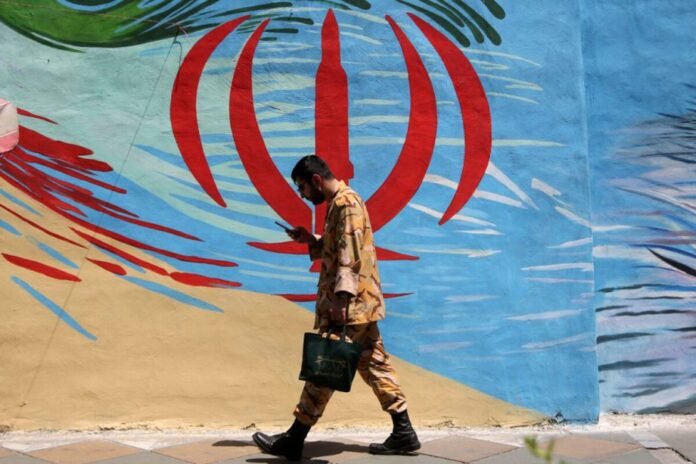
Iran has restored international internet access following months of restrictions imposed after nationwide protests in January and later intensified during the war with the US and Israel, according to Iran’s semi-official Tasnim news agency on Tuesday, Anadolu reports.

Tasnim reported that the process of lifting restrictions had begun following an order by Iranian President Masoud Pezeshkian to return internet access to conditions that existed before January 2026.

According to the report, users once again have access to international websites, while fixed broadband services, including FTTH, VDSL and ADSL, as well as mobile internet services, are now available without restrictions.

Iran had imposed a near-total internet shutdown during protests on Jan. 8 and 9, severely disrupting both domestic and international connectivity across the country.

Nationwide protests erupted in late December and escalated in January following a sharp depreciation of the Iranian rial against US dollar amid mounting economic pressure.

Authorities imposed broad internet restrictions and temporary nationwide shutdowns during the unrest in an effort to curb communications and the spread of protest-related content.

In the weeks that followed, internet services gradually began returning before restrictions intensified again after the US and Israel launched attacks on Iran on Feb. 28.

During the conflict, domestic internet services and local platforms were later restored, but access to the global internet largely remained dependent on Virtual Private Networks (VPNs).

Major global platforms including YouTube and X remain blocked in Iran, with many users continuing to rely on VPN services to access them.

Iranian officials said 3,117 people were killed in the protests, while some human rights organizations estimated the death toll at up to 7,000.

Iranian authorities have acknowledged public discontent but accused the US and Israel of attempting to exploit the unrest through sanctions and pressure aimed at inciting instability and justifying foreign interference and regime change.

Experts had previously described the measures not as a complete shutdown of all internet infrastructure, but as restrictions specifically targeting access to the global internet, while domestic services, including banking systems and local platforms, remained operational.

The restrictions significantly affected businesses, online commerce and communication with the outside world, while access to international platforms became increasingly limited and unstable for ordinary users.

France Reports Heatwave Fatalities as Britain Breaks May Temperature Record

0
france-reports-heatwave-fatalities-as-britain-breaks-may-temperature-record
France Reports Heatwave Fatalities as Britain Breaks May Temperature Record


A spell of unusually high temperatures affected parts of Europe, with France facing heat-related fatalities and Britain recording its hottest day ever for the month of May.

In France, government spokesperson Bregeon said five of the seven fatalities recorded were people who drowned in lakes, rivers or beaches. The government also ordered local authorities to take measures aimed at protecting people during sporting events.

France had been experiencing above-average temperatures since Saturday. Most of Brittany was placed under an orange-level weather warning by Meteo France, which forecast temperatures of up to 36 degrees Celsius on Tuesday afternoon. According to Meteo France, the heatwave was expected to continue through Wednesday and Thursday.

Britain also experienced record-breaking temperatures, with the country’s national weather service saying Monday became the hottest day ever recorded for May, with temperatures nearing 35 degrees Celsius.

The Met Office said temperatures reached 34.8 degrees Celsius at Kew Gardens in west London, provisionally surpassing the previous May record of 32.8 degrees Celsius set in 1922 and matched again in 1944. The day also set a new record for a public holiday, surpassing the previous high of 33.3 degrees Celsius recorded in August 2019.

The Met Office said a study carried out last year found that the chances of exceeding the previous May temperature record had become three times more likely because of changes in climate linked to human greenhouse gas emissions.

“This heat would be exceptional in the UK even in mid summer, let alone in May,” it said.

As temperatures climbed, swimmers headed to open-air pools while pedestrians sought relief in public fountains. Near the village of Brockworth in south-west England, participants also took part in the annual cheese-rolling contest despite the intense heat.

Starbucks ‘Sorry’ After Envoking Massacre in New Ad

0
starbucks-‘sorry’-after-envoking-massacre-in-new-ad
Starbucks ‘Sorry’ After Envoking Massacre in New Ad


A Starbucks marketing stunt in South Korea has blown up into a full-blown national scandal after critics said the coffee chain appeared to mock one of the darkest chapters in the country’s history.

Now, one of South Korea’s most powerful retail bosses is publicly begging for forgiveness.

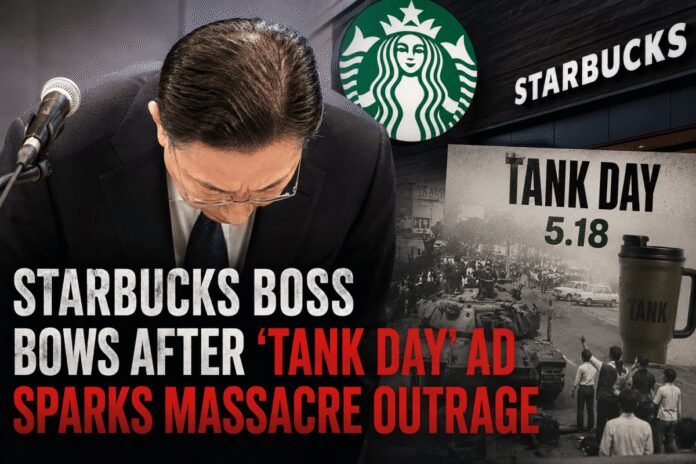
Chung Yong-jin, chairman of Shinsegae Group, which owns a controlling stake in Starbucks Korea, issued a dramatic apology Tuesday after a promotional campaign triggered outrage from families of pro-democracy activists killed during a brutal 1980 military crackdown.

During a televised statement in Seoul, Chung bowed three times and pleaded for forgiveness from victims’ families and the South Korean public.

“I take it very seriously the fact that many people felt deep pain and anger because of Starbucks Korea’s inappropriate marketing campaign,” Chung said.

The uproar began when Starbucks Korea tried to promote a large tumbler size it calls a “tank” by declaring May 18 to be “Tank Day.”

That date is not just any day in South Korea.

May 18 marks the anniversary of the Gwangju Democratic Uprising, when citizens in the southern city of Gwangju rose up against military rule in 1980. The protest was crushed by troops using tanks and helicopters. Hundreds were killed or injured.

So when Starbucks pushed a “Tank Day” promotion on that anniversary, many South Koreans saw it as a horrifying insult.

The campaign got even worse in the eyes of critics because it used the slogan, “Thwack it on the table!”

To many, that phrase appeared to echo a notorious 1987 police statement tied to the torture death of student activist Park Jong-chol. At the time, authorities tried to claim Park suddenly died after investigators “hit the desk with a thwack.”

The reaction was immediate and fierce.

Within hours, Shinsegae canceled the promotion and fired the chief executive of Starbucks Korea. Police also opened an investigation after complaints were filed by relatives of people killed in Gwangju.

Chung first apologized on May 19, saying the campaign caused “deep pain to the victims and bereaved families of the May 18 Democratization Movement as well as to the public.”

But the backlash did not go away.

On Tuesday, he returned with a second, more dramatic apology, this time bowing repeatedly on camera and asking the public not to take out their anger on workers at Starbucks shops.

The blame, he said, belongs with management.

So far, there have been no immediate reports of major incidents at stores.

A senior Shinsegae executive said the company has not found conclusive proof that Starbucks Korea marketing employees intentionally mocked the democracy movement. Employees have reportedly denied doing so.

However, the company said some workers refused to hand over their smartphones during an internal review. Executives said they will wait for the police inquiry and fire anyone found to have deliberately ridiculed the protesters.

The scandal has now reached the highest levels of South Korean politics.

Interior and Safety Minister Yoon Ho-jung said Starbucks products will no longer be used at government events, blasting what he called the chain’s “anti-historical behavior.”

President Lee Jae Myung also weighed in on X, accusing the campaign of showing “inhumane and disgraceful behavior” by people he described as “cheap profiteers” who deny democracy and basic human rights.

The Gwangju crackdown happened after General Chun Doo-hwan seized power in a 1979 coup. Official records say about 200 people died in the uprising, though activists have long claimed the real number was much higher.

Chun’s military government also imprisoned tens of thousands of people while claiming it was rooting out “social evils.”

Public outrage over his dictatorship eventually exploded into massive protests in 1987, forcing South Korea to adopt direct presidential elections. That moment is widely viewed as the beginning of the country’s transition to democracy.

For Starbucks Korea, what may have been intended as a simple tumbler promotion has turned into a disaster.

For many South Koreans, the words “tank” and “May 18” are not marketing gimmicks.

They are reminders of bloodshed, dictatorship and a fight for democracy that still cuts deep.

Pete Hegseth’s desperate crusade for masculine validation

0
pete-hegseth’s-desperate-crusade-for-masculine-validation
Pete Hegseth’s desperate crusade for masculine validation

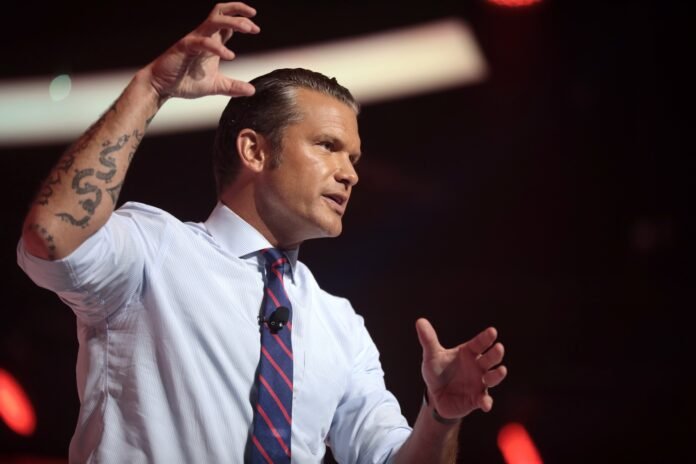
Earlier this year, President Donald Trump surveyed his top military brass on the prospect of making war in Iran. Chairman of the Joint Chiefs of Staff General Dan Caine urged caution, presciently predicting that a ramped-up campaign against Iran could lead its leaders to close the Strait of Hormuz. However, Pete Hegseth, Trump’s self-styled “Secretary of War,” jumped at the prospect of such a conflict.

“Pete, I think you were the first one to speak up,” Trump recently recalled at a press event. “And you said, ‘Let’s do it, because you can’t let them have a nuclear weapon.’”

Americans join the military for any number of reasons: to serve their country, gain economic stability or simply join a community. For Hegseth, a thirst for martial victory and a desire for a masculine metamorphosis seemed to surpass all else.

Much to Hegseth’s chagrin, however, his career as an army officer corresponded to a series of distinctly failed military campaigns.

After graduating from Princeton in 2003, he deployed to two doomed military locales – Afghanistan and Iraq – and then relentlessly defended the Pentagon’s occupation of parts of those places in essays, speeches, and, ultimately, as a weekend host on Fox News.

While Hegseth’s rhetoric on those wars long reflected mainstream Republican talking points – papering over chaos and death in the Middle East and beyond with pledges that stable democracies were close at hand – his zeal indicated something deeper: a desperation, it seemed, to wring some sort of personal validation from his time in uniform.

“The rank and file, and even some of the officers, have accepted the gravity of the war’s failures,” Adam Weinstein, a Marine Corps veteran and deputy director for Middle East policy at the Quincy Institutea nonpartisan think tank focused on peace and diplomacy, told me, speaking of Iraq and Afghanistan.

“There’s a deep sense of sacrifice and loss for nothing. And that can lead to fatalistic beliefs, it can lead to Islamophobia. In its healthier form, it can lead to questioning the principles of interventionism and the US foreign policy establishment.”

Hegseth, for his part, chose to avoid totally any personal or geopolitical reckoning. Once defending the Global War on Terror had became politically untenable, he cast about for excuses that wouldn’t implicate his own career in the military. Rather than zero in on tactical or intelligence failures, his rhetoric took a dark turn, increasingly inflected by Islamophobia, misogyny and a distinctly toxic version of masculinity.

As his profile rose, Hegseth argued ever more forcefully that the Pentagon was weak-willed, insufficiently lethal and overrun by incompetent and cowardly leaders, many of them women or minorities who (in his eyes) had been unfairly promoted.

His proposed remedy was as blunt and dense as his diagnosis: America simply needed to fight harder in the Middle East until the mission was accomplished and “Islamic extremism” was eliminated. As one of his former co-workers told me, “I never got the feeling that he wanted to abandon the Middle East.”

I asked Weinstein if, during his own 2012 deployment to Afghanistan, he saw Islamophobia bubbling below the surface. “It was right on the surface,” he responded. “But what do you think the World War II generation was saying about the Japanese? Dehumanization is a natural outgrowth of war.”

‘If you want something, you go after it

As a boy growing up in Minnesota, Hegseth appeared to be a perfect version of the American male. He was religious, athletic, well-spoken and remarkably handsome. He was ashamed, however, of his self-perceived softness. “I didn’t get in fights as a kid and shied from confrontation because, frankly, I was scared of it,” he wrote in his 2016 book In the Arena, Good Citizens, a Great Republic, and How One Speech Can Reinvigorate America.

In it, he went on to hail his father, Brian, for his “integrity” and “Scandinavian work ethic,” before evincing thinly veiled resentment for not having been reared effectively in the masculine art of aggression. “My father was – and is – an incredible man,” he reflected, “but confrontation isn’t necessarily his forte.”

Military service, Hegseth figured, would imbue him with some much needed and previously missing manliness. It was also his best path to class mobility and prestige. When it came time for college, he applied to West Point, America’s most prestigious service academy, and Princeton, where he was gunning for a ROTC scholarship. He got into both schools and chose the latter, touching down on its verdant New Jersey campus in 1999.

In deciding on Princeton, Hegseth launched himself on a path eerily paralleling that of another Minnesota native of a previous era, novelist F. Scott Fitzgerald. Both of them were working-class lads who attended Princeton, where they bristled at the elitism while craving its validation. Both developed a writing voice on campus and then joined the Army.

Both also struggled with the bottle and with women, though Fitzgerald, unlike Hegseth, was somewhat reflective about his vices. He initially called his first novel The Romantic Egotist (later This Side of Paradise). It followed a handsome, middle-class Princeton man whose greed and social ambition inhibited his ability to find true love.

Hegseth himself expressed a similar ambition in a 2015 interview: “If you want something, you go after it – you’re willing to sleep a little less, put up with more, put up with a little insanity and do things you don’t want to do.”

In a widely read 1927 essay on his alma mater, Fitzgerald asserted that Princeton men “resent any attempt at analysis.” Hegseth also did his best to make such analysis impossible. At Princeton, he was deemed a man with “many faces,” loudly endorsing the Iraq war and attacking feminist groups on campus (even if, in quieter moments, he showed a capacity for nuance and kindness).

One of his former professors has pointed out that Hegseth’s current persona and his Princeton one “don’t fit.” Part of the disconnect stems from the fact that his puffed-up, bellicose military posturing in the Trump era doesn’t match either his Ivy League education or his actual service record.

Hegseth came away from the war in Iraq with a Bronze Star that, it’s worth noting, was issued “without valor.” (It was, in short, a lesser version of the medal that, according to the Washington Post, was “issued somewhat liberally” during the War on Terror years. Some enlisted personnel joked that such a decoration was little more than a “participation trophy” for needy officers.)

Hegseth’s award citation was indeed dry and formulaic, chock-full of the soaring platitudes then used by the White House to sell the American public on the disastrous war in Iraq. It asserted (in what was, historically speaking, a fantasy) that he had “contributed immeasurably to the success of building a free and democratic nation for the citizens of Iraq.”

In reality, the supposed heroes of Hegseth’s war were generally not pedigreed Army National Guard officers like him, but door-busting, ass-kicking Green Berets and Navy SEALs. This was largely thanks to movies like American Sniper and Zero Dark Thirty that lionized their contributions.

After returning home, Hegseth made inroads with such operators via his advocacy work at a series of astro-turf veterans groups, including the “Concerned Veterans of America” (backed by the billionaire Koch brothers), which advocates for the privatization of the Veterans Administration. As part of his duties, he embarked on a 10-city “Defend Freedom” tour in 2014. Such events featured Madison Rising, billed as “America’s most patriotic rock band,” as well as speeches from decorated military heroes and family members.

On that tour, Hegseth connected with Karen Vaughn, a Gold Star mother whose son, Aaron, a SEAL Team Six member, had been killed in Afghanistan. Vaughn told me that she supports Hegseth mostly because he listens to those who have experienced conflict up close. “His friends are the people who fought these wars,” she said. “They are not the people who sat around white linen tablecloths with glasses of wine discussing them.”

Vaughn later introduced Hegseth to Eddie Gallagher, a SEAL who ignited a simmering debate over the military’s rules of engagement when he was accused of killing civilians and fatally stabbing a wounded captive.

Hegseth used the case of Gallagher and two others accused of grisly war crimes against civilians in an attempt to move the Overton window on what should be deemed acceptable rules of wartime engagement. “These are men who went into the most dangerous places on earth with a job to defend us and made tough calls on a moment’s notice,” he brashly asserted. “They’re not war criminals, they’re warriors.”

Ultimately, President Trump agreed with him and reversed Gallagher’s demotion after he was acquitted of the most serious charges, while pardoning other troops who had been convicted of war crimes.

It was through this work that Hegseth earned serious credibility among that badass class of warfighters and ultimately came to embody the essential Trumpian soldier archetype of this moment: White, male and God-fearing.

The Jerusalem cross secretary of war

According to 2019 Department of Defense data, approximately 70% of active-duty service members were Christian (and that undoubtedly hasn’t changed in the era of Donald Trump).

It’s the people who look, talk, and pray like Hegseth who also seem most receptive to opposing women serving in combat roles and in favor of Islamophobic war rhetoric. “If we’re going to send our boys to fight – and it should be boys,” he wrote in his memoirs, “we need to unleash them to win. [America needs] them to be the most ruthless.”

But the United States had already sent too many boys into harm’s way in disastrous wars and its citizens were becoming exhausted by conflict. By 2013, as Hegseth’s star was rising, 53% of polled Americans already saw the Iraq war as a mistake.

That same year, Hegseth first ventured to Jerusalem, where, in a piece penned for the National Review, he hailed “Israel’s sense of purpose.” Unlike other nations, Hegseth observed, Israel maintained “an ever-present understanding that the fragile peace they enjoy and their nation itself are preserved only through intentional, purposeful and courageous action.”

Here was a nation that could satisfy Hegseth’s unquenched thirst for military dominance in the Arab world. And unlike the United States, which sought technocratic rationales for war, Israel had the advantage of framing everything in biblical terms. “I find myself envious,” Hegseth concluded, “of the gravity and substance of the Israelis’ task.”

He repeatedly visited Israel in the years that followed, something that helped rejuvenate his faith in both God and war. In Israel, Hegseth consulted with conservative political figures and soldiers of the Israeli Defense Forces; visited military bunkers on that country’s northern border; and toured Hebron, a Palestinian city in the West Bank that Israel has targeted with attacks and settlements.

He also produced a series of on-the-ground, pro-Israel documentaries for Fox News’s streaming service, including “Battle in the Holy Land,” “Battle in Bethlehem,” and “Life of Jesus.” While filming one of those projects, he first spotted a Jerusalem cross, a symbol once used by the medieval crusaders, and had it tattooed on his chest “to show that my religion is front and center in my life.”

Hegseth’s skin would come to perfectly illustrate his signature version of hyper-aggressive Christian masculinity. His collage of body ink today includes an American flag, an assault rifle and the words “Deus Vult” or “God wills it” – a motto from the Crusades that has been adopted by white supremacists and was seen at the deadly 2017 march in Charlottesville, Virginia. Hegseth also inked the word “kafir,” meaning “infidel” or “non-believer,” on his right bicep.

By 2016, he had come to see Israel’s success as inexorably bound to that of the United States. That January, when President Barack Obama ratified a historic nuclear deal with Iran, Hegseth saw a cowardly capitulation to a country that, he argued then, “would wipe both Israel and America off the map if it could.”

During a visit to Israel that year, he pledged to an audience that the United States was forever prepared to “lock arms and shields with all of you in defense of freedom and western civilization.”

It’s this history, as much as anything, that helps explain America’s current war with Iran. In Secretary of War Hegseth, America now has a man with a bone-deep desire for national revenge, one largely animated by his poorly disguised sense of embarrassment at, and personal emasculation over, the utter failures of the wars he fought in.

These are, of course, profoundly flimsy, deeply egotistical excuses for sending American troops into harm’s way yet again. Not surprisingly, then, there have even been a series of public rejections and defections by former Trump administration figures frustrated by the conflict with Iran.

The most notable of these is Joe Kent, a former counterterrorism official in the Trump administration who resigned his post, citing “no imminent threat to our nation” from that country. Erstwhile Director of National Intelligence Tulsi Gabbard and CIA Director John Ratcliffe have also tacitly acknowledged that the war in Iran was not launched by an actual threat index.

As Hegseth has made clear in his words and deeds, the latest American war is largely animated by emotional factors, plus (as reporting has shown) intense pressure from Israel. Now being in charge of the Pentagon, and with a renewed opportunity to pummel the Middle East, he has dropped all institutional pretense to compassion or caution.

“We are punching them while they’re down,” he recently told reporters, “which is exactly how it should be.”

In practice, this has meant a brutal bombing campaign in conjunction with Israel that targeted, among many other things, a girl’s primary school and oil tankers in the Strait of Hormuz, acts that respectively killed children and polluted the region. Hegseth also pledged not to offer quarter to enemy combatants in violation of international law.

He certainly hopes that faith and masculine posturing alone can secure success. Absent tangible intelligence, he has taken a page out of Israel’s book by injecting religiosity across the ranks, recently promising on CBS News that “the providence of our almighty God is there protecting those troops, and we’re committed to this mission.”

Asked directly if he views this conflict as a religious one, Hegseth said, “Obviously, we’re fighting religious fanatics who seek a nuclear capability in order for some religious Armageddon.”

To bolster such an atmosphere, he has hosted Pentagon prayer services involving fiery Christian nationalist pastors and a Grammy-award-winning religious singer. His department’s promotional videos have displayed Bible verses alongside military footage.

Watchdogs further claimed that US commanders have counseled troops that the war is fulfilling biblical prophecies around Armageddon. Hegseth’s fusion of strength, religion and violence was encapsulated in a poster allegedly displayed at a US military installation in recent days. It featured Jesus Christ firing a mortar round.

Hegseth’s 2024 book, The War on Warriors, further sketches out his theory for reinvigorating the military’s masculine ethos, often through half-assed aphorisms that could fit on a Ford F-350 bumper. Sprinkled in are mythical tales, most of which have Hegseth or another aggrieved white guy at their center.

The military has become so warped and woke, he writes, that it has diluted standards to allow women in combat while simultaneously kicking out “good soldiers for having naked women tattooed on their arms.” In Hegseth’s eyes, of course, women should only be on the front lines if they’re naked and in ink.

Jasper Craven, an investigative journalist covering the military and veterans’ issues, is the author of the new book God Forgives, Brothers Don’t: The Long March of Military Education and the Making of American Manhood.

His writing has appeared in Harper’s, Politico, The Intercept, the Boston Globe, and the New York Times. He is also a fellow at the Veterans Healthcare Policy Institute.

This article, Copyright 2026 Jasper Craven, was originally published by TomDispatch.

It is republished with kind permission.
0FansLike
0FollowersFollow
0FollowersFollow
0SubscribersSubscribe
- Advertisement -
Google search engine

Recent Posts