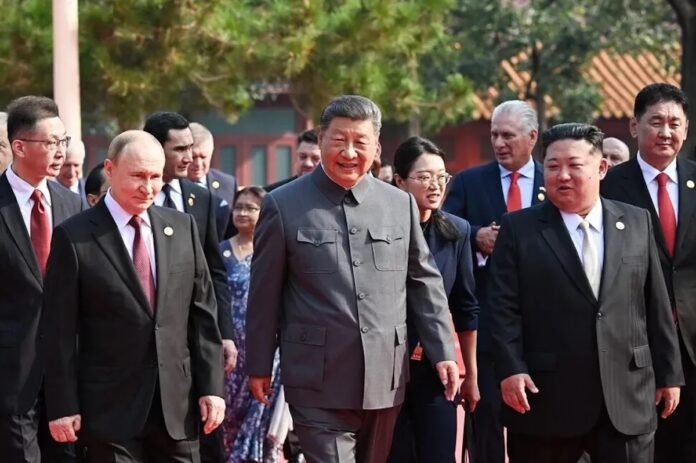
Trump-Xi summit didn’t change North Korea’s strategic reality
The Trump-Xi summit in Beijing may have projected calm at the leader level, but it should not be mistaken for strategic convergence. Whatever one makes of the new language of “constructive strategic stability,” the underlying reality is one of constrained rivalry, not cooperation. That distinction matters greatly when it comes to North Korea.
The Trump administration’s China policy increasingly resembles bounded strategic competition rather than unconstrained confrontation. This is not détente in the Cold War sense. It is a transactional effort to reduce the immediate risks of conflict while preserving long-term competition in military power, advanced technology and geopolitical influence. Both Washington and Beijing appear intent on buying time.
For Xi Jinping, such stability serves a clear purpose. It aligns with China’s broader strategy of economic resilience, technological advancement, and continued military modernization under the 15th Five-Year Plan. It also reinforces Beijing’s preferred global narrative: China as the responsible stabilizer, America as the disruptive military power.
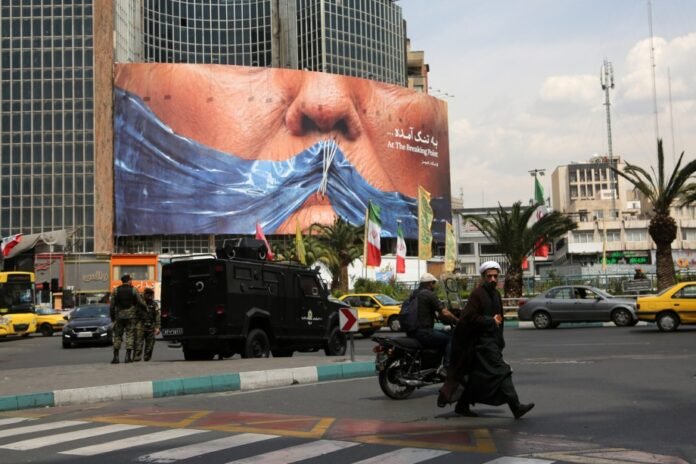
Xi’s nominal endorsement of freedom of navigation through the Strait of Hormuz fits neatly into that story, but without any corresponding commitment to use China’s leverage with Iran to restore maritime security. Tehran seems to understand this dynamic well. Iran’s appointment of a hardline senior political figure as special envoy to Beijing suggests not confidence in Chinese crisis diplomacy, but recognition that China offers political cover, economic lifelines, and diplomatic legitimacy without meaningful pressure or conditions.
Ceremony, however, is not strategy. Summit atmospherics have a short shelf life when unaccompanied by concrete agreements.
Even if Washington and Beijing sustain a temporary trade truce or moderate tensions over technology and security issues, the structural competition remains intact. The administration’s actions elsewhere suggest as much. From efforts to limit China’s foothold in Panama and the Western Hemisphere to resource competition in Greenland, the broader contest continues unabated.
Indeed, weaponized interdependence has become the defining operating system of US-China relations. Semiconductors, rare earths, supply chains and AI infrastructure are no longer merely economic concerns. They are instruments of national power and strategic coercion.
Mutual dependence no longer reassures; it creates vulnerability. AI governance may be discussed diplomatically, but beneath the rhetoric both powers increasingly see artificial intelligence as a decisive source of military advantage and geopolitical leverage.
Nowhere is the strategic divide clearer than Taiwan.
If the summit demonstrated anything, it is that Beijing views Taiwan not as a secondary irritant, but as the central test of US-China relations and perhaps the clearest measure of whether America’s alliances still mean what they say. This is precisely why hopes for major US-China cooperation on North Korea remain unrealistic.
Taiwan and Korea have long been linked in the logic of US credibility and Asian balance-of-power politics. The issue dividing Washington and Beijing is not fundamentally trade or diplomatic rhetoric. It is the future distribution of power in Asia.
Strategic ambiguity has helped preserve peace for decades by deterring both Chinese aggression and unilateral Taiwanese moves toward formal independence. But recent signals have introduced uncertainty.
Trump’s criticisms of Taiwan, calls for greater burden-sharing and suggestions that arms sales could serve as negotiating leverage may be intended as tactical positioning, but allies hear something different: wavering commitment. Deterrence depends on not only capabilities but confidence. Tactical calm today could simply reflect Beijing’s decision to buy time while expanding its leverage for a future move.
That same logic applies to North Korea.
Leader-level de-escalation between Washington and Beijing does not translate into strategic alignment on the Korean Peninsula because their interests fundamentally diverge. Avoiding war may be a shared objective. Advancing each other’s strategic interests is not.
China will not deliver North Korea for Washington.
Beijing may prefer stability on the peninsula, but its deeper priority is limiting American strategic advantage. The era when denuclearization served as a common diplomatic slogan has faded. For Beijing, North Korea increasingly functions less as a proliferation challenge than as a geopolitical buffer and a potential source of leverage against the United States and its allies.
That does not mean diplomacy with Pyongyang is impossible. President Trump may well seek renewed summit diplomacy with Kim Jong Un. But expectations about China’s role should be disciplined. At most, Beijing may support tactical crisis management to prevent war or regime collapse. It is unlikely to meaningfully pressure Pyongyang in ways that strengthen US influence, weaken North Korea’s strategic utility or advance genuine denuclearization.
Nor would Kim return to diplomacy from weakness.
The Kim Jong Un of today is not the leader Trump met in 2018. He now operates with greater nuclear confidence, stronger constitutional legitimacy, Russian political and military backing and a clearer long-term dynastic vision.
North Korea seeks recognition as a permanent nuclear weapons state while simultaneously strengthening both its nuclear and conventional military capabilities, aided in part by Moscow’s wartime dependence on North Korean munitions and manpower.
The strategic environment has changed.
The emerging order in Asia is one not of reconciliation but of managed rivalry – stability without trust, deterrence without resolution and diplomacy without convergence. That is precisely why strengthening the US-ROK alliance and trilateral cooperation with Japan remain indispensable. Not because diplomacy has failed, but because diplomacy now unfolds in a far more dangerous strategic landscape.
Dr. Patrick M. Cronin is Asia-Pacific Security Chair at the Hudson Institute and Scholar and Residence at Carnegie Mellon University’s Carnegie Mellon Institute for Strategy and Technology (CMIST).
If you’re looking for a cozy, comforting soup that feels both hearty and fresh, this Polish Dill Soup is pure comfort in a bowl.
Known in Poland as Zupa Koperkowa, this creamy dill soup is made with tender potatoes, sweet carrots, green peas, fragrant fresh dill, and a silky broth finished with sour cream.
It’s light yet satisfying, simple yet deeply flavorful, and one of those nostalgic homemade recipes that instantly warms both the body and soul.
The fresh dill is truly the star of the dish, giving the soup its bright, herby flavor that makes it completely unique and incredibly comforting.
Why You’ll Love This Polish Dill Soup
Cozy & Comforting
Warm, creamy, and perfect for chilly days.
Fresh & Herby
Fresh dill gives the soup a vibrant, delicious flavor.
Easy One-Pot Recipe
Simple ingredients and minimal cleanup.
Hearty Yet Light
Potatoes and vegetables make it filling without being heavy.
Budget-Friendly
Made with affordable pantry staples.
Great for Meal Prep
It reheats beautifully and tastes even better the next day.
What Is Polish Dill Soup?
Zupa Koperkowa is a traditional Polish soup commonly made with:
Potatoes
Carrots
Broth
Fresh dill
Sour cream
There are many regional variations using:
Rice
Pasta
Barley
Meatballs
Boiled eggs
But the fresh dill remains the defining flavor of this beloved comfort food.
Ingredients You’ll Need
Fresh Dill
The most important ingredient — bright, fresh, and aromatic.
Potatoes
Create hearty texture and comforting flavor.
Carrots
Add sweetness and color.
Green Peas
Bring freshness and a pop of sweetness.
Onion & Garlic
Build savory depth.
Sour Cream
Creates the silky creamy finish.
Chicken Broth
Forms the flavorful soup base.
Scallions
Add extra freshness and onion flavor.
Herbs & Spices
Marjoram, nutmeg, turmeric, salt, pepper, and bay leaf create warmth and depth.
Why This Soup Is So Special
Unlike heavy cream soups, this dill soup feels both rich and refreshing at the same time.
The fresh dill completely transforms the broth, adding:
Bright herbal flavor
Fresh aroma
Signature Polish comfort-food character
The potatoes make it hearty while sour cream creates luxurious silky texture.
It’s simple food at its absolute best.
How to Make Polish Dill Soup
This soup is easy enough for a weeknight but tastes like it simmered all day.
Step 1: Prep the Ingredients
Dice:
Potatoes
Carrots
Onion
Scallions
Mince the garlic and chop the fresh dill.
Step 2: Sauté the Vegetables
In a large pot, melt butter over medium-low heat.
Cook:
Onion
Garlic
Carrots
Scallions
until softened and fragrant.
Step 3: Add Seasonings
Stir in:
Salt
Pepper
Marjoram
Turmeric
Nutmeg
Bay leaf
Cook briefly to release the flavors.
Step 4: Add Potatoes & Broth
Add:
Potatoes
Green peas
Chicken broth
Bring everything to a boil.
Reduce heat and simmer until the potatoes become tender.
Step 5: Stir in Sour Cream
Once the vegetables are cooked, stir in the sour cream gently until fully incorporated.
To prevent curdling, use room-temperature sour cream or temper it first with a little hot broth.
Step 6: Add Fresh Dill
Stir in most of the fresh dill and simmer uncovered for a few minutes.
Taste and adjust seasoning as needed.
Step 7: Serve Warm
Top each bowl with extra fresh dill and serve with:
Crusty bread
Baguette
Buttered toast
Tips for the Best Dill Soup
Use Fresh Dill
Fresh dill is absolutely essential for authentic flavor.
Temper the Sour Cream
This helps prevent the cream from splitting.
Don’t Overcook the Dill
Add it near the end to preserve its bright flavor.
Use Homemade Broth
Homemade broth creates even richer flavor.
Choose Waxy Potatoes
They hold their shape better in soup.
Delicious Variations
Add Pasta or Rice
Traditional versions sometimes include:
Egg noodles
Rice
Barley
Add Protein
Try:
Small meatballs
Shredded chicken
Boiled eggs
Make It Vegetarian
Swap chicken broth for vegetable broth.
Add More Vegetables
Try:
Celery root
Celery stalks
Leeks
What to Serve with Polish Dill Soup
This soup pairs beautifully with:
Rustic bread
Rye bread
Buttered baguette
Side salads
Roasted vegetables
It’s hearty enough to enjoy as a light dinner on its own too.
Storage & Leftovers
Refrigerator
Store in an airtight container for up to 3 days.
Freezer
Freeze for up to 3 months.
Thaw overnight in the refrigerator before reheating.
Reheating Tips
Warm gently over medium-low heat.
Avoid boiling after adding sour cream to keep the texture smooth and creamy.
Frequently Asked Questions
Can I use dried dill?
Fresh dill is highly recommended for authentic flavor.
Can I make it vegetarian?
Absolutely — use vegetable broth.
Can I freeze it?
Yes, though cream-based soups may separate slightly after thawing.
What potatoes work best?
Waxy potatoes hold their shape beautifully.
Can I make it ahead?
Definitely! The flavors deepen overnight.
Why Everyone Loves This Recipe
This Creamy Polish Dill Soup is:
Cozy
Creamy
Fresh
Herby
Comforting
Nostalgic
It’s one of those simple homemade soups that instantly feels warm and nourishing from the very first spoonful.
If you love comforting soups with fresh flavor and creamy texture, this recipe is a must-try.
Hormuz closure could trigger global food price crisis within a year, UN agency warns
The closure of the Strait of Hormuz could trigger a severe global food price crisis within six to 12 months, the UN Food and Agriculture Organisation (FAO) warned on Wednesday, calling the disruption “the beginning of a systemic agrifood shock,” Anadolu reports.
The Rome-based agency said the disruption is no longer only a shipping or energy-market problem, warning that the shock is moving through global agrifood systems in stages.
“The shock is unfolding in stages: energy, fertiliser, seeds, lower yields, commodity price increases, then food inflation,” the FAO said in a podcast titled Policy Recommendations to Prevent a Global Food Crisis | Hormuz Crisis 2026, published Wednesday.
The FAO said the Strait of Hormuz has been effectively closed since Feb. 28 and remained shut as of May 18, disrupting global energy and fertiliser supplies that are critical for agricultural production.
The agency warned that the window for preventive action is closing rapidly, adding that decisions taken now by farmers and governments will determine whether the current disruption turns into a broader food price crisis in the coming months.
The FAO urged governments to expand alternative trade routes, avoid export restrictions, protect humanitarian food flows, and create buffers to absorb higher transport costs.
It also called on governments to avoid policies that could worsen food-fuel competition, including boosting biofuel demand during shortages, and said energy policy responses should not deepen food security risks.
The agency recommended expanding affordable emergency credit for farmers, agribusinesses and small firms across food value chains, with repayment schedules aligned to harvest periods and grace periods of at least six to nine months.
The Strait of Hormuz is one of the world’s most important energy chokepoints, and disruptions there have raised concerns over fuel, fertiliser, and transport costs feeding into global food prices.
The FAO’s Food Price Index has already risen for three consecutive months, with the agency linking pressure on food markets to higher energy and fertiliser costs.
Famously secret about its finances, SpaceX opens its books for the first time
After nearly a quarter of a century operating as a private company, with its financial accounts a closely guarded secret, SpaceX on Wednesday afternoon released a detailed accounting of its business in a nearly 400-page S-1 filing with the US Securities and Exchange Commission.
SpaceX, founded in 2002 and still led by Elon Musk, submitted the filing in anticipation of an initial public offering of its stock as soon as June 12.
The document revealed no major surprises about the company’s space operations, but there was a trove of details about its sprawling operations, which now encompass launch, spaceflight, space-based Internet, and, thanks to its recent acquisition of Musk’s xAI, social media and AI.
The company reported revenues of $18.67 billion in 2025, up significantly from $14.02 billion the year before. However, after turning a small profit in 2024, the company lost $4.94 billion in 2025 largely due to spending on artificial intelligence development.
That’s a big market you’ve got there
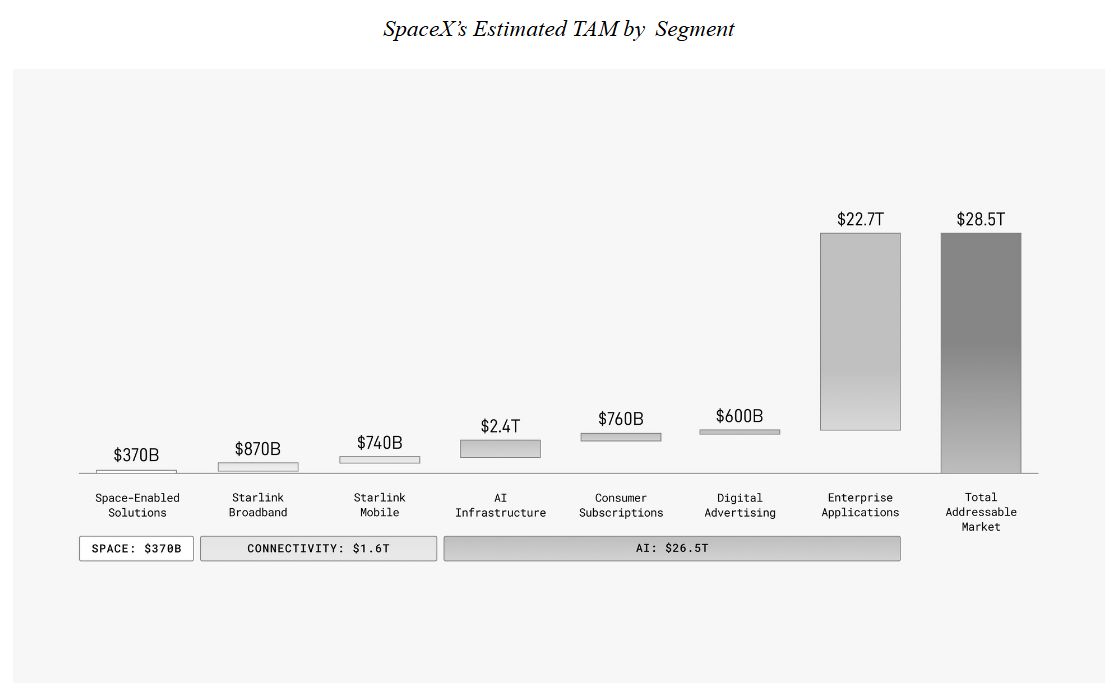
SpaceX projects a “total addressable market,” or TAM, of $28.5 trillion across its present and future offerings in space, data, and AI services. However, of this amount, only about $2 trillion is directly related to space or the company’s Starlink network. The remaining $26.5 trillion is believed to come from AI, largely from enterprise applications.
SpaceX estimate of total addressable market.
Credit: SpaceX S-1 filing
SpaceX estimate of total addressable market. Credit: SpaceX S-1 filing
“We believe we have identified the largest TAM in human history,” the company states on page 171 of the filing. “We believe our next trillion-dollar market is AI compute, which we contemplate will leverage our rockets and satellites for massive orbital deployment.”
The company said its estimates for this large market were based on a number of sources.
“Our AI market estimates are based in part on projections of global data center compute demand from third-party sources, including estimates published by RAND Corporation, together with internal assumptions regarding the portion of global compute capacity that may be utilized for AI workloads and other operational assumptions such as power usage, utilization rates and pricing,” the filing states.
Compensation details
The document includes some interesting details about the company’s leadership. After the IPO concludes and SpaceX becomes a public company, Musk will retain 85.1 percent of the “combined voting power” in leading SpaceX. He will serve as the company’s chief executive officer and chairman of the board of directors. It will be very difficult to remove him from this position.
Musk’s salary in 2025 was $54,080, a value tied to California’s minimum salary for exempt employees. Gwynne Shotwell, president and chief operating officer of the company, received a salary of $1.08 million in 2025, but including stock awards, her total compensation was valued at $85.8 million.
The S-1 filing notes that Musk has served as an advisor to President Trump and alludes to the possibility that changes in politics might materially affect the company’s future.
“The current political environment in the United States is highly polarized, and shifts in the composition of the US Congress or changes in the presidential administration can result in significant changes in government spending priorities, regulatory posture, and the allocation of contracts and resources across industries and programs,” the filing states. “Our relationships with US government agencies and the favorability of the regulatory and procurement environment in which we operate may be affected by which political party controls the presidency or one or both chambers of the US Congress.”
The space business
There is relatively little new information in this document about the company’s launch business. For example, there is no breakdown of the Falcon 9’s internal launch cost (believed to be about $15 million per launch) relative to the base public price of $74 million.
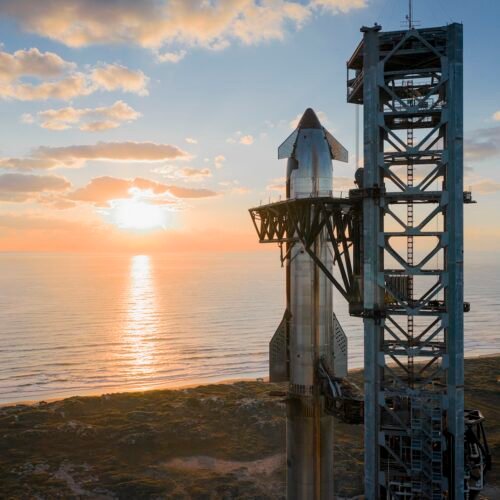
As for the larger Starship vehicle, the filing states that SpaceX aims to reduce the price per kilogram to orbit to at least $185. SpaceX intends to begin launching V3 Starlink satellites during the second half of this year on the super-heavy rocket, but this is predicated on a series of test flights that will resume as early as Thursday from Starbase in South Texas.
The filing also acknowledges the significant work that SpaceX has yet to complete with Starship to make it a fully reusable rocket capable of delivering large payloads to the Moon and Mars.
“These systems involve significant technological, engineering, and operational challenges, including the need to develop habitable transportation and surface environments, and perform complex in-orbit operations,” the document states. “Solving these challenges will require developing solutions that are novel or untested and will require substantial capital investment.”
The AI business
By staking its future on AI, SpaceX makes the case that it is the best-placed company to build a massive constellation of orbital data centers.
“We believe we are the only company with a commercially viable path to building orbital AI compute at scale,” the filing states. “This is underpinned by our unique ability to launch substantial mass into orbit cost efficiently through reusable rockets and manufacture secure, reliable, and high performance satellites at low cost and high volume. Our goal over time is to launch 100 gigawatts of compute to space each year.”
SpaceX said it expects to begin deploying its orbital AI compute satellites as early as 2028.
This company, founded with an initial goal of launching a small rocket known as the Falcon 1, has come a long way since its humble beginnings. It has become the world’s most accomplished launch company and annually puts about 80 percent of all mass into orbit. It operates more satellites than the rest of the world combined.
And yet, to reach its stratospheric valuation and addressable market, SpaceX must evolve from a space company into an AI company and continue growing rapidly. These are huge bets. It will be up to investors to decide in the coming months and years whether these are also good bets.
Truce holds a year after brief Indo-Pak war, conflict continues
A year has passed since conflict broke out between India and Pakistan, briefly raising fears of an all-out war between the two nuclear powers.
While violent conflict between the neighbors has been commonplace for the past 80 years, this latest round of fighting felt different.
Both sides used new weapons against one another, including cruise missiles, short-range ballistic missiles and drones. The level of mistrust and sharp rhetoric worsened considerably, significantly testing regional partnerships.
One year later, tensions remain high, with an underlying risk of further escalation.
What happened last year?
The war broke out last May following a terrorist attack that killed 26 civilians in the Pahalgam area of Indian Kashmir on April 22.
Within days, Indian police claimed the Pakistan-based militant group Lashkar-e-Taiba was behind the attack. Pakistan vehemently denied any involvement.
Dozens of people are believed to have been killed. As in any India-Pakistan conflict, the possibility of the use of nuclear weapons created further alarm.
The four-day conflict came to an end with a ceasefire on May 10. It was announced by the Trump administration, which claimed to have mediated the deal. This irritated India, but Pakistan nominated US President Donald Trump for the Nobel Peace Prize.
India nonetheless claimed victory, boasting of its ability to deliver precise attacks far inside Pakistani territory, exposing weaknesses in its rival’s air defenses. Pakistan, meanwhile, claimed to have shot down five Indian fighter jets (which India denies).
Political ramifications
In Pakistan, the Pakistani military returned to the political mainstream following the conflict. After leading Pakistan’s military response to India, the chief of army staff, Syed Asim Munir, was elevated to field marshal, and then to the post of the country’s first chief of defense forces.
Munir’s influence has only grown since. He has become very close to Trump and has been a key figure in the negotiations between the US and Iran to bring an end to their war.
Pakistani people rally in support of the Pakistani armed forces on the anniversary of the ceasefire with India. Photo: Akhtar Gulfam / EPA
In India, Operation Sindoor was seen as a win for the Modi government’s decisive foreign policy, and was a moment of rare political consensus in the country.
However, in Kashmir, the terror attack raised fresh questions about the government’s claims of normalcy in the region – and its push to boost tourism – following the controversial revocation of Kashmir’s statehood in 2019.
In the weeks that followed the attack, security operations in the Kashmir valley shut down several tourist sites. This led to a sharp decline in visitor numbers and severely affected local businesses. Security operations also targeted civilians, alarming human rights experts.
Perhaps the most significant impact of the conflict has been the difference in diplomatic engagements of both countries.
After the war, Pakistan also signed a new deal with the Trump administration to develop Pakistan’s oil reserves, and a defense pact with Saudi Arabia, a staunch US ally.
India had pursued a decade-long push to isolate Pakistan diplomatically, which made Pakistan’s increasing bonhomie with the US and Gulf states particularly awkward.
Modi’s ill-timed visit to Israel and the visible lack of influence in the US-Iran war has also raised questions about India’s professed role as a regional leader. It has highlighted the limits to India’s strategy of balancing its strategic partnerships, especially during conflict.
India has tried to engage in proactive diplomacy, dispatching delegations of MPs and former diplomats to more than 30 countries over the past year. While India claims these visits were a success, they haven’t done much to convince the world that Pakistan was the aggressor in their conflict.
Where do things go from here?
One year on, the political rhetoric on both sides is as charged as ever.
Both India and Pakistan have signaled a resolve for further escalation in future conflicts.
India has also reiterated that a major water-sharing treaty between the countries would remain suspended until Pakistan takes steps to end its support for terrorism – leaving a major concern over water security unresolved.
In response, Pakistan has made clear any attempt to target Pakistan again would “trigger consequences” that would not be “geographically confined or strategically or politically palatable for India”.
The shifting geopolitics and heightened rhetoric have narrowed the space for any prospects of meaningful dialogue between the two. As a result, the alarmingly low levels of trust will remain.
The ceasefire holds for now, but the conflict continues unabated.
Italy, Libya, Turkey and Qatar strengthen migration security framework
Italy hosted a new round of talks with Libya, Turkey and Qatar focused on migration and security coordination in the central Mediterranean, highlighting the growing role of a four-country mechanism aimed at addressing migration flows through Libya and strengthening regional cooperation.
The meeting, held in Rome on Tuesday, brought together senior diplomatic and security officials from the four countries to review ongoing technical coordination related to irregular migration, human trafficking networks and maritime security cooperation.
The discussions reflected Italy’s efforts to reinforce its role as a key diplomatic player on migration issues linked to Libya, while also pointing to a growing role for Turkey and Qatar alongside the Tripoli-based government on security matters tied to migration routes.
Migration from Libya remains one of the most politically and strategically sensitive issues for Italy and the wider European Union, with Rome continuing to strengthen coordination with Libya’s Government of National Unity led by Abdulhamid Dabaiba while also engaging regional actors with influence in the country.
According to the Libyan government, participants reviewed the work of technical committees established under the quadrilateral mechanism and examined ways to strengthen joint efforts against human trafficking and smuggling networks operating along routes linking the Sahel, Libya and the Mediterranean.
Libya described irregular migration as a “sovereign, security and humanitarian complex dossier,” according to a statement issued by the Government of National Unity.
The Libyan side called for what it described as a “real international partnership” aimed at strengthening Libyan state institutions, particularly the defense and interior ministries, while also supporting development projects in areas most affected by migration routes.
Officials also reiterated that “Libya is not a homeland for irregular migration and cannot become a migrant resettlement zone,” emphasizing voluntary return programmes, support for countries of origin and economic stabilization efforts as central elements of Tripoli’s approach.
The Libyan delegation also presented measures implemented in recent months, including strengthening the coast guard, operational support for security forces and plans to establish a joint operations centre under the quadrilateral framework.
Italian participants included Fabrizio Saggio, diplomatic adviser to Prime Minister Giorgia Meloni, and Palazzo Chigi’s national security adviser. Turkey was represented by Akif Cagatay Kilic, senior adviser to President Recep Tayyip Erdogan, while Qatar sent Minister of State for Foreign Affairs Mohammed bin Abdulaziz Al Khulaifi.
The meeting also highlighted a broader convergence among countries supporting the Tripoli-based government on migration management and Mediterranean security.
For Italy, the framework provides an additional platform for coordination with Ankara and Doha on support for Libyan authorities while maintaining migration control as a central issue in Mediterranean diplomacy.
Questions remain over whether the proposed joint operations centre will move into an operational phase, whether technical and logistical support for Libyan security institutions will expand, and whether the quadrilateral mechanism will evolve into a standing framework for migration and security coordination across the Mediterranean.
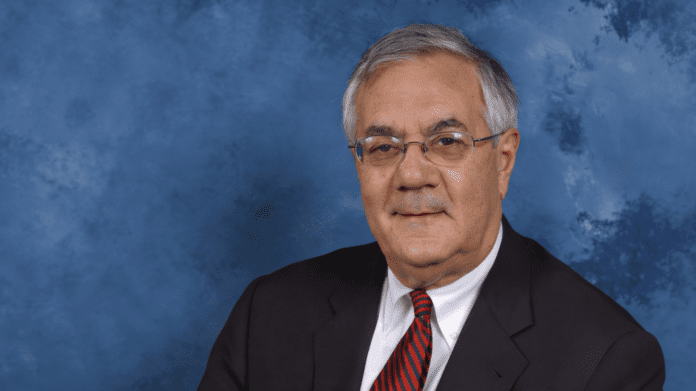
Barney Frank, Influential Liberal Congressman and Architect of Dodd-Frank Reforms, Dies at 86
Barney Frank, the longtime Democratic congressman who became one of the country’s most influential liberal lawmakers, died at 86 after entering hospice care in April due to congestive heart failure.
Frank served 32 years in Congress representing suburbs of Boston and became known for his sharp wit, combative political style and major role in reshaping financial regulation after the 2008 economic crisis. He also became a leading figure in the fight for LGBTQ rights as the first openly gay member of Congress.
Born Barnett Frank on March 31, 1940, in Bayonne, New Jersey, he was the grandson of Jewish immigrants from Eastern Europe. After graduating from Harvard University, Frank worked in the Boston mayor’s office in the late 1960s before serving as an aide to a Democratic Massachusetts congressman. He later ran for Congress himself and entered office in 1981.
Frank publicly came out in 1987. In 2012, he married Jim Ready, becoming the first sitting member of Congress to marry someone of the same sex.
By 2007, Frank chaired the House Financial Services Committee as the US economy moved toward financial collapse. He worked with the Bush administration on legislation aimed at stabilizing financial institutions during the crisis and later partnered with Sen. Chris Dodd to pass the Dodd-Frank Act. The law expanded consumer protections, imposed stricter regulations on banks and increased oversight of financial risk.
Toward the end of his life, Frank urged Democrats to move away from messaging and policies he viewed as politically damaging, including “defund the police” and “open borders.”
“I hope I made the point that the best way to accomplish the improvements in our society that we need, particularly in making it less unfair economically and socially, is by conventional political methods,” he said.
Frank also argued that Democratic leaders should distance themselves from positions he said alienated voters.
“Mainstream Democrats have to make it clear that we oppose that part of the agenda of our friends on the left that is politically unacceptable,” he said. “They’re right about a lot of things but you have to have some discretion.”
Trump admin didn’t want Ebola-exposed Americans, sent them to Berlin, Prague
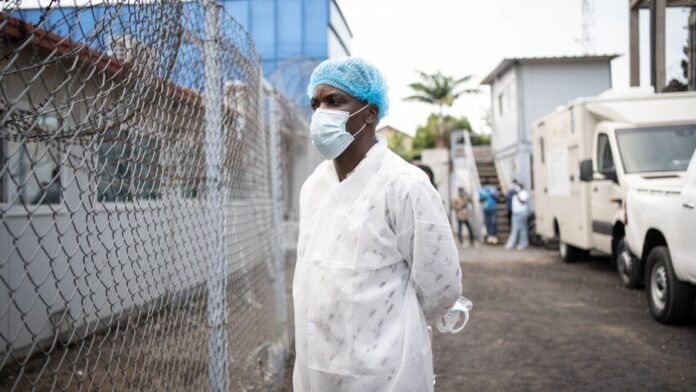
An American infected with Ebola is being treated in Berlin, while another exposed to the deadly virus is being sent to Prague after the White House reportedly resisted allowing citizens to return to the US for care and monitoring.
According to The Washington Post, five people close to the Ebola response said that, over the weekend, the Trump administration resisted allowing the return of Peter Stafford, a 39-year-old surgeon working in the Democratic Republic of the Congo amid a raging Ebola outbreak. The resistance allegedly delayed Stafford’s evacuation and care, risking his health, as experts note that early treatment is critical for Ebola, which can turn deadly in days.
On Monday, the Centers for Disease Control and Prevention said Stafford had developed symptoms over the weekend and tested positive for Ebola late Sunday. In a press briefing on Wednesday, Satish Pillai, the CDC’s incident response manager for the Ebola outbreak, said Stafford had arrived in Germany and is in stable condition. His wife, Rebekah Stafford—also a doctor who was exposed to the virus in DRC but is asymptomatic—along with the couple’s four children, have been flown to Germany as well.
Another doctor, Patrick LaRochelle, who worked with the same Christian missionary group as the Staffords, called Serge, was also exposed to the virus but remains asymptomatic. He is being transferred to Prague for monitoring and care. According to the Post, his wife and children, who were with him in the DRC, were flown to the US after the CDC concluded that they had not been exposed to the virus.
“Did not want him”
The Ebola outbreak, caused by the uncommon Bundibugyo virus strain, was first confirmed on Friday and has quickly escalated to a public health emergency of international concern, according to the World Health Organization. On Friday, there were 246 suspected cases and 65 deaths; the latest numbers, as of Wednesday, from WHO stand at 528 suspected cases and 132 deaths.
It’s unclear when US officials learned of Stafford’s exposure, but upon receiving the information, a back-and-forth discussion on his evacuation began. “The president and his people did not want him back in the United States,” one source told the Post. Another confirmed, “They would not allow him to be transported to the United States.” Trump has previously criticized decisions to bring American Ebola patients back to the US during earlier outbreaks.
White House spokesperson Kush Desai denied that the administration didn’t want to accept Stafford and attacked the Post. “This is absolutely false and another reason why the Washington Post is no longer worth the paper it’s printed on,” Desai wrote in an email. He said the Trump administration’s top concern is ensuring the health and safety of citizens and praised the quality of the German hospital treating Stafford.
The US has multiple centers and hospital systems with specialized facilities capable of providing safe, high-quality care for Ebola patients.
In the press briefing on Wednesday afternoon, Pillai repeatedly dodged questions about the US refusing to allow Ebola-exposed Americans to return home for treatment and care. He also failed to explain how Germany and the Czech Republic—not known for expertise in dealing with Ebola—were chosen for caring for the Americans, or if any other countries were asked to take them and refused.
At one point, when asked directly if the White House had made the decision to refuse Americans, Pillai responded: “Right now, what I would say is that the plans for these individuals that have moved were made based on the conditions on the ground, the need to rapidly mobilize—as you know, this was a very rapid set of circumstances that unfolded over the weekend. And so, what I can tell you right now: this is what the situation was and this is how we responded as quickly as we could.”
Travel restrictions
In addition to sending Americans elsewhere for care and monitoring, the US has introduced travel restrictions related to the Ebola outbreak. Americans arriving from DRC, Uganda, or South Sudan will undergo health screenings, while non-US passport holders who have traveled in those countries in the past 21 days will be barred from entry.
In a statement Tuesday, Africa CDC responded to the restrictions, saying its “position is clear: generalised travel restrictions and border closures are not the solution to outbreaks. Such measures can create fear, damage economies, discourage transparency, complicate humanitarian and health operations, and divert movement toward informal and unmonitored routes—potentially increasing public health risks rather than reducing them.”
Jean Kaseya, Africa’s CDC director general, added: “The fastest path to protecting all countries in the world is to aggressively support outbreak control at the source. Global health security cannot be achieved through borders alone. It is achieved through partnership, trust, science, and rapid investment in preparedness and response capacity.”
Ahmadinejad Is Still Bad for Iranians — and Still Great for Israel
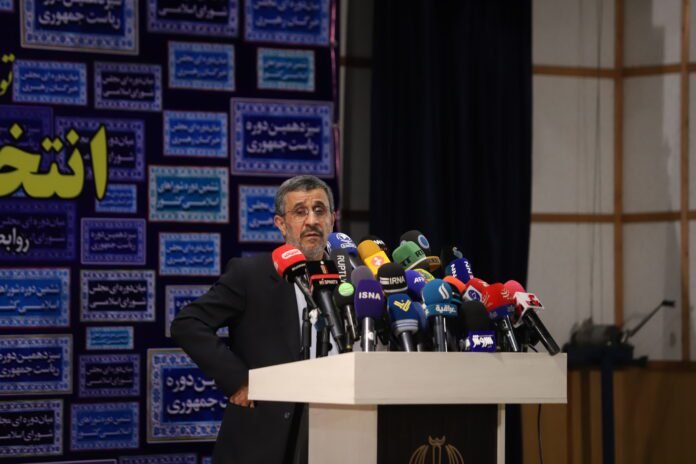
The bombshell New York Times report that the U.S. and Israel hoped to install former President Mahmoud Ahmadinejad as the leader of Iran puts the lie to so much of what hawks in the West have been trying to sell their publics about the Iran war.
That much is obvious thanks to Ahmadinejad’s role in recent Iranian history: In 2009, Iranians rose up against a stolen election in what was known as the Green Movement, which was violently crushed by Iran’s security forces to keep Ahmadinejad in power.
Though a populist, Ahmadinejad at the time dismissed the protests as nothing more than the result of “emotions after a soccer match” or, in another instance, “dirt and dust.” These are not the bona fides of a leader who will lead Iran into democracy.
Reading between the lines of history, Ahmadinejad’s position as a coup leader starts to make sense.
Instead of a campaign for Iranian freedom, this war — like much of the U.S. and Israel’s last 20 years of going after Iran — has been about catastrophically weakening Iran. Here, reading between the lines of history, Ahmadinejad’s position as an Israeli–U.S.-backed coup leader starts to make sense.
Ahmadinejad had been largely quiet until he suddenly reemerged into headlines on Tuesday with the Times report. After killing Iran’s supreme leader in the opening hour of the war, according to the Times, Israel targeted a building on Ahmadinejad’s street, ostensibly to “free” him from what was effectively either house arrest or the strict monitoring of his movements. According to some reports, the guards keeping watch on Ahmadinejad were indeed killed, but Ahmadinejad himself was injured, too.
How, if the plot had been successful, was Ahmadinejad supposed to take over? Was the assumption that by assassinating the top leadership, including Islamic Revolutionary Guard Corps generals, Ahmadinejad would be able to gain the support of the rest of the top echelon of the security forces? That would be a far-fetched notion.
While he retained his populist credentials over the years, Ahmadinejad’s clashes with Supreme Leader Ayatollah Ali Khamenei and with the “nezam,” or regime, over social and political issues lost him whatever support he still had among the military wings and the Basij militia. Those forces — though they had helped crush the 2009 protests on Ahmadinejad’s behalf — remained fiercely loyal to Khamenei and the political system of “Guardianship of the Jurist.”
For now, Ahmadinejad is nowhere to be found, raising suspicions that he is in the custody of the IRGC or dead.
Good for Israel
It’s hard to imagine the Iranian president who declared in his first few months in office that “Israel must vanish from the pages of time” and subsequently questioned the Holocaust being a good choice for Israel. History shows, though, how Ahmadinejad’s eclectic positioning has previously coincided with Israeli interests.
Coming to power after President Mohammad Khatami’s reform movement and his call for “dialog among civilizations,” Ahmadinejad’s stances damaged Iran’s reputation almost beyond repair.
And this was, somewhat ironically, a boon to Israel, whose leaders could point to the malevolent nature of the Islamic Republic. Ahmadinejad was the perfect figurehead for a bogeyman Iran that needed to be taken down a notch.
Israel and its allies in Washington made hay of Ahmadinejad’s every word — for instance, his sponsorship of a Holocaust denial cartoon contest — and succeeded in turning his remarks into the justifications for an unprecedented and devastating sanctions program. Ahmadinejad’s rule was, in so many ways, bad for Iran.
Which is why, even at the time and certainly later, there were suspicions privately aired in Tehran that he could actually be a Mossad asset — with the caveat, of course, that no hard proof ever emerged. Still, at a time when gaining the trust of the west in nuclear negotiations was paramount, Ahmadinejad was building Israeli hard-liners’ case against talks for them.
Now, of course, the allegation that Ahmadinejad was primed as a coup leader — the first report from an even remotely reliable outlet of a real link to Israel — has only added to the rumors, as have his most recent trips abroad, to Viktor Orbán’s Hungary and to Guatemala, both allies and supporters of Israel.
Trump himself admitted before this latest revelation that Israel bombed some of the people who were candidates to be an Iranian Delcy Rodríguez — the Venezuelan figure who seamlessly took control from kidnapped President Nicolás Maduro and reportedly is cooperating with the U.S. The most solid hint Trump gave was that he had someone “inside” Iran in mind, dashing the hopes of Iranian royalists.
Don’t Listen to Israel
Whether or not it is true that Ahmadinejad was an Israeli asset — whenever he may have been recruited or even just unwittingly manipulated — he would have fit Trump’s bill. What he never would have been was a beacon of freedom for the Iranian people. Insofar as the broad contours of the Times report are accurate, we can now be assured that the well-being of the Iranian people has not really ever been at the top of either Trump or Netanyahu’s minds.
The U.S. and Israel may have some commonality in what they’d like to see with Iran, but not entirely. Israel’s interests lie mostly in defanging Iran, even seeing it descend into a failed state that can neither threaten Israel nor challenge its hegemony in the region. The U.S., on the other hand, has consistently focused on Iran’s nuclear potential.
Both Democratic and Republican administrations have indicated that if the nuclear issue was resolved to the satisfaction of the U.S., Iran could potentially be rehabilitated and rejoin the international community. That would have left Iran with the potential to grow into a regional powerhouse and global force — something Israel has long opposed, which is why it tried so hard to derail the 2015 nuclear agreement.
Whatever happens, Ahmadinejad will never be a factor in Iranian politics, even if in the unlikely event that he one day resurfaces alive and free. The Venezuela option for Iran now seems silly, a chimera that should have never been considered.
If the White House had listened to a handful of Iranians or those who know Iran well, rather than Netanyahu and war hawks in Congress, perhaps 175 school children and their teachers would be alive today. The Strait of Hormuz might be open and free. And a nuclear deal could have already been signed.
Instead, there has been war and destruction, wasted lives and wasted treasure, chaos in the region, and the global economy wobbling. Ahmadinejad has once again been bad for Iranians — and now everyone else, too.
This Gun Shop Stayed Open Despite Repeated Violations. Then a Cop Was Killed With One of Its Guns.
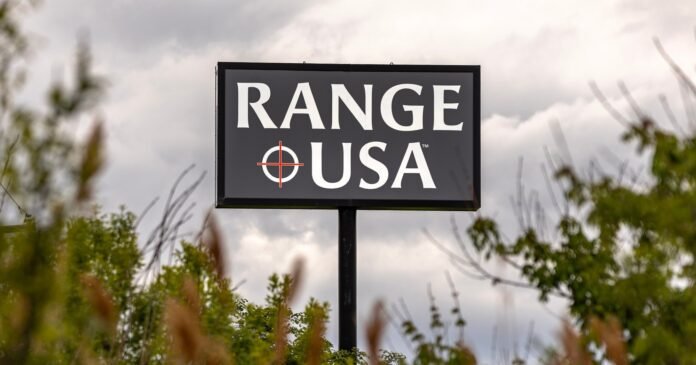
Launched as a new kind of gun retailer in 2012, the Range USA chain was built to look and feel different from the smaller, unwelcoming shops and gun ranges often associated with the industry.
Its founder and president, Tom Willingham, wanted to make the experience of buying and shooting firearms more mainstream. So he modeled his company on big box chains, striving for bright, comfortable outlets that would be inviting to women, novices and others put off by some older gun stores.
Today, Range USA has bloomed into a formidable brand, with 50 stores in 14 states, a footprint that spans from the Mississippi River to the Atlantic Coast.
But despite efforts to set itself apart, the company is beset with the same vexing problems faced by more traditional retailers. Federal regulators have repeatedly cited its employees for failing at basic protocols designed to help thwart illegal sales, and guns purchased at its stores keep getting recovered by police.
Take the recent killing of Chicago police officer John Bartholomew, who was fatally shot on April 25. The suspect who used a 10-millimeter Glock 29 to shoot Bartholomew was not the original owner of the gun. It was first purchased in 2024, according to investigators, in an illegal transaction at a Range USA store in the northwest Indiana town of Merrillville, a short drive from Chicago.
Records obtained by ProPublica show that, in the years before the gun in the fatal shooting was purchased, the store was cited for serious compliance failures on multiple occasions by the Bureau of Alcohol, Tobacco, Firearms and Explosives, the federal agency tasked with oversight of the nation’s gun retailers.
The Merrillville store faced revocation of its license following a 2022 inspection that determined a background check was missing for one sale, according to ATF inspection records. Inspectors also determined that the company made “no significant improvement” toward rectifying over a half dozen previous violations, ATF records show.
In their response to the findings, Range USA managers blamed the store’s antiquated system for filing federal sales paperwork, telling inspectors the underlying problems would be cured once the company moved to an electronic system. The ATF later rescinded the recommendation on the Merrillville store after proof was found that the background check had been conducted.
Records show that between 2020 and 2024, federal authorities recommended revoking the licenses of three other Range USA locations, including two in Ohio.
In 2021, inspecting the Range USA in Dayton, the ATF determined an employee sold a firearm to a person who failed a background check, records show. Company representatives admitted to the agency that the employee had failed to follow store policy and “missed the appropriate connections” concerning illegal sales, despite training. They said the company would implement new policies to head off additional lapses.
A year later, at the Range USA in Lewis Center, an ATF inspector found that a sales clerk had falsified records of a gun sale after accepting an expired conceal-and-carry permit in lieu of conducting a background check, records show. In response, Range USA managers disputed that its employees lied intentionally.
All the Range USA stores that faced revocations are currently open, according to the company’s website, though some have paid fines. Now, as Range USA contends with another controversial gun sale, the ATF is weakening Biden-era penalties for failures to ensure compliance with federal gun regulations, including those meant to deter criminals.
The company did not respond to ProPublica’s requests for comment. It has often responded to ATF findings by blaming employee mistakes and staff turnover while making promises of improved training, records show.
Meanwhile, the chain has continued to grow. In 2025, Range USA sales, according to industry trade publications, increased by just over 5% even as the industry cooled. With that momentum, the company is eyeing another expansion. It plans to open three new locations by 2027.
The ATF has issued dozens of violations against Range USA, including its store in Naperville, Illinois. In response, Range USA told ATF it was putting a new policy in place to prevent illegal sales. ATF originally sought revocation of the store’s license. The company paid a fine, and the store remains open.Obtained and highlighted by ProPublica. Redactions original.
Amid this success, Willingham became a staunch advocate for the industry. In the last five years, he’s contributed to a political action committee that has sought to elect candidates friendly to the interests of gun retailers like Range USA.
Both Range USA and Willingham personally have given to a committee run by the National Shooting Sports Foundation, a trade association that lobbies for the gun retail industry. Range USA has given $35,000, and Willingham $5,000.
The violations cited at Range USA shops sometimes have grown out of investigations into straw sales, transactions where customers lie to purchase guns on behalf of someone prohibited by law from buying them. These guns are typically resold for profit and sometimes end up being used in crimes.
Danzy lied by claiming on a required form that he was purchasing it for himself, when in fact he intended to pass it along to Morgan, according to federal investigators. He was ordered to serve two and a half years in prison for making false statements on federal forms. Morgan was sentenced to life without parole following his 2024 conviction for French’s killing.
In recent weeks, Chicago was confronted with the loss of another public safety officer. Bartholomew was inside a hospital when he was shot to death while guarding Alphanso Talley, a suspect in an armed robbery who allegedly drew the concealed gun and opened fire. Talley has been charged with murder and has yet to enter a plea.
That gun was allegedly purchased two years prior at the Merrillville Range USA by Olivia Burgos, who now faces criminal charges for making false statements in order to facilitate the sale. According to federal investigators, Burgos told store employees that she was purchasing the gun for herself. In actuality, investigators allege, she bought the gun on behalf of her boyfriend, a felon prevented from legally purchasing one.
She also allegedly lied by indicating on federal purchase documents that she was not under the influence of drugs or alcohol at the time of the sale. According to federal investigators, Burgos told them she was addicted to fentanyl and was on the drug when she signed the papers for the gun. Federal authorities have charged her with making a false statement while purchasing a firearm.
The gun eventually made its way to Talley. An investigation into its path to Chicago is ongoing.
A woman hangs blue ribbons on a block for Chicago police officer John Bartholomew, who was shot and killed in April with a gun allegedly purchased at a Range USA location in Indiana.Brian Cassella/Chicago Tribune/Tribune News Service/Getty Images
Last year, advocates with the gun control advocacy group Brady United alleged negligence by Range USA, several Range employees and Willingham in a straw sale from a different shooting, linked to its store in Shorewood, Illinois, about 50 miles outside Chicago. The suit grew from a 2023 incident where then-18-year-old Maxwell Williams shot a woman through the neck amid an argument at a large house party. He later pleaded guilty to aggravated battery with a firearm and is currently serving a 10-year sentence in Illinois state prison.
Williams, who at the time wasn’t old enough to buy a firearm, had his girlfriend illegally purchase one on his behalf, the suit alleged. According to court records, the Range USA sales clerk proceeded with the sale despite signs that the girlfriend was not the actual buyer. Video taken of the transaction shows Williams verbally directing her on which gun to buy and counting out the cash for the purchase himself, the lawsuit alleges. The girlfriend pleaded guilty to misdemeanor battery in the shooting.
Range USA has denied the allegations from Brady and moved to dismiss the lawsuit, claiming that its employees had no knowledge of any criminal intent by Maxwell or his girlfriend. Attorneys for the company also cited the federal Protection of Lawful Commerce in Arms Act, which they said preempts lawsuits against gun retailers and their employees over harm caused by guns bought at their stores.
A solution to the problem of detecting and preventing illegal sales like those that preceded the deaths of the two Chicago police officers has eluded lawmakers and industry figures alike. Employees at retail gun stores are generally taught to notice typical signs of straw purchases and are entitled to end any suspect transaction. But even with good-faith efforts, straw sales persist.
For its part, the ATF has established several surveillance programs requiring retailers to report potential or suspected straw purchases. The trigger for one such effort was so-called “crime guns,” those recovered by police within three years of being sold at retail. Stores with more than 25 such guns annually were targeted for enhanced scrutiny, a program known as Demand Letter 2.
Under the Biden administration, the program was used to connect guns purchased on underground markets to the original sellers. Last year, Trump officials announced the program would be discontinued.
According to an analysis by Brady, about two-thirds of Range USA locations were included in the Demand Letter 2 program between 2022 and 2023.
Gun industry figures consistently deny responsibility for straw sales, putting the blame on the buyers who are breaking the law by lying about their intentions. Part of their solution rests on educational programs and training for retailers on how to spot signs of straw buyers.
In 2021, under President Joe Biden, the ATF began a new strategy — sometimes referred to as the “zero-tolerance policy” — of conducting more frequent inspections and applying harsher penalties to retailers who repeatedly failed to comply with federal guidelines governing gun sales.
After it was adopted, the industry saw a huge increase in the number of recommendations for gun-store license revocations issued by the ATF. Those do not lead to immediate closures, as stores are allowed to fight the revocations through administrative hearings and court appeals that can last years. The revocations plummeted under Trump last year.
Whether the Biden-era policies effectively reduced gun trafficking is still a matter of debate. One expert reached by ProPublica said that the enhanced enforcement didn’t begin in earnest until the middle years of the Biden administration. Before it could take root, they said, the Trump administration upended the policy.
Last month, Trump officials gathered in Washington, D.C., to mark the agency’s pivot away from the Biden-era enforcement measures and usher in a more industry-friendly approach. ATF Director Robert Cekada said that as part of its new direction, the agency will streamline and modernize gun-sale paperwork to help cut down on clerical errors and make consequences for good-faith mistakes more lenient.
“We are proposing to remove unnecessary hurdles that were standing in the way of law-abiding citizens and businesses,” Cekada said. “We are proposing to restore clarity and predictability in our standards.”
He also stressed that public safety remains one of its top priorities. “ATF remains the greatest friend to state and local law enforcement officers, and we believe that these rules will not negatively impact public safety,” he said.
Asked to comment on the end of the zero-tolerance policy, an ATF spokesperson told ProPublica in an emailed statement: “These are administrative and regulatory changes to processes and definitions, not changes to the underlying prohibitions that keep firearms out of dangerous hands. The ATF does not believe any recently released proposed rules will jeopardize public safety.”
Professor Daniel Webster, a longtime researcher of gun trafficking at Johns Hopkins University, said the ATF’s new direction sends a “dangerous signal” to retailers and the public that surveillance of straw sales is no longer a priority. The new rules tell retailers, “Do whatever you want,” he said. “My take is that this ATF is more interested in protecting the industry than in the American public.”
In an emailed statement, NSSF spokesperson Mark Oliva said the organization and its members are “committed to ensuring firearms remain beyond the reach of those who cannot be trusted to possess them. That category includes criminals.”