19 C
London
Wednesday, September 30, 2026
Home Blog

While Gaza dominates the UN, these are the people keeping it alive

0
while-gaza-dominates-the-un,-these-are-the-people-keeping-it-alive
While Gaza dominates the UN, these are the people keeping it alive

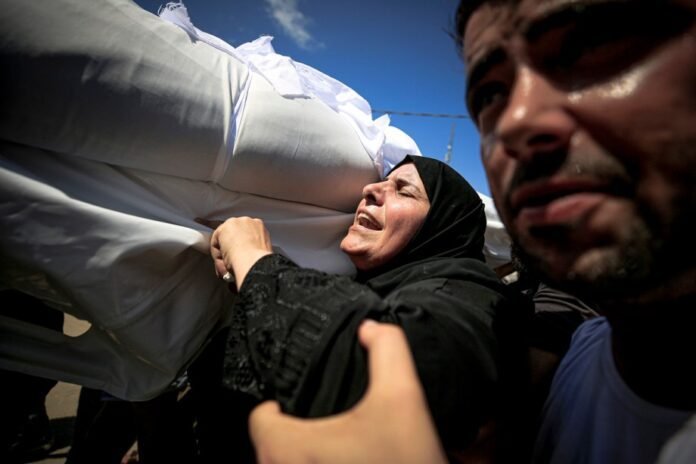
When I first saw footage of Gaza doctor Munir al-Bursh and his family kneeling beside the white-shrouded body of his son, surrounded by mourners, I thought it was an old video. It was not.

My conclusion, however, was understandable. In December 2023, only months after the start of the Israeli genocide in Gaza, the al-Bursh family was targeted in an Israeli attack. Dr. Munir, director-general of Gaza’s Ministry of Health, was wounded. So were other members of his family. His daughter, Jinan, only 13, was killed.

That same day, Gaza’s beloved doctor was back at work, joining the many doctors across the Strip trying to save lives as Israel’s killing machine claimed them by the thousands.

Alas, the latest footage was not old footage resurfacing. It was a new coffin, a new funeral, another child buried by the same family. This time, the attack took place during what some in the media continue to call the ‘Gaza ceasefire.’

On September 19, an Israeli drone strike killed al-Bursh’s eldest son, Basir, outside a tent west of Jabaliya refugee camp.

“We were together side by side,” the grieving father recalled. Basir had warned him: “The Israelis are targeting both of us.” Moments later, his son stepped outside the tent and was killed.

One can be forgiven for confusing Gaza’s present with its recent past. The scenes emerging today are almost indistinguishable from those that preceded the so-called ceasefire of October 2025. The sequence repeats itself with terrible familiarity: Israeli strikes, shelling and sniping; Palestinians killed; the bereaved carrying their dead through Gaza’s destroyed streets, searching among the ruins for somewhere to bury them.

Al-Bursh’s story is part of this terrible continuum, but its significance extends beyond his personal loss. Throughout the genocide, he and other Palestinian doctors became Gaza’s de facto spokespeople. They counted the dead and wounded, documented hunger and destruction, and chronicled the collapse of the medical system from within its hospitals.

In the process, they became Gaza’s highest moral authority, more credible than politicians or self-proclaimed leaders.

And the world listened. Gaza’s doctors forged a bond with global civil society that no political institution could manufacture.

READ: Israeli fire kills 3 more Palestinians in latest Gaza ceasefire violations

Perhaps that helps explain the staggering price Gaza’s medical community has been made to pay. According to the World Health Organization, more than 1,700 healthcare workers have been killed since 2023, amid at least 920 attacks on healthcare.

Dr. Hussam Abu Safiya, like Dr. al-Bursh, became a symbol of that medical resistance. The director of Kamal Adwan Hospital remained at his post through siege and repeated Israeli attacks before Israeli forces detained him in December 2024. He remains imprisoned without charge or trial, amid reports from his lawyer of beatings and deteriorating health.

Dr. al-Bursh, meanwhile, remains steadfast despite repeated blows that would have broken many others. His wife, too, embodies sumud, the Palestinian tradition of steadfastness nurtured at home and passed from one generation to the next.

Even in the immediate aftermath of his son’s killing, al-Bursh continued warning about Gaza’s collapsing healthcare system. Indeed, hospitals have been forced to suspend scheduled surgeries and outpatient services, while severe shortages of fuel, medicines and equipment continue.

“The limited quantities of fuel reaching the enclave barely keep health facilities alive,” al-Bursh warned a day after his son’s murder.

His statement came as world leaders gathered thousands of miles away, in New York, for the 81st session of the United Nations General Assembly.

And once again, Palestine echoed through speech after speech, though this time the language carried a new urgency.

Spanish Prime Minister Pedro Sánchez condemned “the genocide that Netanyahu continues to perpetrate in Gaza.” UN Secretary-General António Guterres described Israel’s mass extermination as involving “a scale of killing and destruction unlike anything I have witnessed” during his tenure. Even French President Emmanuel Macron called Gaza “a spectacle that shames us all,” asking: “What is our credibility worth if we remain inactive on Gaza?”

Then came Israeli Prime Minister Benjamin Netanyahu.

READ: Israeli strike kills imam while preparing Quran education report in Gaza

Dozens of delegates walked out as he approached the podium, leaving row upon row of empty seats, while protests continued outside the UN. Netanyahu responded by calling those who departed “moral cowards.”

One might pause here and speak of tides turning, currents changing and a world slowly loosening the decades-long grip of Israel and its American benefactor.

But Gaza does not have the luxury of time. While the words reverberate through the halls of the United Nations, children are still killed in front of their families. Mass funerals remain part of Gaza’s daily rhythm.

Approximately 1.7 million people remain displaced, many under inadequate shelter, without sufficient clean water or sanitation. Hospitals remain crippled. And above this landscape of ruin, the drones still circle.

Between today and the next UN General Assembly lies an entire year—365 days in which those words can either acquire meaning or become yet another entry in the long archive of speeches on Palestine. However, there is time for rhetoric to become policy: for sanctions to be imposed, boycotts activated, meaningful aid delivered and those responsible for war crimes held accountable.

Until then, Dr. Munir al-Bursh and thousands of Gaza’s men and women will continue to hold the fort amid shattered hospitals, destroyed homes and an exhausted population.

Their resilience is extraordinary. But Gaza cannot be expected to endure simply because it has proved capable of enduring.

In New York, Palestine is spoken of from the podium. In Gaza, Palestinians are still being carried to their graves.

It is time to close the distance between words and action, once and for all. 

OPINION: Is Israel’s reign ending? Macklemore and the cultural war over Palestine

The views expressed in this article belong to the author and do not necessarily reflect the editorial policy of Middle East Monitor.

Fifth unvaccinated person dies of measles; CDC still not counting all deaths

0
fifth-unvaccinated-person-dies-of-measles;-cdc-still-not-counting-all-deaths
Fifth unvaccinated person dies of measles; CDC still not counting all deaths

A fifth, unvaccinated person has died of measles in Pennsylvania, the state’s health department announced Wednesday.

The department identified the deceased as a resident of Lancaster County, which is the epicenter of a raging outbreak that began in late April. The updated case count as of Wednesday is 943 across 39 counties, including 119 cases reported in just the last seven days. At least 176 people have been hospitalized.

Lancaster County has reported 381 cases and three of the five deaths in the outbreak. The previous two deaths were both in infants too young to be vaccinated. That includes a newborn boy and a 6-week-old baby girl. So far, no other information has been released about the county’s third death announced today.

The other two deaths were in an unvaccinated 18-year-old resident of Mifflin County, who developed a severe neurological complication of measles, and an unvaccinated 40-year-old woman, who had several chronic underlying health conditions that put her at higher risk of severe infection, including chronic obstructive pulmonary disease (COPD).

Prior to these five deaths in Pennsylvania, the state had not reported a measles death in 35 years. To date, they are the only measles deaths reported this year in the US. Last year, the US saw three measles deaths: two in otherwise-healthy, unvaccinated school-aged children in Texas and an unvaccinated adult in New Mexico. All three were connected to a massive measles outbreak in West Texas, which spilled over to nearby states. Prior to the 2025 deaths, the US had not seen a measles death since 2015.

Measles was declared eliminated from the US in 2000 thanks to high vaccination rates. But amid misinformation from anti-vaccine activists—including current US Health Secretary Robert F. Kennedy Jr.—vaccination rates have continuously slipped in recent years, vaccination exemptions have hit an all-time high, and the highly infectious virus has come roaring back.

The Centers for Disease Control and Prevention has tallied at least 3,659 cases this year, a tally higher than last year’s and the highest on record since 1991. Still, under the influence of Kennedy, the CDC has resisted reporting the deaths in Pennsylvania, instead altering the criteria for what it counts as a measles death. Currently, the CDC is reporting only two deaths. It’s unclear which two have been counted.

Meanwhile, health officials in Pennsylvania are racing to vaccinate residents amid the deadly outbreak. The health department reports that state nurses have administered more than 8,500 doses of measles, mumps, and rubella (MMR) vaccine this year, including more than 5,500 doses given at pop-up clinics in outbreak areas.

“The best protection against measles remains getting fully vaccinated,” the health department reiterated Wednesday. “The MMR vaccine, administered over two doses, boosts a person’s immune system and provides 97 percent lifetime protection.”

States want to make Big Oil pay for climate harm. Now, courts are weighing in.

0
states-want-to-make-big-oil-pay-for-climate-harm-now,-courts-are-weighing-in.
States want to make Big Oil pay for climate harm. Now, courts are weighing in.

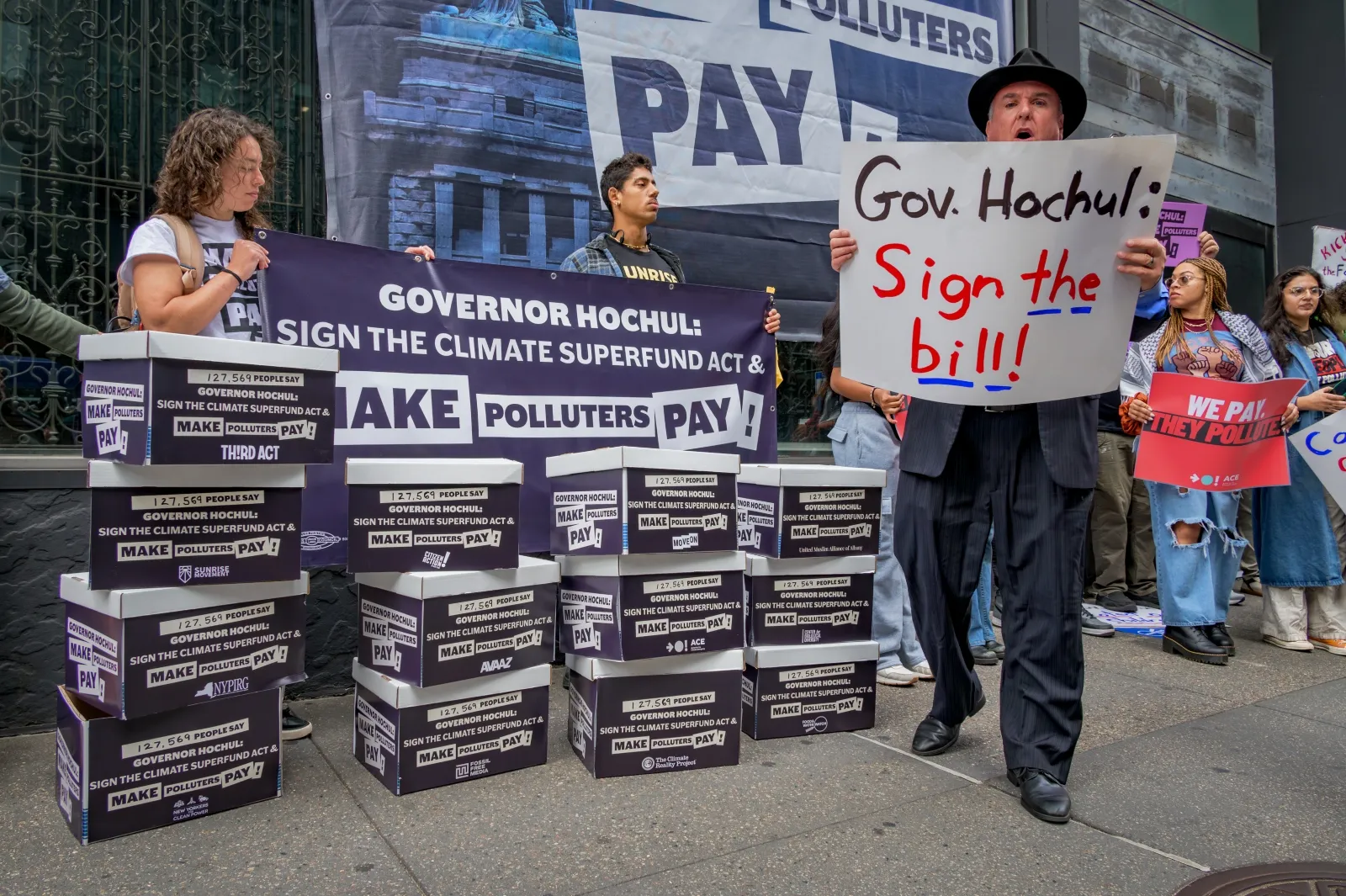
Last week, another federal judge blocked New York’s so-called “climate superfund law,” the state’s attempt to make fossil fuel companies pay for climate-related damages linked to their activities. Signed in 2024, the legislation inspired other states to start drumming up their own ways to hold Big Oil financially accountable for the costs of a warming planet.

The two rulings are certainly a blow to the law’s advocates. But they’re not a death knell for this approach. That’s according to seven lawmakers from Connecticut, Hawaiʻi, Rhode Island, New Jersey, and New Hampshire, who told Grist the decisions have limited relevance to their states. Most expressed continued interest in advancing their own superfund legislation.

What may be more threatening to these kinds of pollution-accountability laws is Suncor v. Boulder County, a case the Supreme Court will hear beginning next week. Though a decision may not come until next spring, the outcome could nullify all state-level attempts to make fossil fuel companies pay for climate costs. 

“Worst case, they rule that federal law — both statutory and constitutional federal law — preempts all of these cases, throws them all out,” said Pat Parenteau, an emeritus professor at the Vermont Law School. This could quash not only superfund proposals, he added, but also consumer rights cases, racketeering cases, and antitrust claims, leaving every state in the country with “billions and billions of dollars piling up with no recourse.”

New York’s climate superfund law sought $75 billion from fossil fuel companies to help pay for costs associated with climate change, including recovery from extreme weather and adaptive infrastructure projects like upgraded stormwater drainage systems and new cooling systems in public buildings. The law was inspired by the federal Superfund Act of 1980, which made chemical and petroleum companies financially responsible for cleaning up heavily polluted sites across the country. 

The two court decisions found that the New York law was preempted by federal law, specifically the Clean Air Act. In the first ruling, Judge Brenda Sannes of the U.S. District Court for the Northern District of New York wrote that the measure was “simply beyond the limits of state law,” siding with the fossil fuel companies and 22 red-state attorneys general that had sued. New York is expected to appeal both cases.

To date, Vermont is the only other state to have enacted a climate superfund law. It’s facing a legal challenge from some of the same plaintiffs as New York, and in the past month alone Parenteau said there’s been a “flurry” of briefings and press statements calling for its repeal. Republican attorneys general and industry interests have also used the legal strike against New York to oppose climate accountability in other states. In New Jersey, Republican state Senator Michael Testa said in a statement that pursuing a climate superfund measure in his state would be “a waste of time and resources.” West Virginia Attorney General JB McCuskey told Bloomberg Law that if any other state passes this type of policy he will sue them “almost instantaneously.”

Read Next

But Grist spoke with several Democratic lawmakers who remained interested in advancing climate superfund legislation despite the losses in New York.

“I don’t think it’ll make any difference,” said Karl Rhoads, an outgoing senator in Hawaiʻi who sponsored a superfund bill last year. “There’s no reason for the rest of us not to continue.”

Rhode Island Representative Jennifer Boylan and Connecticut Representative Josh Elliott both said they’re planning to reintroduce climate superfund bills during their next legislative sessions. “I’m full speed ahead,” Boylan said. She dismissed the idea that the New York case would doom similar legislation elsewhere as “a convenient strategy to try to scare us all.”

Legislators from California, Illinois, and Massachusetts told Bloomberg Law last week that they were interested in putting forward new superfund bills, too.

In New Jersey, a climate superfund bill sponsored by Democratic Senator John McKeon stalled before the Legislature’s summer break but may still be considered during the year and a half that remains in the state’s legislative session. McKeon said he’s unconcerned by the New York ruling, as New Jersey is in a different court circuit and is governed by different laws.

Tony Caplan, a Democratic representative from New Hampshire, last year sponsored an unsuccessful bill to “determine the monetary costs of climate damage to the state of New Hampshire and the best means of recouping such costs.” He said he’s now focusing on decarbonization legislation and doesn’t plan to introduce another superfund bill — but that’s because of long-standing opposition to climate accountability measures from his state’s Republican-controlled Legislature, rather than anything new from the New York decisions. 

“The lawfare goes on,” Caplan said. “The [New York] decision can be appealed, obviously, and there are blue states … that will continue to push forward with these kinds of bills.”

Climate activists with petitions2018 lawsuit brought by Boulder County and the City of Boulder against Suncor and Exxon Mobil can be heard in state court. Fossil fuel interests have argued that it shouldn’t, because it represents an attempt to dictate federal climate policy. 
If just 5 of 8 justices rule that the case is superseded by the federal Clean Air Act or the Constitution, that precedent will be binding across the country (Justice Samuel Alito has recused himself from the case). States could be severely limited, if not outright barred, from seeking any kind of recompense from fossil fuel companies, whether via tort lawsuits or via climate superfund-style legislation.

“My fear,” said Rothschild, “is that this is going to be another notch in a long list of decisions that are threatening to our broader country and democracy, leaving states without the ability to do much on very flimsy and poorly reasoned legal grounds.” 

Another, less consequential possibility is that justices will punt on the case, since it hasn’t yet traveled all the way up the Colorado court system. Rothschild described this as a “wait-and-see” approach that would be preferable to a total victory for fossil fuel interests. But she worried this outcome would leave “bad law” on the books, referring specifically to the New York state superfund decisions and two others that favor federal preemption for issues of transboundary pollution.

If Boulder prevails, then its lawsuit and other state-level accountability measures will be able to proceed. States waiting to see if this happens might get some insight into what kinds of climate claims are permissible and consistent with the limits of state authority. For example, the justices might suggest in their written decision that states can only claim damages for climate pollution released within their borders, or that they can only collect penalties for demonstrated climate harms.

“That might give us something of a yardstick with which we could evaluate what could be done under the climate superfund statutes,” said Jonathan Adler, a professor at William and Mary Law School. “We’ll have to pay a lot of attention.”


Final US military withdrawal from Iraq is a major bonus for Iran

0
final-us-military-withdrawal-from-iraq-is-a-major-bonus-for iran
Final US military withdrawal from Iraq is a major bonus for Iran

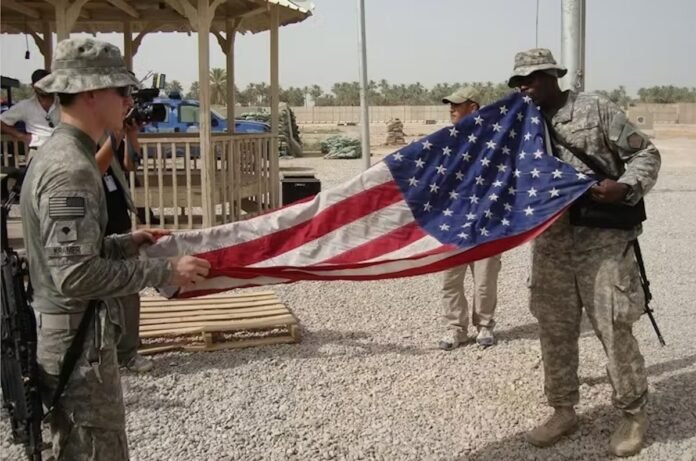
The last of the US-led coalition forces are leaving Iraq. It’s a significant bonus for Iran. The withdrawal date, September 30, was also the date by which Baghdad had pledged to bring numerous powerful Iran-backed militias under state control. But this deadline looks certain to be missed.

This effectively means that, at a moment when Washington is engaged in a costly conflict intended to weaken Iran militarily and economically, it is simultaneously reducing its military presence in the country that has arguably provided Tehran with its greatest strategic gain of the post-Saddam era.

Iraq has its own powerful nationalist instincts and has repeatedly tried to balance both US and Iranian influence and steer its own path. But the US withdrawal now risks removing an important counterweight to Iran, leaving Tehran with a great deal of sway in Iraq’s political and economic affairs.

The irony is that Tehran did not create the conditions that made this possible by itself. It had a lot of help from Washington.

Iran’s influence in Iraq did not suddenly emerge after 2003. Like the US, Tehran had spent decades cultivating Iraqi opposition movements during Saddam Hussein’s rule. Those that Iran cultivated included the Islamic Dawa Party and the Supreme Council for the Islamic Revolution in Iraq, both of which wield enormous power in Iraq today.

Perhaps the most powerful Iran-backed proxy operating in the political-military nexus is the Badr Organization, which was created in Iran during the 1980s, was supported by the Revolutionary Guards and fought alongside Iran during the Iran-Iraq war.

When Saddam Hussain was toppled in 2003 as a consequence of the US-led invasion of Iraq, these powerful organizations gave Tehran something Washington lacked – direct and intimate ties with powerful armed networks. These were now returning to shape the new Iraqi state.

Badr illustrates how those connections became institutional power. Thousands of its fighters returned to Iraq after 2003. The organization transformed itself from an exiled militia into a major political and security player.

Iran was able to cultivate relationships across political parties, ministries, religious networks and armed groups. The fragmented political system that emerged after the hurried 2005 constitutional process was profoundly flawed. It was what is known as the muhasasa (quota) system, by which control of state institutions was divided along ethnic and religious lines. This provided fertile ground for Iran to expand its networks into government.

The rise of Islamic State (IS) also played to Iran’s favor. In 2014, Tehran provided direct military assistance to Iraqi forces and armed groups fighting the IS insurgency. Thousands of Iranian troops joined the fight, which was billed as a sectarian struggle pitting the Shia faithful against IS Sunni extremism. Qassem Suleimani, the head of the Iranian Revolutionary Guards’ elite Quds Force, arrived in Baghdad to take command of the defense of the Iraqi capital.

Meanwhile, the al-Hashd al-Shaabi (Popular Mobilization Forces or PMF) was formed out of a disparate coalition of Shia militias, most of which swore allegiance to Iran. The PMF played an indispensable role in defeating IS. It was subsequently incorporated into Iraq’s formal security architecture in 2016. But some of its most powerful factions retained close relationships with Tehran and developed political and economic interests of their own.

In thie way Iran was able to build overlapping political, military and economic relationships, some operating outside the state and others embedded within it. This helps explain why Iranian influence has proved so difficult to unwind. Removing one militia, politician or commercial relationship does not remove the wider network.

Iran’s economic lifeline in Iraq

Political and military influence has been reinforced by economic integration. Iran and Iraq share an extensive border and substantial flows of goods, energy, pilgrims and commerce. Iraq became a major market for Iranian exports and for years depended heavily on Iran for its gas and electricity, giving the two economies connections that sanctions could complicate but not easily sever.

These links became increasingly valuable as Iran became further isolated by international sanctions. In 2022 I wrote an article, “How Iraq became Iran’s cash cow,” highlighting how Iraq provided Iran with markets, revenue and routes through which the effects of external pressure could be softened.

US authorities have made attempts to close those channels, including sanctioning Iraqi individuals and businesses accused of facilitating oil sales benefiting Iran and Iran-backed militias. It’s a big problem for Washington. The US can sanction Iranian banks, target oil exports and disrupt financial networks globally, but as long as Tehran retains deep access to Iraq’s political economy, an important avenue for absorbing external pressure remains open.

The US withdrawal does not automatically give Iran greater economic control, but it removes an important source of American leverage precisely when Washington is trying to squeeze Tehran most. Tehran does not need to control Baghdad outright – merely to retain sufficient influence to preserve the networks that help it absorb external pressure.

Iran continues to benefit from the centralized nature of the Iraqi economy, in which the public sector controls 40% of jobs according to the latest estimates from the International Monetary Fund (IMF). The IMF has warned that this has crowded out private sector growth.

This has enormous political consequences. Political factions that control ministries and institutions gain influence over jobs, contracts and resources. This creates a system of patronage that reinforces political loyalty. And many of these factions owe their allegiance to Tehran.

This system extends beyond Iran-aligned parties, but they have benefited from it. A competitive private economy would weaken the ability of Iran’s political networks in Iraq to turn control of the state into political dependency. A graduate who can build a career without party connections or an entrepreneur who can prosper without patronage is more politically independent. Economic reform in Iraq is therefore about more than prosperity – it is also about where political power resides.

If withdrawal gives Tehran greater room to exploit these networks as a pressure valve against isolation, Washington risks strengthening its ability to survive.

Bamo Nouri is an honorary research fellow, Department of International Politics, City St George’s, University of London.

This article is republished from The Conversation under a Creative Commons license. Read the original article.

Huge Whale Sinks Yacht Leaving Sailors Stranded at Sea

0
huge-whale-sinks-yacht-leaving-sailors-stranded-at-sea
Huge Whale Sinks Yacht Leaving Sailors Stranded at Sea


Four sailors were left floating in a life raft in the middle of the South Pacific for roughly 17 hours after their yacht collided with a massive whale and began sinking.

The terrifying ordeal unfolded Saturday, Sept. 26, aboard the Australian-flagged yacht Tai Tam as the vessel sailed through remote waters about 250 nautical miles north of Norfolk Island.

The 51-foot yacht was carrying four people when its crew suddenly encountered several whales.

Jemma Cooper, who was sailing with her husband Jeremy Cooper as part of a months-long voyage, recalled seeing around six whales in the area.

“There was a thud. We knew we’d been hit by something,” she told the BBC.

The impact was powerful enough to throw Jemma across the boat.

She described seeing one or two particularly enormous whales that appeared to be about as long as their yacht.

Within moments, the situation aboard Tai Tam became increasingly desperate.

Water began pouring into the vessel, and the crew attempted to keep the yacht afloat by bailing water and dealing with the damage.

But skipper Jeremy Cooper said it quickly became apparent that they were in serious trouble.

“We managed to mitigate it to some extent but the damage was so bad,” he told ABC Pacific.

After approximately half an hour, Cooper said they realized the yacht was unlikely to be recoverable.

With hundreds of miles of open ocean surrounding them, the crew issued a Mayday call and activated the yacht’s Emergency Position-Indicating Radio Beacon, or EPIRB.

That decision would prove critical.

The four sailors eventually abandoned Tai Tam and climbed into a life raft while rescue authorities scrambled to reach them.

The crew consisted of two Australians, one New Zealander and one French national.

The collision happened in an extremely remote stretch of the South Pacific. Norfolk Island itself sits between Australia, New Zealand and New Caledonia, meaning help could not simply arrive within minutes.

New Zealand’s Rescue Coordination Centre received the emergency beacon alert at approximately 1 p.m. New Zealand time and launched a major response.

A Royal New Zealand Air Force P-8A Poseidon maritime patrol aircraft was sent to locate the stranded sailors.

Once overhead, the aircraft crew established two-way radio communication with the yacht’s crew and helped coordinate vessels that had been diverted toward their position.

Meanwhile, Tai Tam’s situation continued to deteriorate.

The badly damaged yacht ultimately sank, leaving its crew entirely dependent on the life raft and the approaching rescuers.

For hours, the four sailors remained stranded in open water waiting for someone to reach them.

Jeremy later described the circumstances as frightening but said the weather fortunately remained favorable.

“We’re unlucky to have been hit by the whale, but then we were really lucky with the level of the response and the weather,” he said.

Help finally arrived at around 6 a.m. the following morning.

The MV Sofrana Surville, a roughly 470-foot cargo ship that had been diverted to the scene, reached the sailors and pulled all four aboard.

For Jemma, simply reaching the ship’s ladder was an emotional moment after spending the night at sea.

“I was just so keen to make sure I could get my feet on that bottom rung,” she recalled.

Once the final member of their group was safely aboard, the emotion of the ordeal finally caught up with her.

“When that last crew member gets on board and you know that they’re safe, I’ve just burst into tears,” she said.

Remarkably, none of the four sailors was reported injured.

Officials later praised the group for being prepared for exactly the type of emergency every offshore sailor hopes will never happen.

Rescue Coordination Centre Operations Manager Mike Clulow said the sailors “did all the right things” after the collision.

Officials specifically credited the crew’s decision to activate their EPIRB early, allowing rescuers to quickly identify their location in an enormous stretch of ocean.

The emergency beacon sends a distress signal that can be detected by satellites and relayed to search-and-rescue authorities, providing rescuers with crucial identifying and location information.

Without it, finding four people aboard a small life raft hundreds of miles offshore could have been dramatically more difficult.

“This was a well-coordinated and executed rescue,” Clulow said, thanking the New Zealand Defence Force, Australian and New Caledonian rescue authorities, the Sofrana Surville and another private sailing vessel involved in the response.

The exact circumstances of the collision remain less clear.

Officials have confirmed that Tai Tam struck a whale, while the sailors reported encountering a group of whales around the time of the impact. Reports have identified the animals as sperm whales, although the New Zealand Defence Force’s initial account referred simply to a whale.

The incident does not appear to have involved an intentional attack by the animal.

For the Tai Tam crew, however, the distinction mattered little in those first terrifying moments.

One minute they were continuing their voyage across the Pacific. The next, their yacht was filling with seawater and they were preparing to abandon everything for a life raft.

Seventeen hours later, all four were back on solid footing aboard a cargo ship — shaken, exhausted and extraordinarily fortunate to have been found.

Netanyahu Meets Passengers Who Overpowered Co-Pilot, Stopped FlyDubai Plane From Crashing

0


Israeli Prime Minister Benjamin Netanyahu met passengers at Ben Gurion Airport on Wednesday night after a FlyDubai flight carrying more than 170 Israelis was diverted to Saudi Arabia following an attempt by its co-pilot to crash the aircraft.

Flight data showed the aircraft plunged nearly 14,000 feet in less than 30 seconds before the first emergency signal was transmitted Wednesday morning, according to flight-tracking website Flightradar24.

Netanyahu called the events aboard flydubai flight FZ1073 from the United Arab Emirates to Israel “a highly severe security incident.” He said Saudi authorities would interrogate the co-pilot and ordered increased security for Israeli and foreign airlines flying into Israel.

“All passengers are out of harm’s way,” Netanyahu said in a video statement released by his office.

At Ben Gurion Airport, Netanyahu spoke with Yaniv Hayun one of the passengers who intervened after the co-pilot stabbed the other pilot and attempted to crash the aircraft.

“All passengers are out of harm’s way,” Netanyahu said in a video statement released by his office.

Hayun apologized because his clothes remained covered in blood.

“It’s an honor to meet you this way. How did you do it?” Netanyahu replied.

“We are a nation of lions,” Hayun said.

Netanyahu embraced him, saying: “I see you and I see a lion. You are a great hero.”

“What you did is just unbelievable. You saved not only the passengers of the plane, but many others,” the Prime Minister added.

Hayun said someone screamed before the lights went out. He and another passenger forced their way into the cockpit, where they encountered the stabbed pilot and the attacker.

“I grabbed the terrorist, choked him, and pulled him away from there,” Hayun said. He said the attacker was damaging the controls as the aircraft’s nose pointed downward. Two other passengers helped restrain him while Yaniv pulled back on the controls.

“I stopped the plane from diving.”

Hayun said he learned how to control an aircraft from watching the documentary series “Mayday.”

Netanyahu separately quoted a passenger who said passengers and a crew member entered the cockpit after the aircraft “entered a tailspin and began to dive.”

“They saved many lives. They prevented a heavy disaster,” Netanyahu said.

Two off-duty flydubai replacement pilots who were aboard as passengers subsequently took control and landed safely in Saudi Arabia, Reuters reported.

RFK Jr. says AI backs his anti-vaccine views. We checked—it doesn’t.

0
rfk-jr-says-ai-backs-his-anti-vaccine-views-we-checked—it-doesn’t.
RFK Jr. says AI backs his anti-vaccine views. We checked—it doesn’t.

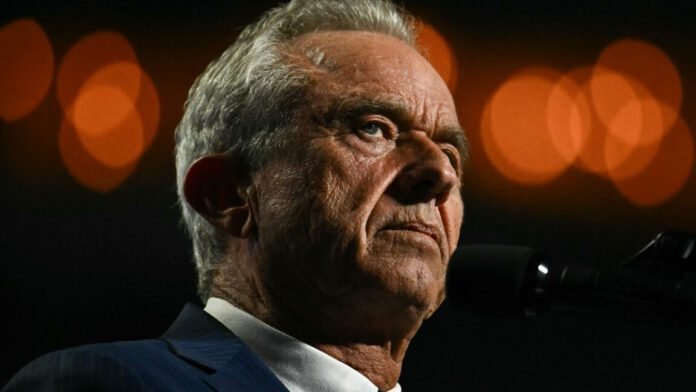
At a Make America Healthy Again event Tuesday, anti-vaccine Health Secretary Robert F. Kennedy opened a “fireside chat” with Vice President JD Vance on the peculiar topic of artificial intelligence. While MAHA generally coalesces around things like healthy lifestyles and mistrust of drug makers, Kennedy quickly turned to extolling the potential for artificial intelligence, surprising Vance, who said he was expecting to discuss “weight loss and acid, not AI.”

Kennedy boasted that the Trump administration is “making it easy for every American to use AI,” which he claimed would free us from the “medical tyranny” of doctors and health experts. He suggested Americans should start using AI to get second opinions about medical recommendations, saying AI is “better informed than any doctor in the country.” He also suggested that the technology would confirm his misinformation about vaccines and contrarian views on public health guidance.

“We’re never, ever again going to be able to be dominated by public officials who tell us trust the experts, because every American will be able to check their own medical advice,” Kennedy said.

AI >>> Kennedy

Kennedy, who has no medical, scientific, or public health experience, then laid out specific examples in which he suggested AI would contradict health and medical experts and vindicate his own views:

“If somebody tells you masks work, trust the experts, AI may tell you otherwise. If somebody tells you social distancing works, trust the experts, AI may correct that. And if somebody tells you that a vaccine will prevent transmission and infection—oh, you need to take it to protect your grandmother—AI may say it actually doesn’t do that”

AI may contradict or “correct” experts, but does it actually? We checked—the answer was nope.

When we asked Google’s Gemini: “Do masks work to prevent spread of infectious diseases?”

The AI chatbot responded (including its emphasis): “Yes, masks work to reduce the spread of respiratory infectious diseases, operating primarily as physical barriers to outgoing and incoming infectious particles. Their real-world effectiveness depends heavily on mask quality, fit, and population-level adherence.”

ChatGPT offered a similar answer, responding: “Yes. Masks can reduce the spread of some infectious diseases, particularly respiratory infections transmitted through droplets and aerosols.”

Doctors and experts >>> AI

Chatbots provided similar affirmative answers to the question of whether social distancing works at preventing infectious diseases. “Yes, social distancing is an effective public health measure for reducing the transmission of infectious diseases, particularly respiratory pathogens,” Gemini responded.

For the question, “Can vaccines prevent transmission and infection?” they provided almost identical results again.

“Yes,” ChatGPT responded. “Vaccines can prevent both infection and transmission, but the degree of protection varies by vaccine and disease.”

“Yes,” Gemini echoed, “vaccines can prevent both infection and transmission, but how effectively they do so depends on the specific vaccine and pathogen.”

The answers are in line with the opinion of experts, including the caveats, knocking back Kennedy’s suggestion that AI would immediately play into his dangerous views. Still, they don’t back up Kennedy’s claim that they’re “better informed” than actual doctors. There are plenty of examples and data indicating that AI cannot be trusted over expert clinicians with health guidance—and can be dangerous when it is.

Kennedy noted AI has “some downsides.” But it also quoted Sam Altman, the CEO of OpenAI, the developer of ChatGPT, as saying, “It would be malpractice for a doctor to make a diagnosis or to make a prescription without at least checking AI.”

MAHA betrayal

Kennedy’s unexpected praise for AI makes more sense in the context of this specific MAHA event, which was held at the swanky Waldorf Astoria in Washington, DC. It was sponsored, in part, by AI companies OpenAI and Anthropic. Counter to MAHA’s previous mistrust of industry and opposition to corporate capture, other sponsors for the MAHA summit included Walmart and Grail, which The New York Times pointed out has an application for a cancer screening blood test pending at the Food and Drug Administration.

Bloomberg Law reported that sponsorship packages for the summit were being sold for up to $300,000, which included a guaranteed speaker slot, input into the panel makeup, and a private group dinner with Kennedy and Mehmet Oz, head of the Centers for Medicare & Medicaid Services.

The agenda included executives from huge health insurance companies, UnitedHealth and Elevance. There were also drug makers, a panel on psychedelics, and an executive from Hims & Hers, a direct-to-consumer telehealth company.

The nature of the event has many MAHA leaders feeling betrayed. Robert Malone, a fringe scientist and previous Kennedy ally, blasted the event in a newsletter. “The incestuous nature of MAHA is becoming harder to ignore, and the conflicts of interest seem to multiply by the day,” Malone wrote. “MAHA was supposed to expose the revolving door between money, industry and government, not build its own.”

Romania, Poland scramble jets as Russia pounds Ukraine with drones, missiles

0
romania,-poland-scramble-jets-as-russia-pounds-ukraine-with-drones,-missiles
Romania, Poland scramble jets as Russia pounds Ukraine with drones, missiles


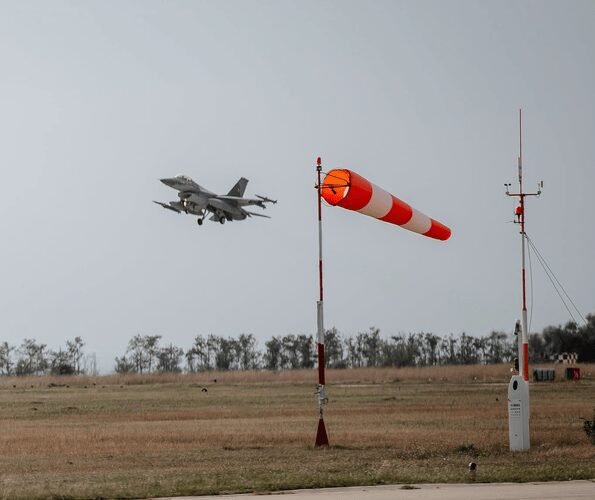
Romania and Poland scrambled military jets to protect their airspace after Russia launched a new wave of attacks on neighboring Ukraine, both countries said in statements.

Romania’s defense ministry said two F-18 aircraft belonging to the Spanish Air and Space Forces, which are engaged in the “Enhanced Air Policing combat service,” were deployed to monitor the situation. Poland’s armed forces said they had concluded operations to secure the country’s airspace and reported “no violation.” Both countries are members of the European Union and NATO.

Poland’s Air Traffic Authority said it temporarily suspended air operations at Rzeszow and Lublin airports because of military aviation activity during the strikes. Flights have since resumed.

Russia targets energy sites, killing five

Ukrainian President Volodymyr Zelenskyy said Russia launched nearly 190 drones as well as ballistic missiles. He said the main target was energy infrastructure in Kyiv and the surrounding region, though residential buildings were also damaged.

A supermarket was struck in the village of Ivankovychi, Zelenskyy said. Five people were killed, including a child.

“Our defenders managed to shoot down some of the ballistic missiles. But unfortunately, there were also hits,” Zelenskyy wrote on X. He urged Ukraine’s allies to provide more air defense support as winter approaches.

Drone falls in Moldova

Moldova’s defense ministry said a drone fell on its territory during the “massive” overnight attacks. The ministry said the drone entered Moldovan airspace shortly before 5:45 a.m. local time and exploded on the outskirts of Hirbovat village in the Anenii Noi district.

“Police and national army teams are moving to the scene to investigate the incident,” the ministry said.

Poland lifts shelter warning

Poland later lifted a warning it had issued to residents of its eastern region. Earlier in the day, the Government Centre for Security had told people in Lublin to take shelter because of the Russian strikes on Ukraine. The centre said Polish fighter jets were operating in Polish airspace.

“ATTENTION! The air attack threat has been lifted. There is no threat within the territory of Poland,” the centre said.

Asia can’t just pipeline its way around Hormuz

0
asia-can’t-just-pipeline-its-way-around-hormuz
Asia can’t just pipeline its way around Hormuz

When governments talk about reducing dependence on the Strait of Hormuz, the discussion usually turns to pipelines in Saudi Arabia and the United Arab Emirates.

For Asian importers, that is only part of the story. The physical bottleneck is in the Persian Gulf, but much of the economic exposure sits thousands of kilometers to the east.

In the first half of 2025, the US Energy Information Administration estimated that 89% of the crude oil and condensate moving through Hormuz went to Asian markets. China, India, Japan and South Korea alone accounted for 74% of those flows.

For those economies, Hormuz is not simply a distant geopolitical chokepoint. It is embedded in the way their energy systems are supplied.

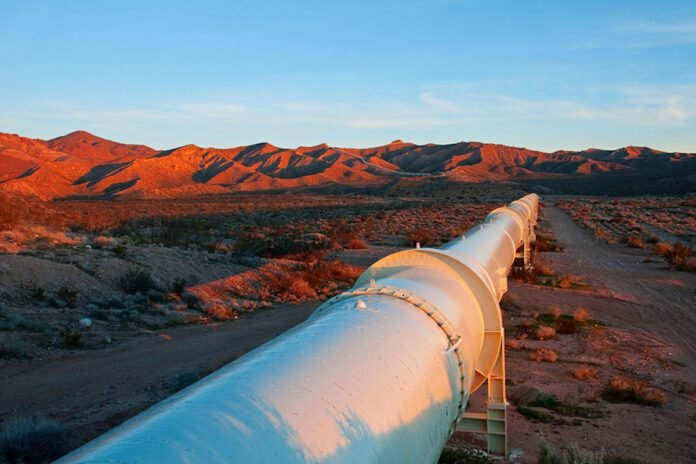
There are sensible efforts underway to reduce that exposure. Saudi Arabia can move crude west through its East-West Pipeline to Yanbu on the Red Sea. The UAE can send oil to Fujairah on the Gulf of Oman, avoiding Hormuz altogether.

ADNOC is also building a second pipeline to Fujairah, intended to double export capacity through the port when it becomes operational in 2027. Each of these projects gives producers more room to maneuver during a disruption.

The Saudi experience this month, however, is a useful warning against treating extra pipeline capacity as the same thing as energy security. On September 10, Saudi Arabia’s East-West Pipeline was hit in several attacks in the Riyadh and Madinah regions.

The Saudi Ministry of Energy said the line was shut as a precaution while technical teams assessed its integrity. Reuters reported on September 22 that operations had restarted at a reduced rate.

Only a few months earlier, that same pipeline had shown why bypass routes matter. In the first quarter of 2026, Saudi Aramco raised flows through the East-West system to its maximum capacity of 7 million barrels per day while shipping through Hormuz was constrained, describing it as a “critical supply artery.”

The episode does not make the investment look misguided. It shows something more practical: a backup route can be extremely valuable and still remain vulnerable to the wider conflict that made the backup necessary.

The numbers also put the limits of substitution into perspective. According to the International Energy Agency, close to 20 million barrels per day of oil moved through Hormuz in 2025, around a quarter of the world’s seaborne oil trade.

The IEA estimates that Saudi and Emirati pipelines have roughly 3.5 million to 5.5 million barrels per day of available capacity that could redirect crude away from the strait. The EIA estimates the principal Saudi and Emirati bypass systems at about 4.7 million barrels per day.

Several million barrels a day of alternative capacity are clearly important in a crisis. They can soften a supply shock and give exporters options they would not otherwise have. But they cannot replace normal traffic through Hormuz.

Nor does nameplate capacity tell the whole story. Pipelines rely on pumping stations, electricity, storage, communications, export terminals and safe maritime access at the other end.

If several of those elements are exposed to the same conflict, a route that looks separate on a map may be less independent in practice.

For Asian buyers, LNG makes the problem harder still. The IEA estimates that 93% of Qatar’s LNG exports and 96% of the UAE’s normally pass through Hormuz. Together, those flows account for about 19% of global LNG trade. In 2025, almost 90% of LNG exported through the strait was destined for Asia, covering roughly 27% of the region’s LNG imports.

There is no oil-pipeline-style solution for those volumes. Qatar sends some pipeline gas to the UAE and Oman through the Dolphin system, but spare capacity is limited, and Oman’s LNG terminals have been operating close to full utilization.

Moving large quantities of Qatari LNG to another coast would require more than a new pipe. It would mean recreating liquefaction, storage and export infrastructure that took years to build and billions of dollars to finance.

What happened in the LNG market earlier this year is therefore instructive. The IEA’s Q3 2026 Gas Market Report found that between March and June, LNG loadings from Qatar and the UAE fell by 35 billion cubic meters compared with a year earlier.

Producers outside the Persian Gulf raised LNG output by about 27 bcm, replacing roughly three-quarters of the lost volumes. Asian buyers did not overcome the disruption by discovering a new route around Hormuz. The adjustment came through additional supply elsewhere, higher prices and some demand response.

For Asian governments, that points to a broader definition of energy resilience. More Saudi and Emirati bypass capacity is useful, and the new Fujairah pipeline should add flexibility.

But the region’s energy security cannot rely on pipeline engineering in the Persian Gulf alone. Supplier diversification, strategic inventories, flexible LNG contracts, adequate storage and regasification capacity, and the ability to switch between crude grades all matter when transport routes become unreliable.

The same principle matters for producers. Adding a second route improves the system, but the value of that redundancy depends on how many risks the two routes still share – from power and storage to terminals, communications and security.

Hormuz is unlikely to become irrelevant; the volumes are simply too large, and LNG is particularly difficult to reroute. A more realistic aim is to make a disruption in the strait less damaging to the economies that depend on it.

For Asia, that means treating bypass pipelines as one layer of insurance rather than the insurance policy itself.

Dr. Mahyar Ramezankhani is a postdoctoral researcher and professor of economics focusing on applied economics and regional economic policy.

So what’s happening with Russia’s new, long-delayed crewed spacecraft?

0
so-what’s-happening-with-russia’s-new,-long-delayed-crewed-spacecraft?
So what’s happening with Russia’s new, long-delayed crewed spacecraft?

In what seems like an alternate universe in hindsight, Russia and the European Space Agency began discussing collaboration on next-generation crewed spacecraft two decades ago. Under the agreement, Europe would have provided a service module to power a crew capsule carrying up to six passengers.

Europe ultimately decided not to pursue a crewed spacecraft project at the time, and Russia’s state-backed space corporation, Roscosmos, chose to move ahead with a crewed spacecraft on its own. This project—always seemingly more of a Potemkin village than an effort encompassing real hardware—has gone under various guises over the years:

  • PPTS (Perspektivnaya Pilotiruemaya Transportnaya Sistema / Prospective Piloted Transport System): The initial conceptual project name used in 2009
  • PTK NP (Pilotiruyemy Transportny Korabl Novogo Pokoleniya / New Generation Piloted Transport Ship): The official technical designation used until 2016
  • Federatsiya (Federation): The official name chosen following a public contest and announced in January 2016
  • Orel / Oryol (Eagle): A new name adopted in September 2019 when Roscosmos was under the control of Dmitry Rogozin

Actual hardware tests, maybe?

Beyond the name changes and a flood of renderings, after nearly 20 years of work, then, is anything actually happening with the Eagle spacecraft?

For starters, the relatively new chief executive of Roscosmos, Dmitry Bakanov, appears to have jettisoned the “Eagle” name of the spacecraft favored by Rogozin. In a recently published Interfax story, the spacecraft is referred to as PTK NP.

Bakanov, in comments translated for Ars by Rob Mitchell, told the publication that tests of the spacecraft’s parachute system will begin this fall.

“The first step is the launch and testing of a new, promising, reusable manned transport spacecraft,” he said. “And in the fall, there will be a parachute drop and testing in the Far East.”

According to the publication, the spacecraft will also “undergo tests in emergency rescue modes during an emergency at the launch pad” later this year, and in 2027, tests will occur “in the zone of maximum dynamic pressures.”

Aspirational launch dates

It’s not clear from the report whether these tests will involve real flight hardware, boilerplate vehicles, or mockups. However, the reference to the “zone of maximum dynamic pressures” presumably refers to Max-Q and suggests that some kind of launch abort test will occur. This would be a significant step toward a spaceflight.

The article also says Russian space officials are currently holding to a debut crewed launch of the spacecraft in 2028 or 2029, likely on the Angara A5M rocket. This is probably not a date to write down in ink just yet. Four years ago, Russian President Vladimir Putin spoke confidently about the “Eagle” spacecraft and the resumption of Russia’s lunar program.

Clearly, they have not happened.

Whatever it will be called, and whenever it’s completed (if ever), Russia’s next-generation crewed spacecraft is intended to supplant the Soyuz spacecraft for flying cosmonauts into low-Earth orbit and to have the versatility to fly humans to the Moon.

0FansLike
0FollowersFollow
0FollowersFollow
0SubscribersSubscribe
- Advertisement -
Google search engine

Recent Posts