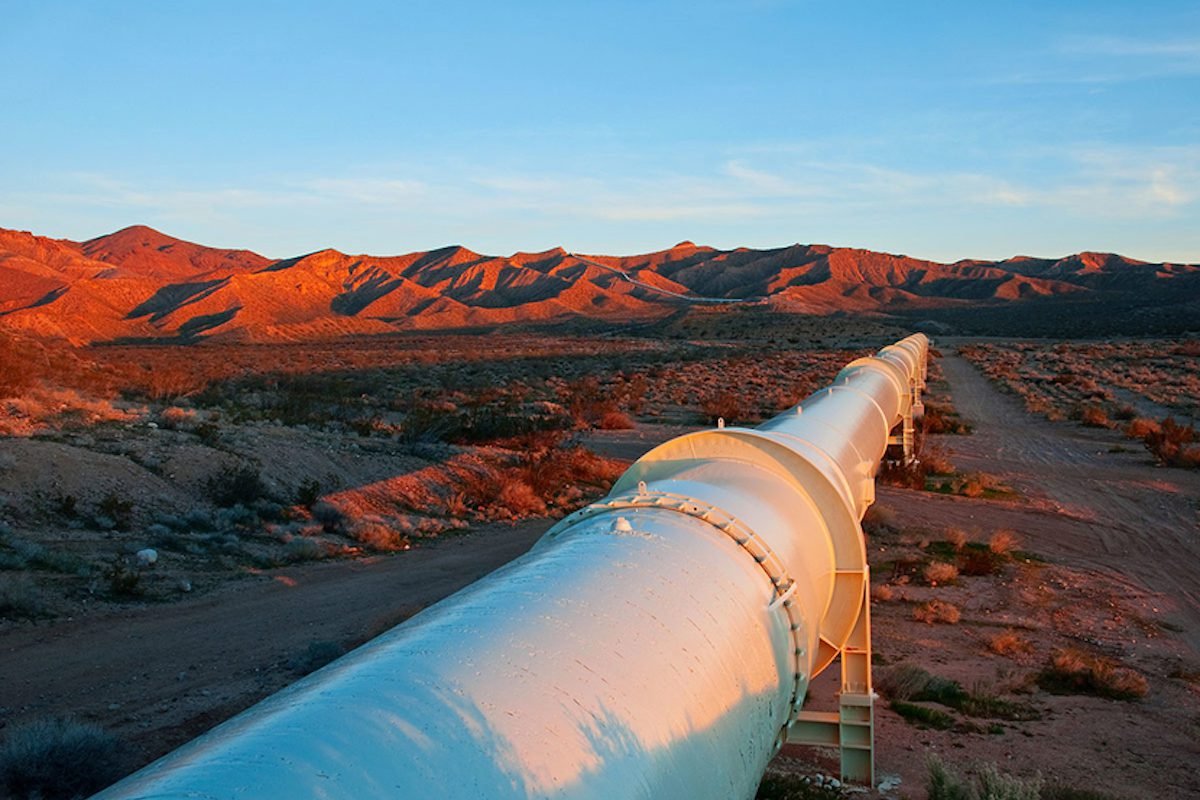
When governments talk about reducing dependence on the Strait of Hormuz, the discussion usually turns to pipelines in Saudi Arabia and the United Arab Emirates.
For Asian importers, that is only part of the story. The physical bottleneck is in the Persian Gulf, but much of the economic exposure sits thousands of kilometers to the east.
In the first half of 2025, the US Energy Information Administration estimated that 89% of the crude oil and condensate moving through Hormuz went to Asian markets. China, India, Japan and South Korea alone accounted for 74% of those flows.
For those economies, Hormuz is not simply a distant geopolitical chokepoint. It is embedded in the way their energy systems are supplied.
There are sensible efforts underway to reduce that exposure. Saudi Arabia can move crude west through its East-West Pipeline to Yanbu on the Red Sea. The UAE can send oil to Fujairah on the Gulf of Oman, avoiding Hormuz altogether.
ADNOC is also building a second pipeline to Fujairah, intended to double export capacity through the port when it becomes operational in 2027. Each of these projects gives producers more room to maneuver during a disruption.
The Saudi experience this month, however, is a useful warning against treating extra pipeline capacity as the same thing as energy security. On September 10, Saudi Arabia’s East-West Pipeline was hit in several attacks in the Riyadh and Madinah regions.
The Saudi Ministry of Energy said the line was shut as a precaution while technical teams assessed its integrity. Reuters reported on September 22 that operations had restarted at a reduced rate.
Only a few months earlier, that same pipeline had shown why bypass routes matter. In the first quarter of 2026, Saudi Aramco raised flows through the East-West system to its maximum capacity of 7 million barrels per day while shipping through Hormuz was constrained, describing it as a “critical supply artery.”
The episode does not make the investment look misguided. It shows something more practical: a backup route can be extremely valuable and still remain vulnerable to the wider conflict that made the backup necessary.
The numbers also put the limits of substitution into perspective. According to the International Energy Agency, close to 20 million barrels per day of oil moved through Hormuz in 2025, around a quarter of the world’s seaborne oil trade.
The IEA estimates that Saudi and Emirati pipelines have roughly 3.5 million to 5.5 million barrels per day of available capacity that could redirect crude away from the strait. The EIA estimates the principal Saudi and Emirati bypass systems at about 4.7 million barrels per day.
Several million barrels a day of alternative capacity are clearly important in a crisis. They can soften a supply shock and give exporters options they would not otherwise have. But they cannot replace normal traffic through Hormuz.
Nor does nameplate capacity tell the whole story. Pipelines rely on pumping stations, electricity, storage, communications, export terminals and safe maritime access at the other end.
If several of those elements are exposed to the same conflict, a route that looks separate on a map may be less independent in practice.
For Asian buyers, LNG makes the problem harder still. The IEA estimates that 93% of Qatar’s LNG exports and 96% of the UAE’s normally pass through Hormuz. Together, those flows account for about 19% of global LNG trade. In 2025, almost 90% of LNG exported through the strait was destined for Asia, covering roughly 27% of the region’s LNG imports.
There is no oil-pipeline-style solution for those volumes. Qatar sends some pipeline gas to the UAE and Oman through the Dolphin system, but spare capacity is limited, and Oman’s LNG terminals have been operating close to full utilization.
Moving large quantities of Qatari LNG to another coast would require more than a new pipe. It would mean recreating liquefaction, storage and export infrastructure that took years to build and billions of dollars to finance.
What happened in the LNG market earlier this year is therefore instructive. The IEA’s Q3 2026 Gas Market Report found that between March and June, LNG loadings from Qatar and the UAE fell by 35 billion cubic meters compared with a year earlier.
Producers outside the Persian Gulf raised LNG output by about 27 bcm, replacing roughly three-quarters of the lost volumes. Asian buyers did not overcome the disruption by discovering a new route around Hormuz. The adjustment came through additional supply elsewhere, higher prices and some demand response.
For Asian governments, that points to a broader definition of energy resilience. More Saudi and Emirati bypass capacity is useful, and the new Fujairah pipeline should add flexibility.
But the region’s energy security cannot rely on pipeline engineering in the Persian Gulf alone. Supplier diversification, strategic inventories, flexible LNG contracts, adequate storage and regasification capacity, and the ability to switch between crude grades all matter when transport routes become unreliable.
The same principle matters for producers. Adding a second route improves the system, but the value of that redundancy depends on how many risks the two routes still share – from power and storage to terminals, communications and security.
Hormuz is unlikely to become irrelevant; the volumes are simply too large, and LNG is particularly difficult to reroute. A more realistic aim is to make a disruption in the strait less damaging to the economies that depend on it.
For Asia, that means treating bypass pipelines as one layer of insurance rather than the insurance policy itself.
Dr. Mahyar Ramezankhani is a postdoctoral researcher and professor of economics focusing on applied economics and regional economic policy.