6.8 C
London
Sunday, May 10, 2026
Home Blog

Israeli army chief says more recruits needed ‘immediately’

0
israeli-army-chief-says-more-recruits-needed-‘immediately’
Israeli army chief says more recruits needed ‘immediately’

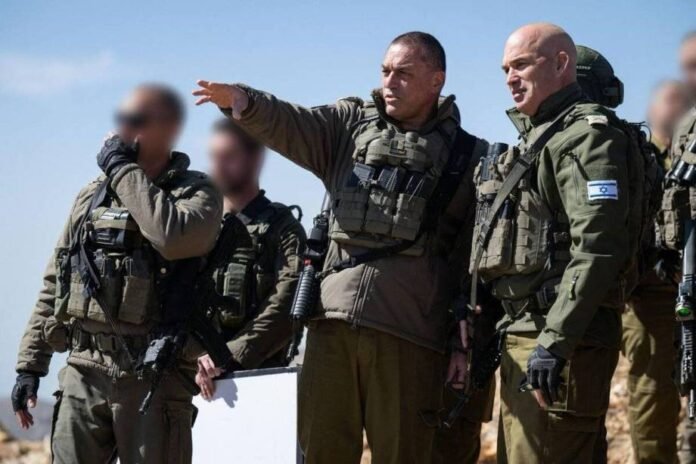
Israeli Chief of Staff Eyal Zamir said on Sunday that the army needs more soldiers immediately,” amid the escalating crisis surrounding the conscription of ultra-Orthodox Jews, or Haredim, and the continuation of military operations on several fronts, Anadolu reports.

The remarks came in a meeting of the Knesset’s (parliament) Foreign Affairs and Security Committee, according to the Yediot Ahronot newspaper.

Israel is engaged in a multi-front war, including Iran and Hezbollah in Lebanon, besides Gaza. Officially, the conflicts are on hold, but Israeli breaches continue unabated.

“I am not preoccupied with political or legislative processes, but rather focused on the multi-front war and on defeating the enemy,” Zamir said. “To continue doing this, the Israeli army needs more soldiers immediately.”

Zamir in March had warned that “the Israeli army is collapsing from within,” given the government’s failure to pass a law regulating the conscription of Haredim and reserve duty, and its failure to extend mandatory service up to 36 months.

According to spokesperson Efi Defrin, the army needs approximately 15,000 additional soldiers, including between 7,000 and 8,000 combat soldiers, adding that “it is essential to enact a conscription law.”

Haredi Jews make up about 13% of Israel’s population of approximately 9.9 million and do not serve in the military, instead dedicating their lives to studying the Torah.

Israeli law requires all Israelis over 18 to serve in the military, and the exemption of Haredim has been a contentious issue for decades.

‘Gone With the Wind’ Star Suffered Hell Behind Hollywood Glamour

0
‘gone-with-the-wind’-star-suffered-hell-behind-hollywood-glamour
‘Gone With the Wind’ Star Suffered Hell Behind Hollywood Glamour


To the world, Vivien Leigh was the breathtaking Hollywood queen who lit up the screen in Gone with the Wind — but behind the glamorous smile was a tortured woman battling mental illness, loneliness and devastating health problems that nearly destroyed her life.

The legendary actress spent years hiding explosive mood swings, emotional breakdowns and crippling illness while desperately trying to maintain her image as one of Hollywood’s most elegant stars.

Friends said Leigh’s pain started long before fame.

Born in India in 1913, the future screen icon was ripped away from her family and sent to a strict convent school in England when she was just 6 years old. According to biographer Kendra Bean, Leigh went nearly two years without seeing her parents again — a heartbreaking separation many believe emotionally scarred her for life.

Despite the loneliness, Leigh became obsessed with becoming a star.

“Vivien always wanted to be an actress,” her former school friend Maureen O’Sullivan once revealed. “She was single-minded.”

Even as a child, Leigh reportedly pushed herself harder than everyone around her, taking ballet lessons alone and demanding attention anytime she stepped onstage.

But behind the ambition was emotional torment that only worsened as she grew older.

Her explosive romance with Hollywood legend Laurence Olivier became one of the most scandalous love affairs of its time after the pair fell for each other while filming Fire Over England.

The two eventually abandoned their spouses and families to be together, shocking fans and fueling nonstop gossip across Hollywood.

Yet even Olivier could not save Leigh from the inner demons consuming her.

By the late 1930s, the actress was reportedly suffering terrifying emotional episodes. Friends claimed she would unleash vicious verbal attacks before later having no memory of what happened.

Her secretary once chillingly admitted: “Several times I thought she really was going mad.”

Leigh was eventually diagnosed with manic depression, now known as bipolar disorder, and suffered repeated mental breakdowns throughout her career. At one point, Olivier reportedly rushed her to a psychiatrist — only for the actress to allegedly charm and manipulate the doctor into believing she was perfectly fine.

And that wasn’t the only nightmare destroying her health.

Leigh also battled tuberculosis for years, enduring painful treatments and lengthy recoveries while still forcing herself back onto movie sets and theater stages.

Remarkably, even as her private life spiraled, Leigh continued delivering unforgettable performances. In 1952, she won an Oscar for her haunting role in A Streetcar Named Desire, proving she could still command the screen despite the chaos behind closed doors.

“She was a flawed masterpiece,” one friend famously said.

Leigh’s marriage to Olivier eventually collapsed under the strain of her illness and emotional struggles, ending one of Hollywood’s most legendary romances.

Just seven years later, tragedy struck again.

The actress died in 1967 at only 53 years old after suffering another brutal bout of tuberculosis.

But even near the end of her life, Leigh reportedly refused to surrender to despair.

“I am happy now,” she said just two years before her death.

Behind the dazzling beauty, designer gowns and Oscar-winning fame was a woman trapped in a constant battle against mental illness, heartbreak and physical suffering — and those closest to her say her fierce determination may have been the only thing keeping her alive for so long.

Why Is Palestine Action’s Map and Manual Still Online?

0
why-is-palestine-action’s-map-and-manual-still-online?
Why Is Palestine Action’s Map and Manual Still Online?


A manual put out by Palestine Action, a group banned in the UK, which lists companies and private addresses, has drawn criticism that the material lowers the barrier between protest, vandalism, and operational targeting

A public map of companies linked, directly or indirectly, to Israel’s defense industry has turned Palestine Action’s campaign into something more difficult to classify than a protest drive. The map lists companies, suppliers, facilities, and, in some cases, private addresses connected to individuals linked to targeted firms. A linked guide tells supporters how to organize.

The organization has been banned in Britain since February, but continues to operate freely in other countries. Now, B’nai Brith Canada is calling on Ottawa to examine whether Palestine Action should be listed as a terrorist entity, saying the material is being shared by an active Canadian chapter and is available for anyone to access.

Palestine Action was launched in the United Kingdom in July 2020. It operates by targeting companies it identifies as “corporate enablers” of the Israeli military, with a primary focus on dismantling the operations of Israeli arms firm Elbit Systems. The organization has since expanded to target other Israel-linked companies and individuals in several countries.

“You know where it starts. You never know where it ends,” Matias Rott, head of intelligence at Taurus and a certified expert in cyber investigation, told The Media Line after reviewing the map and manual. “The manual is so lax that you can say, ‘I can do whatever I want with this manual because it’s just teaching me the ABC on how to do any protest.’”

The manual is so lax that you can say, ‘I can do whatever I want with this manual because it’s just teaching me the ABC on how to do any protest’

Following an attack on RAF Brize Norton in June 2025, the UK Government formally proscribed the group on July 5, 2025, under anti-terrorism legislation. Palestine Action remains banned in the United Kingdom pending the government’s appeal, even after London’s High Court ruled the ban unlawful, saying it disproportionately interfered with rights to free expression and assembly.

The same judgment did not describe Palestine Action as an ordinary protest group. It noted that the organization promoted its political cause through criminality and its encouragement, but found that proscription had not been justified at the required scale and level of persistence.

That legal tension sits at the center of the debate surrounding the group’s “Target Map” campaign. Supporters frame it as pressure against companies tied to Israeli defense contractors. Critics say the combination of mapped targets, private addresses, operational guidance, and decentralized action turns political campaigning into a threat environment.

Richard Robertson, director of research and advocacy at B’nai Brith Canada, told The Media Line that his organization is “deeply concerned by Palestine Action globally,” and specifically by what he described as an active Canadian chapter sharing the group’s underground manual and target map.

“What is concerning about this is that they’re identifying targets in Canada and around the world openly on the web for anyone to access and encouraging individuals to engage in criminal activity against those targets,” Robertson said. “This is something that we don’t typically see. Usually, those who are engaging in sabotage or who are promoting violence or anarchy don’t do so in the public forum. But what separates Palestine Action, and in fact, what we believe makes them so dangerous, is that they’re doing this in plain sight.”

Robertson said the issue should not be treated as a conventional free speech dispute.

“This isn’t even hate speech,” he said. “This is counseling criminal activity, suggesting that individuals form cells, conduct reconnaissance, engage in acts of sabotage, engage in acts of criminal violence. This isn’t protected speech, certainly not in Canada or in any country for that matter. This is counseling terrorism.”

This isn’t protected speech. … This is counseling terrorism.

He continued, “We have formally asked for the Canadian government to review Palestine Action Canada and to consider whether or not they meet the threshold for listing as a terrorist entity here in Canada.”

“Doing so, listing Palestine Action Canada or listing Palestine Action as a global organization would enable our government to take preemptive actions to protect Canadians against the threat that they pose,” he continued.

Robertson said B’nai Brith Canada is also calling for an investigation into Palestine Action, its manual, its target map, and any foreign links that could meet the threshold for criminal charges.

“We need to get ahead of this group,” he said. “We can’t wait for them to actuate on their threats here in Canada.

Rott said the danger lies in the way open-source information can be turned into operational material. Companies, suppliers, contractors, and corporate officers can often be traced through open sources, especially when campaigners spend time building databases. What changes the picture, he said, is the use made of that information.

Every big attack starts in open-source intelligence. You are going to try to gather as much information as you can in order to profile your victim.

“Open-source intelligence is one of the keystones to becoming operational,” Rott said. “Every big attack starts in open-source intelligence. You are going to try to gather as much information as you can in order to profile your victim.”

The Palestine Action manual, available through the target map, does not simply present slogans or protest messaging. It discusses small groups, secrecy, preparation, and action. Rott said that is why the material should be analyzed differently from standard activist content.

“Technically, they are operating as any intelligence cell and as any terrorist cell,” he said. “We are going through not only how to create a cell, but also how to perpetrate an attack.”

He stopped short of making a formal legal classification, saying different countries would handle the case under different laws. But as an intelligence matter, he said, the structure is clear enough. “They seem to have some degree of intelligence on how to create a dormant cell, how to perpetrate an attack, and even more, how to secure lines of communications in order to organize everything,” he said. “What we are seeing right now is dormant cells that can act as lone wolves. They have to choose their own objectives.”

Lt. Col. (Res.) Dr. Uri Ben Yaakov, a former senior officer in the Israeli security establishment and a researcher at the International Institute for Counter-Terrorism at Reichman University, said the model is not new. What is striking, he said, is how openly it is now available.

“I don’t think it’s a new phenomenon,” Ben Yaakov told The Media Line. “We found in the past what they called killing lists with names and addresses of army people, and we saw it in different places.”

He said groups under pressure have often moved from centralized command structures to calls for autonomous action. “We learned it once Al-Qaida faced, I would say after September 11, when all the intelligence entities were after them,” he said. “They had to go below the radar, and they started the call for lone wolves and independent operations. The same with ISIS [Islamic State] in 2017, after they started facing losses in Syria and Iraq.”

Ben Yaakov said Palestine Action’s methods should be viewed within the broader pattern of proxy-style activity, even if the ideology and target set differ. “The call for proxy operations is very acceptable nowadays,” he said.

For him, the key issue is not only the damage done at a specific site, but also the pressure placed on the people and companies being named. “The damage, the real damage, is not the important issue,” he said. “The real damage is to the reputation. The real damage is to threaten the different organizations or people behind these organizations.”

The real damage is to the reputation. The real damage is to threaten the different organizations or people behind these organizations

That matters because many of the listed targets are not Israeli state institutions. Some are local companies, suppliers, business partners, landlords, or entities accused of indirect links to Israel’s defense sector. Security experts say that broadening the target pool can expose people who are not decision-makers in Israeli policy and may have no direct role in any military activity.

Robertson said the danger to Canadian targets should not be treated as hypothetical. He pointed to the record of Palestine Action in Britain, where the group has targeted institutions it had previously identified.

“It’s our opinion that the risk is real and that it must be taken seriously,” he said. “We’ve already seen the willingness of other Palestine Action chapters, specifically the chapter in the UK, to actuate on their desires. They have targeted the institutions that they’ve highlighted in the United Kingdom.”

“We can’t wait for similar things to happen here in Canada,” Robertson continued. “We know that this group is willing and able to actuate when they target something, when they identify something. We have to take that seriously.”A similar concern has emerged in the United States, where the Anti-Defamation League (ADL) says Palestine Action US later appeared under a new name, Unity of Fields. The ADL described Unity of Fields as a direct-action network that supports groups such as Hamas, Hezbollah, the Houthis, and the Popular Front for the Liberation of Palestine, and said the new formation called itself “a new front against the US Empire.”

The group has also appeared before Congress for security testimony. In June 2025, Kerry Sleeper, deputy director of intelligence and information sharing at the Secure Community Network (SCN), told the US House Committee on Homeland Security that anti-Israel networks operating in the United States and online were helping create a more dangerous domestic threat environment. SCN, the official safety and security organization of the Jewish community in North America, works with Jewish federations, law enforcement agencies, and Jewish communal security partners across the continent.

Sleeper named Unity of Fields alongside Students for Justice in Palestine, Within Our Lifetime, and online propaganda hubs such as the emerging ISNAD Network, saying such networks “help blur the lines between protest and incitement” by justifying, glorifying, and promoting violence against the Jewish community in the name of Gaza.

SCN’s testimony also placed that concern in a broader threat context. Sleeper said SCN analysts identified approximately 500 online “Threats to Life” targeting the Jewish and Israeli community in the previous year and were on pace to surpass 700 in 2025. After the May 21 shooting outside the Capital Jewish Museum in Washington, SCN analysts identified approximately 6,000 violent threats against the Jewish community on social media in one week.

The US rebranding matters because it points to a broader problem raised by both experts interviewed by The Media Line: once a map, manual, and propaganda channel exist online, the model can be copied, renamed, and adapted by actors who are not formally controlled by the original organization. The name may change, but the operational logic can remain.

Rott said the campaign should be understood as a full process, not only as a website. The map identifies potential locations. The manual describes how supporters can organize. The group encourages activists to document actions and feed them back into the campaign. “After communicating the target and perpetrating the attack, they can even send pictures or videos of the attack that they may use in order to recruit other people,” he said.

In his view, that creates a cycle: information, action, propaganda, recruitment, and then more action. “It’s a really complex situation that should be taken into account,” he said. “Sometimes you say it can start as something not as important, once again, a painting. But if you follow the procedures and you are a little bit more shady, you can get into a proper terrorist attack with this kind of manual.”

Ben Yaakov focused less on radicalization as an abstract process and more on execution. The danger, he said, is that online material can simplify the move from belief to action.

I think that the problem is the execution, or how easy it is to execute such an operation, more than radicalization

“I think that the problem is the execution, or how easy it is to execute such an operation, more than radicalization,” he said. “Because radicalization, you know, it’s something that is out there.”

For democratic governments, that creates an uncomfortable security challenge. Traditional intelligence methods are more effective when people communicate within an organization, receive orders, transfer money, or coordinate logistics. But decentralized action moves some of the most important decisions into private spaces, sometimes into the mind of a single person or a tiny group.

“When you have an organization of a group of people that are on the way to commit an attack or preparing something, they are talking among themselves,” Ben Yaakov said. “So the traditional, the classic intelligence is good. You have communication intelligence. You have human intelligence.”

But the model changes when the idea comes from a public campaign and the execution happens elsewhere. “The preparation is everything, and everything is always between the two ears of a sick man, or between him and his brother or wife or good friend,” he said. “That’s already a challenge to the law enforcement agencies, the intelligence agencies.”

The legal question is just as complicated. Rott said that in his view, the material crosses a line when it encourages illegal action. “As soon as you are inciting to violate the law, free speech is not legal,” he said.

Ben Yaakov drew a three-part distinction: legal protest, ordinary crime, and terrorism. Protest, he said, must remain protected. Illegal conduct must then be judged according to its target and purpose. “There is no clear line,” he said. “We have hundreds of definitions for terrorism.”

Still, he said, the agenda behind an act matters. “The difference between the two is the background, the agenda behind, the aim,” he said. “If the attack will be made against civilians, this is pure terrorism.”

Asked specifically where he would place attacks on civilian companies, Ben Yaakov said he would classify them as terrorism because they target private actors for an ideological purpose. “At the end of the game, I will call it terrorism because of the aim,” he said.

That is not the only view in the British debate. Civil liberties groups and lawyers challenging the proscription have argued that the government stretched terrorism law into the realm of disruptive protest and property damage. The High Court ruling reflected part of that concern, finding the ban disproportionate even while rejecting the idea that Palestine Action was simply a nonviolent civil disobedience group.

That distinction may matter for governments beyond Britain. If authorities move too broadly, they risk turning a security response into a free speech controversy. If they move too slowly, they may allow targeting material to spread until individuals outside the original network act on it.

Rott said enforcement is difficult because the internet does not respect national borders. A server can sit in one country, activists can operate in another, and an attack can take place in a third. “The Internet has no boundaries,” he said. “The Internet doesn’t recognize borders.”

He said removing one website is not enough. Material can remain in internet archives, circulate through mirrors, or be reached through tools that mask a user’s location. “It requires a lot of work in order to erase this kind of content,” he said.

The bottom line is that nowadays, a terrorist can penetrate into your bedroom with no gates, no doors

Ben Yaakov said that states have not yet properly adjusted to the way online platforms now operate in security terms. “The bottom line is that nowadays, a terrorist can penetrate into your bedroom with no gates, no doors, no nothing between him sitting in, I don’t know, in Tehran and your home in the UK,” he said.

In his view, governments already use the private sector in counterterrorism financing, requiring banks, accountants, lawyers, and others to report suspicious activity. He said a similar concept may eventually be needed for online platforms and service providers.

“This is part of the security, like states are taking care of our borders,” he said. “In a way, we should see it as one of the borders and states need to control it.”

For now, the Palestine Action map remains part of a wider fight over where protest ends, and operational targeting begins. The answer varies by country, court, and security agency. But the concern raised by experts and Jewish organizations is no longer limited to one country.

“The material needs to be out,” Ben Yaakov said. “It cannot be online.”
This summer, the American water crisis becomes real

0
this-summer,-the-american-water-crisis-becomes-real
This summer, the American water crisis becomes real

This story was originally published by WIRED and is reproduced here as part of the Climate Desk collaboration.

Two high-profile water crises, juiced up by climate change and industrial overuse, are building in the U.S. From a city in Texas staring down a drought emergency to a decades-long political crisis coming to a head for the states that rely on the Colorado River, water issues in the West will take center stage this summer — and experts tell WIRED that other places should take notes and start planning ahead for their own future.

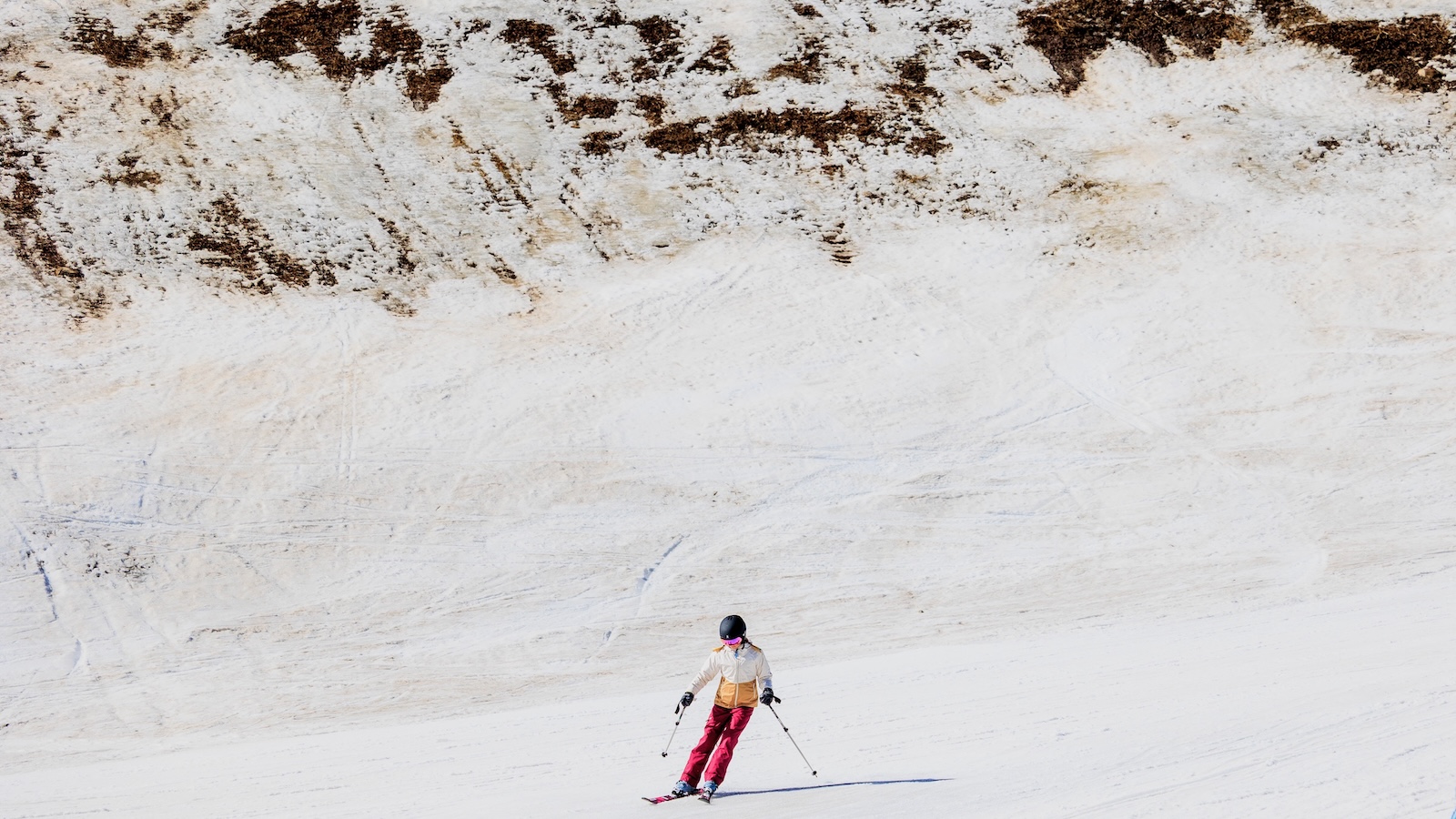
In February, following a winter of record-breaking heat, snowpack in various mountain ranges across the American West reached record lows. March came in even hotter, smashing records in states across the region.

“What happened in March was unprecedented and stunning and disturbing and out of this world, frankly — we had temperatures the likes of which we have never seen and couldn’t have happened without human-caused climate change,” said Brad Udall, a senior water and climate researcher at Colorado State University’s Colorado Water Center. “We had a crummy snowpack that went from crummy to god-awful in three weeks.”

This snowmelt crisis is having dire impacts on the Colorado River, one of the most crucial water sources in the West, which provides water for 40 million people across seven states. River flow in some areas on the Colorado had slowed to a trickle last week, thanks to the early snowmelt this year.

Read Next

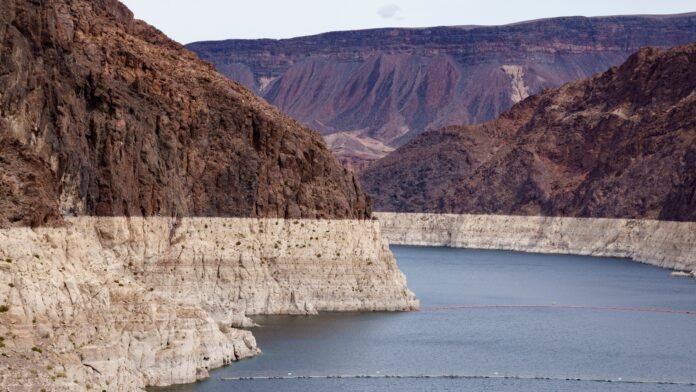
The Colorado River isn’t just a crucial water supply: It also provides power for more than 25 million people through dams at Lake Powell and Lake Mead, the two largest reservoirs in the country. Low water levels in those reservoirs spell trouble for electricity generation. As of Tuesday morning, Lake Mead was sitting at just 17 feet above its record low level, set in July of 2022.

This record dry season is also colliding with a decades-long political crisis on the Colorado River. For years, the states drawing water from the river have sparred over how to equitably divide the supply from the river, as the growth of agriculture and a series of climate-charged droughts have begun threatening the long-term water supply. Alfalfa for cattle feed is the biggest consumer of water from the Colorado, using more water than all of the cities along the river combined. States have missed key deadlines, including one in February, to renegotiate the Colorado River Compact of 1922, which regulates how water in the region is distributed. Each state gets an annual allotment, and the total amount of water is supposed to be divided evenly between an upper basin and a lower basin.

Earlier this month, following dire projections for the summer, the U.S. Interior Department stepped in, announcing a series of actions intended to keep hydropower at Lake Powell running. The government acknowledges that this could lessen hydropower at Lake Mead as well as water availability in states along the lower part of the river.

With all this chaos, there’s a chance, Udall said, that this season’s scarce water could cause a historic first in the next few years: States in the upper basin of the river could fail to deliver enough water to states in the lower basin, violating the 1922 agreement for the first time. This could trigger a potential lawsuit between states.

“What’s frustrating to somebody like myself is this is all foreseeable,” said Udall. “Those of us who are kind of in the know, and that includes a lot of people in the Colorado River Basin, have seen something like this coming for a long, long time.”

Read Next

Even with this dire set of circumstances, it’s unlikely that the millions of people who rely on the Colorado River will reach Day Zero, the term for when municipal water sources run dry. No U.S. city has ever gotten to that point.

However, there’s a region that could be inching closer to this kind of catastrophe. Officials in Corpus Christi, the eighth-largest city in Texas, said last week that the city is set to reach a Level 1 drought emergency — what it defines as 180 days of water demand outpacing supply — by September. Some projections say that, barring major weather patterns that bring more rain, municipal water sources could run dry by next year.

People living in Corpus Christi are already under restrictions for their water use, including limits on lawn watering and car washing. Residential water bills also increased by an average of just under $5 this year. City officials said that industrial customers would be asked to cut use by 25 percent in September.

“We don’t want to wreck our economy,” Corpus Christi city manager Peter Zanoni told NBC News of the decision to wait until September to declare a Level 1 drought emergency, which would force those industrial customers to curb their use. “We don’t want to have operations close down.”

Corpus Christi’s water supplies come overwhelmingly from surface water sources. Two of the most important local sources — the Choke Canyon Reservoir and Lake Corpus Christi — have reached critically low levels over the past few years as drought has gripped the region. As of Tuesday, they were sitting at 7.4 percent full and 8.7 percent full, respectively.

Read Next

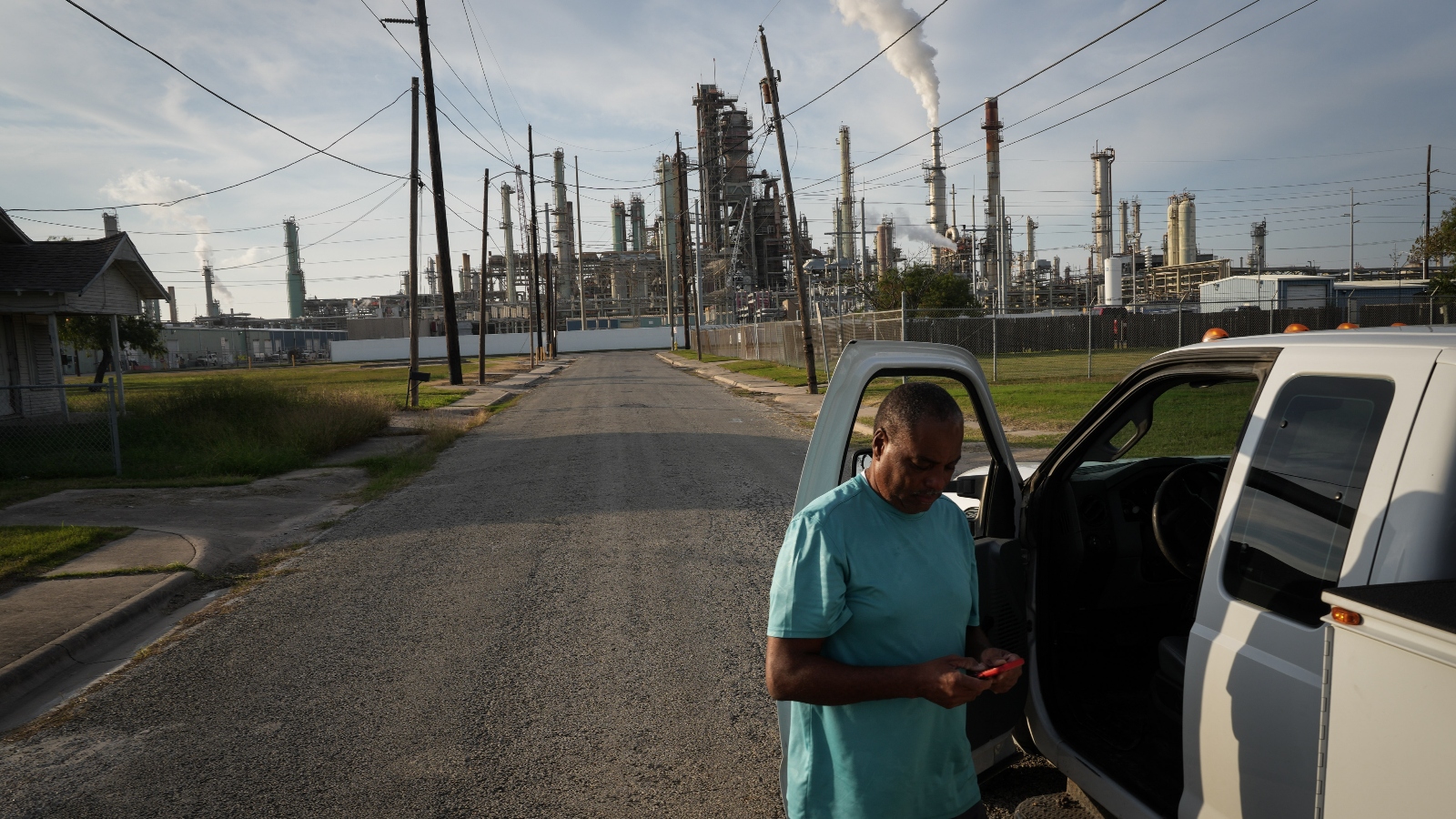
Many of the city’s problems stem from industrial water use. Corpus Christi is a major petrochemical hub, and the largest industrial consumer of water in the area, according to permit statistics obtained by Inside Climate News, is a joint Exxon Mobil and Saudi Basic Industries Corporation plastics plant. The plant used an average of 13.5 million gallons of water each day between 2022 and 2024. The average residential customer, according to the city, uses 6,000 gallons per month. (Exxon Mobil did not return a request for comment.)

The city has discussed building a desalination plant to provide water to its industrial customers — including the Exxon plant, which began operating in 2022 — for years. But the project’s potential costs ballooned to more than $1 billion, while residents expressed concerns about the ecological impacts the plant could have. Last year, regulators voted to pass on the project, with no backup plan for water supply in place. On Wednesday, the Houston Chronicle reported that Texas Governor Greg Abbott’s office had denied Corpus Christi additional funding for a separate desalination plant.

“Some lessons to learn from this situation that are important for a lot of cities, especially in the Southwest, is that water infrastructure projects are getting more expensive with time,” said Shane Walker, director of the Water and the Environment Research Center at Texas Tech University. “If you think you can wait around and get a cheaper deal on a water infrastructure project, it’s probably the opposite.”

This push and pull between attracting business and what a city can maintain waterwise, Walker said, is a common tension for city planners. As more cities in Texas see population growth — and struggle with planning out their water needs — more of them need to be thinking much farther ahead.

“You have to think of a 20-year time horizon as urgent,” Walker said. “If you’re relying on groundwater — groundwater is a finite resource. Lakes are vulnerable to drought. What’s your alternative supply?”

There could be some short- and medium-term relief for both Corpus Christi and the Colorado River. At a water update briefing last week, Zanoni said that recent rains had been “beneficial” to the region, helping to boost water levels in Lake Texana, another water source for the city. Udall said that recent wet weather has also helped stabilize some conditions out West. And the upcoming El Niño phenomenon — forecast to be one of the most intense El Niños on record — could bring a heavy monsoon season to the West this summer.

But both the municipal situation in Corpus Christi and the regional crisis for the Colorado River have specific similarities: a lack of attention to slow-building problems, exacerbated by industrial use. Climate change is pushing water crises like these to a new type of breaking point.

“Around the world we’ve seen climate change events that are really big and massive,” Udall said of the crisis on the Colorado River. “Maybe this is the first worldwide climate change crisis that’s going to force really fundamental policy-level decisions to be made, and fundamental changes in how we operate. Seven states, two nations, 40-plus million people, a whole bunch of farmers, and major cities are going to have to completely rethink how they use this resource.”


Hantavirus: American CDC says risk to public ‘very low’

0


The US Center for Disease Control (CDC) said it was closely monitoring American passengers aboard the MV Hondius but added that the hantavirus outbreak posed a “very low” risk to the wider public.

“Our CDC team began coordinating with domestic and international partners as soon as we were notified of a hantavirus situation,” CDC director Dr Jay Bhattacharya said.

“We understand that people are concerned and looking for information and that is why we provided clear, written health guidance to the American passengers through the State Department. The safety and health of the affected American travelers is our number one goal.”

The New York Times reported that residents in three states were being monitored for hantavirus, although none had shown any signs of illness.

“Hantavirus is not spread by people without symptoms, transmission requires close contact, and the risk to the American public is very low,” the CDC statement said.

The luxury cruise ship hit by a deadly hantavirus outbreak and marooned since Sunday off the coast of Cape Verde left for Spain on Wednesday, a Reuters witness said, after three people, two of them seriously ​ill, were evacuated.

The MV Hondius, with nearly 150 people on board, is expected to dock in Spain’s Tenerife, in the Canary Islands, within three days, Spain’s Health Minister Monica Garcia said, adding that those still on ‌board were not presenting any symptoms of the disease.

Once in Tenerife, if they are still healthy, all non-Spanish citizens will be repatriated to their countries, Garcia told a press conference in Madrid.

The 14 Spanish passengers will be quarantined in a military hospital in Madrid, she said. The duration of the quarantine will depend on when they potentially had contact with the virus, she said, adding that it has a 45-day incubation period.

Three people – a Dutch couple and a German national – have died in the outbreak.

A total of eight people – including a Swiss citizen who has returned home ​and is being treated in Zurich – are suspected to have contracted the virus, with three of them confirmed by laboratory testing, the World Health Organisation said.

Argentina’s health ministry will carry out rodent trapping and analysis in the southern ​city of Ushuaia, the origin point of the cruise ship hit by the outbreak, it said in a statement.

Officials are reconstructing the itinerary of the Dutch citizens who travelled in ⁠Argentina and Chile and later presented symptoms of hantavirus on the cruise, the statement said.

No associated cases have been found in Argentina.

Israeli forces raided Palestinian women prisoners’ section 10 times in 2 months, group says

0
israeli-forces-raided-palestinian-women-prisoners’-section-10-times-in-2-months,-group-says
Israeli forces raided Palestinian women prisoners’ section 10 times in 2 months, group says

Israeli prison forces carried out at least 10 raids on sections holding Palestinian women prisoners at Damon Prison in March and April, the Palestinian Prisoners Society said on Sunday, Anadolu reports.

A statement said the raids involved “beatings, forcing prisoners to lie on the ground and handcuffing them behind their backs.”

Citing testimonies from women recently released from Damon Prison, the group said male and female prison guards “deliberately assaulted the prisoners,” leaving several with bruises.

“Israel is holding most of the 88 Palestinian women prisoners in Damon Prison, while others remain in detention and interrogation centers,” the statement said.

Among the detainees are two girls and three women in the early months of pregnancy who were recently arrested over what Israel describes as “incitement.”

The group said the use of solitary confinement against women prisoners “has escalated” since the Gaza war in October 2023, noting that at least six women have been placed in isolation, including some held for more than two weeks.

It added that severe overcrowding has worsened inside prison cells amid ongoing arrest campaigns, with some cells holding more than 10 women, forcing many to sleep on the floor.

“Starvation policies have become one of the most recurring forms of abuse cited in prisoners’ testimonies, especially during Israeli holidays,” the statement said.

The group said one prisoner lost about 30 kilograms (66 pounds) within several months of detention.

It added that “strip searches” have become routine since 2023, particularly during transfers to Hasharon Prison, used as a temporary detention facility, or upon arrival at Damon Prison, where women were subjected to “humiliating and degrading” searches.

Strip searches are one of the most prominent and widely used policies and one of the forms of sexual assault that has affected all men and women prisoners, according to the group.

Israeli authorities also deny medical treatment to prisoners, such as women suffering from chronic illnesses, the statement said, adding that two women prisoners have cancer.

Most of the women prisoners are either detained over alleged “incitement” or held under administrative detention without charge based on what Israel describes as a “secret file,” the organization said.

The prisoners’ society renewed calls for the release of women prisoners held “arbitrarily,” especially minors, sick detainees, and pregnant women.

It also demanded an end to “organized crimes and violations” against prisoners, calling them “one aspect of the ongoing genocide against prisoners and detainees.”

In April, Raed Abu al-Humus, head of the PLO Commission of Prisoners’ Affairs, told Anadolu that Palestinian prisoners in Israeli jails face a “silent genocide,” including starvation, solitary confinement, denial of medical treatment, beatings, and humiliation.

More than 9,400 Palestinians are currently held in Israeli prisons, facing torture, starvation, and medical neglect that have led to the deaths of dozens, according to Palestinian and Israeli rights groups.

Bannu Checkpoint Attack Kills at Least 15 Pakistani Security Personnel Near Afghan Border

0
bannu-checkpoint-attack-kills-at-least-15-pakistani-security-personnel-near-afghan-border
Bannu Checkpoint Attack Kills at Least 15 Pakistani Security Personnel Near Afghan Border


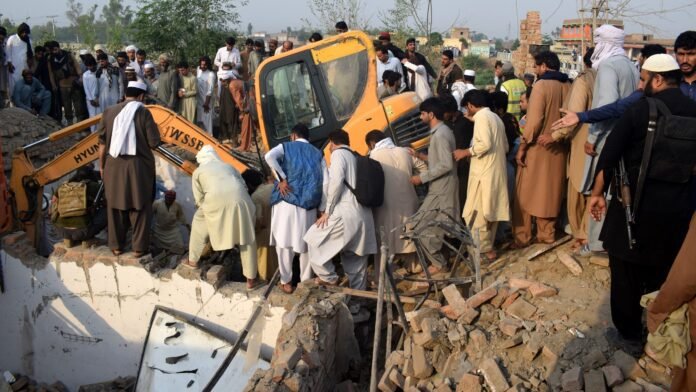
[Islamabad] Attackers rammed an explosives-packed vehicle into a police checkpoint on the outskirts of Bannu, near Pakistan’s border with Afghanistan, late Saturday, killing at least 15 security personnel and triggering an ambush on rescue teams and law enforcement officers who arrived after the blast. The attack, claimed by the newly emerged armed group Ittehad-ul-Mujahideen Pakistan, struck one of Pakistan’s most volatile security corridors as violence has intensified along the Afghan frontier.

The explosion reduced the checkpoint building to rubble, raising fears that additional personnel remained trapped inside as rescue operations continued. Police sources said the attackers used drones during the assault, suggesting a more complex operation than a standard vehicle-borne suicide attack. After the blast, armed men positioned in the surrounding area opened fire on law enforcement personnel who had come to assist the wounded and secure the scene.

Bannu police spokesperson Kashif Khan told The Media Line that the same police station and the surrounding area had previously come under attack, including assaults targeting police personnel and police vehicles. He said officers who arrived to take part in rescue operations were also ambushed after the explosion.

According to information received by The Media Line, about 29 personnel, including police officers and members of the paramilitary Federal Constabulary, were inside the building when the vehicle detonated. Sources told The Media Line that the scale of the blast raised concern that the death toll could rise beyond initial reports.

The attack comes as Pakistan faces renewed armed violence, especially in Khyber Pakhtunkhwa and Balochistan, the two western provinces bordering Afghanistan. Pakistani security officials have frequently linked attacks in these areas to the Tehrik-i-Taliban Pakistan, known as the TTP, and allied factions. The TTP is separate from the Afghan Taliban but shares ideological and historical ties with it.

Islamabad has repeatedly accused Kabul of failing to act against networks operating from Afghan territory. Pakistani authorities say some armed leaders have found space in Afghanistan, where they can plan, facilitate, or coordinate attacks inside Pakistan. Afghanistan’s Taliban authorities deny allowing their territory to be used for cross-border attacks and say Pakistan’s security problems are internal.

The Pakistan-Afghanistan border region remains difficult to secure because of mountainous terrain, porous crossings, long-standing armed networks, and deep mistrust between the two governments. The reported use of drones in recent attacks has added a further concern for Pakistani security forces, suggesting that armed groups may be adapting tactics and expanding their operational capabilities.

The Bannu attack reflects the broader challenge facing Pakistan’s counterterrorism campaign: heavily fortified targets remain vulnerable, reinforcements can become secondary targets, and armed groups operating near the Afghan border continue to test the state’s ability to secure its western belt.

Oil prices rise as investors weigh Middle East peace prospects

0
oil-prices-rise-as-investors-weigh-middle-east-peace-prospects
Oil prices rise as investors weigh Middle East peace prospects


Oil prices rose over $1 on Thursday, rebounding from the previous day’s sharp losses, as investors weighed ‌the prospects of a Middle East peace deal succeeding.

Brent crude futures were up 78 cents, or 0.8%, at $102.05 a barrel at 0400 GMT. U.S. West Texas Intermediate gained 76 cents, or 0.8%, to $95.84 a barrel.

Both benchmarks slumped more than 7% on Wednesday, hitting two-week lows on optimism over a possible end to the Middle East war. ​They pared losses, however, after U.S. President Donald Trump said it was “too soon” for face-to-face talks with Tehran and a senior ​Iranian lawmaker said the U.S. proposal was more of a wish list than a reality.

“While peace negotiations are ⁠likely to continue at least until next week’s U.S.-China summit, the outlook beyond that remains uncertain,” said Hiroyuki Kikukawa, chief ​strategist of Nissan Securities Investment, a unit of Nissan Securities.

Trump and Chinese President Xi Jinping are scheduled to meet next week.

“The main scenario ​is that oil prices will remain elevated,” Kikukawa said.

Iran said on Wednesday it was reviewing a U.S. peace proposal that sources said would formally end the war while leaving unresolved the key U.S. demands that Iran suspend its nuclear program and reopen the Strait of Hormuz.

An Iranian foreign ministry spokesperson ​cited by Iran’s ISNA news agency said Tehran would convey its response. Trump said he believed Iran wanted an agreement.

A Pakistan ​mediation source and another person briefed on the talks said an agreement was close on a one-page memorandum that would formally end the conflict.

U.S. ‌media outlet ⁠Axios reported that the U.S. expects Iranian responses on several key points in the next 48 hours, citing sources saying this is the closest the parties had come to an agreement since the war began.

“From a broader perspective, oil markets have remained stuck between diplomacy and disruption for more than two months, with investors’ emotions being manipulated by headlines almost daily,” said Priyanka Sachdeva, senior ​market analyst at Phillip Nova.

“If ​a formal deal eventually materialises, ⁠oil prices could witness a free fall as geopolitical premiums rapidly evaporate from the market. However, any fresh signs of attacks on oil infrastructure or escalation in the Middle East could easily ​trigger another parabolic spike in crude prices.”

Even if a peace deal is reached, oil supplies ​are expected to tighten ⁠further in coming weeks because it will take weeks for oil shipments to resume from the Middle East Gulf and reach refiners worldwide – so oil companies will continue to deplete storage tanks to meet peak summer demand.

U.S. crude and fuel inventories continued to decline last week ⁠as countries ​sought to offset supply disruptions caused by the Iran crisis, the Energy Information ​Administration said on Wednesday.

Crude stocks fell by 2.3 million barrels to 457.2 million barrels last week, compared with analyst expectations in a Reuters poll for a ​3.3 million-barrel draw.

Source:  Reuters

Meghan Markle Undergoes ‘Humility Training’ to Battle Her Diva Ways

0
meghan-markle-undergoes-‘humility-training’-to-battle-her-diva-ways
Meghan Markle Undergoes ‘Humility Training’ to Battle Her Diva Ways


Meghan Markle was reportedly put through what insiders are calling “humility training” before her now heavily scrutinized trip to Australia with Prince Harry — all in an effort to shake off years of “diva duchess” rumors that continue to haunt the couple.

The Duke and Duchess of Sussex recently touched down in Australia for a whirlwind tour packed with charity events, speaking appearances, business meetings, and brand-building opportunities. But behind the polished smiles and carefully staged photo ops, sources claim Meghan’s team was in full panic mode over how the public would react.

According to insiders, the 44-year-old former actress knew this trip could make or break the Sussexes’ latest attempt at reinventing themselves on the global stage.

“Meghan was painfully aware that accusations about her being demanding and difficult never really went away,” a source claimed. “She knew every second of this trip would be dissected by critics, royal watchers, and the media.”

The couple’s visit immediately sparked comparisons to their wildly successful 2018 royal tour of Australia — back when Harry and Meghan were still working royals and one of the monarchy’s biggest attractions.

This time, however, things were very different.

The Sussexes arrived carrying years of royal family drama, criticism over their commercial deals, and growing backlash from people accusing them of trying to create a “fake royal court” in America while cashing in on their titles.

Sources claim Meghan’s advisers spent months preparing her for the Australia trip with intense image coaching designed to make her appear more “warm,” “relatable,” and “grounded.”

According to one insider, almost nothing was left to chance.

“There was planning behind every interaction,” the source alleged. “How long she spoke to people, how she greeted crowds, the emotional tone she used during speeches — everything was carefully managed.”

Another insider bluntly described the preparation as “anti-diva training.”

The source added that Meghan’s team believed Australia would become a major test of whether the Sussexes could continue operating like global royals without the backing of Buckingham Palace.

“They felt the stakes couldn’t have been higher,” the insider claimed. “There was enormous pressure privately, even if Harry and Meghan tried to look relaxed in public.”

During the trip, Harry delivered speeches focused on workplace safety and mental health, while Meghan hosted a women’s wellness event tied to her expanding lifestyle brand, As Ever.

The duchess is also reportedly working to grow her business empire in Australia after trademarking multiple products there.

But critics quickly slammed the tour for looking too much like an official royal visit — despite the pair no longer representing the monarchy.

Questions also resurfaced about the couple continuing to use their Duke and Duchess titles while mixing charity appearances with paid commercial events.

The controversy revived memories of their 2018 Australia tour, which was initially hailed as a massive success before reports later emerged claiming Meghan clashed with palace staff behind the scenes.

Although some palace insiders denied the harsher accusations at the time, rumors about tensions and demanding behavior followed the couple for years afterward.

Security surrounding the latest Australia trip also became a lightning rod for criticism.

Harry is still battling the British government over the removal of his taxpayer-funded police protection after stepping down as a senior royal in 2020. While the Sussexes reportedly paid for private security during the trip, Australian authorities confirmed additional police operations were still required during their stay.

Insiders now claim Meghan and Harry viewed the entire visit as something much bigger than just another overseas appearance.

“For them, this was a referendum,” the source said. “They wanted to prove they could still command the world’s attention and operate on a royal level without being part of the royal family anymore.”

And according to critics watching closely from both Hollywood and Buckingham Palace, every handshake, smile, and speech was being judged in real time.

Huge landslide created a 500-meter-high tsunami in a major tourist area

0
huge-landslide-created-a-500-meter-high-tsunami-in-a-major-tourist-area
Huge landslide created a 500-meter-high tsunami in a major tourist area

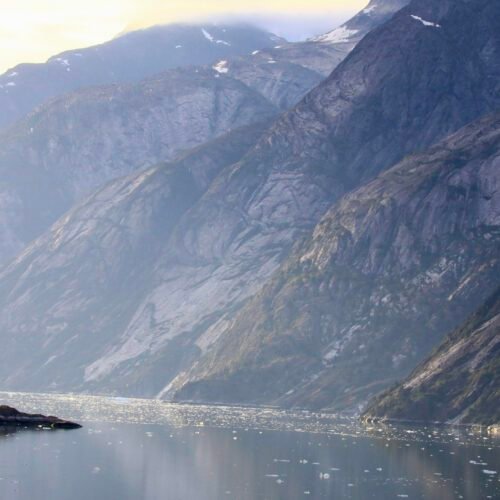
At 5:26 am local time on August 10, 2025, a massive wedge of rock with a volume of at least 63.5 million cubic meters detached from a mountain above Alaska’s Tracy Arm fjord. The falling rock plummeted into the deep waters at the terminus of the South Sawyer Glacier and caused an initial 100-meter-high breaking wave that tore across the fjord at speeds exceeding 70 meters a second. When this wave hit the opposite shoreline, it surged up the steep rocks to a height of 481 meters above sea level.

“It was the second highest tsunami ever recorded on Earth,” says Aram Fathian, a researcher at the University of Calgary and co-author of a recent Science study that reconstructed this event in detail. “But until now, almost nobody heard about it because it was a near-miss event,” he adds. There were no injuries or fatalities reported following the Tracy Arm fjord tsunami, mostly because it happened early in the morning. But we might not be so lucky next time.

Landslide megatsunamis

Earthquake-generated tsunamis usually reach runup heights of a few tens of meters when they strike land. Landslide tsunamis, like the one that happened in Tracy Arm, are often more localized but also way more violent. When millions of tons of rock suddenly fall into a confined body of water like a narrow fjord, the variation in water depth and the direct displacement of the water column produce extremely high waves. Since 1925, scientists have documented 27 such events with runups exceeding 50 meters. The highest was the 1958 Lituya Bay tsunami, which reached 530 meters.

The source of the 2025 Tracy Arm tsunami was a steep rock wedge on the northern side of the fjord. Its headscarp, the uppermost boundary of a landslide or rockfall, sat roughly 1,025 meters above sea level. For centuries, the structural integrity of this slope was maintained by a massive wall of ice known as the South Sawyer Glacier. But South Sawyer, like many other glaciers in the Stikine Icefield, has been in a state of retreat due to the warming climate.

Climate-driven disaster

“We studied the event from several aspects, from different lenses,” Fathian says. The team used high-resolution satellite images taken before and after the event to reconstruct the shape and geometry of the slide, as well as its axis and direction. Satellite images were also used to evaluate glacial thinning in the area, which, the team concluded, was the root cause of the Tracy Arms event.

The collapse, according to the study, was made more likely by the industrial-era warming of the planet. Researchers calculating the regional temperature trends found a 1.1° C increase in summertime temperatures since around 1875, driving up snowline elevations by roughly 169 meters. The local ice also got significantly thinner. Between 2013 and 2022 alone, the glacier ice bracing the failure site thinned by 100 to 130 meters.

Without millions of tons of ice pressing against the rock, the slopes were left too steep to support their own weight. In July 2025, just weeks before the event, glacial retreat exposed the very base of the slope that would soon fail. The icy straitjacket that kept the rocks from collapsing was no longer there. But there were other signs of an impending disaster.

Cracks in the rock

Retrospective analysis of optical and radar satellite imagery from the weeks preceding the slide showed no visible tension cracks or major deformational scarring on the slope. From the outside, it looked perfectly sound. But deep within the rock, surfaces were already grinding. Regional seismometers registered localized repeating earthquakes beginning as early as August 5. By August 9, these mini earthquakes were happening once every hour. In the six hours leading up to the main failure, the gaps between these seismic signals shrank to between 30 to 60 seconds.

The cause of this uptick in microseismicity was the small patches of rock and ice snapping as a huge part of the cliff began to inch its way downward. About an hour before the landslide, the signals merged into a continuous, grinding slip. And then, the rock fell.

The impact of 63.5 million cubic meters of rock hitting the fjord released forces large enough to be registered globally. The seismic waves that cascaded across the planet were recorded by sensor stations worldwide and were equivalent in energy to a magnitude 5.4 earthquake. The sloshing water within the fjord established a 66-second long-period seiche, a standing wave, that reverberated back and forth for 36 hours.

“It could easily turn into a catastrophic disaster,” Fathian says. It could, because Tracy Arm is a highly frequented tourist destination.

A close call

During the summer, more than 20 boats navigate the Tracy and Endicott arms every day, including up to six large cruise ships. Had the landslide occurred a few hours later, in the middle of the tourist day, the outcome could have been tragic. But even at 5:26 in the morning, the tsunami was enough to terrify the few people present in the vicinity.

About 55 kilometers away on Harbor Island, a group of kayakers saw the water flowing past their tents 20 minutes after the landslide. The surging tide took away some of their gear and one of the kayaks. Nearby in No Name Bay, observers on a motor vessel reported a 2-2.5-meter cresting wave coming along the beach from the direction of Tracy Arm, followed by a secondary 1-meter wave.

Farther away, 85 kilometers from the source, the crew of the small cruise boat anchored in Fords Terror saw a surge of water pouring over a nearby sandbar; it then physically lifted their vessel three meters despite a falling tide. The surge, they reported, lasted until 11 am, only to leave their small skiff stranded on dry land a few minutes later as the water receded.

At the mouth of the fjord, a National Geographic Venture cruise ship carrying around 150 people was anchored in dense fog. The captain noted currents, white water, and a significant amount of ice and debris near the edges of the fjord. Because the jagged, shallow seabed near the fjord’s mouth acted like a speed bump that sapped the wave’s energy, people onboard the cruise ship came out of the event unscathed. “It was a miraculous kind of luck we had that nobody got hurt,” Fathian claims.

But that luck may not last. With the warming climate, the team is convinced we’re going to have more Tracy Arms in the future.

Early-warning system

As climate change accelerates the retreat of tidewater glaciers and thaws the permafrost holding Arctic mountains together, the structural integrity of these landscapes is failing. “These conditions exist in many locations worldwide: Canada, Alaska, New Zealand, Greenland, Norway, and many other places,” Fathian claims. “And a similar event could happen in these areas.”

At the same time, our exposure to these hazards is on the rise. The number of cruise ship passengers visiting Alaska has increased from roughly 1 million in 2016 to 1.6 million in 2025. “Some of these cruise ships carry up to 6,000 passengers. This is literally a floating city,” Fathian says. “Imagine one of these ships getting hit by a mega tsunami wave.”

The researchers hope their study will provide scientific tools we could use to predict such events in advance. “Tracy Arm was not on the radar—it was not on anyone’s hazard or risk map,” Fathian explains. The goal for the team now is a better understanding of precursory warning signals they could detect with seismological techniques like mini earthquakes recorded around Tracy Arm a few days prior to the tsunami.

“These signals could be promising for developing early warning systems in similar conditions or areas,” Fathian says. “Hopefully this kind of data ends up on desks of policymakers and regulators to come up with practical and appropriate measures.”

Science, 2026.  DOI: http://dx.doi.org/10.1126/science.aec3187

0FansLike
0FollowersFollow
0FollowersFollow
0SubscribersSubscribe
- Advertisement -
Google search engine

Recent Posts