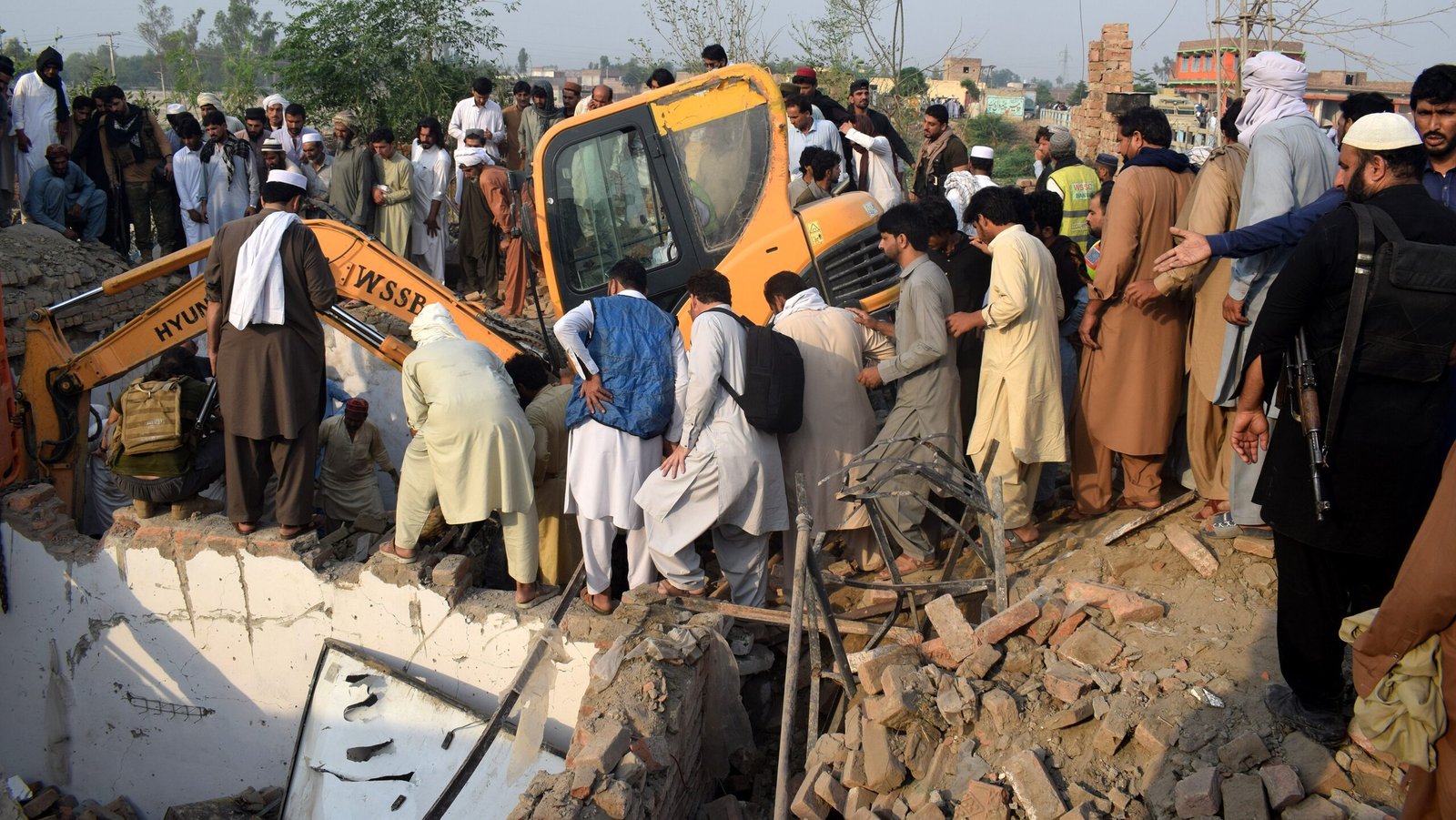
[Islamabad] Attackers rammed an explosives-packed vehicle into a police checkpoint on the outskirts of Bannu, near Pakistan’s border with Afghanistan, late Saturday, killing at least 15 security personnel and triggering an ambush on rescue teams and law enforcement officers who arrived after the blast. The attack, claimed by the newly emerged armed group Ittehad-ul-Mujahideen Pakistan, struck one of Pakistan’s most volatile security corridors as violence has intensified along the Afghan frontier.
The explosion reduced the checkpoint building to rubble, raising fears that additional personnel remained trapped inside as rescue operations continued. Police sources said the attackers used drones during the assault, suggesting a more complex operation than a standard vehicle-borne suicide attack. After the blast, armed men positioned in the surrounding area opened fire on law enforcement personnel who had come to assist the wounded and secure the scene.
Bannu police spokesperson Kashif Khan told The Media Line that the same police station and the surrounding area had previously come under attack, including assaults targeting police personnel and police vehicles. He said officers who arrived to take part in rescue operations were also ambushed after the explosion.
According to information received by The Media Line, about 29 personnel, including police officers and members of the paramilitary Federal Constabulary, were inside the building when the vehicle detonated. Sources told The Media Line that the scale of the blast raised concern that the death toll could rise beyond initial reports.
The attack comes as Pakistan faces renewed armed violence, especially in Khyber Pakhtunkhwa and Balochistan, the two western provinces bordering Afghanistan. Pakistani security officials have frequently linked attacks in these areas to the Tehrik-i-Taliban Pakistan, known as the TTP, and allied factions. The TTP is separate from the Afghan Taliban but shares ideological and historical ties with it.
Islamabad has repeatedly accused Kabul of failing to act against networks operating from Afghan territory. Pakistani authorities say some armed leaders have found space in Afghanistan, where they can plan, facilitate, or coordinate attacks inside Pakistan. Afghanistan’s Taliban authorities deny allowing their territory to be used for cross-border attacks and say Pakistan’s security problems are internal.
The Pakistan-Afghanistan border region remains difficult to secure because of mountainous terrain, porous crossings, long-standing armed networks, and deep mistrust between the two governments. The reported use of drones in recent attacks has added a further concern for Pakistani security forces, suggesting that armed groups may be adapting tactics and expanding their operational capabilities.
The Bannu attack reflects the broader challenge facing Pakistan’s counterterrorism campaign: heavily fortified targets remain vulnerable, reinforcements can become secondary targets, and armed groups operating near the Afghan border continue to test the state’s ability to secure its western belt.