14.5 C
London
Friday, May 8, 2026
Home Blog

Even in Japan, robots are far from being full‑fledged caregivers

0
even-in-japan,-robots-are-far-from-being-full‑fledged-caregivers
Even in Japan, robots are far from being full‑fledged caregivers

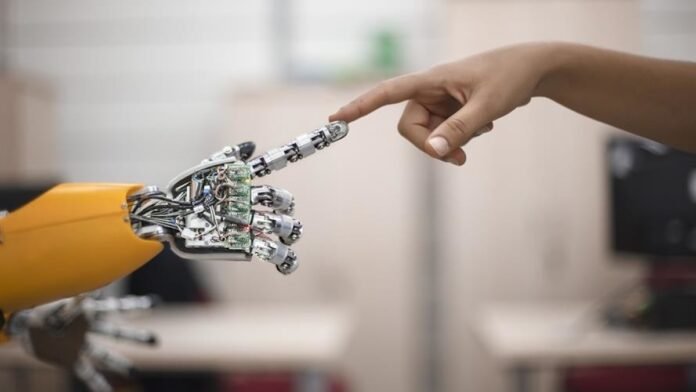
The robot pauses at the edge of the room as an engineer checks its sensors. Then, with a soft mechanical hum, this humanoid machine begins to move. It lifts a mannequin from a bed, slowly and carefully. The engineers hold their breath.

I am in a robotics lab in Tokyo, Japan, as part of my Wellcome research fellowship. The engineers have repeated this test hundreds of times over several weeks, with mixed results.

Japan has one of the world’s oldest populations, and a strained health and care workforce. It has also long been the global leader in the development and deployment of care robots.

While other countries are exploring robotic technologies, Japan stands out for the size of its investment over several decades, and the strong link between innovation and national policy.

Government-led initiatives such as Society 5.0 and Moonshot promote a “super-smart” society in which, by 2050, robots could be integrated into everyday life. One early example is the impending trial of humanoid baggage handlers at Tokyo’s Haneda airport.

My research assesses what the introduction of robots means for care in Japan. This includes ethical and societal questions about affordability, privacy risks, data management and safety – and what the Japanese public thinks about these technologies.

In a care sector that is globally under pressure, different types of robot – from humanoid and pet-like “companions” to more straightforward mechanical aids – could prove useful. Some help lift people, reducing physical strain on care workers. Others remind patients to take medication, support thier rehabilitation exercises and monitor their vitals.

However, my research shows there is still a big gap between staged robotic demonstrations and everyday reality.

Uniquely human skills

Many of the robots I observed were tested in carefully controlled environments. Floors were cleared, lighting was adjusted, engineers stood nearby ready to step in. In some cases, the robots’ actions were partly, if not entirely, controlled from a distance.

In contrast, real care environments are busy, unpredictable and crowded. People move suddenly. Their needs change from moment to moment. Technologies that work well in labs still struggle in these settings.

Carers can notice changes in patient mood and adjust how they speak. They can offer comfort without being asked. These are uniquely human skills. As one family caregiver put it: “The promise of robotic care is practical, but the experience of care is emotional – that’s where the tension lies.”

Youtube video

Some family carers and professional careworkers welcomed the idea of robotic assistance, especially for physically demanding tasks like lifting. Others worried that too much reliance on machines could make care feel impersonal.

“To some older adults, these technologies are helpful tools,” said one careworker. “To others, they feel confusing, frustrating – a glimpse of a future they never asked for.”

Such perspectives are often missing from media narratives that focus on robot success stories. In Japan, these are shaped by government strategies and economic priorities. Innovation, never neutral, reflects political agendas about how society should respond to aging and labor shortages.

The challenges over care that societies face are not only technical but social, ethical and cultural. They raise questions about what care should be, how it is valued, and what kind of future we want. “Among families and caregivers, hope and hesitation sit side by side,” a technology developer told me. “Efficiency is often welcome, but not at the cost of losing the human touch.”

The future for care?

While Japan has been successful in exporting socially assistive robots such as Paro (a therapeutic robotic that resembles a baby seal) and the humanoid Pepper, China is rapidly expanding the market with more affordable, mass-produced technologies and humanoid innovation.

However, we are still a long way from the vision of care robots feeding, washing and otherwise supporting people in the way human carers do every day. Participants in my research, including technology developers, all agreed that robots should never fully replace human carers.

Technologies that assist with lifting, mobility and routine monitoring are the most likely to become widely used and ethically and socially accepted. In these areas, robots can complement human care rather than try to replace it.

Care is, at its core, a deeply human activity, not just a series of programmable tasks. It relies on relationships, trust and mutual understanding. Robots may support these processes, but they cannot replace them.

Additionally, some technologies are likely to remain expensive, available mainly to well-funded care homes or private users. This raises issues about access to good-quality care.

Care robot developments in Japan show what can be achieved through sustained investment and political support. But they also shed light on the large amount of work needed to ensure responsible research and innovation practices in this area.

The real question is not just what robots can do. It is what kind of care we want in the future – and how technology can support it without deepening inequalities, limiting access to good-quality care, and losing the power of human touch.

Giulia De Togni is a chancellor’s fellow, School of Population Health Sciences, University of Edinburgh.

This article is republished from The Conversation under a Creative Commons license. Read the original article.

Trump reportedly plans to fire FDA Commissioner Marty Makary

0
trump-reportedly-plans-to-fire-fda-commissioner-marty-makary
Trump reportedly plans to fire FDA Commissioner Marty Makary

President Trump has signed off on a plan to fire Food and Drug Administration Commissioner Marty Makary, though insiders caution that the plan is not final and could change, according to several media reports.

News of the planned axing comes from inside sources who spoke with The Wall Street Journal,  which was then confirmed by reporting from Bloomberg, The Washington Post, and Politico. The Post reported that the administration has not decided who would serve as acting director upon Makary’s departure.

The planned exit comes after a tumultuous year for Makary, in which the FDA plunged into turmoil and controversy over DOGE cuts, personnel drama, vaccine approvals, gene therapy decisions, abortion pill oversight, and vape regulation.

Earlier this week, the Journal reported that Trump had scolded Makary over the weekend for not moving fast enough to approve flavored vapes and nicotine products. Trump’s advisors reportedly described Makary as a problem for the administration and said he was blocking the president’s campaign promise to “save vaping.”

Specifically, Makary was said to have avoided approving menthol, mango, and blueberry vape flavors from the Los Angeles manufacturer Glas out of concern that the flavors could entice youth to vape. After pressure from Trump, the FDA authorized the vapes on Tuesday.

Top administration officials have seen Makary as struggling to manage the FDA while getting into arguments with other health officials, according to the Journal. They also noted complaints from the pharmaceutical industry about him.

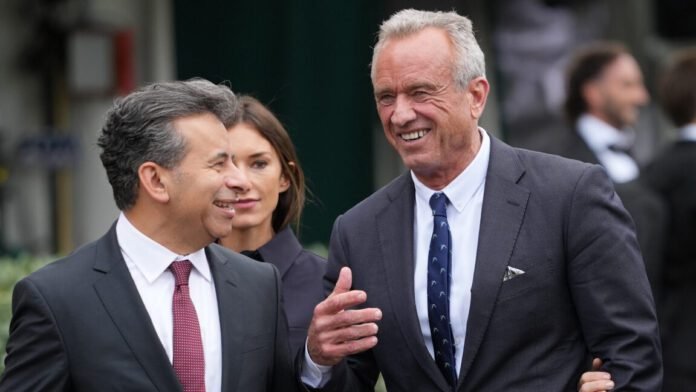
If Makary is removed, it would add to a growing list of vacancies in the ailing health agencies overseen by anti-vaccine Health Secretary Robert F. Kennedy Jr. High-level leaders of the FDA, Centers for Disease Control and Prevention, and the National Institutes of Health have left in droves amid the Trump administration. The CDC is without a director, and there is no surgeon general.

Emirates unveils UAE flag livery on Airbus A380

0
emirates-unveils-uae-flag-livery-on-airbus-a380
Emirates unveils UAE flag livery on Airbus A380


Emirates has unveiled a new special livery featuring the UAE flag across the fuselage of one of its iconic Airbus A380 aircraft, in a tribute to national unity and pride.

The new design, displayed on aircraft A6-EVG, extends the airline’s signature tail motif into a large-scale UAE flag rendered in a bold 3D effect along both sides of the superjumbo jet. Emirates described the initiative as part of its “This Flag Will Always Fly” campaign.

The move follows a nationwide initiative launched by Mohammed bin Rashid Al Maktoum, who called on citizens and residents to raise the UAE flag as a symbol of unity, solidarity and national resilience during recent challenges.

Ahmed bin Saeed Al Maktoum said the airline was proud to answer the call to honour the country through one of its most recognisable global symbols.

“Since our inception, every Emirates aircraft has proudly carried the UAE flag wherever it flies,” he said. “This new livery is our way of honouring a home that has given us so much, and a nation that stands as proof of what is possible when we collectively choose, every day, to reach higher.”

The aircraft has already operated flights to New York City and Brisbane, with Emirates planning to deploy it on additional A380 routes across its global network.

The airline also confirmed plans to introduce the same flag-inspired design on a Boeing 777 aircraft in the future.

The UAE flag has long featured on the tails of Emirates’ fleet, which is among the most recognisable in global aviation. The airline has previously introduced commemorative liveries to mark national milestones and major events.

In 2017, Emirates unveiled a special decal honouring Zayed bin Sultan Al Nahyan on its 100th A380 as part of the “Year of Zayed” initiative. The same year, the carrier also launched a series of aircraft liveries promoting Expo 2020 Dubai.

Hezbollah Drones Wound 4 IDF Soldiers, One Seriously

0
hezbollah-drones-wound-4-idf-soldiers,-one-seriously
Hezbollah Drones Wound 4 IDF Soldiers, One Seriously


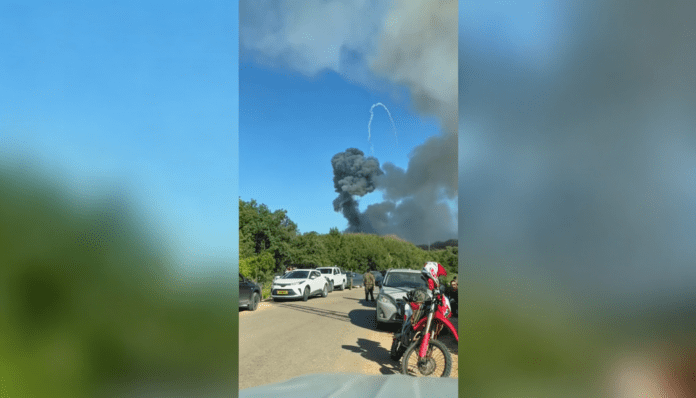
Four Israel Defense Forces (IDF) soldiers were wounded Friday, including one seriously and three moderately, in separate attacks involving explosive drones launched by Hezbollah. The soldiers were evacuated for medical treatment, and their families were notified.

In the latest incident, two soldiers sustained moderate wounds and one was seriously injured after a drone crossed from Lebanon into Israeli territory. The IDF Spokesperson’s Unit said that “this is another violation of the ceasefire understandings by the terrorist organization.”

Earlier in the day, several Hezbollah explosive drones detonated near IDF troops operating in southern Lebanon. One soldier was moderately wounded in that attack and evacuated for medical treatment. His family was notified.

Separately, police responded to an unmanned aerial vehicle discovered on the roof of a school in Nahariya. Officers and bomb disposal teams arrived at the scene, evacuated the school, and began efforts to neutralize and remove the drone. No injuries were reported.

The IDF said Thursday that it was canceling several civilian events in northern Israel following an assessment that Hezbollah could launch rockets toward Israel in response to the killing of Ahmed Ghaleb Balout, commander of the group’s Radwan Force, in Beirut the previous day.

Puerto Rico Lawmakers Call for Investigation Into Alleged Drugs-for-Votes Scheme After ProPublica Report

0
puerto-rico-lawmakers-call-for-investigation-into-alleged-drugs-for-votes-scheme-after-propublica-report
Puerto Rico Lawmakers Call for Investigation Into Alleged Drugs-for-Votes Scheme After ProPublica Report

Federal and local lawmakers in Puerto Rico, as well as civil rights and advocacy organizations, have called for investigations after ProPublica reported how a federal probe into a drugs-for-votes scheme in Puerto Rico prisons got quashed after the 2024 elections.  

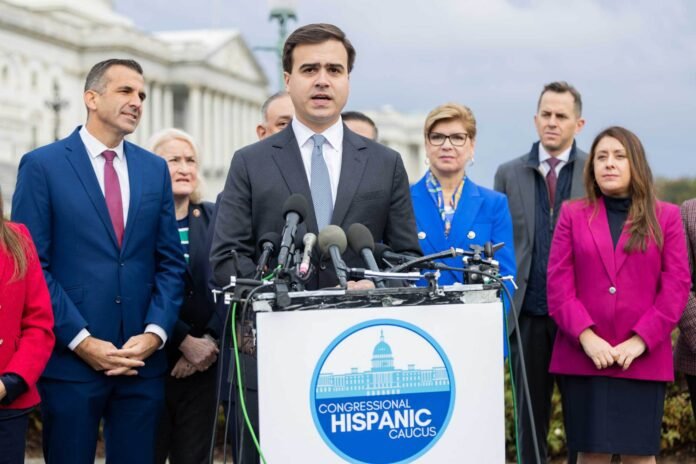
The territory’s representative in Congress, Pablo José Hernández Rivera, called on members of the U.S. House Judiciary Committee on Tuesday to join him in a push for a congressional probe into the matter. 

“The report published today by ProPublica details facts that no elected official — whether in Puerto Rico or in Washington — can ignore,” he said in a statement in Spanish.

The same day, Rep. Héctor Ferrer Santiago, a Popular Democratic Party member, introduced a resolution in the territory’s House ordering its Committee on Public Security to investigate, calling the allegations “serious!” and saying the House has “an inescapable duty to investigate.” 

Their requests came the day ProPublica published its investigation detailing how prosecutors had uncovered a drugs-for-votes scheme being run by a violent gang in Puerto Rican prisons and were deep into looking at whether now-Gov. Jenniffer González-Colón or her campaign were involved. In the days following President Donald Trump’s election in 2024, as prosecutors prepared the indictment, they were told by supervisors in the U.S. Attorney’s Office for the District of Puerto Rico to exclude the voting-related charges against inmates and prison staff, four sources with knowledge of the investigation told ProPublica. Then, once Trump took office, they were told to abandon the probe into potential political ties entirely, the sources said.

González-Colón, a longtime Republican and member of the pro-statehood New Progressive Party, has declined repeated requests for interviews by ProPublica. In a statement Tuesday, she denied any wrongdoing and said she “has stood firmly against corruption” throughout her career and political campaigns. 

“I categorically reject any attempt to link me to unlawful conduct,” she wrote. González-Colón has not been charged with any crime.

She told local news outlets Wednesday she doesn’t think any investigation into the matter is warranted. “There is nothing here,” she said in Spanish. “And, if they have research from the past four years, let them do it, let them bring it to a successful conclusion. But I have absolutely nothing to do with the things that are pointed out there, much less my campaign.”

On Wednesday, leaders of the Puerto Rican Independence Party also called for an investigation. Sen. María de Lourdes Santiago, vice president of the party, said on social media that the questions of partisan intervention in prison spaces should not be ignored considering their “severe implications.” 

Read More

Thomas Rivera Schatz, president of the Puerto Rico Senate and a member of González-Colón’s party, initially told local news outlets that government officials in Puerto Rico should investigate thoroughly. But at a press conference on Thursday, he backed away from that assertion, saying of ProPublica’s report: “I do not lend it any credibility whatsoever. … It appears to follow a specific editorial line — one directed against the Republican Party and against Trump.”

An indictment filed in December 2024, while Joe Biden was still president, charged 34 members of a gang, known as Group 31 or Los Tiburones, and associates with crimes including drug distribution resulting in at least four overdose deaths, money laundering and possessing a firearm. Prosecutors also alleged that the gang made connections with government officials “for the purpose of reducing prison sentences” and that the gang mandated both the prisoners’ political affiliations and “who to vote for in primary and general elections,” but included no charges related to the drugs-for-votes scheme.

Sources familiar with the investigation said gang leaders forced inmates to vote for González-Colón or face brutal beatings and being cut off from a supply of drugs. Many of the inmates are addicted to illicit drugs. Prosecutors said they had evidence that González-Colón had spoken with one of the prison gang leaders on WhatsApp during the primary campaign and were pursuing other potential ties when they were instructed not to look any further, people with knowledge of the investigation told ProPublica. 

González-Colón said in her statement that she engaged with all sectors of society during her campaign. “That included meeting with families of incarcerated individuals concerned about rehabilitation and reintegration, because public policy must be inclusive and responsive to every community,” she said. She did not address the allegation that she had talked with a gang leader directly. 

W. Stephen Muldrow, U.S. attorney for the District of Puerto Rico, who was appointed by Trump in 2019 and has served continuously since, told ProPublica that his office does not comment on open cases. While a couple of defendants in the drug and money laundering cases have taken plea agreements, most of the cases are still pending. 

“Given the ongoing nature of the case and the importance of maintaining the integrity of active matters, it would not be appropriate for us to comment further in a press setting,” Lymarie Llovet-Ayala, spokesperson for the office, said in an email Wednesday. Previously, she said that charging corrupt public officials “has always been and remains a top priority” of the office.

As Puerto Rico’s resident commissioner in Congress —  a role similar to a U.S. representative — Hernández Rivera has the power to introduce and co-sponsor legislation and vote in committee, but is prohibited from voting on final passage of laws in the House. 

Hernández Rivera, a Democrat and member of the Popular Democratic Party, said he already has support from at least a couple of members from the House Judiciary Committee who are interested in starting the oversight process and are working on a draft letter requesting an investigation.

Political parties in Puerto Rico don’t adhere to a straight divide among Democrats and Republicans. Instead, they center much of their focus on whether Puerto Rico should become a state and so have Republicans and Democrats within each.

Hernández Rivera said the fact that the New Progressive Party has a stronghold on inmate votes is suspicious. “About the prisons in particular, it raises eyebrows from a statistical standpoint, the fact that 83% of inmates vote for the candidate of that party when no other place in Puerto Rico votes by those margins,” he said, citing a ProPublica tally of voter returns from the State Elections Commission’s website. By comparison, González-Colón won 41% of the overall vote in her victory in the five-way general election contest. 

“The issue here is more about whether the processes were followed and whether there was corruption in giving up the case,” Hernández Rivera said. 

U.S. Rep. Glenn Grothman, R-Wis., a member of the House Judiciary Committee, told ProPublica that while he didn’t yet know the details of the matter, he would support an investigation. He said the allegations aren’t surprising given the suspicions of election fraud across the U.S. and considering “today’s morals.” 

“I hope our committee or another committee does some investigating,” he said. 

Annette Martínez-Orabona, executive director of the American Civil Liberties Union of Puerto Rico, said abandoning an investigation into a fraudulent voting scheme in prisons undermines the trust of those who believe in democracy. 

The ACLU is “advocating for full transparency about what happened with this investigation … what evidence was collected, and what was done with that evidence,” Martínez Orabona said in a written statement. 

The Power 4 Puerto Rico Coalition, a diaspora organization that advocates for more independence for the territory, said it wants answers from González-Colón and the U.S. Department of Justice. 

“Power 4 Puerto Rico calls for Congressional hearings to fully review what happened, who knew, and why the voting-related investigation did not proceed,” Erica González Martínez, director of the group, wrote in a statement. “The Puerto Rican people deserve the truth.”

A China move now on Taiwan would be an enormous gamble

0
a-china-move-now-on-taiwan-would-be-an-enormous-gamble
A China move now on Taiwan would be an enormous gamble

“The Iran war weakens deterrence in Asia, undercuts confidence of US allies and partners, and makes conflict with China more likely.”

That’s become an article of faith among those opposing the US fight with Iran.

The US military – the navy in particular – is indeed smaller than it should be, and much American combat power is deployed to the Middle East. There is no deployable aircraft carrier in the Western Pacific, and the sole forward-based Marine amphibious unit, the 31st MEU, is deployed to Iran.

As troubling, the Iran war is draining war stocks – especially long-range precision missiles and air-defense ordnance. It’s unclear exactly how alarming the situation is, but it is likely that the US hasn’t got what it would like to have to fight China. The USINDOPACOM commander, Admiral Samuel Paparo, suggested as much in recent comments.

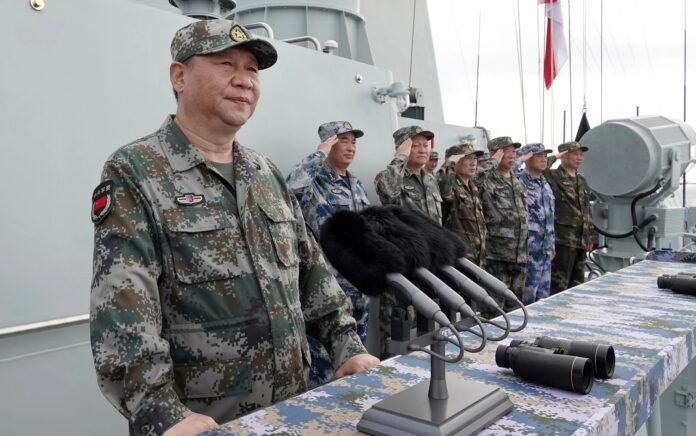
Does this present Xi Jinping with a tempting opportunity to make a move on Taiwan or against the Philippines or Japan – or all of them?

Maybe.

But Xi might have second thoughts.

China has indeed built a powerful military – in what’s often described as the biggest, fastest military buildup since World War Two.

The US Department of War’s annual China Power Reports make for grim reading.

The People’s Liberation Army’s principal near term mission is to seize Taiwan. It has been working on the problem for at least five decades.

Its naval and air forces can surround the island.

Combined PLA sea and airborne lift can potentially move large enough forces across the Taiwan Strait.

The PLA’s huge rocket force can hammer Taiwan. It has a Fifth Column in Taiwan that can assist, and has been engaged in effective subversion and cognitive warfare against Taiwan’s population for years.

Short and confined

Xi Jinping might like his odds – especially if the fight is confined to the area around Taiwan and it ends soon – say, in a few weeks.

But taking Taiwan is no sure thing.

The US military still has considerable capability in the region – even with all that’s going on with Iran – and it can reinforce from elsewhere.

Even more, the Americans have shown they know how to fight, as seen in Venezuela and Iran – and swatting away Houthi missiles in the Red Sea. And, worse, Chinese air defenses and missiles sold to their proxies haven’t worked so well.

The PLA also hasn’t been in a real fight for 50 years.

Xi must wonder.

If the fight for Taiwan expands and becomes a global war China – by its own admission – still cannot protect its global interests.

The PLA is not ready to operate worldwide, or project power much beyond 1,000 miles from the mainland – even if its missiles can range much farther.

Beijing can expect its international trade to come to a standstill – along with energy and food imports.

Chinese companies will be starved of components and technology to build things nobody will buy anyway.

And halting exports that earn hard currency (principally US dollars) – as well as being booted from the US dollar network – would pose other huge problems.

Beijing will need to make do with its own currency, which is not freely convertible. A nice way of saying most people don’t want it.

Try buying Australian iron ore to produce the steel to build the PLA Navy – or even buying off Ivy League professors – without US dollars to pay for the purchases.

And if the attack on Taiwan isn’t a short affair, and the PLA gets bogged down, the Chinese public may not be so understanding – even after an initial surge of nationalism.

Xi has been telling Chinese citizens to get ready to ‘eat bitterness’ for years. But the 600 million people living $5 a day or less, the single child households whose sons are dead, and Xi’s many enemies may instead blame Xi for the hardship.

And starting a kinetic war just might wake up other countries to the need to better defend themselves – and cooperate with each other and the United States.

It’s already started – and that’s before a shooting war.

Xi Jinping’s aggressive behavior has gotten Japan to bolster its defenses – something successive US administrations couldn’t achieve.

The Philippines are similarly energized. The Indonesians too. Even New Zealand sounds worried about China.

And the Americans are clearer about the China threat than they were a decade ago when warnings – even by military officers – were verboten in Washington and at USINDOPACOM.

The Europeans? They can be craven but are sort of realizing that defense matters – thanks to Putin, and to Trump’s tough-love approach.

The Global South? Wait until the reports come out of the PLA gunning down Taiwanese – and also the reports of Chinese investment (and under the table payments) drying up.

Even the Russians might only make pro-Beijing statements and shed crocodile tears, leaving the Chinese and the Americans to go at it.

Chinese-funded leftist groups in America might try to help the cause. But attack Taiwan (or Japan) and US bases on Guam and in the Northern Marianas (US territory) and in Hawaii and you’ll kill Americans.

Attack the mainland itself and don’t expect most Americans to get over it any time soon.  

Even America’s native Quisling class, Wall Street and big-business, might finally have second thoughts about the PRC.

Ultimately, only Xi Jinping knows what he’s going to do.

And he might decide now is the time to make his move while the Americans are occupied in Iran.

But it would be one hell of a gamble.

And Xi and CCP elites are presumably not suicidal. Otherwise, why squirrel their wealth away, along with relatives, overseas?

Colonel Grant Newsham (US Marines – Ret.) is the author of When China Attacks: A Warning to America.

US opposes Israeli annexation of West Bank, diplomat tells UN

0
us-opposes-israeli-annexation-of-west-bank,-diplomat-tells-un
US opposes Israeli annexation of West Bank, diplomat tells UN

A US diplomat reaffirmed Friday that the US opposes Israeli annexation of the occupied West Bank and remains committed to pursuing peace and stability in the region, Anadolu Agency reports.

Speaking during an Arria-formula session at the UN headquarters, Ambassador Jeff Bartos, the US representative for UN Management and Reform, said Washington continues to work closely with regional and international partners to advance security and prosperity in the Middle East.

“The United States remains committed to working in close partnership with Israel and key Arab nations and the international community to bring peace, prosperity, security and dignity to the region,” Bartos told diplomats and Security Council members.

Bartos said the Trump administration opposes unilateral Israeli annexation of territory in the occupied West Bank and emphasized the importance of regional stability.

“As President (Donald) Trump has made clear, the United States opposes Israeli annexation of the West Bank,” he said. “Stability in the West Bank is vital for Israel’s security and aligns with our goal of achieving peace in the region.”

READ: Israel continues to bar Red Cross representatives from meeting Palestinian detainees

He added that US officials remain engaged in ongoing discussions with international partners aimed at improving security conditions in the territory.

“We are in regular dialogue with partners about improving stability and security in the West Bank,” Bartos said.

The US diplomat also condemned violence targeting civilians, regardless of the perpetrators.

“We condemn terrorism or criminal violence by any party against any resident in the West Bank,” he said.

Bartos said the US continues to support efforts toward a future in which Palestinians and Israelis can coexist peacefully.

“Furthermore, the United States will continue to work toward a future in which the people in the West Bank and Gaza live in freedom and prosperity and at peace with Israel,” he said.

The meeting was organized by the Permanent Missions of Denmark, France, Greece, Latvia and the UK to provide Security Council members an opportunity to hear testimony on the challenges affecting Palestinians living in the West Bank, including East Jerusalem.

READ: Israel approves $270M budget for settlement roads in occupied West Bank

Course correction: Google to link more sources in AI Overviews

0
course-correction:-google-to-link-more-sources-in-ai-overviews
Course correction: Google to link more sources in AI Overviews

The top of a Google search page is prime real estate, but it has primarily been the domain of AI Overviews for the past two years. Websites that spent years optimizing for Google search haven’t exactly loved being pushed down the page by a chatbot and may blame AI Overviews for recent traffic drops. Google is not admitting fault, but it is rolling out a number of changes that will place more links to websites inside AI answers.

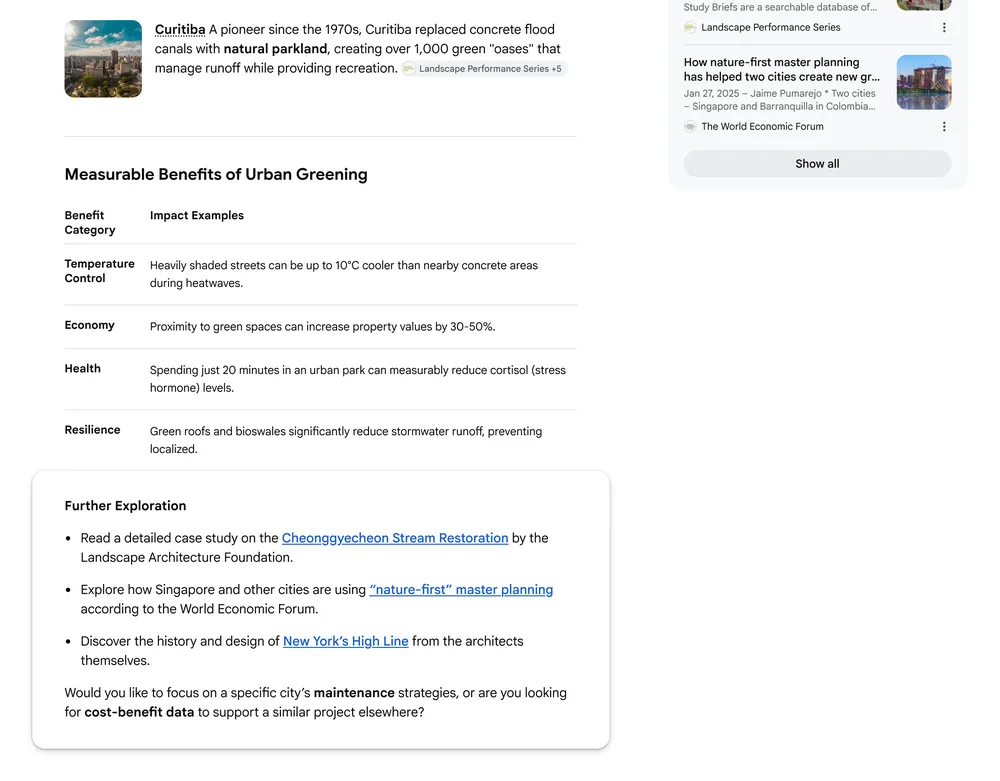
Google says many AI Overviews are “just the beginning of exploring a topic you’re interested in.” To support this supposed yearning to know more, AI Overviews and AI Mode will soon get a new section at the bottom called “Further Exploration.” The new exploration box will link to articles and analysis that is relevant to the query in a bullet point list. In the example below, a search for urban green spaces produces suggested links to content about specific projects in New York and Singapore. This is also where you may see the bait questions that are so common at the end of AI outputs.

Google AI will offer links with more information at the bottom.

Google AI will offer links with more information at the bottom. Credit: Google

Similarly, AI Overviews may include a section of “Expert Advice” that offers a snippet of content from around the web that is relevant to your search. This can include news and reviews from around the web, as well as discussions from public-facing forums and social media. Each one will include a link so you can “jump to the full conversation.”

Google also promises that AI answers will include more links generally. These will continue to appear as small pills at the end of paragraphs. Clicking on them will show a list of sources that supposedly formed the foundation of the AI output. Hovering over links in AI Overviews and AI Mode will also produce a pop-up that gives you more information about the site before you click.

Hovering over links in AI answers will soon show preview pop-ups.

Hovering over links in AI answers will soon show preview pop-ups. Credit: Google

While most of the newly announced AI features will roll out soon, Google is still seeking partners to support one of them. Google is seeking publishers that are interested in testing a new form of subscription integration. The company says your favorite websites should appear more prominently in AI search, so it’s trying to make that happen in AI Overviews and AI Mode. This feature will use an API to link a reader’s subscription on a website with their Google account. Google says that early testing showed users were much more likely to click through when their subscribed websites appeared as links in AI answers. Interested publishers are invited to fill out a form to get more information.

Live by the web, die by the web

Google does not accept the conventional wisdom that AI search is reducing website traffic. However, various analyses have suggested that the chatbot is stopping users from leaving Google’s platform. That might be fine for Google right now, but Gemini only works as a search product if it has a vast sea of online data to summarize. As websites increasingly feel the squeeze of lower traffic (and advertising revenue), there may be less of that content available.

Google also has to be aware that the growing AI backlash goes beyond existential threats to the web—it’s also an immediate legal liability. Publishers, artists, and authors have filed lawsuits against the company alleging that Gemini is illegally using their content. Penske Media has alleged that searches with AI Overviews can reduce clicks by as much as 90 percent. Meanwhile, Google is under increased scrutiny in Europe now that the Digital Markets Act is in full effect, which could force it to create an AI Overviews opt-out for websites.

These changes may represent a bit of a course correction for Google after AI tools created too many zero-click searches. It’s unclear if just adding more external links to AI answers will get the job done, though.

Man Dies After School Bus Crashes with Oncoming Truck

0
man-dies-after-school-bus-crashes-with-oncoming-truck
Man Dies After School Bus Crashes with Oncoming Truck


A routine afternoon turned into a nightmare in Florida after a devastating crash involving a school bus and a pickup truck left a 76-year-old man dead — while horrified bystanders listened to his desperate cries for help from inside the wreckage.

The tragic collision happened around 2:50 p.m. Wednesday along State Road 40 in Marion County, according to local reports. Authorities say a GMC Sierra was heading west when a school bus traveling in the opposite direction attempted to make a left turn directly into its path.

The impact was violent.

Witnesses said the pickup truck became mangled after slamming into the bus, trapping the elderly driver inside as stunned motorists rushed to the scene.

One witness, Lorie Provancher, told local station WESH that the moments after the crash were haunting.

“The gentleman was screaming for someone to get him out of his truck,” she said. “All we could do was call 911 and try to comfort him while waiting for help.”

Provancher said she and other witnesses desperately tried to reach the trapped man, but the wreckage was too crushed to get inside.

“It was awful,” she reportedly said, explaining that everyone felt helpless as the man cried out in pain.

First responders eventually pulled the victim from the destroyed truck and rushed him to a nearby hospital. Tragically, he later died from his injuries.

Officials believe the school bus driver may have failed to yield while making the turn, though the Florida Highway Patrol is still investigating the deadly crash.

The school bus involved belonged to Maplewood Elementary School and had four students, the driver, and a bus aide onboard at the time. Miraculously, none of the children or school employees were injured.

Still, the emotional fallout has shaken the community.

“The thoughts and prayers of our entire district are with the victim’s family,” Marion County Public Schools said in a statement. “The lives of everyone involved are forever changed.”

The district said grief counselors are being made available for students and staff following the horrific incident.

Officials also confirmed the bus driver — described as an 11-year veteran employee — has been temporarily removed from driving duties while investigators determine exactly what happened.

The fatal wreck is reportedly the latest in a string of recent school bus crashes and close calls in central Florida, sparking growing concerns from parents about student transportation safety.

How Venezuela has – and hasn’t – changed since Maduro’s capture

0
how-venezuela-has-–-and-hasn’t-–-changed-since-maduro’s-capture
How Venezuela has – and hasn’t – changed since Maduro’s capture

Four months have passed since US forces captured Venezuela’s sitting president, Nicolás Maduro, and ousted him from power. Maduro’s vice-president, Delcy Rodríguez, quickly moved into the top job and has, under US tutelage, begun a process of reversing her country’s experiment with socialism.

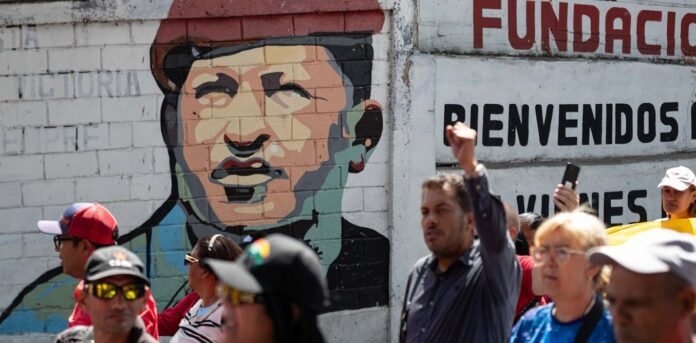
Venezuela’s pivot towards socialism began under the leadership of Hugo Chávez. After entering office in 1999, he initiated a programme of sweeping nationalisations, state-led oil wealth redistribution and increased social spending. Chávez called this process the Bolivarian revolution.

Maduro replaced Chávez as president after his death in 2013. And from there, his administration oversaw one of the most severe economic declines in modern history while simultaneously dismantling democratic checks and balances.

Ideological revision is a perilous moment for revolutionary regimes. Major policy pivots require cautious steering and, without credible and calibrated leadership, they risk overwhelming insular, authoritarian states.

The Soviet Union is perhaps the most illustrative example of this. It collapsed in 1991 under the weight of popular economic grievances mobilised under newfound freedoms of speech and assembly.

Keen to avoid a similar fate, the Chinese Communist party studied the Soviet Union’s downfall over the next decade. It concluded that the Soviet miscalculation was simultaneous economic and political opening, and has thus limited regime liberalisation to the economy.

In Venezuela, Rodríguez appears to be following China’s approach. She has maintained tight control of political conditions inside the country, while prioritising economic liberalisation.

Delcy Rodriguez stands next to Diosdado Cabello at an event.

Delcy Rodríguez (centre-left) stands next to her interior minister, Diosdado Cabello (centre-right), at an event in Caracas. Miguel Gutiérrez / EPA

Under the acknowledged guidance of US officials, Rodríguez has unravelled some elements of Maduro’s regime. Thirteen of 32 ministerial positions have been reshuffled in an administration that has long been dominated by military figures and interests.

However, a number of the key power brokers from the Venezuelan armed forces who maintained the Maduro regime remain in government. This includes the interior minister, Diosdado Cabello, and Vladimir Padrino López, who was dismissed from his role as defence minister in March and appointed as agriculture minister instead.

These people have moved into line behind Rodríguez. Successive US presidents have issued sanctions, bounties and arrest warrants against them, as they have against Rodríguez. Hers have now been rescinded, and other prominent Maduro loyalists will be hoping their compliance brings them the same.

The entire machinery of state and government remains in the hands of the ruling United Socialist Party of Venezuela (PSUV). This includes the national assembly, supreme court, national electoral administration, police and military. PSUV governors are in place in 23 of the country’s 24 states.

And despite demands from Venezuelan opposition figures for presidential elections, the Trump administration and Rodríguez have thus far avoided committing to a vote. Progress on granting amnesty to Maduro-era political prisoners has also slowed.

While more than 2,200 people were released from prison or had other legal restrictions withdrawn after the passing of an amnesty law in February, the release of political prisoners has reduced to a trickle. Over 400 of these people remain incarcerated, and the amnesty law has been quietly parked for revision.

Economic liberalisation

On the economic front, Rodríguez has implemented reforms at a greater pace. New laws and regulations reversing Chávez’s nationalisation drive are reopening key sectors of the economy to private investment. This includes hydrocarbons and mining.

A recently unveiled Commission for the Evaluation of Public Assets will audit state ownership in other economic areas such as agriculture, manufacturing and infrastructure. A fire sale to the private sector is expected.

The discipline and political dominance of the PSUV machine have been put to good use here, waving through favourable terms and other confidence-building measures for investors. These include providing legal guarantees in what has long been a notoriously unpredictable economic environment, as well as access to international arbitration. Whether these measures encourage investment will become clear in the months ahead.

Rodríguez has also steered Venezuela back into the International Monetary Fund (IMF), ending a suspension that began in 2019 when the organisation ceased recognising Maduro’s government. Kristalina Georgieva, the IMF’s managing director, reports having “productive” conversations with Rodríguez.

The US flag raised outside the US embassy in Venezuela.

The US embassy in Venezuela raised the American flag for the first time in seven years in March 2026, after both nations agreed to restore diplomatic relations. Miguel Gutierrez/EPA

The US president, Donald Trump, has praised Rodríguez for doing a “great job”. He has said she is working well with US representatives. But there are many disruptive challenges on the horizon for Rodríguez. In the short-term, there is a very real risk of protests. Venezuela remains in a political limbo with hopes of justice and democracy currently frustrated.

The absence of demonstrations to date owes much to a lack of leadership on the ground. This is likely to change when opposition leader Maria Corina Machado, who the Maduro government barred from competing in the July 2024 presidential election, returns to the country. Machado has said she expects to be back in Venezuela before the end of 2026.

Many had expected Machado to be delivered into the vacated presidency after Maduro’s capture. But Trump declined to support her as the country’s next leader. Even after she gave Trump her Nobel Peace Prize medal in January – and despite her strong friendship with US secretary of state, Marco Rubio – Machado remains on the periphery of US decision making.

On a recent tour of Europe, avowed neoliberal Machado did not voice support for the economic changes Rodríguez has introduced. She has instead emphasised the necessity for political reform in Venezuela, while also demanding accountability and justice for the corruption and abuses of previous governments.

Another, more long-term problem relates to the type of political economy that is emerging in Venezuela. The economic changes are designed to spur investor interest in extracting the country’s hydrocarbon and mineral resources.

This will merely reestablish Venezuela’s historical dependence on commodity exploitation. Such dependence has been a fundamental factor in Venezuela’s instability since the 1970s and is something the Bolivarian revolution pledged to end.

0FansLike
0FollowersFollow
0FollowersFollow
0SubscribersSubscribe
- Advertisement -
Google search engine

Recent Posts