12.2 C
London
Monday, May 11, 2026
Home Blog

Trump’s coming kowtow to Chinese dictator he admires and envies

0

When American and Chinese presidents meet, it is usually the upstart China that is desperate to be treated as an equal by the world’s pre-eminent superpower. Yet on May 14 when Donald Trump flies to Beijing for the first of four meetings planned this year with President Xi Jinping, he will be the one in the weaker position.

This is partly because of Trump’s undisguised admiration for authoritarian leaders. But mainly it is because he will arrive needing China’s help in bringing his war with Iran to a close.

This summit was originally billed as being the moment when Trump and Xi would turn the truce they declared in their trade war last October into a more permanent agreement. The battle of import tariffs on each other’s products would not end in anything like free trade but would at least be replaced by some sort of stability, close to the current level estimated by the Peterson Institute for International Economics of an average 47.5% American tax on Chinese imports and a 31.9% Chinese tax on imports from America.

Yet although trade and economics will still play a prominent role in the Beijing meeting, and will likely lead to some sort of agreement over a new dispute-resolution mechanism between the two countries, it will not be the most important issue under discussion. That issue will be Iran: how to handle Iran’s nuclear-weapons and uranium-enrichment program and how to achieve an agreement between the warring parties that can allow oil tankers and other shipping to pass freely through the Strait of Hormuz, the narrow body of water between Iran and Oman that is currently being blockaded by both Iran and the United States.

The Beijing summit was originally supposed to take place in mid-April but was postponed at Trump’s request because of his Iran war. It seemed possible that, in the few days before the Xi-Trump meeting, the Iranians and Americans might come to an interim agreement on the basis of the peace plans put forward by both countries. That would have owed much to Trump’s desire to fly to Beijing without the shadow of war hanging over him. But Trump has rejected the Iranian proposal.

In any case, a long-term solution will rely upon an agreement by both sides with China, for China is the only major power that is both a partner of the Iranians and capable of overseeing a nuclear agreement.

Unlike its strategic partner, Russia, China has been reluctant to intervene overtly and directly in foreign conflicts. It is supporting Russia’s war in Ukraine, but has so far avoided getting directly involved, in either military or diplomatic terms. The same is true of Iran’s war with America and Israel.

China has assisted the Iranian regime by continuing to buy Iranian oil and other commodities, insofar as they have been attainable. But it has also encouraged another of its partners, Pakistan, to act as a mediator between Iran and the United States. Even more notably, on May 6 it welcomed Iran’s foreign minister, Abbas Araghchi, on a visit to Beijing. Araghchi was certainly not there as a tourist.

It would not be in China’s interest to embarrass Trump by making a big show of its role in bringing an end to a war that the American president began more than two months ago. As China is by far the world’s biggest importer of oil, it shares an interest with America, Europe and the rest of the world in opening up Hormuz and getting the price of oil back down to pre-war levels. Displaying a willingness to collaborate over restricting the spread of nuclear weapons would also help burnish China’s claimed credentials as a force for peace and stability, credentials that have been severely damaged by its support for Russia in Ukraine.

The hope must be that this positive role, and the leverage over Trump that it provides, does not make Xi Jinping overconfident. Taiwan is the country that stands to lose the most from an overconfident Xi, either through his being emboldened enough to attempt an invasion or a coercive blockade or through his persuading a grateful Trump to weaken US support for Taiwan’s autonomy.

In truth, Xi is unlikely to attempt an invasion or blockade, for the examples of Russia in Ukraine and America in Iran have displayed clearly the costs and risks of military adventurism. China’s better hope is to wait until Taiwan’s next presidential election in January 2028, which could bring to power someone more favorable to China or at least more manipulable than the pro-independence figures who have run Taiwan for the past decade.

He is likelier to press Trump to reduce America’s sales of weapons to Taiwan as an unstated quid pro quo for helping with Iran.

The oddity of this supposed summit of the giants in Beijing is that neither country is in fact in a strong position. One of the most enduring propaganda messages throughout Xi’s 13 years as his country’s leader has been the claim that America is declining while China is rising. In economic terms, this is plainly not true: China’s annual GDP peaked at 77% of America’s in 2021 but has since fallen back to only a little over 60%.

The once-widespread predictions that it would soon overtake the United States have been quietly abandoned as China’s economy has been weakened by a property crash and demographic decline, and America’s has powered ahead thanks to technology investment. Now, it would take a collapse of the US dollar and a big rise in China’s currency to make it plausible that China could overtake America at any time in the next few decades, or possibly ever.

Meanwhile, one of the ironies of Trump’s “Make America Great Again” slogan is that in strategic and geopolitical terms he has done more than any American president in living memory to make the Chinese message of decline look as if it could come true. He has done his best to destroy or damage the security alliances in Europe and Asia on which America has depended for the past 80 years. He has made America less attractive to international scientists and other talented emigrants and has alienated populations all around the world that were previously favorable to the United States.

Most important, however, is the fact that although the war Trump started in Iran on February 28th displayed American military prowess it also displayed the country’s strategic weaknesses. America has shown that it is currently unable to produce enough of its impressively sophisticated weapons to last for more than a few weeks in an intense conflict. And, above all, American overconfidence leads it to start wars that it does not know how to finish.

When overconfidence is attached to strategic incompetence the result is disastrous. We should all keep that in mind when we see Presidents Xi and Trump parading proudly in the Great Hall of the People in Beijing next week, or indeed when watching reruns of Vladimir Putin’s May 9 “Victory Parade” in Moscow. All three of our nuclear superpowers show the same dangerous mix.

This English original of an article first published by La Stampa in Italian translation is republished with permission. It can also be found, along with many other articles, on Bill Emmott’s Global View.

iOS, macOS, and iPadOS 26.5 updates arrive with encrypted RCS messaging and more

0
ios,-macos,-and-ipados-26.5-updates-arrive-with-encrypted-rcs-messaging-and-more
iOS, macOS, and iPadOS 26.5 updates arrive with encrypted RCS messaging and more

Apple has released version 26.5 of all of its operating systems today: iOS 26.5, iPadOS 26.5, macOS 26.5, watchOS 26.5, tvOS 26.5, visionOS 26.5, and version 26.5 of the HomePod software (whew).

None of these are particularly momentous updates, which is pretty normal this late in their lifecycle, but they add a small batch of new features alongside the pile of patches outlined on Apple’s security vulnerabilities page. This is Apple’s first release to support end-to-end encryption for the RCS messaging standard, for example, which, when enabled, can give green-bubble messages some of the same security and privacy advantages that iMessage users have long enjoyed.

Encrypted RCS messaging has a “beta” label in this release, and Apple says it’s limited to a subset of supported cellular carriers. Expanded support “will roll out over time.” Encrypted chats will show up with a padlock icon in the Messages app; if you don’t see a padlock, the message isn’t encrypted, even if you’re using RCS.

Other additions in the 26.5 releases are new Pride-themed wallpapers and some of the initial work needed to support ads in the Apple Maps app. There are also a handful of smaller platform-specific additions and bug fixes, which you can find on Apple’s release notes pages (we’ve linked each in the first paragraph). Apple has been testing several changes to third-party wearable support in the EU to comply with local regulations, but those features haven’t yet been included in the public versions of those iOS updates.

These are likely to be the last major updates we get for these versions of the operating system before the next-generation versions are unveiled at Apple’s Worldwide Developers Conference next month.

It’s hard to say what to expect from the 27 releases, except that we’re still waiting on an updated AI-backed version of Siri that was first mentioned as part of the iOS 18 cycle in 2024, was very strongly implied to be part of the iOS 26 cycle last year, and still has not been demoed in any Apple presentations or in any software betas. Apple and Google announced that Apple would use Google’s Gemini language models to power the new Siri, but aside from vague promises to ship the feature this calendar year, Apple has kept mostly quiet about it.

Recent reporting from Bloomberg also suggests that users will be able to choose the AI models they want to use for Apple Intelligence’s writing and image-generation tools in iOS 27, iPadOS 27, and macOS 27.

View from Tokyo: Has Iran war changed confidence in the US?

0
view-from-tokyo:-has-iran-war-changed-confidence-in-the-us?
View from Tokyo: Has Iran war changed confidence in the US?

Originally published by Pacific Forum, this article is republished with permission.

The war on Iran waged by the US and Israel has caused multidimensional and likely irreversible tectonic shifts. At the global level, the negative effects of the war extend far beyond economic aspects such as soaring energy prices and the onset of international stagflation. This war has unnecessarily triggered a transformation in US-Russia relations, a deterioration in US-China relations, and a worsening of transatlantic ties.

Naturally, in the Indo-Pacific region, it is having a complex and ambivalent impact on the trust that US allies and friendly nations place in the United States.

Among these variables, I will examine the changes in “confidence in the US” as seen from the Indo-Pacific, particularly from Japan’s perspective, while consciously distinguishing between Japan’s mass media/researchers, and government officials – and between the US government in general and the Trump administration.

Typical criticism of the US in Japan

Winning a war requires a clear strategy, appropriate tactics, a just cause and trustworthy allies. If a country wages war in this manner, its allies’ trust in that country will remain unshaken. However, the current war with Iran lacks three of these four elements – strategy, a just cause, and allies – leaving only appropriate tactics, namely the powerful American military force. It is only natural that this war would fail to yield results.

Sure enough, confidence in the United States is rapidly declining among Japanese media and researchers.

In public opinion polls conducted by major Japanese media outlets from March to April, the percentage of respondents who “do not support” the attacks by the United States and Israel reached 75% to 86%. Moreover, the criticism is harsher than before. There is strong criticism of Mr. Trump’s “unilateral declaration of war,” and since the attack was forced through without international consensus or clear evidence of nuclear development, many are questioning the United States’ qualifications as a “leader safeguarding the international order.”

Of course, the primary reason for this is that the prolonged war has directly impacted the lives of ordinary people. As Japan’s economic losses materialize – including soaring crude oil and electricity prices due to the blockade of the Strait of Hormuz, as well as the sharp decline in stock prices and the value of the yen – criticism is mounting that American unilateral military actions are harming Japan’s national interests. However, these criticisms are not limited to Japan; they are likely shared across the Indo-Pacific region and around the world.

In fact, among some researchers in Japan, there are those who go beyond a simple “decline in trust” in the US to question the very nature of the alliance with the United States. Some experts have pointed out concerns that the US military’s redeployment of THAAD and Patriot missiles from South Korea and of Marine Corps personnel from Japan to prioritize its response in the Middle East will weaken deterrence against North Korea and China, creating a power vacuum in East Asia.

Furthermore, some voices point to the risk of being “dragged into” conflicts. Given the possibility that the Trump administration might make demands such as “cooperation on missile production” or “dispatching the Self-Defense Forces to the Strait of Hormuz,” there are concerns that Japan may be required to exercise its “right to collective self-defense.” Criticism of the “passive US-Japan alliance”—a recurring theme—is also resurfacing, with concerns that Japan might be forced into a situation where it has no choice but to cooperate.

Trust in ‘the US’ and trust in ‘Trump

The Iranian Revolution and the Second Oil Crisis occurred the year after I joined the Ministry of Foreign Affairs in 1978. Over the subsequent 27 years in my capacity as a Japanese diplomat, I personally witnessed the 1991 Gulf War, the War on Terror beginning in 2001 and the 2003 Iraq War. From my perspective, these wars in which the United States fought or was involved in in the Middle East share certain commonalities.

One of these was that, before exercising military force, the US president would carefully explain to the Americans why an attack was necessary. At the very least, during the 1991 Gulf War, the 2001 War in Afghanistan, and the 2003 Iraq War, the US administrations of the time had a minimum sense of “compliance with international law.” For example, the justification for the attack on Iraq was the 1990 UN Security Council resolution authorizing “all means necessary” against Iraq (following its Kuwait invasion). This allowed the US to somehow secure the understanding and support of its allies.

Setting aside media outlets and scholars critical of the government, those currently formulating and implementing policy within the Japanese government likely still share this memory. Given this, the decline in “trust in the US” currently being debated in Japan must, strictly speaking, be analyzed by distinguishing between trust in the “Trump administration” and trust in the “US government in general.” The approaches of the two are vastly different, and the Trump administration, at the very least, lacks a “spirit of lawfulness.”

Even so, why does the Trump administration keep repeating such seemingly crude tactics? I believe the key to understanding this lies not in foreign policy, but in domestic politics. With inflation and the Epstein documents, the Trump administration has been struggling domestically for the past 16 months. Perhaps because the midterm elections are coming up in November, the Trump administration appears to be desperately trying to improve its difficult domestic situation through foreign policy. Compounding this problem is Trump’s personal behavior. Particularly since the start of his second term last January, a distinct pattern has emerged in his conduct. Namely, Trump:

  • has a tendency to speak before thinking;
  • states his “wishes” that are not necessarily factual;
  • doubles down if the other party rejects his “wishes”; and
  • if public opinion and the markets reject it, he backs down.

This pattern has been repeated time and again.

There is no way that key figures in the Japanese government are unaware of this. Compared with previous US presidents, there is no doubt that Japanese policymakers have less confidence in the “uncertainty and inconsistency of Trump’s words and actions.” However, I do not believe this decline in trust is as serious as the distrust of the US government felt by European nations.

On the contrary, it seems that Japan’s trust in the “US government in general” remains.

Japan draws a clear line

On April 27, the Nikkei reported as follows, which appears to symbolize this point:

  • On April 17, the UK and France—both members of the G7 – hosted a summit aimed at resuming navigation through the Strait of Hormuz. This is a separate framework distinct from that of the United States. The move stems from the view that the Trump administration’s “reverse blockade” may violate international law.
  • From Japan, Keiichi Ichikawa, the prime minister’s national security advisor, participated online as an observer. Prime Minister Takaichi Sanae chose not to attend.
  • Japan also did not join the statement drafted by the UK and France. The statement called for a diplomatic resolution to the issue of the Strait blockade and emphasized freedom of navigation and the rule of law. G7 members Germany, Italy, and Canada endorsed it.
  • A Japanese diplomatic official stated that the phrase “multinational mission” in the statement served as a stumbling block. This is because, to Trump, a “multinational mission” could be perceived as an attempt to establish an international order without the United States.

Why is Japan concerned about the “formation of an international order without the US?” It is self-evident when one considers Japan’s geopolitical environment. By effectively gaining control of the Strait, Iran has inadvertently acquired a “deterrent” comparable to nuclear weapons. Iran’s actions constitute a flagrant violation that fundamentally undermines the legal principle of “freedom of navigation on the high seas” enshrined in the United Nations Convention on the Law of the Sea and could potentially shake the very foundations of Japan’s existence as a maritime nation reliant on international trade.

A situation where international straits, including the Strait of Hormuz, are militarily and politically controlled by a specific country, thereby no longer guaranteeing freedom of navigation, goes beyond mere economic rationality and touches upon Japan’s core interests. In this regard, the “joint mission” by European nations is by no means sufficient to resolve this issue to begin with. Moreover, unlike European nations – which face serious alliance problems with the United States over Ukraine – it is the US Navy’s Seventh Fleet, based in Yokosuka, that is effectively safeguarding the Asian nations’ sea lines of communication all the way to the Middle East.

Given this perspective, setting aside the Japanese media and some researchers, responsible policymakers within the Japanese government should view the situation as follows: despite Trump’s  unpredictability, trust in the US to make and implement the minimum policy decisions that a traditional “US government” would naturally take persists. That said, this “sense of trust” could vanish into thin air depending on Mr. Trump’s next move. We can only keep our fingers crossed and hope that this will not happen.

Kuni Miyake (kunimofa@hotmail.com) is a visiting professor of Ritsumeikan University and director and special advisor at Canon Institute for Global Studies.

EU agrees on sanctions targeting Israeli occupiers in West Bank

0
eu-agrees-on-sanctions-targeting-israeli-occupiers-in-west-bank
EU agrees on sanctions targeting Israeli occupiers in West Bank

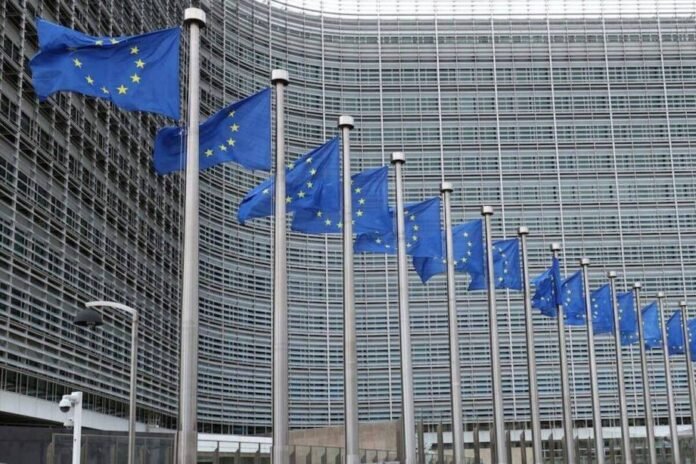
European Union foreign ministers agreed Monday on a new round of sanctions targeting Israeli occupiers and organizations accused of supporting illegal settlement activity in the occupied West Bank.

“It’s done! The European Union is sanctioning today the main Israeli organizations guilty of supporting the extremist and violent colonization of the West Bank, as well as their leaders. These most serious and intolerable acts must cease without delay,” French Foreign Minister Jean-Noel Barrot said on US social media platform X.

Barrot said the EU also adopted sanctions against “the main leaders of Hamas.”

“The hope that France revived last year in New York, that of two recognized and respected States living side by side in peace and security, we will let no one undermine it,” he added.

READ: US opposes Israeli annexation of West Bank, diplomat tells UN

EU foreign policy chief Kaja Kallas also confirmed the decision, saying EU foreign ministers “gave the go-ahead to sanction Israeli settlers over violence against Palestinians.”

“It was high time we move from deadlock to delivery. Extremisms and violence carry consequences,” Kallas said on X.

The decision came as EU foreign ministers gathered in Brussels for a meeting of the Foreign Affairs Council.

The occupied West Bank has seen escalating violence since the start of Israel’s war on the Gaza Strip in October 2023, including killings, arrests, home demolitions and settlement expansion, according to Palestinian officials.

At least 1,155 Palestinians have since been killed, about 11,750 injured, and nearly 22,000 arrested in the occupied West Bank, according to official Palestinian figures.

READ: 9 Israeli ministers demand police allow occupiers to storm Al-Aqsa Mosque to mark East Jerusalem occupation

The missing link in America’s critical minerals push isn’t mining – it’s processing expertise

0
the-missing-link-in-america’s-critical-minerals-push-isn’t-mining-–-it’s-processing-expertise
The missing link in America’s critical minerals push isn’t mining – it’s processing expertise

The United States is spending billions of dollars to secure access to critical minerals – minerals and metals that are essential to modern technology, from electric vehicles to smartphones and military systems.

But amid the push to dig more, one question gets far too little attention: Who will actually process what comes out of the ground?

Between mining and the finished product lies a complex chain of separation, refining and advanced manufacturing. Since the 1990s, however, the United States has lost much of its critical mineral processing capacity.

Rebuilding domestic mineral supply chains will depend not only on resource availability and funding, but also on whether the U.S. can rebuild the technical expertise and industrial systems required to process those materials on a large scale.

How America lost its lead

The United States was a global leader in rare earth minerals from 1965 through the mid-1980s. It produced about 15,000 metric tons a year, about three times the amount produced by the rest of the world.

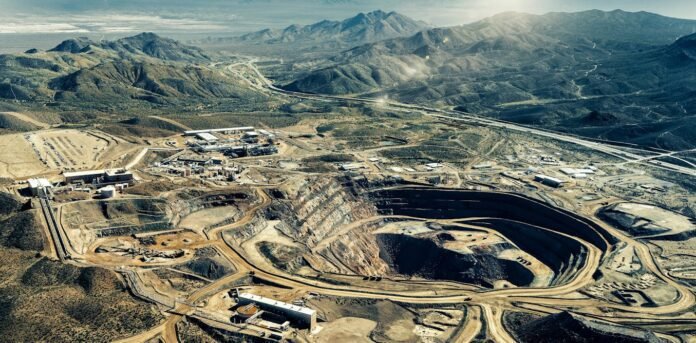
The Mountain Pass mine in California supplied the majority of the world’s rare earth elements used in electronics and the defense industry. American metallurgists, chemical engineers and processing facilities had significant expertise in its production and processing.

However, environmental damage, including wastewater pipeline leaks that released radioactive wastewater into the Mojave Desert during the 1980s and 1990s, and tightening regulations increased operating costs in the United States. During that period, much of the world’s manufacturing base for rare earth elements shifted to China, where labor costs were lower and environmental regulations were less stringent.

As production grew abroad, U.S. production of rare earth elements fell sharply – to near zero by the early 2000s, according to the U.S. Geological Survey.

In recent years, as much as 90% of the rare earth minerals extracted in the United States and allied countries have been shipped to China for processing. In 2024, the U.S. relied on imports for about 80% of its rare earth compounds and metals.

Why bringing processing back is not simple

The U.S. government is now pushing to increase domestic critical minerals production, citing national security. But building a processing facility is not like opening a warehouse.

These facilities require years of permitting, highly specialized equipment and a workforce trained in metallurgy, chemical engineering and industrial systems operation. The time from investment decision to production can stretch across a decade.

The U.S. currently has two domestic rare earth mining locations. One is in southeast Georgia, which extracts rare earth elements as a byproduct of heavy mineral sand mining. The other is Mountain Pass, which produces bastnaesite, a rare earth carbonate mineral. The mines produced about 51,000 metric tons of rare earth mineral concentrates in 2025, while the U.S. imported about 21,000 metric tons of rare earth compounds, most of them from China, according to 2025 U.S. Geological Survey data.

The U.S. has also lost expertise. Mining and mineral engineering education programs now produce only a few hundred graduates per year, well below the levels of past decades. The number of accredited programs has declined since the 1980s. Many faculty members are nearing retirement.

Industry projections estimate that the mining workforce will need to grow significantly in the coming years to meet rising demand. Specialized skills in areas such as rare earth separation, metallurgical testing and environmental systems design require years of training and practical experience. And while mining can produce high-paying jobs, the industry also has a reputation for environmental damage and hazardous conditions.

Environmental compliance is part of the skill set

Processing critical minerals is a dirty industry. That fact has made it more difficult for processing and refining companies to operate in the U.S.

For example, separating rare earth elements typically involves chemical processing with acids and solvents. When waste streams are poorly managed, these processes can produce toxic wastewater and air pollution and contribute to soil erosion. In parts of China where rare earth production expanded rapidly in the 1990s and 2000s, contamination from mining and processing has polluted rivers and damaged nearby farmland, and the wastewater can seep into soil and groundwater.

In the U.S., modern facilities must meet strict federal and state standards for air quality, water discharge and waste management that raise the cost of processing. These regulations were developed in response to environmental disasters, like the Cuyahoga River fire of 1969, when industrial oil and waste on the river burned, and hazardous waste crises like the Love Canal disaster that led to landmark environmental laws.

Operating a refinery or separation facility in compliance with regulatory standards today requires expertise in pollution control, waste treatment and sustainable process design. That requires a workforce skilled in materials science and engineering and with knowledge of environmental systems. Without environmental expertise, operational risks, regulatory challenges and project delays can increase, affecting long-term viability.

How to build a US supply chain

Rebuilding U.S. supply chains will require more than expanding extraction.

Canada’s critical minerals strategy offers an example. It connects mining projects to battery and electric vehicle manufacturing by funding processing facilities, developing regional supply chain hubs and investing in workforce training programs tied to those industries.

Australia has combined critical minerals policies with incentives and public financing to encourage domestic mineral processing, while also expanding university and vocational training in mining, metallurgy and mineral processing.

The United States has many of the key ingredients needed to rebuild its processing capacity, including research universities and workers with transferable industrial skills. Land-grant and technical universities could expand programs that integrate mining, materials science, environmental restoration and recycling. In regions such as Appalachia, where coal’s decline has left workers with skills but few job opportunities, retraining programs for new mineral recovery jobs could help people transition to a new industry.

A few federal programs support parts of this transition, including research hubs that develop new extraction and processing technologies, apprenticeship initiatives and university-industry partnerships. However, these efforts are spread across multiple agencies, with limited coordination to align priorities and investment.

The real bottleneck

America’s critical minerals strategy is often discussed in terms of geology and geopolitics – where resources are located and who has access to them.

But supply chains depend on people and systems. That’s America’s real bottleneck in creating a domestic supply chain.

A successful domestic supply chain will require workers who know how to separate neodymium from praseodymium, operate solvent extraction circuits and maintain hydrometallurgical plants within regulatory standards. These are highly specialized skills that take years to develop.

The United States has significant mineral resources and growing policy support. Now, it needs to pay attention to the workforce and industrial capacity needed to transform those resources into usable materials.

This gap developed over decades. Addressing it will likely require sustained investment alongside broader mineral policy changes such as permitting reforms and investment in domestic processing facilities.

Syria Strips Bashar Assad of Civil Rights, Seizes Assets and Properties

0
syria-strips-bashar-assad-of-civil-rights,-seizes-assets-and-properties
Syria Strips Bashar Assad of Civil Rights, Seizes Assets and Properties


[DAMASCUS] Syria is seeing major new judicial moves as authorities pursue prosecutions against several prominent figures from the former regime, in what observers describe as an early step toward transitional justice and accountability for abuses committed during the country’s yearslong conflict.

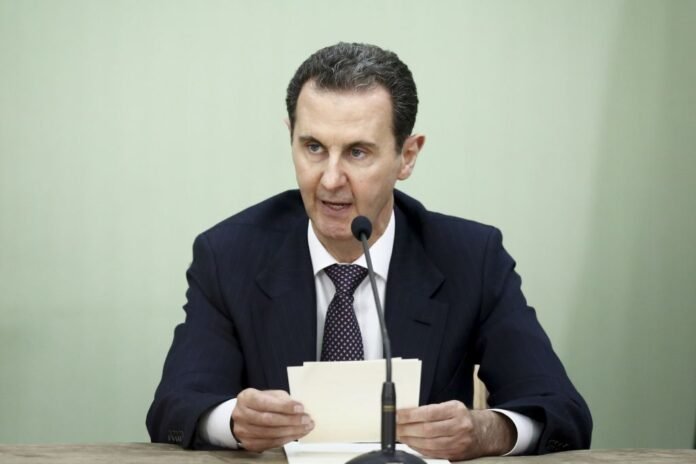
The Fourth Criminal Court in Damascus has ruled to strip former Syrian President Bashar Assad, his brother Maher Assad, and several former military and security officials of their civil rights while placing their movable and immovable assets under state administration, according to The Media Line’s correspondent in Damascus.

The ruling was issued during a public hearing connected to the trial of former Brig. Gen. Atef Najib, who faces charges related to widespread abuses committed during the 2011 protests in the southern province of Daraa, the birthplace of the Syrian uprising. The charges include “systematic mass killings,” “arbitrary detention,” and “participation in the al-Omari Mosque massacre,” one of the bloodiest incidents during the early days of anti-government demonstrations.

The legal measures also targeted several prominent military and security figures, including Fahd Jassem al-Freij, Mohammad Ayoush, Louay al-Ali, Qusai Miheoub, Wafiq Nasser, and Talal al-Aseimi. Observers say the move goes beyond procedural legal action and reflects an effort to reopen files tied to violations committed throughout the war.

A correspondent for The Media Line reported that the hearings initially took place in the presence of journalists and representatives of human rights organizations before portions of the proceedings were closed during witness testimony to protect the investigation and ensure witness safety. Atef Najib was also questioned directly as prosecutors presented evidence and accusations related to the events in Daraa.

The trials have brought renewed attention to the Assad family’s 54-year rule over Syria, beginning with Hafez Assad’s rise to power in 1970 through what was known as the “Corrective Movement” and continuing with the transfer of power to his son Bashar Assad in 2000.

Over the decades, the ruling family consolidated control over Syria’s political, military, and security institutions by building an extensive intelligence and security apparatus that played a central role in governing the country, monitoring public life, and suppressing political dissent.

The Syrian regime relied heavily on overlapping security agencies designed to prevent the emergence of rival power centers within the state. Sensitive military and intelligence positions were often assigned to individuals loyal to the ruling family.

Politically, the regime entrenched a one-party system led by the Baath Party, effectively marginalizing political pluralism and independent opposition movements. Although Syria maintained formal constitutional institutions, elections, and a parliament, real decision-making power remained concentrated within the presidency and the inner circle surrounding the security establishment.

Economically, Assad-era Syria saw increasing overlap between political authority and business elites closely tied to the regime. Under Hafez Assad, the state dominated large sectors of the economy through a centralized socialist model. During Bashar Assad’s early years, Syria gradually shifted toward a market economy, but the economic opening failed to create genuine competition and instead enabled a narrow elite to monopolize key sectors such as telecommunications, energy, real estate, and trade.

One of the most prominent figures symbolizing this economic influence was Rami Makhlouf, Assad’s cousin, who controlled vast business networks across strategic sectors and was often described as the regime’s financial backbone.

The Syrian economy also became deeply intertwined with patronage systems and political favoritism, concentrating wealth among elites connected to the ruling establishment while social inequality widened and development levels declined across many parts of the country.

On the security front, the Assad regime faced several domestic challenges over the decades, most notably its confrontation with the Muslim Brotherhood in the late 1970s and early 1980s. The conflict culminated in the 1982 Hama crackdown, when Syrian forces launched a massive military assault on the city, killing thousands in one of the deadliest episodes in modern Syrian history.

When nationwide protests erupted in 2011, Assad’s government faced its most serious threat since the regime’s establishment. Authorities responded with military and security force crackdowns, transforming the protests into a prolonged and devastating armed conflict that killed hundreds of thousands, displaced millions, and caused widespread destruction to Syria’s economy and infrastructure.

Throughout the war, the regime strengthened its dependence on security forces, allied militias, and foreign support to maintain control, relying heavily on military and political backing from Russia and Iran.

Observers say the latest judicial measures represent the first official attempt to prosecute figures who for decades were considered beyond legal accountability. The proceedings have also reignited debate over transitional justice and the possibility of holding officials accountable for abuses committed throughout Syria’s modern history.

At the same time, questions remain about whether these trials can contribute to meaningful national reconciliation in a country still struggling with the consequences of war, political fragmentation, and severe economic and security challenges.

Pirates are already playing Forza Horizon 6 days before its launch

0
pirates-are-already-playing-forza-horizon-6-days-before-its-launch
Pirates are already playing Forza Horizon 6 days before its launch

Playable copies of Microsoft’s Forza Horizon 6 have appeared on game piracy sites more than a week before the game’s official launch, the apparent result of a mistake in uploading the game’s files to Steam over the weekend.

Since the early days of Steam, players have been able to preload encrypted versions of supported games well ahead of release so the game is ready to play when the encryption key is released on launch day. But early Sunday morning, Microsoft mistakenly uploaded roughly 155 GB of Forza Horizon 6 files to Steam in unencrypted form, as tracked by SteamDB.

That unprotected upload was noticed almost immediately across social media sites and Reddit. Within hours, Reddit’s CrackWatch community was reporting that the game’s copy protection had been broken, allowing for easy downloads of pirated versions across multiple piracy sites reviewed by Ars (while that initial CrackWatch post has since been “removed by Reddit’s Legal Operations team,” details of another crack were being discussed on CrackWatch as of Monday morning).

As of Monday, footage from Forza Horizon 6 can be seen in multiple YouTube videos and livestreams.

In March, an unencrypted copy of Death Stranding 2 was similarly uploaded to Steam days before the game’s PC release, leading almost immediately to its availability on piracy sites. But Death Stranding 2 had already been available for over a year on the PlayStation 5 when that leak happened, somewhat blunting its overall impact.

Back in 2018, the Denuvo copy protection for Hitman 2 was broken days before the game’s official launch date, thanks to the quick work of crackers working on an early access version made available to preorder customers.

The unprotected early upload could be a costly mistake for Microsoft, which is set to officially release Forza Horizon 6 on May 19 (or May 15 for those who pre-purchased the $120 Premium Edition). A 2024 study of Denuvo protection estimated that when a cracked version of a game is available within the first week of its release, it results an average 20 percent reduction in total revenue. While that study didn’t examine the impact of pre-release cracks, the potential economic impact is likely even higher.

Italy prepares hantavirus guidance as global health authorities monitor cruise ship outbreak

0
italy-prepares-hantavirus-guidance-as-global-health-authorities-monitor-cruise-ship-outbreak
Italy prepares hantavirus guidance as global health authorities monitor cruise ship outbreak


Italy’s Health Ministry is preparing a circular letter on hantavirus for regional authorities and healthcare professionals following renewed international concern over the rare but potentially deadly disease, Italian news agency ANSA reported Monday.

The ministry said the document will provide updated guidance on surveillance, prevention and case management as health authorities monitor developments linked to recent hantavirus cases reported abroad.

The move follows heightened attention surrounding reports of hantavirus infections connected to a cruise ship outbreak in South America that was highlighted in international media coverage, including by the BBC.

Hantavirus is primarily spread through exposure to infected rodents or their urine, saliva and droppings. Symptoms can initially resemble the flu but may develop into severe respiratory illness in some cases.

Italian health officials stressed there was no immediate public health emergency in Italy, but said the circular was being prepared as a precautionary measure aimed at ensuring local health systems remain informed and coordinated.

The Health Ministry’s planned guidance is expected to be distributed to Italy’s regions, hospitals and public health bodies in the coming days, according to ANSA.

Health experts generally recommend avoiding contact with rodents, maintaining proper sanitation in enclosed spaces and using protective measures when cleaning areas that may contain rodent contamination.

An American and a French national who have returned to their home countries having left a cruise ship hit by a deadly outbreak of hantavirus have tested positive, authorities say.

The US health department said a second American national on the repatriation flight had also shown mild symptoms, adding that both passengers had travelled back in “biocontainment units out of an abundance of caution”.

French Health Minister Stéphanie Rist said a woman was isolating in Paris and her health was deteriorating, with 22 contact cases traced.

More than 90 passengers of the MV Hondius ship, currently docked in Spain’s Canary Islands, are being repatriated.

In its latest update from Tenerife on Monday, Spanish officials said 54 people were still on board the ship.

Spanish Health Minister Mónica García said six of those were passengers: four Australians, one Briton and one New Zealander.

Three passengers – a Dutch couple and a German woman – have died after travelling on the vessel. Two of them are confirmed to have had the virus.

Sources: ANSA/BBC

A U.S. Senate Candidate Says Foreign Truckers Are Making America’s Roads Unsafe. His Own Truckers Have Caused Harm.

0
a-us-senate-candidate-says-foreign-truckers-are-making-america’s-roads-unsafe-his-own-truckers-have-caused-harm.
A U.S. Senate Candidate Says Foreign Truckers Are Making America’s Roads Unsafe. His Own Truckers Have Caused Harm.

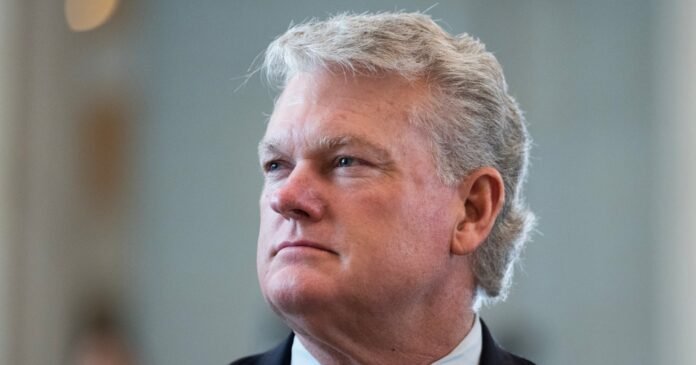
A Georgia congressman running for one of the country’s most competitive U.S. Senate seats has vowed in social media posts and interviews to make America’s roads safer — by taking commercial driver’s licenses away from noncitizens.

“If you can’t read English road signs,” Mike Collins, a Republican, posted on Facebook in April, “you don’t belong behind the wheel. Period.”

Collins, the owner of a trucking business and a member of the U.S. House of Representatives’ transportation committee, is one of the loudest champions of the Trump administration’s effort to revoke licenses from nearly 200,000 noncitizen commercial drivers, including thousands of truckers. The Trump administration has pushed the policy forward even though its own officials have written that there’s no empirical evidence to show that foreign truckers cause more crashes than truckers who are American citizens.

At the same time, however, Collins has opposed rules that experts say actually would reduce the odds of serious crashes. Those rules could have required that Collins’ family business sink substantial money into new safety measures for its fleet.

Over the past 25 years, crashes involving truckers for Collins’ business killed five people and injured more than 50 people — including one woman who now needs around-the-clock care due to a severe brain injury — according to federal data, court filings, plaintiffs’ attorneys and police records.

Drivers and passengers who were injured in those crashes later claimed in lawsuits that truckers for Collins’ business have caused them to collectively incur hundreds of thousands of dollars in medical expenses. The figure the business has paid out is not known because the settlements it reached with crash victims have been confidential, as is common in such suits.  Court filings in one suit state that both parties agreed to a $1 million payout from the business’s insurer. Collins’ business denied wrongdoing by truckers and the business itself in those cases.

ProPublica’s analysis of federal motor vehicle data from the past two years shows that Collins’ business has a higher rate of unsafe driving and speeding violations per mile than the majority of trucking companies with substantial mileage. The analysis also shows that the company’s recent crash rate sits around the median of similar companies, while the rate of injury from those crashes sits in the top fifth.

Safety experts told ProPublica that some of the technologies opposed by Collins, which include devices on semitrucks to limit their speed and sensors on big rigs to automatically brake in the face of a potential collision, reduce the odds of crashes leading to serious injuries and deaths. The country’s largest trucking trade group — a group that Collins’ family business is a member of, according to the company’s website — has supported mandates for those technologies.

“These are proven technologies,” said Zach Cahalan, executive director of the Truck Safety Coalition, which advocates on behalf of crash victims and their families. He added that the technologies would “protect those we hold dear on our roads from horrific tragedy.”

Neither Collins’ campaign nor his congressional office responded to ProPublica’s requests for comment or to questions about his family business’s safety record or his policy positions on trucking safety. His campaign manager declined to make him available for an interview. The business did not respond to questions sent by ProPublica; an employee told ProPublica that press inquiries about the business are handled by Collins’ congressional office.

In recent years, Collins has described his efforts to keep foreign truckers off the roads as “purely a safety issue.” He has also questioned the effectiveness of other safety measures and said that they would have saddled his industry with extra costs.

“We want to be safe,” Collins said in one congressional hearing. “I don’t know of a trucking company out there that doesn’t want to be safe. And when they are not safe, they are taken off the road.”


Toward the end of 2023, his first year in Congress, Collins had one of his first chances to support a measure that experts believed could make the roads safer. The Biden administration had proposed a rule that would require the installation of devices to limit the speed of trucks, capping it as low as 60 miles per hour.

But Collins questioned the need for the rule. He told officials at a transportation committee hearing that the federal government shouldn’t require the safety measure. He said insurance companies already serve as a sufficient speeding deterrent, because they have the ability to cut off coverage to truckers with unsafe driving records. He also said the rule wasn’t needed because of yet another deterrent that had long been in place.

“They are called speed limit signs,” he said. “They are enforced by law enforcement.”

Collins’ position stood at odds with the industry’s largest trade group, American Trucking Associations, which that year had expressed support for capping the speeds of trucks between 65 and 70 miles per hour. Collins did not respond to questions about why his views are at odds with ATA, which represents the interests of 37,000 members, including Collins’ family business.

In 2025, the Trump administration withdrew the speed limiter proposal. U.S. Secretary of Transportation Sean Duffy celebrated the decision as one that would get “D.C. bureaucrats OUT of your trucks.”

Collins also pushed back against a different proposal, which would have required trucks to have automatic emergency braking systems. That technology can force a truck to slow down if the potential for a collision is detected.

Federal officials had estimated that the braking system mandate could prevent more than 8,000 injuries a year. ATA supported much of the proposal, too. Yet Collins, whose family business has used those systems in some trucks, explained at recent congressional hearings that the technology was “very expensive” and didn’t work that well. “People don’t understand that these things are actually hurting more than they’re helping right now,” Collins said at a hearing last year.

Some of Collins’ truckers have been involved in crashes because of their alleged failure to slow down, according to citations and police reports obtained by ProPublica. Over the past five years, three people hurt in those crashes have sued Collins’ fleet because its truckers allegedly failed to maintain a safe distance, leading them to cause crashes. The plaintiffs claimed that they sustained serious injuries that cost five to six figures in medical expenses.

The truckers and Collins’ business denied wrongdoing in the cases. The three cases were dismissed. Lawyers for two plaintiffs said the cases ended in a settlement; a lawyer for the third plaintiff did not respond to multiple requests for comment about the dismissal of the case.

The fate of automatic emergency braking requirements is now up in the air, too. The Trump administration has delayed the rule from going into effect and, according to ProPublica’s reporting last year, may narrow the scope of it.

A smiling man wearing a long-sleeve button-down and jeans drives inside of a truck cab with an overlay of text: “Mike Collins: Businessman Trucker.”
A still from Mike Collins’ ad for his U.S. Senate campaign from July 2025. Collins has used his identity as a trucking business owner as political clout, despite his company’s history of crashes and safety concerns. Screenshot by ProPublica via Facebook

Collins has said that his decades in the business make him especially attuned to safety measures that work, compared with bureaucrats who have “beaten to death” his industry with too many regulations. In the late 1980s, Collins became the head of the family’s trucking company before he had graduated college. He took over for his dad, Mac Collins, who served as a congressman from 1993 to 2005.

Shortly into Mike Collins’ time as president, one of his company’s truckers lost control of his trailer. The crash that followed sent a 19-year-old woman to the hospital. The trucker later pleaded guilty to driving under the influence of cocaine. The business drew scrutiny because that trucker had pleaded no contest to drunk driving earlier that year but was allowed to stay on the road. A political opponent later aired a TV ad that accused the family’s trucking business of being cited for “more than a hundred” safety violations.

At the time, Mac Collins blamed the company’s insurer for missing the drunk-driving conviction in a background check. He said the ad contained “falsehoods” but didn’t specify what was wrong. The company ultimately fired the trucker after the crash, Mac Collins told the Ledger-Enquirer in 1994.

The larger the Collins trucking fleet grew — into one of about 100 trucks, hauling timber for Georgia-Pacific as well as tires and steel — the more traffic citations and inspection violations its truckers received. The data ProPublica reviewed showed that truckers have gotten into more than 90 crashes that have led to at least 51 injuries and five deaths since 2001.

In 2007, one Collins trucker veered into oncoming traffic on a North Carolina highway and hit a white Honda CR-V. The CR-V’s driver, Bridget Murphy, and the trucker both died. Murphy’s estate and two of Murphy’s passengers filed a lawsuit and, according to a court filing in 2009, agreed to a $1 million payout from the company’s liability insurance coverage. The company wrote in a filing that the trucker had been “stricken by a physical impairment beyond his control.”

In 2021, another trucker switched lanes on an Indiana highway and collided into a car driven by Larkin Cooper. She claimed in a lawsuit that the trucker’s “negligent and reckless” driving caused injuries that forced her to drop out of nursing school and switch to a lesser-paying career. Her lawyer wrote that the total damages were likely to exceed $75,000.

In 2023, a trucker failed to stop quickly enough while approaching a red traffic light on a northeast Georgia highway, causing a four-vehicle crash, according to court records. Drivers in two vehicles later said in lawsuits that they had sustained serious medical injuries. One of them claimed that the costs to treat his back, knee and neck totaled more than $120,000.

Collins did not answer ProPublica’s questions about the lawsuits. Lawyers for the family’s business denied wrongdoing in the suits in Indiana and Georgia. Soon after, the business settled for undisclosed sums.


During a televised debate in April, just weeks before the May 19 Republican primary for the U.S. Senate race, Collins told viewers that his time in the trucking business had taught him how to work across the aisle in Washington, D.C. His political ads feature him behind the wheel of a rig, and his yard signs have a logo of an American flag in the shape of a semi.

Yet his messaging about making roads safer centers on one main idea: getting noncitizen truckers off the road.

In one social video from November, Collins was on one side of a split screen, speaking about a sign on the other screen.

“You know what this sign says?” Collins asked. “Nah, neither do I.”

“Y’all, It’s a road sign from Uzbekistan, which is exactly why I’m able to drive a truck in Georgia, but not Uzbekistan,” he continued. “But somehow, y’all, that common sense, well, it didn’t apply to one man on our roads.”

Collins then replaced a photo of the sign with a mug shot of an undocumented trucker named Akhror Bozorov. Collins said he had been “wanted in Uzbekistan for terrorism and spreading Jihad.” After Bozorov was arrested last year, the Department of Homeland Security published a press release that criticized Pennsylvania Gov. Josh Shapiro’s transportation department for issuing a license to Bozorov and President Joe Biden’s administration for granting the trucker his work authorization.

Collins went one step further and used the trucker’s story to attack the politician he’s trying to unseat, U.S. Sen. Jon Ossoff, D-Ga., for not being tough enough on immigration.

He also cited Bozorov’s story as justification to strip noncitizen truckers of their licenses — but failed to present evidence that noncitizen truckers make the roads less safe.

In March, the Trump administration enacted its rule that could eventually revoke commercial licenses from nearly 200,000 noncitizen drivers. But according to the administration’s initial analysis of its own rule last year, “There is not sufficient evidence, derived from well-designed, rigorous, quantitative analyses, to reliably demonstrate a measurable empirical relationship” between a trucker’s citizenship status and safety outcomes.

A letter from nearly 20 Democratic state attorneys general pointed out that the Trump administration cited only five fatal crashes last year that were caused by noncitizens with commercial driver’s licenses, out of more than 4,000 deaths involving CDL drivers nationwide. The letter said that the Trump administration’s rule presented “no facts” to support the claim that revoking thousands of licenses would “benefit public safety.”

Public interest lawyers have also filed a legal challenge to the rule. The challenge is pending.

“The notion that immigrant drivers are less safe than other drivers is not supported by the facts,” said Wendy Liu, one of the lawyers who filed the challenge.

The same week that Trump’s rule was enacted, Collins doubled down on his calls to restrict commercial licenses for noncitizens, writing in an Instagram post that “this isn’t some game. Lives are at stake. Deport these thugs now.”

Iran offer was ‘reasonable,’ official says after Trump rejection

0
iran-offer-was-‘reasonable,’-official-says-after-trump-rejection
Iran offer was ‘reasonable,’ official says after Trump rejection

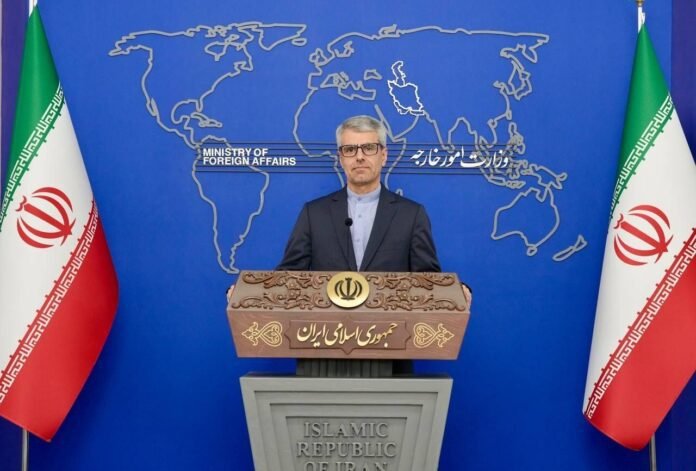
Esmail Baghaei. Photo: Iranian Foreign Ministry

A top Iranian official on Monday said a peace proposal summarily rejected by President Donald Trump was a “reasonable and generous” path toward ending the war.

Esmail Baghaei, the spokesperson for Iran’s Foreign Ministry, said during a press conference that “the only thing we have demanded is Iran’s legitimate rights,” accusing the US side of insisting on “unreasonable demands.”

Baghaei’s remarks came after Trump in a social media post dismissed the Iranian proposal – a counter to the latest US offer – as “totally unacceptable.”

“I don’t like it,” Trump wrote, without specifying what he found objectionable. The president’s reply sent oil prices surging.

Trita Parsi, executive vice president of the Quincy Institute for Responsible Statecraft, wrote late Sunday that it appears Iran is offering to compromise significantly on its uranium stockpile and future enrichment.

“The US demands that the entire Iranian stockpile be shipped out of the country. In the past, Tehran rejected shipping any of it out; it only agreed to downblending it. In its latest proposal, however, it offers to have some of it diluted and the rest shipped to a third country,” Parsi wrote. “As I understand it … Iran is also offering to accept an arrangement in which it will not need to enrich uranium at all for 12 years. This is not the 15-20 years Trump originally wanted, but longer than the 3-5 years Terhan originally offered.”

“That Iran is willing to pause enrichment at all is a significant concession that I am not sure is fully appreciated by the American side,” he continued. “It remains unclear to me why this and the stockpile have become so central in Trump’s perspective. His earlier red line was simply no nuclear weapons… The insistence on shipping the entire stockpile out appears to be another example of Trump allowing America’s red lines to be replaced by Israel’s. It would be a shame if the entire negotiation collapses over this issue.”

The details of the US offer and Iran’s counter have not been fully made public, though some of both sides’ demands have been divulged in media reports and vaguely outlined by government officials. Trump, who has repeatedly issued dire threats against Iran and called the country’s leaders “lunatics,” told Axios that he spoke with Israeli Prime Minister Benjamin Netanyahu about Iran’s response.

“It was a very nice call,” said Trump. “We have a good relationship.”

Iranian comments

Iran’s Baghaei, for his part, rejected the notion that Iran is the party behaving irrationally. “It is enough to look at Iran’s record,” he said. “Were we the ones who deployed troops? Are we the ones bullying countries in the Western Hemisphere? Were we the ones who committed assassinations twice during negotiations?”

“Is our proposal for safe passage through the Strait of Hormuz unreasonable?” Baghaei asked in response to the US president. “Is establishing peace and security across the entire region irresponsible?”

Citing an “informed source,” Iran’s semi-official Tasnim News Agency reported Monday that “Iran’s text emphasizes the necessity of an immediate end to the war and guarantees against renewed aggression toward Iran, along with several other issues within the framework of a political understanding.”

“Iran’s text also stresses the necessity of lifting US sanctions and ending the war on all fronts, as well as Iranian management of the Strait of Hormuz should certain commitments be fulfilled by the United States,” Tasnim added. “The necessity of ending the naval blockade against Iran immediately after the signing of the initial understanding is also among Iran’s emphasized demands, the source said.”

-Common Dreams

0FansLike
0FollowersFollow
0FollowersFollow
0SubscribersSubscribe
- Advertisement -
Google search engine

Recent Posts