15.4 C
London
Tuesday, May 5, 2026
Home Blog

Cities are rehearsing for deadly heat. Will it help when disaster comes?

0
cities-are-rehearsing-for-deadly-heat.-will-it-help-when-disaster-comes?
Cities are rehearsing for deadly heat. Will it help when disaster comes?

On a sunny Friday afternoon in October 2023, some 70 children filed into a cool, dark tunnel in the south of Paris to help the city rehearse for its increasingly hot future.

The tunnel, part of the abandoned Petite Ceinture railway encircling the city, is always 64 degrees Fahrenheit (18 degrees Celcius), making it the perfect safe haven from the potentially lethal heat imagined outside. Once underground, each youngster was asked to simulate the effects of extreme temperatures that might become reality in their lifetimes. Some pretended to have been poisoned by food that spoiled during a power outage. Others faked the effects of carbon monoxide leaking from a faulty generator. Meanwhile, Red Cross workers scrambled to decide who to send to overwhelmed hospitals. Around them, dozens of others — fire fighters, city officials, teachers — did their best to simulate the chaos and cascading impacts a heat wave of unprecedented duration and intensity might force them to confront.
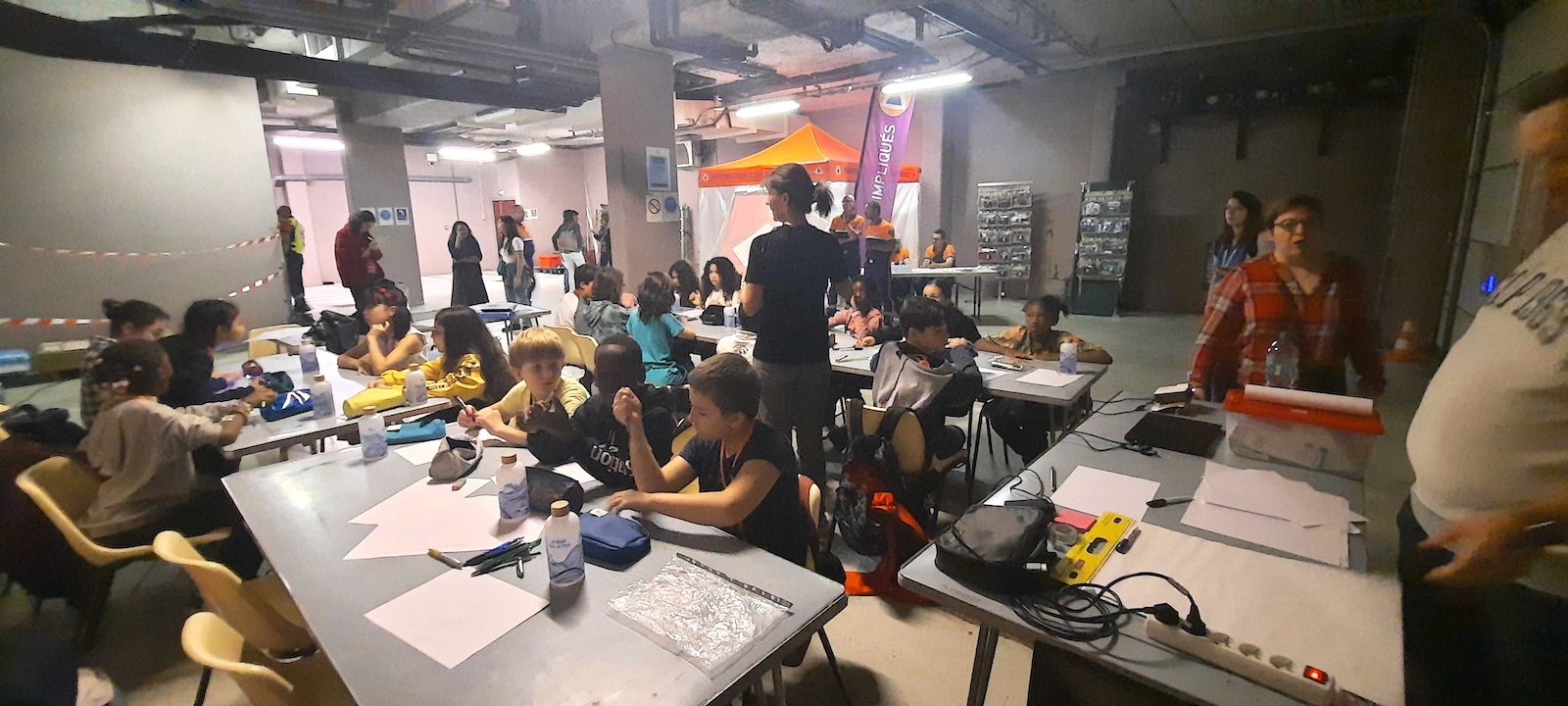
Young children and their teachers participate in an extreme heat simulation.

The officials who created the Paris at 50C exercise wanted children to participate because they will face the consequences of a warming world and because they ask so many questions. Crisotech

The exercise, called Paris at 50 degrees Celsius, was designed to imagine what might happen if the mercury hits 122 degrees F, something scientists warn is increasingly likely by 2100. It combined live drills and a tabletop exercise to help shape a plan to protect the city’s 2 million people from that kind of heat. Once limited to a handful of cities, these exercises are spreading as local governments stress test health services, emergency response, and essential infrastructure before temperatures reach dangerous extremes.

What Paris is rehearsing could soon confront cities across the continent. European governments are being urged to prepare for 5 to 6 degrees F (2.8 to 3.3 degrees C) of warming, a change that could push Paris toward dangerous summertime temperatures by the end of the century. 

Such heat is a global threat. Modeling suggests more than 1.6 billion people in nearly 1,000 cities could regularly face perilous conditions within three decades. Heat waves are already straining hospitals, causing outages, and paralyzing transit. In the complex systems that make up a city, even small failures can lead to larger breakdowns.

But as cities invest time and money into these exercises, one question remains: Do they actually improve preparedness?


It took Pénélope Komitès more than 18 months to prepare a drill that would last just two days. As Paris’ deputy mayor in charge of resilience, she considers such planning essential. “It was very important for us to show people that heat waves are not just something we see on the TV, but something that can happen soon, and that we need to improve what we’re going to do,” she said.

To help inform the scenario, scientists at the Île-de-France Regional Climate Change Expertise Group, which advises city leaders on climate risk, modeled what the future might look like. Other studies based on data from the Intergovernmental Panel on Climate Change have largely confirmed their projection that temperatures could hit 122 degree F (50 degrees C) by the end of the century. For now, the city’s record stands at 108.68 F (42.6 C), registered on July 25, 2019.
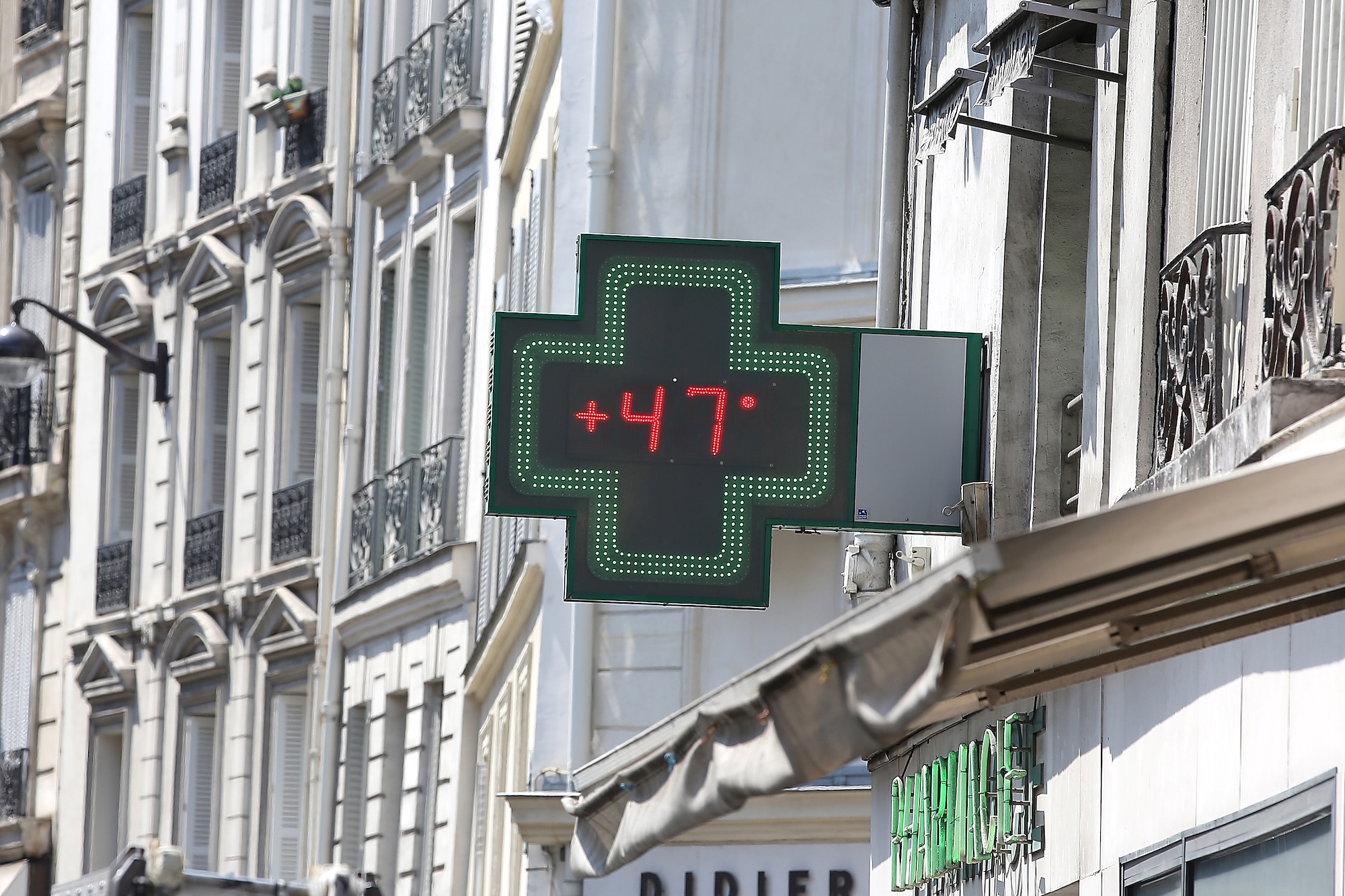
a sign over a pharmacy says 47 degrees C

The simulations are designed to test a city’s response to all the things that might happen during a prolonged heat wave, such as people experiencing heat stroke and other health impacts. Crisotech

“The objective was to anticipate all possible impacts of a heat dome across Paris, to consolidate the [preparedness] measures planned by the city in the event of an extreme heat wave, test new solutions, … and identify new actions to be implemented,” said Komitès.

More than 100 organizations took part, from city agencies and emergency services to utilities and nonprofits. While other cities, including Melbourne, London, and Phoenix, have hosted similar workshops, Paris made the unprecedented decision to include citizens in the role-playing portion of the €200,000 ($236,000) event. The city held informal meetings to recruit volunteers and help residents visualize the scenario. Children were especially valuable participants, both because they will face the consequences of a warming world and because they ask so many questions, said Ziad Touat, the crisis management consultant who led the simulation for Crisotech.

Komitès also wanted to prepare Parisians for the day when all of this would unfold for real. That’s important, she said, because the pandemic showed that well-informed communities respond to a crisis more effectively. If people recognize the symptoms of heat stroke, for example, or know when to find a cooling shelter, first responders can focus on the most vulnerable, Komitès said.


Five years ago, these simulations were confined to a handful of cities in the U.S. and Europe. Now, cities around the world are getting interested, said Cassie Sunderland, managing director of climate solutions at C40, a global network of mayors focused on climate action. 

Some of the sims are sprawling operations like the one in Paris; others are more modest tabletop exercises, or hybrids that combine interagency workshops with limited role-playing. All are meant to identify points of failure before a crisis does.

A blue mobile air conditioning unit in Paris

A huge generator provides power during an exercise designed to simulate the surge in electricity demand Paris might experience during a prolonged heatwave. Crisotech

Success is not measured by whether a drill runs smoothly, but rather, the opposite. The most valuable ones are realistic enough to force decisions, yet unpredictable enough to expose coordination problems and infrastructure failures. For example, engineers might be brought in to determine the temperature at which train tracks expand. “Imagine if you suddenly have a huge amount of people who need additional health care, but doctors and nurses can’t get to the hospital because of transport failures,” said Sunderland.

The growth of these exercises reflects a broader concern that many cities are unprepared. “Simulating extreme heat is really important,” said Dr. Satchit Balsari, a professor of emergency medicine at Harvard Medical School. “A lot of cities stop and make heat action plans, but they actually don’t drill into how they are going to implement them, whether the funding for it exists, and if they actually have the know-how.”

Some scenarios can only be explored in a simulation, such as the question of cooling patients experiencing heatstroke. “How do you take a large human body and put it in ice? Is there a bucket that big?” Balsari said. “The answer is no, so is it a body bag? Where do you get all this ice?” What might appear simple on paper becomes a challenge unless tested.

Simulations should also consider what measures are needed after the heat breaks, Balsari said. For instance, healthcare systems will need plans for addressing the long-term impacts like increased risk of chronic kidney disease. “Have a final session that thinks about what the subsequent months look like,” he said. 

Read Next

Such challenges are compounded because most cities do not have someone responsible for crafting a unified response. A few, including Athens, Greece; Melbourne, Australia; and Freetown, Sierra Leone, have appointed “heat officers,” but most rely upon coordination among multiple departments. Rigorous testing can identify where that might break down and how coordination can be improved. Phoenix created a heat department after an exercise revealed that very problem.

Some of the cities most vulnerable to extreme heat may not have the resources to stage an expensive drill. But Touat said preparedness is not an all-or-nothing affair. Smaller, less costly efforts can still build readiness — whether by testing communications plans, mapping vulnerable citizens, or practicing how agencies would collaborate during an outage. “Don’t try to have everything at once and to spend too much money to do an exercise of this type,” he said. “It’s better to do five small ones than one big one.”

However, simulating extreme heat to improve preparedness isn’t enough, and work to decrease temperatures in cities must happen in parallel, Sunderland said. True resilience requires long-term changes that cool cities and slow climate change itself.


Even though these simulations have their limits and can come with a hefty price tag, many cities still see their appeal. 

In Taiwan, they are expanding beyond cities. The country staged a tabletop exercise last year and plans a live simulation in July to test coordination within cities and between national officials. The goal is to test whether national and local agencies can effectively work together, said Ken-Mu Chang, the deputy director general of the country’s Climate Change Administration. 

The tabletop exercise and role-playing scenario will focus on managing the health impacts of a days-long 104-degree F (40-degree C) heat wave — the kind of prolonged heat that can overwhelm hospitals and power systems. One challenge, Chang said, is designing an exercise that feels realistic enough to be useful without creating unnecessary public anxiety.

After last year’s trial run, officials realized that much of the exercise focused on agencies explaining existing plans, rather than showing how they’d respond to a crisis. “We want to make those gaps more visible and more concrete,” Chang said. “We want agencies not only to explain what they have, but also to identify what is still missing under a more extreme situation.”

Meanwhile, Barcelona, Spain is adapting the model Komitès helped develop.

A shade structure shields people from the sun in Barcelona

Barcelona has created more shaded areas throughout the city to protect people from increasingly dangerous heat. Courtesy of Ajuntament de Barcelona

The Catalan city faces growing urgency to prepare for a hotter future. The Mediterranean basin is warming 20 percent faster than the global average, making it one of the continent’s climate hot spots. Barcelona is among the European cities expected to see the greatest number of heat-related deaths by the end of the century. 

Given that future, city officials want to develop plans to protect infrastructure, build a registry of vulnerable residents, and improve coordination. “It’s not easy when there’s so many actors and it’s not easy when the impacts are on so many different levels,” said Irma Ventayol, who leads Barcelona’s climate change department and is overseeing the simulation.

kids play on a playground with sun shades in Barcelona

Barcelona’s Heat Plan 2025-2035 calls for the continued expansion of green infrastructure and shaded areas in public schools and playgrounds. Courtesy of Ajuntament de Barcelona

“Can we cope with waste management at 40 degrees C or 50 degrees C? Are the trucks prepared? Maybe they are, but no one has checked, so we need to ask those questions sooner rather than later,” Ventayol said. She also sees media coverage of the event as an opportunity to raise awareness among Barcelona’s nearly 2 million residents.

Beyond protecting the city, she hopes the exercise can help others. “I’d like to have a protocol that can serve other cities too, a scalable methodology that other cities can take and replicate, even for other impacts such as floods,” Ventayol said.


In Paris, the simulation — which inspired a flooding exercise that took place in October — produced 50 recommendations later folded into the city’s 2024–2030 Climate Action Plan. Some are now underway, including insulating thousands of homes and replacing asphalt parking spaces with trees; it planted 15,000 last winter alone. Even the three bathing spots along the Seine River that opened with a splash during last year’s Olympics are part of a broader effort to help residents stay cool.

Komitès is being peppered with questions from others eager to launch similar exercises. All of the lessons for the simulation were compiled into two public documents: a guide to running a heat simulation of this scale and a report detailing what organizers learned. “Everything we did is already on the internet so you’re already one step ahead,” said Touat at Crisotech.

The biggest surprise to come out of the exercise had nothing to do with infrastructure resilience or cooperation among departments. What shocked Komitès the most was how unprepared Parisians are for extreme heat.

The realization prompted what may be the city’s most important adaptation effort yet: preparing citizens, not just officials. In March, Paris opened its first Campus of Resilience with the civil protection agency and fire department. The center will host training sessions, smaller simulations, and public workshops open to all residents. “We need to talk with Parisians,” Komitès said. “To inform them, to prepare them.”


Trump, invite Xi to make Chinese cars in the US, with conditions

0
trump,-invite-xi-to-make-chinese-cars-in-the-us,-with-conditions
Trump, invite Xi to make Chinese cars in the US, with conditions

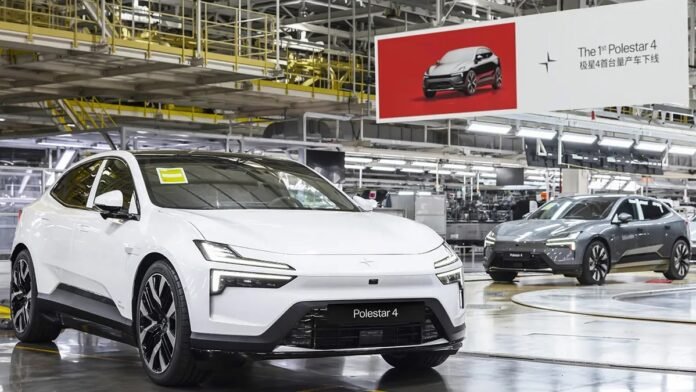
A Polestar 4 at the Polestar factory in Hangzhou Bay, China. Models sold in North America will be built in South Korea. Photo: Polestar

[Editor’s note: Urban Lehner has seen up close how this sort of situation plays out. He was the Wall Street Journal’s Detroit bureau chief in the 1980s when the Japanese were starting to make cars in the United States.]

China is the world’s largest auto exporter. The Chinese would like to manufacture cars in the United States.

More than 70 House Democrats have urged President Donald Trump to keep Chinese cars – and carmakers – out of the US market.

“As you prepare for your upcoming summit with the President of the People’s Republic of China, any effort to lower barriers for Chinese automobiles or otherwise facilitate their entry into the US market would pose a direct threat to American manufacturing, workers, and national security,” the members of Congress said in a letter to the president.

Among their demands: Maintain high tariffs on Chinese cars and ban Chinese companies from manufacturing cars in the US. The representatives said 5% of gross domestic product and 10 million jobs are at stake.

The lawmakers criticize the government subsidies and exploitative labor practices that have enabled Chinese companies to make such inexpensive cars. They have a point. China has done many of these things and they’re among the reasons the Chinese can undersell foreign competitors.

If the US started importing Chinese cars in a big way, domestic carmakers would be at risk of going under. But why prevent the Chinese from manufacturing cars in the US? Having to hire American factory workers at American wage rates would seriously dent their cost advantage. They would be forced to compete on quality rather than price.

Granted, the Chinese can make good cars. Consumer Reports took a look at the four made-in-China cars already available in the US and found that at least one of them, the Buick Envision, “is one of the better small SUVs in its class.” General Motors says it is moving production of the vehicle to the US in 2028. The three others are the Lincoln Nautilus, Volvo S90 and Polestar 2.

The Chinese are especially big in electric vehicles; their EVs have buyers in many overseas markets swooning. The Chinese models tend to have longer battery range and better digital platforms and infotainment systems. Ford’s chief executive calls the Chinese “the 700-pound gorilla in the EV industry.”

The Chinese companies compete so fiercely in their own market that their quality will likely keep rising. Only makers of the highest-quality cars will survive.

It might be good for US carmakers to have to compete with the Chinese if the competition was on quality rather than price.

When Japanese car companies started manufacturing in the US 40 years ago, they were manufacturing better cars in smarter ways than the Americans. Detroit was forced to up its game – and did. American car quality rose. The same would likely happen now if the Chinese were allowed in.

If the goal is to protect US jobs and manufacturing, then, there’s a better way than banning Chinese manufacturing: Ensure that the competition is only on quality.

One way to do that would be to take a leaf from China’s foreign investment-policy book. Until recently, China imposed conditions on foreign direct investors. To set up manufacturing operations, they had to accept Chinese joint-venture partners. The partnerships were set up in ways that made technology transfer inevitable.

Uncle Sam could put one or more conditions on Chinese manufacturing. Here are some possibilities:

  • A US carmaker is a joint-venture partner with a 50% stake in the operation. (GM has a joint-venture partner for the Envision in Shanghai.)
  • The joint venture employs American workers at American compensation rates and employs American managers.
  • The Chinese cars made in the US contain a high percentage of US content.
  • At least initially, the high tariffs stand: The Chinese cars sold in the US are made in the US.

If the president judges that American auto jobs and manufacturing need protection from Chinese manufacturing in the US, he could impose one or more of these conditions.

If, instead, the members of Congress convince Trump to hermetically seal the US from all Chinese cars, the result could be a widening quality gap between Chinese and American cars.

Being forced to compete with the Chinese in the American market would give US automakers an incentive to match China’s best quality.

The president could present a come-in-with-conditions policy to Xi Jinping as a win-win. The Chinese are allowed access to the US car market, something they want. The US gets continued protection for American jobs and manufacturing. US consumers get better cars.

Should farmers care? Trump hopes to come back from Beijing with assurances that the Chinese will buy lots of American soybeans. He’s much more likely to win those assurances with this modest proposal than by just saying no to Chinese cars.

Former longtime Wall Street Journal Asia correspondent and editor Urban Lehner is editor emeritus of DTN/The Progressive Farmer. This article, originally published on May 4 by the latter news organization and now republished by Asia Times with permission, is © Copyright 2026 DTN, LLC. All rights reserved.  Follow Urban Lehner on X @urbanize.

Google Home gets upgraded Gemini voice assistant and new camera controls

0
google-home-gets-upgraded-gemini-voice-assistant-and-new-camera-controls
Google Home gets upgraded Gemini voice assistant and new camera controls

Google launched its big AI-fueled redesign of Google Home late last year, and it has been adding features here and there ever since. Today, the company announced a bigger update that might take care of some of your smart home woes. Camera feeds will be easier to navigate, and the AI event labeling should be more straightforward. The move to Gemini 3.1 for Home voice assistance should also mean the robot is less obtuse and more reliable.

According to Google, Home users who have signed up for the early access channel should already have the update to Gemini 3.1. Google initially released this AI model on other platforms in February, but that rollout didn’t include Google’s smart speakers. With the expansion to Home, Google says those speakers will be able to take advantage of Gemini 3.1’s “advanced reasoning to better interpret and execute complex, multi-step voice commands.” Of course, it says something like that with every Gemini update.

Google has cited various AI evaluations that show Gemini 3.1 is better at parsing big, complex prompts. It showed gains in tests like ARC-AGI-2 and Humanity’s Last Exam, both of which require tricky logic problems that need domain-specific knowledge. How much that kind of capability will benefit a smart speaker that specializes in brief interactions is unclear, but you can have long conversations with Gemini in your smart home devices if you want. Google notes the improved model can process multiple different tasks in a single prompt, saving you from breaking up tasks into multiple commands.

The AI-powered Ask Home feature is also expanding beyond the app with this update. In the near future, the Home-specific Gemini chatbot will be available in the Home web interface, allowing you to conversationally check camera history and create automations. This will start as a preview feature, though.

Google is also adding new automation options, both triggers and actions. Here’s the full list.

  • Security & Access Control
    • Arm and disarm: Arm security systems, check if the security system is armed
    • Door lock monitoring: Checking specific states like locked, unlocked, jammed,
      forced open, or ajar.
    • Binary sensors: Detecting simple true/false states such as contact/no contact,
      leak/no leak, or freeze/no freeze.
  • Appliance & Cleaning:
    • Appliance state (Start & Stop): Controlling operational states (Start, Stop, Pause,
      Resume) for devices like washers, dryers, and coffee machines.
    • Robot vacuums: Specific commands to dock, pause, or resume vacuum cleaning
      sessions.
  • Lighting & Environment Control
    • Lighting control: Adjusting brightness levels, toggling On/Off, and managing light
      effects.
    • Colored lights: Change the color of a device (light bulb, LED strip, etc.), change
      the color temperature of a device
    • Window coverings: Opening and closing blinds or checking their specific
      position percentage.
    • Climate: Monitoring relative humidity levels via thermostats.
  • Media & Entertainment
    • Playback control: Monitoring states like playing, paused, or buffering.
    • Volume: Checking and managing volume levels on media devices.
  • Device Health & Inputs
    • Power management: Monitoring battery levels and charging status.
    • Switch events: Utilizing smart switch inputs, including initial presses, long
      presses, and release events.

Paying subscribers can use Ask Home to create automations (with or without the new ingredients), but everyone can do it the old-fashioned way with buttons and drop-down menus.

Less camera jank

The 2025 Home app update made a lot of changes, but it didn’t exactly nail the experience. Camera control was still annoying, and the AI notifications weren’t very helpful (or accurate). Today’s update could address at least some of that, but Google says the underlying model is not being upgraded to Gemini 3.1. That’s only for the voice assistant end.

Google says timeline navigation will be much improved now, featuring a higher frame rate when scrubbing through video. That should make it easier to get where you’re trying to go, and if you miss it, there are finally simple skip buttons that take you 10 seconds forward or backward. There are also new swipe controls for switching between timeline/event views and resizing the player window.

Event history UI

Google Home’s new event history with shorter descriptions and Familiar Faces feedback.

Google Home’s new event history with shorter descriptions and Familiar Faces feedback. Credit: Google

With the move to Gemini, Google Home’s ability to recognize people fell off considerably, making notifications much less useful. Home will now have thumbs up/down feedback buttons, which will help make Familiar Face notifications more accurate over time. Facial recognition will also automatically ignore blurry or obscured images to improve IDs. Notifications and timeline previews will also have better animated preview GIFs that are centered on the subject, too.

The AI model that analyzes camera footage in Google Home has a tendency to mislabel things, which can lead to frustrating and misleading notifications, like telling you there’s a deer in the house. Google isn’t claiming a major change to the quality of descriptions, but the system has apparently been streamlined to make the descriptions simpler. Google says this means you’ll see less cluttered and more straightforward event labels that are “more accurate.” We will see about that.

You won’t get Ask Home or the AI event descriptions with a free Home profile. But those paying for extended footage will see the allegedly simpler AI-generated descriptions in more places. Descriptions will come to the timeline view, as well as to older Nest cameras that previously didn’t work with Gemini. You have to make sure Gemini for Home features are enabled in the camera settings, though.

Deputy Sheriff Fired After Shocking Brawl with Umpire at Son’s Baseball Game (Video)

0
deputy-sheriff-fired-after-shocking-brawl-with-umpire-at-son’s-baseball-game-(video)
Deputy Sheriff Fired After Shocking Brawl with Umpire at Son’s Baseball Game (Video)


What should have been a fun, family-friendly youth baseball tournament ended in chaos after a sheriff’s deputy-turned-coach allegedly got into a shocking on-field brawl with an umpire—right in front of kids and parents.

Lt. Darrell Holley, 44, who worked with the Oktibbeha County Sheriff’s Office, was coaching a Starkville under-14 team when tempers exploded at the end of a final game. According to reports and widely circulated footage, Holley stormed toward umpire Jeff Akins, 52, near the pitcher’s mound—and that’s when things spiraled fast.

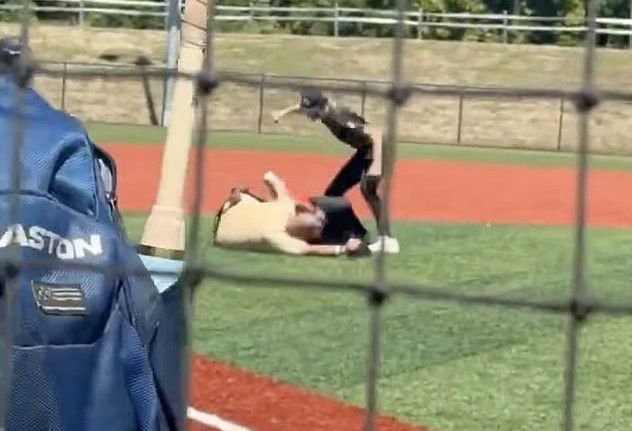
Video shows the two men exchanging shoves before Akins appears to throw the first punch. But the situation quickly escalated beyond just the two adults. Holley’s own son, a player on the team, is seen jumping in and striking the umpire from behind—twice.

Moments later, Holley allegedly delivered a blow to the back of Akins’ head, knocking him to the ground. Even after the umpire fell, punches continued as stunned spectators watched the disturbing scene unfold.

The chaos didn’t stop there. As Akins tried to get back up, more punches were thrown before both men ended up wrestling on the ground. Holley’s son reportedly joined in again, continuing to hit the umpire until coaches and officials rushed in to break it up.

WATCH THE VIDEO BELOW:

Police say both Holley and Akins were arrested and charged with fighting not in self-defense, a misdemeanor offense. Holley was held on a $1,000 bond before being released, while Akins was let go on his own recognizance.

The fallout was immediate.

Holley was fired from his position with the Oktibbeha County Sheriff’s Office the very next day. Sheriff Shank Phelps didn’t mince words, making it clear the department had zero tolerance for what happened.

“A baseball field is supposed to be a place of fun and family; fighting has no place there,” he said in a statement.

Tournament officials were equally outraged. Director Mike Narmour announced that everyone involved in the altercation will be banned from all future Grand Slam events. He also revealed that stricter rules are coming, including a zero-tolerance policy when it comes to arguing with umpires.

“Grand Slam Mississippi is sickened and devastated by these types of events,” Narmour said. “There’s no place for that—especially in front of kids.”

Under the new crackdown, any coach, player, or even fan who so much as argues with an umpire could be immediately removed from the field.

Clavicular and the Right-Wing Project to Radicalize Young Men

0
clavicular-and-the-right-wing-project-to-radicalize-young-men
Clavicular and the Right-Wing Project to Radicalize Young Men


Alain Stephens is an investigative reporter covering gun violence, arms trafficking, and federal law enforcement.

Braden Peters, better known online as Clavicular, did not become famous by offering young men discipline in any ordinary sense. He became famous by selling them “ascension”: the promise that a better face, leaner body, harsher jaw, and ruthless optimization could buy them power in a world they believe has already priced them out. In April, that sermon hit a grisly wall (or, more accurately, a floor) when Peters was hospitalized after a suspected overdose during a livestream in Miami. Bloody and bruised, he later described the hospitalization as “brutal.” 

In the aftermath, Clavicular’s online presence has unraveled. YouTube recently removed his channels for repeated policy violations, including linking to prohibited sites and attempting to evade a previous ban. Despite being pushed off major platforms, he doubled down, staging a stunt trip late last month with a group of young women to Little Saint James, the private island once owned by Jeffrey Epstein. 

Now, that same pattern of boundary-pushing has bled into the courts: Clavicular is facing a civil lawsuit in Florida from Aleksandra Mendoza, who alleges battery, fraud, and emotional distress, including claims that he injected her with a non-FDA-approved substance during a livestream and engaged in nonconsensual sex. Still, the streamer seems to make news almost daily, most recently for reportedly entering into a club venture in Miami with a man with ties to the Israeli mob.

None of this ongoing ordeal is some tragic footnote to the Clavicular brand. It has been him reaching his final form, stripped of filters: a young man preaching mastery through chemical self-invention, then collapsing live on camera, only to be slapped with subpoenas.

The New Prophet of Male Despair

Clavicular’s movement lives in the vocabulary of “looksmaxxing,” “hardmaxxing,” and “ascending,” a lexicon born in incel-adjacent internet forums and now being pushed into the mainstream by TikTok, Kick, and algorithmic outrage. Looksmaxxing culture didn’t emerge from nowhere; it grew out of the fringe online forums where users reduce attraction to “power, status, and looks,” obsessively rate faces, and turn self-improvement into an unyielding, almost clinical hierarchy of attractiveness.

His popularity stems from selling what he claims is the answer to a worldview born from the insular hodgepodge of pickup artists, anti-women forums, and involuntary celibacy groups — and he’s dragged it into the spotlight.

He has promoted steroid use, “bone smashing,” injecting peptides, and even using methamphetamine as part of a savage self-improvement regimen aimed mostly at young men. He has also drifted openly around Andrew Tate, Nick Fuentes, and the broader online right while insisting politics are for “jesters” (an insult in the looksmaxxing community). That juke is its own tell, because when a teenager builds an audience on hierarchy, humiliation, sexual scarcity, and racialized beauty standards, he is doing politics whether he says so or not.

Clavicular did not invent male despair, but he has certainly monetized it to his own great success.

It’s not unheard of for a young man to throw himself into the gym, practice self-discipline, embark on a rigid diet, and curate a public-facing persona. I’ve imbibed on bodybuilding culture in my own life. But Clavicular’s worldview is fueled by more than simple vanity. It is blackpill nihilism in gym clothes. The “blackpill” tells young men that the social order is fixed, intimacy is a commodified market, and the only thing left is to become more physically dominant than the next guy or accept your permanent irrelevance. In that mental framework, body maintenance becomes class warfare of the face. It is triage in a mating economy. Clavicular did not invent male despair, but he has certainly monetized it to his own great success.

Blackpilled

There is a reason this message is resonating. Clavicular’s runway to launch is an America where young men are more atomized and are worse off than their forefathers. Young American men are lonely, socially frayed, and increasingly detached from the kinds of institutions that once gave people identity outside romance and work. Gallup found that 25 percent of U.S. men ages 15 to 34 said they felt lonely “a lot” of the previous day, a higher number than young women and second in the world among our peer countries. The 2023 surgeon general’s advisory on social connection warned the country’s broader epidemic of isolation is not merely personal but structural.

Gone too is the era where men could feel like they were contributing to the community and world around them. A farmer could see his food nourishing his neighbors, a cobbler’s work lived on the feet of his peers, and a doctor literally saved the lives of his local village. These are now nothing more than oral legends passed down from baby-boomer and Gen X parents of the way it used to be. 

But it is also revisionist history. This is the part too many elders refuse to admit: A lot of men were raised to expect an unearned inheritance. It was an entitlement gained at the exclusion of everyone else. They were assured that stable work, baseline social respect, and starting a family would follow if they merely stayed on the tracks as a heterosexual, yet basic, white man. But the tracks have buckled. Economist Raj Chetty’s work on mobility found that 90 percent of children born in 1940 earned more than their parents; for children born in the 1980s, that figure had fallen to around half. Meanwhile, wage growth for the top has badly outpaced the bottom 90 percent over the long arc of modern American inequality. That does not excuse reactionary politics, but it does explain why so many young men feel they were promised adulthood and handed precarity.

Misogyny is foundational to the entire right-wing project.

The modern far right, which has stepped in to fill the space the erosion of our institutions and social fabric have left behind, understands something even modern liberals tend to flatten: Misogyny is not a secondary issue. It is foundational to the entire right-wing project. Researchers have described misogyny as a gateway into far-right radicalization, and scholars who research white nationalism have shown how “Great Replacement” ideology is soaked in reproductive anxiety — the fantasy that white decline is caused not just by immigration but by women refusing their assigned breeding role. In these circles, women are not citizens. They are demographic assets and currency.

But as civil rights, reproductive rights, and immigration have expanded opportunities, life isn’t so easy for the static white-bread young men of America. They now have to bring more to the table.

It is why in Clavicular’s talk of “ascension” doesn’t just coincide with a rise in personal male beauty, but in parallel with right-wing mansophere attacks on what has been the perceived robbery of white male entitlements. It’s no shock that much of Clavicular’s vocabulary aims to diminish women, whom he publicly humiliates on his stream and reduces into self-serving chasers of status, making claims of centuries-old patriarchal domination as a societal good.

It’s an ethos that punches back at the external reality of his impressionable fanbase. 

That is why Clavicular matters beyond his own cartoonish excess. He is not just some young misanthrope with a camera and a syringe. He is a clean vessel for a much older grievance: that sweeping social change has stripped certain men, especially but not exclusively cis white men, of an unearned ease their fathers and grandfathers treated as normal.

The Disappearing Man

The real theft here is spiritual. In a quixotic quest for authenticity, young men are instead being sold a playbook that they must collapse themselves into tiny, fixed archetypes: warrior, king, alpha, mogger, Chad.

Missing is heroism — not performative strength, but the harder labor of standing against cruelty.

In Clavicular’s lane, and under the auspices of social media attention, the commandment is simpler still: become beautiful or become nothing. Conspicuously absent from that script are virtues like wisdom, tenderness, stewardship, restraint, humor, and even morality. 

Missing, too, is heroism — not performative strength, but the harder labor of standing against cruelty, telling the truth under pressure, protecting the vulnerable, and trying to tilt the world a few degrees toward justice.

That is why the blackpill philosophy, and broader manosphere, is antithetical to perhaps the most important tenet of true growth: courage. 

It is surrender disguised as realism. It tells men to stop imagining themselves as builders of community tasked with fighting unjust systems, and instead obsess over their social ranking. It is a feudal vision of manhood with the body as castle, the whole world as an ever-present threat, and other men as rivals. 

That is the real cowardice of imagination at the center of Clavicular’s rise. Not that he tells young men to exercise, clean up, or care how they present themselves. Fine. Groom yourself. Build your body. Take some responsibility. But do not confuse optimization with grit. And do not mistake a man begging his followers to buy into his despair for a leader of men.

A New Look for ProPublica

0
a-new-look-for-propublica
A New Look for ProPublica

You may have noticed things look a little different when visiting ProPublica’s website recently or encountering our work on other platforms, such as Apple News or Instagram. We’ve updated our logo and our typefaces, and we made improvements to the design and functionality of our homepage and how we present our work. We wanted to take a moment to tell you what’s changed and why.

The biggest changes you’ll notice on our homepage are structural. Many of our investigations come with supporting material, including visual explainers, details on our methodology or ways to send us tips. Our new design allows us to package these pieces together, so it’s easier for you to find the full picture. We’re also showcasing more of our best investigations from the archives so readers have a chance to discover reporting they may have missed.

The new homepage allows investigations to be packaged with supporting material, such as our methodology or translations, and better showcases our visual journalism.

We’ve also made improvements to the presentation of articles, including more details about our journalists and partners, along with their photos and how to contact them securely if you want to contribute to our journalism. Many of our articles are available in other languages or can be listened to with audio narration. These options are now more prominent, but we’re also working to keep the focus on what matters most: our reporting and visual storytelling.

ProPublica’s logo and typefaces are new too. We think they’re bolder and cleaner, while maintaining a connection to the classicism of our name, and do a better job traveling across the many screens where you can find our work. Our previous visual identity was built for a different era, it launched before mobile phones and social media were ubiquitous, and it was due for an update.

ProPublica’s work on other platforms, such as Instagram and Apple News, has a new look to make us more recognizable and distinct.

What hasn’t changed: our commitment to investigative reporting in the public interest, our independence and the rigor we bring to every story.

More changes will roll out over the coming months. We hope you like what you see, and, as always, if you have thoughts, we want to hear them. Please email [email protected] if you notice any bugs or have suggestions for what else we can do. 

Many thanks to those who helped conceive this work, including our partners at Gretel and so many of our colleagues here, especially our design team, led by Allen Tan with Sophie Greenspan and Jeff Frankl.

Support Independent Journalism:

As a nonprofit newsroom, we rely on donations from individuals like you to fuel our work. Your support today will directly fund investigations that shine a light on urgent issues: corporations prioritizing profits over public safety, health insurers denying coverage to patients, unintended consequences of new laws and more.

Europe’s dilemma – to use China’s turbines to meet its renewable targets or not

0
europe’s-dilemma-–-to-use-china’s-turbines-to-meet-its-renewable-targets-or-not
Europe’s dilemma – to use China’s turbines to meet its renewable targets or not

Europe’s wind turbines have become part of a wider struggle over energy security, industrial power and the west’s dependence on China.

European wind power capacity has surged dramatically in recent years. Wind energy now supplies 17% of EU electricity up from 13% in 2019. Offshore wind has expanded particularly rapidly, with installed capacity growing strongly over the past decade.

But Brussels wants renewables to provide at least 42.5% of the EU’s total energy mix by 2030. Wind is “pivotal” to this strategy, according to the European Commission’s wind power action plan. The challenge for Europe is to meet its 2030 target, it needs to build 33 gigawatts (GW) of new wind turbines annually.

So far, data from 2022, 2023 and 2024 indicates that Europe has averaged only around 16-19 GW of new installations per year. This leaves a significant gap between Europe’s target and its implementation.

Across the Atlantic, the picture is just as uncertain. The US Inflation Reduction Act introduced during Joe Biden’s presidency promised a surge in renewable energy investment, including wind. But growing political opposition to turbines, especially from Donald Trump and his political allies, has cast doubt over how far that momentum can go.

Cheap turbines and fast delivery

Europe’s installation shortfall and the US’s retreat from wind energy create a strategic opening for China. Chinese manufacturers dominate the global wind industry, with six of the top ten turbine makers and producing over 70% of the world’s new wind turbines in 2024. Companies like Goldwind, Envision and Mingyang offer turbines that are 30-40% cheaper than western equivalents and promise faster delivery.

This puts the west in a bind: accept Chinese help to meet climate targets quickly and cheaply, or reject it and risk falling further behind.

Europe could certainly rely on Chinese wind power to close its gap in renewable energy. The same could be said about the US, although its desire to push forward with wind power is not clear. US wind deployment fell to 5.2 GW in 2024, the lowest level in a decade, and turbine orders dropped 50% in the first half of 2025.

However, allowing Chinese firms greater market access creates a real policy dilemma. While purchases of Chinese turbines would speed up Europe’s energy transition and is cost effective, the EU sees China as an economic rival and security risk that potentially undermines the union’s industrial and strategic autonomy.

The US appetite for Chinese wind tech is much lower than Europe’s. Aside from permit delays, grid connection bottlenecks and rising costs, Trump’s return to office in 2025 is an important factor in the US’s renewable slowdown. The US president has publicly labelled wind power “a joke”, and has frozen federal permits for offshore and onshore wind projects, in addition to eliminating renewable energy tax credits.

But that’s not all. Washington views China’s dominance in wind turbine technology as a security threat requiring protectionist barriers, and has effectively blocked Chinese wind technology through various measures. This includes national security probes into wind turbine imports, 50% tariffs on wind turbines and parts, and tax credit restrictions that bar companies using Chinese-manufactured components from accessing federal clean energy incentives.

Western tariffs haven’t slowed China’s wind industry but have redirected it. Chinese wind turbine exports surged 50% in 2025. By the end of 2025, cumulative exports had exceeded 28 GW, a thirteenfold increase from 2015. Chinese manufacturers are now selling wind turbines to more than 60 countries, and have established production or research operations in more than 20.

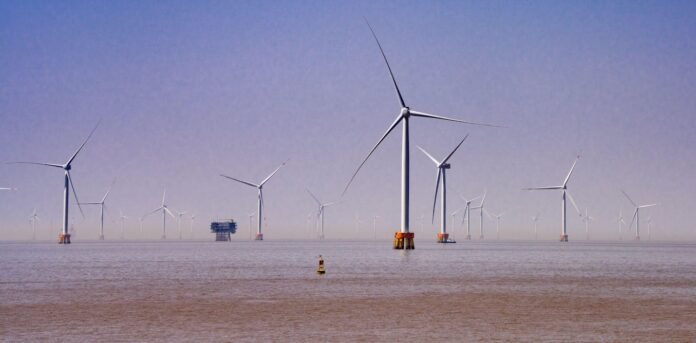
The UK’s largest wind farm is off the east coast.

Targeting new markets

The pattern is clear: China is targeting developing markets where western competition is weak and renewable energy demand is surging. The biggest purchasers of turbines from China in 2024 were Saudi Arabia, Uzbekistan, Brazil, Egypt and Kazakhstan. All are participants in China’s economic development plan, the Belt and Road Initiative.

But China’s wind momentum shows no signs of slowing. Pakistan, Indonesia, Vietnam, Saudi Arabia and Malaysia are expected to add 120 GW of wind and solar capacity over the next decade, requiring US$73 billion (£53.5 billion) in investment. Chinese firms already captured over 60% of renewable energy capacity in these markets since 2024, and is set to expand further.

While China’s wind turbine sales to the US and Europe may be uncertain, Beijing has secured a different prize. Since 2013, Chinese companies have installed 156 GW of power capacity across Belt and Road Initiative countries, 70% in Asia and 15% in Africa.

The west may be protecting its own energy independence, but may also be handing the control of Africa and Latin America’s energy future and security to China, if things don’t change.

Crypto exchange Coinbase to cut about 14% of workforce

0
crypto-exchange-coinbase-to-cut-about-14%-of-workforce
Crypto exchange Coinbase to cut about 14% of workforce


Coinbase said on Tuesday it ​will cut about 700 ‌jobs, or about 14% of its global workforce, ​as part of a ​restructuring plan aimed at ⁠reducing costs and repositioning ​the business for the ​AI era.

Shares of the crypto exchange were up 4.66% in ​premarket trading.

The company ​expects to complete the exercise largely ‌in ⁠the second quarter of 2026.

Coinbase expects to incur about $50 million to $60 million ​in ​total ⁠restructuring expenses, mainly tied to employee ​severance and other ​termination ⁠benefits, with most of the charges to be ⁠recognized ​in the second ​quarter.

Source:  Reuters

Financial strain, lockdowns and fear of infection during disease outbreaks magnify violence against women and girls − new research

0
financial-strain,-lockdowns-and-fear-of-infection-during-disease-outbreaks-magnify-violence-against-women-and-girls-−-new-research
Financial strain, lockdowns and fear of infection during disease outbreaks magnify violence against women and girls − new research

When the world shut down due to the COVID-19 pandemic in early 2020, another crisis quietly grew behind closed doors. Reports from around the globe suggested that violence against women and girls was increasing. Governments, nongovernmental organizations and advocates began referring to the phenomenon as a “shadow pandemic.”

To determine whether these headlines and informal reports reflected reality, we led the first-ever comprehensive review of studies tracking violence against women and girls during infectious disease outbreaks across low- and middle-income countries. We focused on those regions because less research on the topic has been done there, and women and girls face specific risks, such as child marriage, that are less prevalent in wealthier nations.

Our findings, published in BMJ Global Health and co-authored with UNICEF, are both clear and concerning: Violence against women and girls tends to increase during outbreaks, and the very measures used to control disease spread can lead to that rise.

Across 53 studies measuring changes in violence against women and girls in the first year of the COVID-19 pandemic, the majority found increases, with some studies showing no change and relatively few showing declines. This pattern held across different types of violence – for example, physical domestic violence, sexual domestic violence, psychological violence or online violence – particularly committed within the home.

But even more striking was how little evidence there was from other infectious disease outbreaks. Despite the growing frequency of global health emergencies, only one study examined violence against women and girls during an outbreak other than COVID-19, specifically examining violence in Sierra Leone during both Ebola and COVID-19.

How outbreaks contribute to gender-based violence

Infectious disease outbreaks do more than spread illness. They can disrupt economies, burden health systems and reshape daily life. These shifts can amplify existing inequalities and, in many cases, increase the risk of violence.

Our research identified five key pathways through which outbreaks contribute to violence against women and girls.

The United Nations dubbed the rise in violence against women and girls during the COVID-19 pandemic ‘the shadow pandemic.’

First, job loss, reduced income and financial stress were the most consistently identified contributors to violence. When households experience economic strain, tensions rise – and women and girls often bear the consequences. In some contexts, economic stress was linked not only to intimate partner violence but also to harmful practices like child marriage.

Second, movement restrictions like lockdowns and quarantines can trap women and girls with abusive partners or family members. While these outbreak response measures are designed to reduce disease transmission, they can also isolate women from social networks and limit opportunities to seek both formal and informal help.

Third, deeming certain services as nonessential reduces people’s access to support. During COVID-19, many health, social and legal services were scaled back or became harder to access. School closures also meant that girls in some contexts faced increased risks of exploitation, early pregnancy or forced marriage.

Fourth, perpetrators may use women’s and girls’ fear of infection to control or manipulate them. For example, men sometimes discouraged their partners from leaving the home or seeking care in order to avoid disease risk.

Finally, women’s and girls’ past experiences with health systems can influence their intention to seek services in the future. In settings affected by earlier outbreaks, such as the 2014 Ebola outbreak, mistrust of health services discouraged some survivors from seeking care after experiencing violence, especially if doing so might lead to quarantine or mistreatment.

These pathways are not isolated. They often interact and reinforce one another, creating conditions in which violence becomes more likely during crises.

Building better evidence

Public health emergencies are becoming more frequent, and measures like lockdowns and limiting access to schools, clinics and other services can have unintended consequences. Our findings show that protecting women and girls needs to be part of how public health experts respond to outbreaks from the start and not something to address only after violence has already increased.

Tracking the issue in different types of outbreaks – such as cholera, influenza or Ebola – could help determine which policy responses are most protective.

But even within COVID-19 research, we uncovered important limitations. First, most studies focused on adult women, with far less attention to girls. And second, many studies relied on metrics such as the number of hotline calls or clinic visits, which can be misleading. A drop in reports does not necessarily mean a drop in violence; it may reflect reduced access to services or greater barriers to reporting.

Despite the data gaps we uncovered, our study already points to targeted strategies that can protect women and girls: reducing households’ financial stress, making services safe and easy to reach, ensuring girls’ continued access to school, and building stronger community support.

Asia fracturing into energy security haves and have-nots

0
asia-fracturing-into-energy-security-haves-and-have-nots
Asia fracturing into energy security haves and have-nots

The US-Iran war is exposing a hard truth: Asia is a tiered system of energy access, where wealth determines resilience.

Investors have for years treated Asia as a single growth engine. Capital flowed into the region on the assumption that, despite the clear, well-known differences between nations, many fundamentals held: stable trade routes, manageable energy costs and export-driven expansion.

But this assumption is now under strain. Roughly a fifth of global oil supply typically passes through the Strait of Hormuz, but disruption there doesn’t hit Asia evenly, though. It sorts winners from losers.

Japan, South Korea and Singapore sit at the top of this hierarchy. They import most of their energy, but they also have the financial capacity to secure it.

Japan holds more than US$1 trillion in foreign exchange reserves. South Korea has over $400 billion. These countries can defend currencies, subsidize fuel, and outbid competitors when supply tightens.

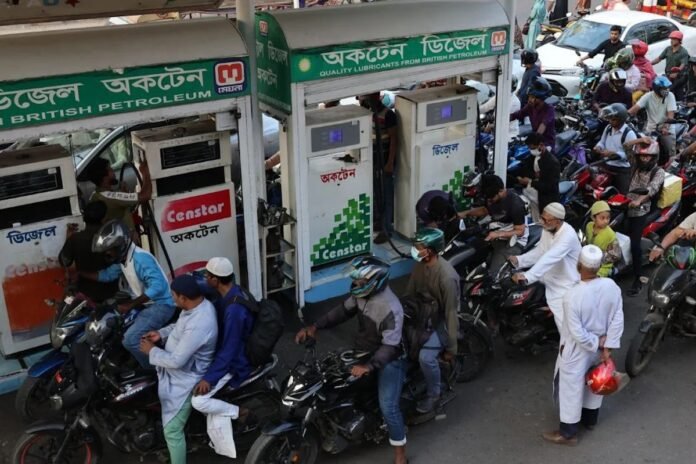
Lower down the scale, the picture becomes far more fragile. Bangladesh is running inflation above 8%, with officials warning that fuel costs are draining public finances.

Thailand, with one of Asia’s highest ratios of oil imports to GDP, has already cut its economic growth forecast to 1.5%. South Korea’s import prices surged 16.1% year-on-year in March, highlighting how quickly external shocks feed through into domestic costs.

The Asian Development Bank has cut regional growth forecasts to 4.7% from 5.1%, while raising inflation projections to 5.2%. These numbers matter, but, arguably, the pattern matters more.

Asia is splitting into tiers defined by energy security, fiscal strength and access to capital. In a tight market, of course, oil does not flow equally. It flows to those who can pay. And this creates a hierarchy of economic resilience.

For global investors, this changes how Asia should be understood. The old framework, of broad regional exposure capturing growth, is no longer sufficient.

Energy access is becoming a primary filter for capital allocation. Countries with strong reserves, credible policy and diversified supply will attract investment. Those without will see rising risk premiums.

Currency markets are already reflecting this divide, too. Japan has spent around $35 billion supporting the yen as energy costs push the currency lower. Other Asian economies don’t have the same firepower. As import bills rise, currencies will weaken, feeding further inflation and tightening financial conditions.

Bond markets will follow, as they always do. Those nations with weaker external balances and higher import dependence will face higher borrowing costs. Fiscal space will shrink precisely when governments are forced to spend more on subsidies.

Subsidies, in fact, are part of the problem. They buy time, but they don’t solve the underlying issue.

Japan can afford to cushion the impact of fuel prices. The Philippines can support public transport drivers. Vietnam can draw on emergency funds.

These measures soften the immediate impact, but they widen deficits and increase long-term vulnerability, particularly in economies with limited fiscal capacity.

The deeper shift is significantly more structural. Asia’s growth model has relied on cheap, reliable energy flowing from the Middle East, and that model, clearly, now faces sustained uncertainty.

Even if supply returns to normal, the risk premium will remain as shipping costs, insurance costs, and delivery times rise, and planning becomes harder.

Supply chains start to reflect this. The disruption in Hormuz has already contributed to a backlog of around 1,000 vessels, delaying cargo across energy and industrial inputs.

For manufacturing economies operating on tight margins and precise timelines, delays matter as much as prices. Production schedules slip, inventory costs rise and export competitiveness weakens.

All this, then, feeds directly into corporate earnings. Energy-intensive sectors, such as chemicals, transport and heavy industry, face margin compression. Companies in weaker economies struggle to pass on costs without hitting demand, and those with pricing power or exposure to energy supply gain a relative advantage.

Against this backdrop, savvy investors will need to adjust quickly.

Country selection becomes more important than regional allocation. Metrics such as foreign exchange reserves, current account balance and energy import dependence move to the center of analysis. Exposure to “Asia” as a single theme carries more risk than it once did.

China and India sit in complex positions within this hierarchy. China has scale and state control, but remains heavily dependent on imported energy. India continues to post strong growth, yet imports roughly 85% of its oil, leaving it exposed to price shocks.

Neither is insulated. Central banks across the region are, as such, facing difficult choices. Raising rates supports currencies but slows growth; yet holding rates risks deeper inflation and further currency weakness.

Singapore has already tightened policy, Australia is weighing further increases and others face similar trade-offs with less room to maneuver. The result is a region that is increasingly out of sync.

Nigel Green is CEO and founder of deVere Group

0FansLike
0FollowersFollow
0FollowersFollow
0SubscribersSubscribe
- Advertisement -
Google search engine

Recent Posts