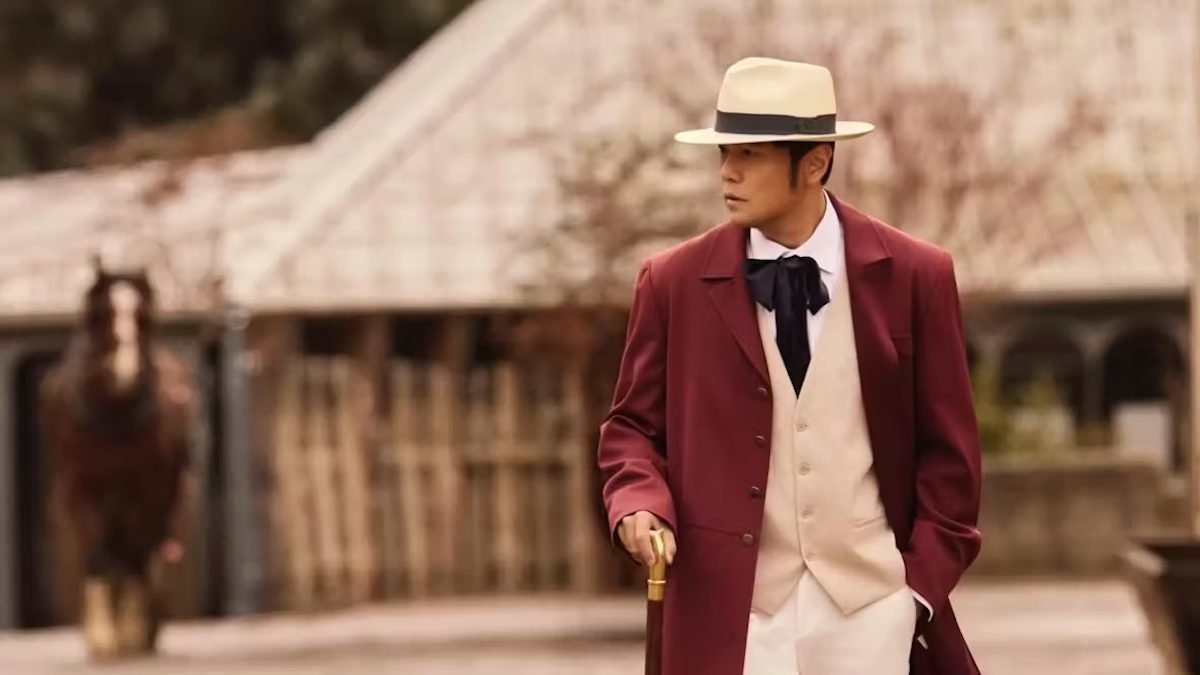
Taiwanese pop music superstar Jay Chou, known in Mandarin as Zhou Jielun (周杰倫), has put Australia’s Sovereign Hill on the map.
A nationally renowned tourist attraction in Golden Point, a suburb of Ballarat, Victoria, Sovereign Hill is an open-air museum that depicts the first decade following the discovery of gold in Ballarat in 1851.
Chou’s 25 albums have sold more than 30 million copies, and the music video for his latest hit, Gold Rush Town (淘金小鎮), was filmed in the open-air museum.
With over 9 million views on YouTube, the video offers a global audience for both Sovereign Hill and the Chinese Australian experience.

Chinese people and the Australian gold rush
Gold Rush Town marks the first time a pop superstar has told the history of Australia’s gold rush through Chinese eyes. But the Sovereign Hill museum has an admirable record of including the history of Chinese people during the Australian gold rush.
Led by historian Anna Kyi, the museum’s Chinese exhibits exemplify a new push in Australian heritage to rediscover the foundational role played by Chinese migrants in Australian history using Chinese-language sources.
The museum’s “Chinese camp” was opened in 2024, promoting the multi-ethnic nature of the goldfields and the rich cross-cultural relations that developed as a result.
Tens of thousands of Chinese came to the Victorian goldfields in the 1850s, interacting with people from all over the world.
The music video features Chou as a sharply dressed Chinese detective, walking stick in hand, chasing down Chinese bank robbers through the twists and turns of a frontier town in which the main characters are ethnic Chinese.
The Chinese in Ballarat were a prominent community in the 1850s. They made up 25% of the community, and may have been the majority in some areas of the colony. As late as 1871 – after the end of the city’s gold rush – 14% of men over 15 in Ballarat were Chinese.
Some Chinese Australians became wealthy during the Gold Rush. Chinese locals showed off their wealth just as Europeans did, with swagger and style and public display.
While stereotypes of Chinese as miners and market gardeners have some basis, many were involved in all variety of occupations, including police work.
Detective Fook Shing served on the Victorian police force from the 1860s to the 1880s, solving crimes across the colony and even as far off as Sydney.
Chou also plays a detective in the video clip – and you can clearly see the similarities between Fook Shing and Chou’s character.
Sharing an Australian Chinese story
Despite the intense political scrutiny for artists trying to maintain popularity on both sides of the Taiwan Strait, Chou has managed to avoid being boxed into a political position. He has carefully crafted an audience of everyone from Chinese ultra-nationalists to Taiwanese independence sympathisers.
Those trying to emphasize his politics often refer to a deliberately ambiguous 2007 quote: “Of course I’m Chinese. I’m also Taiwanese.”
Gold Rush Town has been incredibly popular on Chinese-language social media, spawning dozens of commentary videos and covers on popular sites such as BiliBili.
While The Ballerat Courier has reported that the clip could be “boosting Ballarat’s tourism industry,” we haven’t seen any evidence of this on social media. Indeed, many international Chinese speakers are commenting that the video was filmed in Melbourne – 90 minutes’ drive away.

Without travel to Sovereign Hill being part of the social media buzz, it seems unlikely the video will lead to huge tourist numbers beyond the small bump this month.
But the video’s value isn’t in tourism. Chou’s video highlights a shared Chinese and Australian past and a common humanity at a time of rising diplomatic tension between China and the West.
Chou has pushed the memory of the Chinese Australian gold rush experience away from simplistic discussions of racism, and toward the complicated and multifaceted experiences of real people in the 1850s.
The video shows Chinese Australians as gold rush pioneers, rather than gold rush victims; heroes in the national story, rather than marginal players.
People in China and Taiwan may not even register this as an Australian music video. But Chinese speakers in Australia will recognize the iconic location and the significance of this shifting history.
Gold Rush Town marks an important moment for Asia-Australia cultural relations, with a popstar bringing Chinese Australian history into the light in a positive way. We have come a long way from the 1983 filming of David Bowie’s quasi-racist China Girl in Sydney’s Chinatown.
Sophie Loy-Wilson is a senior lecturer in Australian history, University of Sydney. Craig A. Smith is an associate professor of translation studies, The University of Melbourne.
This article is republished from The Conversation under a Creative Commons license. Read the original article.








, has put Australia’s Sovereign Hill on the map. A nationally renowned)