24.7 C
London
Friday, May 29, 2026
Home Blog

Far removed from today’s global juggernaut, soccer was born in the well-heeled boarding schools of 19th-century England

0
far-removed-from-today’s-global-juggernaut,-soccer-was-born-in-the-well-heeled-boarding-schools-of-19th-century-england
Far removed from today’s global juggernaut, soccer was born in the well-heeled boarding schools of 19th-century England

Over the past two centuries, soccer – or football, as it is called in much of the English-speaking world – has become a truly global phenomenon that connects fans on all continents. It is also, come World Cup time, a deeply nationalist affair that pits teams and their fans from various countries against each other.

Yet today’s deeply competitive professional and spectator sport that spans the globe has far more local origins. As an expert on global history and author of a 2025 book on the subject, I know the game’s roots date back to early 19th-century England – and with a very specific social cause.

When English high school students and teachers created football as a sport in the first decades of the 19th century, it was to provide students at prestigious elite schools such as Eton with an opportunity to let off steam and excess energy. Students at such private boarding schools – they are called public schools in the United Kingdom – came mostly from wealthy families and were sent there not just for their education but also for socializing with their peers.

But boarding school students were often hard to control. Overprivileged students had a tendency to see teachers and headmasters not as authority figures but as people of lower social standing. Rebellions were common and pitted spoiled students against helpless teachers. Enter soccer: A strenuous physical activity such as kicking the ball across a field appeared to teachers as a means to regain control over their students and to redirect their energies.

The origins of soccer

Ballgames that pitted two groups of people against each other were nothing new in Britain.

Folk football” existed long before it became a school sport. However, these early ballgames were unregulated, raucous and violent encounters of two parties formed by inhabitants of two villages or two neighborhoods. They did not need to involve an actual ball but something that could be kicked across a field or through the streets of a town.

Such events have little in common with modern-day soccer. They could involve hundreds of people. Playing fields were not marked. And the goal was to kick the ball once across a marker, such as a hedge or a field line. These ballgames were not about scoring but about taking on the opposing team by all means available. Such sporting affairs were known to anyone in England in the first half of the 19th century.

An old photo of a soccer match in progress.

A soccer match in progress in 1885. Hulton Archive/Getty Images

The games migrated from there to school grounds.

At Rugby School, a public school in central England whose name was given to the modern game of rugby, students in the 1820s began playing a game that involved the kicking of a ball. Students engaged in these games because they gave them tremendous freedom.

The game was not yet codified, and teachers let students organize games without interfering in their play. Football offered both students and teachers what they craved most. Paradoxically, what for students was freedom was for teachers a useful means of control.

Teachers allowed the game to become a cherished activity of students because it took the students’ minds off other temptations. Tired and exhausted students, teachers reasoned, were good students who abstained from committing mischief and sexual behavior they deemed inappropriate.

The development of different games

Since the game lacked rules, and teachers kept a hands-off attitude toward the game, it gave students an opportunity to make their own rules. And these rules were the result of collective decisions of students.

From the 1840s to the 1860s, students produced rules that regulated how the ball could be handled, how many members a team should have and how scores were counted.

Students at Rugby School were the first to codify the game. These rules of 1844 allowed players to use their hands for controlling the ball. The rules produced by students at Eton in 1847, by contrast, outlawed the use of hands for propelling the ball.

But these were just a few of the many sets of football rules that students wrote in the three decades from the 1840s to the 1850s. And these codes did not yet clearly distinguish between a game that was focused on propelling the ball with hands – a key aspect of the modern game of rugby – versus a game that was focused on using only one’s feet, a key aspect of soccer.

The result was a great diversity of rules for a game that high school students played for fun. However, the game – mandatory for all high school students – was also used as an instrument of institutionalized bullying of younger students by older ones, with physical attacks on younger students built into the game. In effect, football of this time was a participation sport without any spectators.

Students played games on meadows and fields in the near surroundings of the public schools. These playing fields often did not have markings for borders or goals. Walls, trees and bushes marked the borders. Gates and doors were used as goals.

Soccer players pose for a photo.

The starting 11 players of the Cambridge soccer team in an undated photo. Hulton Archive/Getty Images

The codification of what became soccer

Public school graduates took their versions of the game with them to the next level. At Cambridge, students began in 1837 to iron out some of the modern-day rules. There, three iterations of unified football rules were created over the course of the next 19 years. The third set in 1856 culminated in a game of kicking a ball with one’s foot.

In 1863, representatives of football clubs from the larger London area met to discuss the formation of a football association and a common set of rules. Ebenezer Cobb Morley, who served as captain of the London-based Barnes Football Club, convinced the other participants to accept unified rules that banned the use of hands for propelling the ball.

The 1863 rules of the Football Association stipulated that players were not permitted to “carry the ball,” to “throw the ball” nor “to take the ball from the ground with his hands while it is in play.” These rules provided the basis for modern-day soccer.

The game’s professionalization

The London rules of 1863 did not replace existing football rules, and these rules did not find acceptance everywhere. The 1863 London meeting did not include representatives of the public schools that were resolved to continue playing football according to their traditional rules. Rather than unifying football regulation, the London variant added just one more set of rules.

However, the London meeting showed a maturing game. The participants did not come from boarding schools but from football clubs that had formed independently of public schools. And these participants were not teenagers but adults.

Morley was 32 years old when he presided over the meeting that had become necessary because football was transforming into a competitive sport that pitted teams of different football clubs against each other. And for such competitive games, unified rules were needed.

In 1872, the honorary secretary of the Football Association, Charles W. Alcock, suggested the creation of the Football Association Challenge Cup Competition.

The introduction of this tournament helped transform football from a pure enjoyment into a competitive sport, first played by amateurs and later by professionals. With growing crowds of spectators came stadiums.

That’s the kind of highly professionalized and dynamic game that will feature in this year’s World Cup. And what a far cry it is from the chaotic boarding school pitches of 19th-century England.

Severed sea cucumber appendages don’t seem to die

0
severed-sea-cucumber-appendages-don’t-seem-to-die
Severed sea cucumber appendages don’t seem to die

Organs, arms, appendages, and other complex tissues usually decay rapidly when they’re separated from their host. Over the years, biologists have seen some success with keeping them alive outside of the body—organ transplants depend on it—but it has always required germ-free environments and nutrient-rich mediums filled with growth factors. Now, though, scientists have discovered bits of tissue removed from a species of sea cucumber called Psolus fabricii can keep on living indefinitely if they’re left in ordinary seawater.

“This is naturally occurring tissue immortality,” said Sara Jobson, a researcher at Memorial University of Newfoundland and lead author of the study. “Having tissues that survive that easily is unheard of. We’ve never seen anything like this.”

The beginning of LiPfe

Psolus fabricii is a species of sea cucumber that lives in the cold waters of the Atlantic and Arctic oceans. Its bottom side, known as a sole, is soft and ringed by a band of tube feet that it uses to grip rocks. Once on a rock, it extends soft, branching tentacles into the water to feed on suspended particles. Because these sea cucumbers inhabit harsh environments, their feet and tentacles experience high rates of injury and loss. Evolution has therefore endowed these sites with an incredibly high capacity for regeneration.

While sea cucumbers can easily regrow these parts, they don’t have whole-body regeneration like flatworms and some starfish do. Their severed bits don’t grow into new sea cucumbers. But it turns out they don’t die, either.

“We didn’t set out to find immortal tissues,” Jobson said. “Our lab focuses on sea cucumbers, and this sea cucumber has been used in other studies. One of my collaborators happened to notice that its amputated tissue just kept living, and it seemed to be healing and surviving and she didn’t do anything special to keep it. It was a fortuitous discovery.”

This fortuitous discovery quickly turned into an organized long-term experiment. The researchers took excised tube feet, groups of tube feet called ambulacra, and tentacles from P. fabricii and found all of them survived when placed in natural, non-sterile seawater.

“We examined all of them, but we primarily focused on tube feet,” Jobson said. When tube feet were severed, the wound margin was a mess of missing or fragmented epidermal and connective tissue. Within two days, the explants began shedding this damaged tissue. Internally, a large influx of coelomocytes, the sea cucumber’s immune cells, rushed from the inner connective tissues toward the damaged spot, apparently to facilitate organismal defense and regeneration.

By day six, the healthy tissue had curled inward, completely sealing the wound site; the severed organ was more or less restored to working order.

It turned out LiPfe explants weren’t just surviving; they were actively reorganizing their architecture to adapt to the new, severed state. First came the shrinking. During the first week, the tissue shrank by about 23 percent in diameter. Given more time, it stabilized and reversed this trend. Between 60 and 120 days post-excision, LiPfe grew back to their initial size, and after a year, they were 12 percent larger than when they were first cut from the host.

The researchers have introduced these tissues as a completely new class of living material they called LiPfe—living immortal P. fabricii explants. And as time went by, LiPfe put on quite a show.

The metamorphosis

The internals of a foot tube attached to a sea cucumber include a mix of epidermal tissue, connective tissue, a neural plexus, muscle tissue, and an inner lumen. The separated explants, though, got busy dismantling parts of themselves that were no longer useful. Muscle tissues, which initially made up 17 percent of the explant, were gradually invaded by coelomocytes that broke the muscle down into small pieces and destroyed its organization. After 180 days, the muscle tissue and the lumen had completely disappeared from the explant.

In their place, connective tissue expanded to become the dominant structure. The collagen fibrils within it began bundling together, creating strong bands or striations that looked similar to the vanished muscles. By the end of the first year, connective tissue accounted for 74 percent of the explant, while the epidermal tissue thinned out to occupy just 20 percent.

The outward appearance changed, too. The explants shifted in color from red or orange to a lighter white or pink. Red-pigmented cells clumped into small aggregates and migrated toward the center of the tissue, leaving the outer edges of the explants increasingly transparent.

In a year, LiPfe explants rebuilt themselves into alien-like translucent orbs with a large red cellular mass at their core.

They didn’t develop any orifices, though, or anything even remotely resembling a digestive system. “One of the first questions we had was how they were able to maintain cellular energy,” Jobson said.

Feeding the orbs

To test how LiPfe sustains itself, Jobson’s team exposed its explants to isotopically labeled amino acids and ammonium. By six days post-excision, the tissues saw a significant spike in the absorption of dissolved amino acids. LiPfe was directly sucking nutrients from the surrounding seawater to fuel its tissue repair and survival. And they could survive for a really long time.

The scientists noted that some of the tube foot explants survived for years just sitting free at the bottom of holding tanks, covered in a layer of particulate matter and surrounded by other living organisms. Some were completely buried under 10 millimeters of mud and still displayed the same morphology: round shape, transparent margin, and a red core. The only thing that could apparently harm them was proximity to decaying tissues of other species. “This made them struggle to survive,” Jobson said. “I think there were toxins or harmful materials their immune system could not cope with.”

The team also found that the immortality of severed tissues is, to the best of our knowledge, unique to P. fabricii. The researchers conducted comparative experiments on explanted tissues from related sea cucumber species, and none showed equivalent tissue survival.

Zombie cucumbers

Back in 1951, doctors at Johns Hopkins Hospital in Baltimore took a sample of a malignant cervical tumor from Henrietta Lacks, a 31-year-old mother of five. When they cultured these cells later, they noticed that they doubled every 24 hours in a seemingly never-ending cycle. The HeLa cells, named after the patient, were the first instance of cell immortality ever discovered in humans. “This revolutionized cell biology and a lot of medical research,” Jobson says.

HeLa, though, was just a single cell type. LiPfe offers a new experimental model that enables scientists to work with a structured piece of animal tissue that maintains its own immune activity, cell cycling, and nutrient intake, without ethical concerns that come with experimenting on live animals. “On the evolutionary tree, sea cucumbers are relatively close to mammals, and they have been previously noted as having potential for interdisciplinary research,” Jobson said.

The authors of the study also point out that finding naturally immortal complex tissues challenges our conventional perceptions of what being alive really means. “The question we get a lot is ‘are these tissues actually alive?’ and this is where it becomes kind of philosophical—we lovingly call them zombies,” Jobson said.

LiPfe explants are not dead because their tissue is not decaying or degrading, and it does absorb nutrients. On the other hand, LiPfe orbs don’t reproduce, and reproduction is one of the fundamental characteristics of life. “They’re not growing into a new sea cucumber but restructuring into a form that best suits them in their current state,” Jobson said. “So, they seem to be functioning as a whole new entity.”

Before resolving philosophical dilemmas about LiPfe, the team wants to understand the basics first. The first question is how tissue immortality in P. fabricii actually works. “Is there anything unique, rare, weird that we haven’t seen in other sea cucumbers that makes them able to do this?” Jobson wondered. The second question is why it’s there in the first place—whether there is an evolutionary role of this ability or if it’s just a byproduct of really high regenerative capacity.

Finally, we still don’t know how long P. fabricii with their immortal tissues actually live. “That’s a great question,” Jobson said. “Unfortunately, there are very few tools that work for aging sea cucumbers.”

Science Advances, 2026.  DOI: 10.1126/sciadv.aeb1394

Not dying yet, the Quad even with Trump has a vital role to play

0
not-dying-yet,-the-quad-even-with-trump-has-a-vital-role-to play
Not dying yet, the Quad even with Trump has a vital role to play

Analysts have tried to make sense of US President Donald Trump’s second term with countless, sometimes contradictory, labels. He’s isolationist and transactional. He’s a populist. Or, more recently, a neoconservative.

One way to make sense of both him and the broader state of geopolitics at the moment is to understand the difference between structure and agency.

Trump has undoubtedly exercised his agency in expansive ways since beginning his second term. Yet, at the same time, he has been constrained by structural limitations. The Supreme Court’s ruling against his Liberation Day tariffs is one example. Another is Congress’s release of the Epstein files.

Even Trump’s fiercest boosters will admit that he is, like his predecessors who also sought to expand executive powers, limited by the US constitution and its stipulation of three co-equal branches of government.

It’s similar with foreign policy. Trump can berate allies, implement tariffs and withdraw from international institutions, but he can’t fundamentally alter certain structural realities. This is helpful in making sense of the way Trump’s actions are impacting the United States’ alliances and partnerships.

A pivotal moment for the Quad

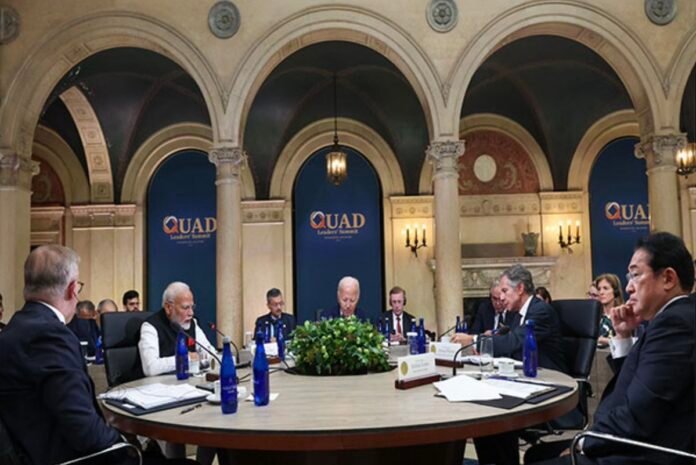
This week, the foreign ministers of the four nations in the so-called “Quad” – the United States, Australia, Japan and India – met in New Delhi.

The leaders of these nations, however, haven’t gathered for a summit since 2024, when Joe Biden was president. India was meant to host last year, but a summit never came together. It’s unclear if one will happen this year, either.

This has prompted much handwringing. Critics are saying the Quad is drifting “toward irrelevance” and is “on the brink of extinction”.

Yet, as much as the leaders of the four nations have exercised their agency in distinct ways – including, at times, changing the trajectory of the Quad to be less ambitious – the structural dynamics in the Indo-Pacific remain unchanged.

China’s rapid military buildup, extensive maritime aggression, economically destabilizing practices, wolf-warrior diplomacy and violent border clashes have altered the strategic calculations of the region for the foreseeable future.

This is why, before the Trump administration took office in January 2025, the four Quad nations dramatically expanded the group’s scope and ambitions. The members agreed to cooperate on everything from fighting cancer to developing vaccines to enhancing cyber security.

They declared at their last leaders’ summit that the “Quad countries have built a vital and enduring regional grouping that will buttress the Indo-Pacific for decades to come.”

US-India ties go downhill

This is not to say there haven’t been challenges.

No single issue has been more problematic for Quad ambitions in the second Trump administration than US-India ties.

For decades, US presidents have all touted the importance to American’s national interests of a powerful, independent and democratic India. In their view, India served as a helpful counterbalance to China in the Indo-Pacific. It was the first Trump administration, after all, that resuscitated the Quad in 2017. (The group was originally formed in 2007, but fell apart soon after that.)

Trump also befriended Indian Prime Minister Narendra Modi during his first term, calling him “one of America’s greatest, most devoted and most loyal friends.”

Since 2025, however, India-US relations have soured due to the second Trump administration’s massive immigration crackdown, his tariffs on India, tensions over India’s purchases of Russian oil and Trump’s growing closeness with Pakistan.

And, after a testy exchange between Trump and Modi over the phone last June, Trump reportedly canceled his plans to travel to India for the summit.

An effective counter-balance to China

Beijing has been opposed to the Quad since its inception, accusing the four democratic members of engaging in a Cold War mentality while encircling and antagonizing China. Beijing said it would accelerate its own military modernization in response.

After the Quad disbanded in 2008 – for reasons that remain debated – one US scholar argued: “The Quad came down and China did exactly what it said it was going to do if the Quad persisted.”

Unsurprisingly, China has continued to oppose the Quad since it regrouped. It still sees the Quad the same way the four members envisioned it – as an effective albeit still nascent counterbalance to China.

At this week’s foreign ministers’ meeting in India, the Quad members agreed to jointly build a port in Fiji, increase critical minerals cooperation and expand maritime cooperation in the region.

Beijing wasn’t impressed. Almost immediately after the meeting ended, Chinese state media ran a story with the headline, “Beijing blasts exclusive cliques after Quad meeting.”

Why the Quad still matters

Public opinion in the four Quad countries also shows firm backing for the alignment. Our polling at the US Studies Centre at the University of Sydney in 2025, for example, found respondents were far more supportive of the Quad becoming a formal military alliance than not.

Australians were the most supportive (49% agree), followed by Indians (44%), Americans (42%) and Japanese respondents (41%). Only a small number of respondents in the four nations opposed the Quad becoming a formal military alliance (from 7-15%). The rest either didn’t know or were unsure.

Cooperation among the Quad members is continuing to expand and deepen, as well. With every passing year, the Quad nations are engaging in an increasing number of military exercises, humanitarian and disaster assistance activities, and maritime cooperation efforts.

The individual leaders of the four nations will continue to change. And they will at times have significant reservations about each other. Yet China’s destabilising behaviour gives the Quad members few alternatives but to persist in using their agency to counterbalance Beijing’s revisionist agenda.

Jared Mondschein is director of research, US Studies Centre, University of Sydney.

This article is republished from The Conversation under a Creative Commons license. Read the original article.

Gayle King’s Ex-Husband Apologizes After She Reveals Shocking Betrayal

0
gayle-king’s-ex-husband-apologizes-after-she-reveals-shocking-betrayal
Gayle King’s Ex-Husband Apologizes After She Reveals Shocking Betrayal


Gayle King’s ex-husband is speaking out again after the TV legend reopened one of the most painful chapters of her private life.

The CBS Mornings host, 71, recently recalled the devastating moment she came home and discovered her then-husband, William Bumpus, cheating with one of her close friends.

Now Bumpus is publicly apologizing once more, nearly 40 years after the scandal shattered their marriage.

King opened up about the jaw-dropping betrayal during an appearance on the Call Her Daddy podcast, where she told host Alex Cooper that she walked in on Bumpus in the act with a woman she considered a friend.

The moment was as humiliating as it was heartbreaking.

King said she found the woman wearing only a towel and immediately confronted her.

“I can’t believe that you are here and that you are doing this,” King recalled saying. “I can’t believe that you are doing this.”

Then came the line that made the betrayal cut even deeper.

“I thought we were friends!” King remembered saying, admitting the words sounded “so pitiful” in the moment.

As if the scene was not chaotic enough, King said she had accidentally triggered the home alarm system during the confrontation. Police soon arrived at the house, only to recognize her and ask for an autograph.

The morning-show star said she just wanted them gone before they realized what had really happened inside the home.

“I wanted to say, ‘Could you take out the trash?’ But I didn’t,” King recalled. “I just wanted to get them in and out as quickly as possible.”

The painful story is not new. King has spoken about the affair before, including in 2016, when Bumpus also responded with an apology.

But after she brought up the humiliating episode again, Bumpus issued another statement acknowledging the damage his actions caused.

He said King “has every right to share what was a painful chapter that changed the trajectory of our marriage and our family nearly 40 years ago.”

“I respect her right to tell her story, and that’s where I’ll leave it,” he added.

Bumpus also said he remains “endlessly grateful” to King for their two children, daughter Kirby, now 40, and son Will, now 39.

The former couple was married from 1982 until 1993. Despite the ugly end to their marriage, Bumpus now says he and King managed to build a healthy relationship as co-parents.

He credited King with helping them successfully raise their children together after the split.

“It was Gayle who chose, with me, to co-parent successfully from the very beginning,” he said, calling it proof of their shared commitment to putting their children first.

Bumpus said that bond carried them through the years and allowed them to remain in “a good place” today.

He also revealed that King recently sent warm birthday wishes to his daughter Poet on her 16th birthday, a gesture he said “meant a great deal.”

The attorney also reflected on the pressures of being married to someone as public as King.

He admitted he “did not fully appreciate Gayle’s public life” during their marriage, saying he is naturally private and struggled with how exposed their lives could feel.

Still, he insisted that his discomfort was “no reflection on her true talent and abilities.”

Bumpus called himself “a genuine admirer and fan” of King and said he has had a “front-row seat” to her remarkable career.

He ended his statement by saying he continues to work on being “the best version” of himself, with support from King, their children, their grandchildren, and his role raising Poet as a single father.

For King, the memory remains one of the most stunning betrayals of her life. But decades later, the former couple appears to have found a way to move forward, even if the scar from that shocking day never fully disappeared.

After Uvalde, Texas Stuffed Schools Full of Cops. They Brutalized Students.

0
after-uvalde,-texas-stuffed-schools-full-of-cops-they-brutalized-students.
After Uvalde, Texas Stuffed Schools Full of Cops. They Brutalized Students.


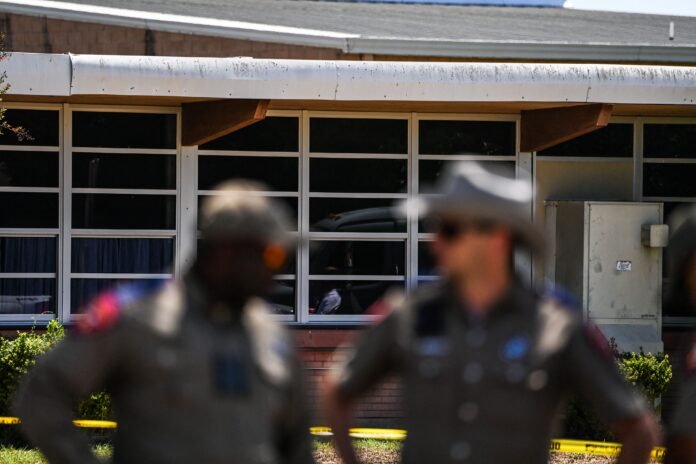
If there’s one thing we know about the 2022 school shooting in Uvalde, Texas, which left 19 children and two teachers dead, it is this: The police failed to stop it. This was not for an absence of well-funded, trained officers on the scene. They were there.

Rather than placing themselves potentially in harm’s way, however, the cops waited outside for over an hour and aggressively confronted desperate parents who begged for them to enter, including handcuffing one mother.

This failure to save lives was not, as I wrote at the time, a failure of police work. It in fact exemplified what police critics and abolitionists have stressed for decades, with reams of evidence. Police do not save lives or prevent crime. Policing is not the “thin blue line” between social peace and chaotic violence. And the work of policing is a far cry from the heroic myth so stubbornly lodged in the American imagination.

This was not, of course, the lesson learned by Texas authorities after the shooting. Instead, the state’s response was as predictable as it was doomed to produce only more violence in Texas schools: They added more cops.

There were no well-researched, pragmatic policy changes around limiting assault rifles, regulating the hyper-destructive expanding bullets that ripped children’s bodies apart, and increasing mental health support — things that could actually stop shootings like in Uvalde, which was carried out by a troubled 18-year-old.

Texas school districts instead poured billions of dollars into stationing police at every public school campus in the state. The results, as a New York Times report published this week found, has been an horrific spate of violent police abuse against children in schools across the state.

Texas stationed police officers at every school. The result has been a horrific spate of police abuse against children.

There is no official use-of-force data on the over 11,000 cops stationed across Texas’s 400-plus school district police departments, the Times reported, and scant oversight. Despite the limited access to information, journalists were able to pinpoint “more than 2,600 use-of-force incidents” in a nearly four-year period using only the “small share of records” available.

There are horrific details. Kids are routinely slammed to the ground for minor misbehavior. Police punch children in the face. They shock students with Tasers for being in the wrong place. Or point guns at unarmed teens. Cops put handcuffs on a 6-year-old who later cried to his father, “The police wants me to die!” In some cases, low-level disciplinary infractions that should lead to no more than a trip to the principal’s office left children facing criminal charges; the well-documented school-to-prison pipeline in all its ignominy.

According to policing experts who spoke with the paper, Texas lawmakers “embraced school policing without establishing safeguards required for meaningful accountability.” A cop was mildly disciplined for having hogtied a 10-year-old boy with a behavioral disorder; apparently hogtying kids was a pattern for the officer. In response to the incident, the school district had to ban the practice of binding children by their hands and feet. The risks of bodily harm coming to kids across the state, however, remain tremendous: As in 16 other states, corporal punishment is legal in Texas schools.

And there is no mention in the Times investigation of the demographic profiles of the children abused by cops, but the videos in the report overwhelmingly show what appear to be nonwhite children enduring violent police abuse.

Filling school campuses with cops, meanwhile has not even worked to achieve the policy’s stated aim of stopping school shootings in Texas. In late March, a 15-year-old student in Bulverde, Texas, shot and injured a teacher and then took his own life.

Policing: A Twisted Civic Religion

After Uvalde, it was obvious to many of us that, despite widespread and high-profile criticisms of the police officers’ actions that day, we were unlikely to see a radical shift in mythic perceptions around the value of policing as a source of public safety.

The conflation of police presence and public safety maintains a powerful ideological hold, resistant to revision, regardless of recalcitrant evidence. Even the Supreme Court affirmed in 2005 that police departments are not in fact obligated to provide protection to the public.

In a gun-drenched, law-and-order conservative state like Texas, police lionization is a twisted civic religion. Republican Gov. Greg Abbott signed a law in 2016 to designate police officers a protected class, “making it a hate crime for anyone to commit a crime against a law enforcement officer out of bias against the police.”

As I wrote in 2022, just after the Uvalde shooting, it would be too generous to those in power to grant that they have simply been misled by pro-police propaganda. By insisting that we double down on policing, leaders like Abbott make clear that they too uphold what the institution of policing defends: property, power, and racial hierarchy.

When it comes to the teachers and students whose lives are infused with greater violence and risk because of increased police presence, support for ever-present cops is more surprising. Even with ample evidence of police escalating confrontations and instigating violence against kids of all ages, sources who spoke to the Times reaffirmed the necessity of cops in schools.

“In interviews, dozens of parents, teachers, principals and students said that they believed police officers were needed to keep schools safe,” the Times reported.

It is well established what flooding schools with police does and does not do. It does not promote safety.

Writer Patrick Blanchfield noted in 2020 that the police “are in our minds as a solution rather than as a problem.” There is a powerful false consciousness at play, violently reinforced when every social problem is met solely with a carceral, policing-based solution.

“We don’t know what our nation without police would look like,” the abolitionist scholar Mariame Kaba wrote. “But we know that our society with police is violent, racist, precarious, unequal, and unfree.”

As the response to Uvalde makes clear, this is not a knowledge problem. It is well established what flooding schools with police does and does not do. It does not promote safety; it does increase life-altering incidents of violence against children.

Texas is not alone in choosing violence.

Rocket Report: A dark day for Blue Origin; Pentagon eyes new launch site

0
rocket-report:-a-dark-day-for-blue-origin;-pentagon-eyes-new-launch-site
Rocket Report: A dark day for Blue Origin; Pentagon eyes new launch site

Welcome to Edition 8.43 of the Rocket Report! A disclaimer: No one yet fully appreciates the ramifications of Blue Origin’s New Glenn rocket explosion Thursday night on its launch pad at Cape Canaveral, Florida. What we know as of this writing is that much of Blue’s sole orbital-class launch pad has been destroyed, and the New Glenn rocket will be grounded for an extended period of time. It is too soon for any hot takes, at least until the Sun rises at the Cape on Friday morning. One thing I am sure of is that we will be writing about this event for weeks, months, and years to come.

As always, we welcome reader submissions. If you don’t want to miss an issue, please subscribe using the box below (the form will not appear on AMP-enabled versions of the site). Each report will include information on small-, medium-, and heavy-lift rockets, as well as a quick look ahead at the next three launches on the calendar.

Charting China’s contribution to space junk. There’s a problem with the drastic uptick in Chinese space launches over the last decade. China appears to be ignoring long-established norms about disposing of the upper stages of rockets, Ars reports. These are the parts of the vehicle that separate from the first stage of a rocket and push a satellite or spacecraft into orbit. In the early decades of spaceflight, launch operators routinely left upper stages in orbit after they released their payloads. But most launch companies today reserve enough propellant in their rockets to remove them from orbit to avoid the risk of spent upper stages becoming a source of space debris. But China is not following this trend. There has been striking growth in China’s rocket body mass. In the past five years, the mass of Chinese rocket bodies in long-lived orbits has risen from less than 100 metric tons to 252, according to a new analysis by Space Domain Awareness expert Jim Shell.

Worst practices… The recent growth of Chinese upper stages has been driven by the country’s increased launch rate as it begins to deploy satellite megaconstellations, Shell said. China’s space industry is just at the beginning of launching megaconstellations to compete with SpaceX’s Starlink satellite service, suggesting that if the country does not curb this practice it will deteriorate an already congested space environment. Chinese constellations such as Guowang and Spacesail are typically at higher altitudes, above 800 km, and China may launch 1,000 or more rockets over the next decade to support these constellations. That’s a lot of new junk if the trend continues.

The Ars Technica Rocket Report
The easiest way to keep up with Eric Berger’s and Stephen Clark’s reporting on all things space is to sign up for our newsletter. We’ll collect their stories and deliver them straight to your inbox.

Sign Me Up!

DARPA, Voyager team up on solid rocket motors. The Defense Advanced Research Projects Agency (DARPA) has awarded Voyager Technologies a $16.5 million contract to continue development of a solid rocket motor thrust-control technology designed to make missile propulsion systems more adaptable across different missions and weapons programs, Space News reports. The contract is part of DARPA’s “Burn n’ Go” program. Solid rocket motors are used for a wide range of applications, from tactical missiles to space launch vehicles. The upside for solid rocket motors is their reliability and manufacturability. Solid rocket motors can vary their thrust, but these thrust profiles are predetermined by propellant grain patterns and the dimensions of the motor. In other words, the thrust profiles are locked in once the motor is manufactured. Unlike liquid-fueled rocket engines, solid-fueled rockets typically can’t be throttled up or down on the fly.

It’s in the propellant… Voyager is working with DARPA on a new “propellant-embedded” method of controlling the thrust of solid rocket motors after they are manufactured. The recent contract is for Phase 2 of the Burn n’ Go program. During Phase 1, Voyager worked on architecture concepts and preliminary designs. Voyager’s Phase 2 contract will culminate in “tailorable SRM hot-fire demonstrations,” the company said in a press release. “This award reflects confidence in our ability to translate advanced propulsion technologies into field-ready capabilities that support US national readiness and deterrence,” said Matt Magaña, president of space, defense, and national security programs at Voyager. “Our approach is designed not only to demonstrate performance gains at the system level, but to establish a credible path to industrialization that can reshape how solid rocket motors are produced, mission tailored and controlled.”

Virgin Galactic’s VSS Unity vehicle returns to flight, kinda. With its first Delta-class suborbital spaceship expected to debut this summer, Virgin Galactic has returned its first-generation SpaceShipTwo vehicle Unity to flight for pilot and ground team training, Aviation Week & Space Technology reports. Grounded since its seventh and final operational mission on June 8, 2024, VSS Unity and its quad-jet carrier aircraft took to the skies over New Mexico on Wednesday. The jet released the unpowered spaceplane, and its two pilots steered Unity to a runway landing at Spaceport America. This was the first of several anticipated glide flights with Unity to help prepare the Virgin Galactic’s pilots for the first glide test flights of the Delta-class ship.

Managing energy... “Unity‘s glide characteristics and energy-management profile provide an outstanding real-world proxy for our new spaceship,” said Mike Moses, president of Virgin Galactic Spaceline. “Using a proven vehicle in this way prepares our pilots and operations teams to move through flight testing for our new spaceship more efficiently and with greater confidence than simulator training alone could provide.” The latest schedule provided by Virgin Galactic calls for glide flights of the first Delta-class ship to begin before the end of September, followed by the first rocket-powered test flights by the end of the year.

German launch startup tests upgraded engine. Rocket Factory Augsburg, based in Germany, has developed and tested its Helix engine for use on the company’s light-class RFA One satellite launcher. RFA is working on an upgrade to the power pack, a critical piece of the Helix engine responsible for delivering propellants from the rocket’s storage tanks to the engine combustion chamber. This new power pack design recently completed a series of tests in Sweden through a partnership between RFA and the European Space Agency, ESA announced this week. RFA says the power pack will allow the company’s souped-up kerosene-fueled Helix 2.0 engine to provide double the thrust for the RFA One rocket with the same mass and cost of the already-developed Helix 1.0. “The result for our customers: more payload for a lower budget!” said Stefan Brieschenk, RFA’s chief operating officer.

But what about that launch?... All of this work to upgrade the RFA One launcher is happening before the company has even flown the basic configuration of the rocket. Nine Helix 1.0 engines will power the first RFA One booster off its launch pad in Scotland. RFA has applied for a marine license to launch its first RFA One rocket no earlier than July 1. There is still much work to do to prepare for the rocket’s first launch. The original booster RFA planned to use for the first test flight was destroyed during a test-firing in 2024. “This is a legally required step for planning, and a good sign of how far we’ve come—but it’s not a launch date just yet,” RFA said. (submitted by EllPeaTea)

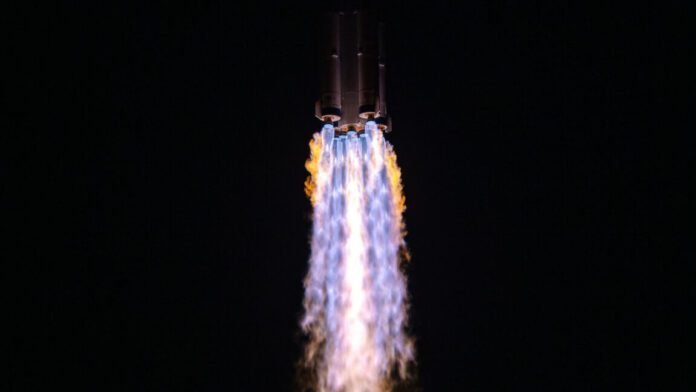
Fresh crew launches to China’s Tiangong space station. China launched the Shenzhou 23 spacecraft Sunday with three astronauts heading to its space station, including one set to stay in space for a year, The Associated Press reports. The spacecraft blasted off on a Long March 2F rocket from the Jiuquan Satellite Launch Center in northwestern China. The astronauts on the mission are Zhu Yangzhu, the commander, Zhang Zhiyuan, and Lai Ka-ying, also identified by Chinese authorities as Li Jiaying using the Mandarin transliteration of her name. Lai, who was born and raised in Hong Kong and has a doctoral degree in computer forensics, is the first astronaut from the city on a space mission.

Who will draw the straw?... The Shenzhou 23 spacecraft docked at the Tiangong space station less than four hours after launch. The new crew members joined three astronauts who have lived and worked on the Tiangong complex for more than 200 days, temporarily raising the station’s crew complement to six. The outgoing crew is set to return to Earth as soon as Friday. One of the three astronauts on the Shenzhou 23 mission is scheduled to stay at the orbiting space station for a year in what would be among the world’s longest single stays in space. Chinese officials said they have not determined which of the astronauts will be tasked with the one-year stay in orbit. The other two crew members will return to Earth in approximately six months. (submitted by EllPeaTea)

NASA to order more Crew Dragon flights from SpaceX. NASA plans to add more missions to SpaceX’s commercial crew contract, protecting the agency from the possibility that Boeing’s spacecraft is never certified for missions to the International Space Station, Space News reports. The space agency announced its intent May 18 to add six more missions to SpaceX’s commercial crew contract. Each will carry four astronauts to and from the space station. NASA last placed an order for more SpaceX commercial crew missions in 2022, when it added five missions for $1.4 billion. That contract extension covers missions through Crew-14, expected to launch sometime next year. The Crew-12 mission is currently docked at the ISS.

Blame Starliner… If Boeing’s Starliner crew capsule had worked out as NASA hoped, the agency would have two independent crew transportation providers to service the International Space Station. But six years after NASA certified SpaceX to ferry crews to and from the ISS, Boeing’s Starliner still lacks approval for regular crew rotation flights after a 2024 test flight was marred by technical issues. The next Starliner mission will be a cargo-only flight, so the earliest Boeing’s crew capsule will fly with astronauts again is next year. With the ISS nearing retirement in the early 2030s and Starliner still firmly in test phase, NASA has reduced its order for operational Starliner flights from six to four. (submitted by EllPeaTea)

Rideshare integrators book their own Falcon 9 launches. Two rideshare operators—SEOPS and Exolaunch—have purchased dedicated SpaceX Falcon 9 launches to run their own rideshare missions, Via Satellite reports. Both companies announced the deals on Tuesday during the Smallsat Europe industry conference, with Exolaunch buying two Falcon 9 launches, and SEOPS purchasing one. Both companies explained the dedicated missions as a way to increase options for a pressured smallsat launch market.

Transcending Transporter… SpaceX organizes its own rideshare launches. Its Transporter missions go to Sun-synchronous orbit, and Bandwagon flights launch into mid-inclination orbits. Companies like Exolaunch, SEOPS, and others buy up capacity on these missions to divide among their customers’ CubeSats and small satellites. SEOPS said its motivation for buying up an entire Falcon 9 launch, rather than reserving a portion of the capacity of a Transporter mission, was to create a mission tailored for “time-sensitive or non-standard payloads,” such as larger or unique satellites beyond typical rideshare limits. (submitted by EllPeaTea)

New Glenn explodes on the launch pad. On Thursday evening Blue Origin attempted to test fire its massive New Glenn rocket at its Florida launch site, but something went very wrong after engine ignition. The super heavy lift rocket exploded in spectacular and disastrous fashion, Ars reports. The static fire test was being filmed by NASASpaceflight.com on its Space Coast Live feed, which captured video of the conflagration that followed destruction of the booster. The first stage of New Glenn, fueled with methane, produced a massive fireball above the launch site along the Florida coast, LC-36A. It is possibly the most dramatic and powerful rocket explosion since the Soviet Union’s N1 rocket was destroyed during a launch attempt in 1969.

Far-reaching consequences… This is the worst disaster in the history of Blue Origin, founded in 2000. The space company owned by Jeff Bezos appeared to be on the verge of turning a corner with the New Glenn rocket after years of delays and growing pains. The New Glenn that blew up on the pad Thursday night was supposed to launch next week with a batch of Amazon Leo broadband satellites, which were safely tucked away in a hangar and not on top of the rocket when it exploded. It would have been the fourth New Glenn launch to date, coming less than two months since the rocket’s third flight. The failure of New Glenn also has major implications for NASA and its surging efforts to return humans to the Moon before the end of this decade, and to establish a lunar base on the surface.

Starship mostly successful on 12th test flight. SpaceX launched the first test flight of its upgraded Starship rocket and Super Heavy booster May 22, with mostly positive results, Ars reports. The giant rocket took off from South Texas, and its upper stage, or ship, splashed down on target in the Indian Ocean a little more than an hour later. This was the first flight of the latest version of SpaceX’s stainless-steel mega-rocket, and the 12th full-scale test flight of Starship to date. Starship V3 fared better on its debut than the first flights of Starship V1 and V2 in 2023 and 2025. Both past versions of Starship broke apart during launch on their inaugural flights.

Some goals left unaccomplished… Something caused two Raptor engines—one of 33 on the Super Heavy booster and one of six on Starship itself—to fail during the May 22 launch sequence. This is notable because the test flight marked the first use of SpaceX’s newest-version Raptor on a launch. The booster was unable to complete a guided descent toward the Gulf of Mexico, and the ship skipped a planned restart of a Raptor engine in space. The latter unchecked box means the next Starship flight will likely launch on a suborbital trajectory, as all Starships have to date, rather than attempting the program’s first truly orbital test flight. The good news is that Starship’s heat shield appeared to function well during reentry, with fewer signs of damage or degradation as the vehicle splashed down northwest of Australia. (submitted by EllPeaTea)

Air Force chief calls for new heavy launch site. Traffic at US military launch sites is approaching max capacity. The nation needs another launch site capable of hosting heavy and super heavy launches to keep up with the growing demand, according to a study cited by Air Force Secretary Troy Meink during recent testimony in front of the House Armed Services Committee, Payload reports. Meink talked about the growing challenge to find space to launch amid the geographical limitations at Cape Canaveral Space Force Station in Florida and Vandenberg Space Force Base in California. The Pentagon is preparing for the rising number of US launches to climb ever-higher in the coming years.

Support for diversity… Specifically, the Pentagon is talking about a new military-run spaceport. Defense officials are wary of the vulnerabilities of private or state-run launch sites to potential attack, and they argue that geographic diversity could help the military overcome bottlenecks at the Cape and Vandenberg.

Next three launches

May 29: Falcon 9 | Starlink 10-53 | Cape Canaveral Space Force Station, Florida | 12:03 UTC

May 29: Atlas V | Amazon Leo LA-07 | Cape Canaveral Space Force Station, Florida | 23:33 UTC

May 30: Falcon 9 | Starlink 17-41 | Vandenberg Space Force Base, California | 14:00 UTC

WHO says 906 suspected cases and 223 suspected deaths from Bundibugyo strain of Ebola

0
who-says-906-suspected-cases-and-223-suspected-deaths-from-bundibugyo-strain-of-ebola
WHO says 906 suspected cases and 223 suspected deaths from Bundibugyo strain of Ebola


The ‌World Health Organization said on Friday that there were 906 suspected cases of Ebola in the Democratic Republic of Congo, including 223 suspected deaths that were being investigated.

An outbreak of the Bundibugyo strain of Ebola is ongoing in ​the Democratic Republic of the Congo, with cases also reported in Uganda.

There have been 125 ​confirmed cases of Ebola in the DRC, including 17 confirmed deaths in Ituri, North ⁠Kivu and South Kivu. There have also been seven confirmed cases of Ebola in Uganda, three ​of which were imported from the DRC, and one death. However, no community transmission has been reported, the ​WHO said.

The Ebola outbreak in eastern Democratic Republic of Congo likely started two months ago, the World Health Organization said in early May. The outbreak of the rare , for which there is no vaccine, was declared by the WHO ​a public health emergency of international concern. It has alarmed experts because of how long it went undetected ​while spreading across a densely populated area, making it difficult to trace and isolate the contacts of infected individuals.

HIGH ‌DEATH ⁠RATE

The rate of people who died among those confirmed to have the infection is between 30% and 50%, said Anais Legand from the High Threat Pathogens Team, which is part of the WHO Health Emergencies Programme.

“It’s huge. It means that up to five out of 10 people are likely to die,” Legand said, adding that the data is ​preliminary and requires further ​investigation. Early care could ⁠help drive down fatality rates, Legand said.

The first recovered patient was discharged from a health centre in the DRC after receiving two negative tests, Legand ​said, adding she hoped many more would recover and stressing the importance of ​access to ⁠early care.

The WHO said testing capacity is being improved and that it was hopeful that most of the backlog of test samples from suspected cases will be processed in the coming days.

The number of suspected ⁠cases ​is likely to go up, Legand said, but added it ​was a sign that surveillance is working.

“As for whether the peak has passed, investigations are still ongoing. I don’t think we can ​say that at this stage,” she said.

Via Reuters

More Than $100 Million Was Billed for Medically Questionable Vascular Procedures, Government Watchdog Finds

0
more-than-$100-million-was-billed-for-medically-questionable-vascular-procedures,-government-watchdog-finds
More Than $100 Million Was Billed for Medically Questionable Vascular Procedures, Government Watchdog Finds

Dozens of doctors are routinely performing risky vascular procedures in medical offices, generating tens of millions of dollars in Medicare payments for potentially unnecessary procedures, according to a federal report released earlier this month.

The review, completed by the Office of the Inspector General at the Department of Health and Human Services, flagged nearly 140 doctors across the country as having “concerning” billing patterns. 

The analysis parallels a 2023 ProPublica investigation that revealed how high Medicare reimbursements for office-based vascular treatments had fueled a surge of unnecessary procedures, putting patients at risk of amputation or even death. The inspector general’s study, which began in April 2024, cited ProPublica’s reporting and broadly confirmed its findings.

Millions of Americans have peripheral artery disease, a vascular disorder in which the buildup of plaque narrows arteries and blocks blood flow in the legs. While most treatments are safe, ProPublica’s investigation found that there has been widespread concern among medical experts that some doctors are overusing procedures on patients who may not need them. 

The Centers for Medicare & Medicaid Services laid the foundation for the problem nearly 20 years ago, when it tried to rein in growing hospital costs by diverting certain common, minimally invasive procedures to outpatient facilities. These treatments may include the placement of stents in blood vessels or the removal of plaque with a bladed catheter, also known as an atherectomy. 

But instead of saving taxpayers money, it created a boom. For years, even as researchers challenged the long-term safety and efficacy of these expensive procedures, the federal government did little to stop potential abuse. 

ProPublica’s reporting chronicled the rise of the procedures after the introduction of the government’s financial incentive, along with horror stories of patients who lost their legs or died from complications.

Our investigation examined years of federal Medicare claims data to identify and name the doctors who were making the most money off of these controversial procedures, and found that several of them had also racked up allegations of patient harm and even fraud. Doctors identified in our reporting objected to being portrayed as part of the problem, with some defending their use of the procedures, saying they could save the government money by preventing more serious complications down the road.

ProPublica’s analysis also found that many procedures were being performed on patients with only mild disease, against best practices. Working with data journalists from the health analytics group CareSet, and in consultation with experts, we found that nearly 1 in 4 patients underwent the invasive procedure in the early stages of vascular disease, amounting to nearly 30,000 patients who may have endured procedures too soon or even unnecessarily.

The inspector general’s analysis, which focused on data from 2019 through 2023, found that while overall payments for vascular procedures have decreased in recent years, the procedures have shifted from hospitals to physicians’ offices. 

The report flagged $105 million, about a fifth of all office-based vascular payments in 2023, as suspicious for medically unnecessary procedures. About 140 doctors accounted for these “concerning” payments, with 26 physicians responsible for the majority of them. This small group of specialists each received about $3 million in medical payments on average, and treated more than four times the average number of Medicare patients compared with similar physicians, conducting double the average number of procedures per patient.

Read More

About half of these flagged doctors, which include interventional radiologists, vascular surgeons and cardiologists, practiced in California and Texas.

Since 2019, CMS has investigated and identified 15 providers who received overpayments for vascular procedures, according to the report. The agency has also initiated a “claims analysis project” to detect physicians who are excessively billing for certain procedures, including atherectomies. 

The inspector general recommended that CMS monitor billing records to identify medically unnecessary procedures that pose a risk to Medicare enrollees and take appropriate actions. The inspector general also provided information on the outlier physicians to CMS and encouraged the agency to work with its program integrity team to review their billing patterns. “Although determining whether these physicians engaged in abusive or fraudulent practices was not within the scope of this study, their billing patterns warrant further scrutiny,” stated the report. 

CMS agreed with the inspector general’s recommendations and said it would consider the report’s findings to determine next steps. 

Somali piracy is back – fuelled by political turmoil, aid cuts and the Iran war

0
somali-piracy-is-back-–-fuelled-by-political-turmoil,-aid-cuts-and-the-iran-war
Somali piracy is back – fuelled by political turmoil, aid cuts and the Iran war

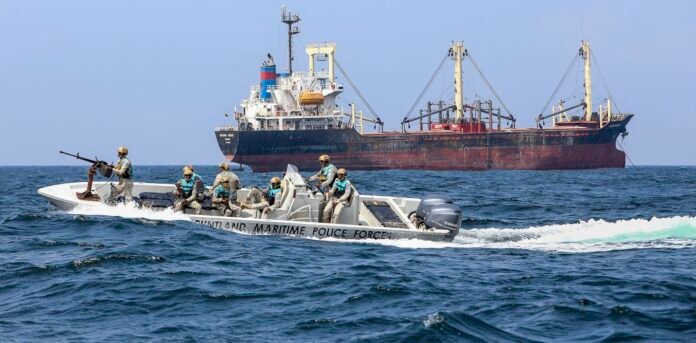
On the evening of April 26, the Egyptian merchant vessel Sward was hijacked by armed men a few miles off the Somali coast. It was steered towards an anchorage near the port of Garacad in Puntland, a semi-autonomous state in north-eastern Somalia.

Over the following days, further armed men joined the Sward as well as an interpreter tasked with negotiating a ransom with the shipowner. At the time of writing, the ship remains under pirate control.

Unfortunately, this is not an isolated event. Two oil tankers – the Palau-flagged Honour 25 and the Togo-flagged Eureka – were seized around the same time and redirected towards the Puntland coast.

Somali pirate groups have also hijacked several ocean-going dhows – traditional sailing vessels – as “motherships” in recent weeks, enabling them to remain at sea for weeks and launch attacks far from the coast. Together, these incidents have sparked concern over whether we’re seeing a resurgence of Somali piracy.

A map of the Horn of Africa.

A string of vessels have been hijacked off Somalia’s coast in recent weeks. Peter Hermes Furian / Shutterstock

Between 2005 and 2012, Somali pirates carried out more than 1,000 attacks on foreign ships. They successfully hijacked 218 vessels and took over 3,700 sailors hostage. Shipowners paid around US$50 million (£37 million) in ransoms per year over this period, while the associated loss of trade and increased security measures cost the global economy up to US$18 billion.

Since then, Somali piracy has been kept in check by a combination of private security guards, naval patrols and land-based development initiatives. But very few pirate kingpins faced trial and their broader supply and support networks were never dismantled. The recent cases suggest they were merely dormant.

So, could the hijack-for-ransom business model now be resurrected? There are three reasons for concern. First, piracy has always had a political dimension. In our 2014 research on the local dynamics of Somali piracy, we found that peaks in local pirate activity coincided with periods of political turmoil and military contest.

And, unfortunately, Somalia is currently in constitutional crisis. In March, the federal government postponed the 2026 general election without due process. It also recently ordered the dissolution of the newly elected parliament in Somalia’s South West state and forcibly replaced its leadership.

Meanwhile, Israeli recognition of the self-declared republic of Somaliland in December 2025 has led to new regional alliances between Arab states and Mogadishu. Saudi Arabia, in particular, sees Somalia’s territorial integrity as essential to security in the Red Sea and Gulf of Aden.

Distrust and skirmishes between Somalia’s various regions and its federal government led local elites in the states of Puntland and South Central Somalia to turn to piracy to fund military and political campaigns between 2005 and 2012. They may well be tempted to do so again.

The second driver of piracy is poverty. Rising food, fuel and fertiliser costs, coupled with the Trump administration’s abrupt dismantling of US-funded development programmes, are causing widespread misery in Somalia. US humanitarian assistance to Somalia dropped from US$467 million in 2024 to US$70 million a year later, with just US$3 million coming from the US government in the first three months of 2026.

Many people in Somalia are desperate for new income streams. In Puntland and South Central’s coastal areas, pirate groups are remembered as big and generous employers that shared their revenues broadly to create the necessary land-based support for their business.

Third, the opportunities for piracy are better than they have been for many years. With the Strait of Hormuz closed due to the Iran war and attacks by the Houthis making the Red Sea a high-risk area, many merchant ships heading towards Europe are rerouting around southern Africa. This route passes along the Somali coast.

Risks for pirates are also suddenly lower. Many of the naval vessels that previously patrolled the area have been redeployed towards the Red Sea and the Strait of Hormuz. This means that pirates can station themselves on hijacked dhows for longer without being detected or challenged and wait for a target to present itself.

Faced with escalating costs, fewer shipowners are also currently investing in expensive counter-piracy measures or travel at sufficiently high speed to put off potential hijackers. For those who can afford them, armed private security teams have proved an effective deterrent. Yet those who cannot return fire when pirates approach struggle to evade capture.

What will happen next?

Initially, what happens next will depend on how the current hijacks proceed. Pirates rely on ransoms for reinvestment and to attract young men into their no-win-no-fee contracts. Fast and generous payments – the pirates have demanded US$10 million for the Eureka – may free the captive ships. But they will lead to escalating risks for everyone else.

Marine insurers can drive shipping traffic away from Somalia’s coast by declaring the Somali Basin a “high-risk area” once again, as they did in 2008. This will further inflate costs for consumers. No state or alliance also currently has the will or capacity to run a naval mission on the scale seen in 2011 and 2012, when navies worldwide spent more than US$1 billion annually on counter-piracy operations off Somalia.

Although piracy manifests as a sea-based problem, it can only be solved on land. Building infrastructure that fosters regional trade and local development is a better approach than trying to control piracy at sea. The economic damages caused by higher trade and naval enforcement costs are orders of magnitude greater than what pirates have to offer to their communities.

USTR’s Vietnam designation mistakes transition for failure

0
ustr’s-vietnam-designation-mistakes-transition-for-failure
USTR’s Vietnam designation mistakes transition for failure

On April 30, the US Trade Representative designated Vietnam as a Priority Foreign Country for intellectual property, the most severe classification in the annual Special 301 Report and the first time in 13 years any country has been tagged with the label.

The designation rests on five grounds: online piracy, counterfeiting, inadequate border enforcement, unlicensed software use and the absence of criminal penalties for cable and satellite signal theft. Within 30 days, the USTR must decide whether to open a Section 301 investigation.

The report frames the designation around a “persistent failure to resolve long-standing concerns” dating back to 2020. But parts of it sit uneasily with that framing. In the 2025 report, Vietnam was on the Watch List, the lowest tier. It skipped the Priority Watch List entirely to reach the top.

It is worth separating three dimensions that the report covers but does not clearly distinguish: legislative reform, administrative reorganization and operational enforcement.

On legislation, Vietnam has been active. Decree 341 overhauled the copyright enforcement framework in February 2026. The 2025 Amended IP Law, effective from April 2026, modernized IP protection and strengthened enforcement mechanisms.

Both predate the USTR’s designation. The USTR acknowledged enforcement actions, including the shutdown of Fmovies, Y2Mate and HiAnime.to. Vietnam’s government said criminal prosecutions for IP offenses had increased.

On operational enforcement, the numbers declined. The Ministry of Industry and Trade reported that the value of detected violations fell by 31.8% in 2025, a year in which the transfer of provincial enforcement to local authorities took effect mid-stream.

Pending IP cases were canceled or left pending transfer. The introduction of specialized intellectual property (IP) courts may be delayed until 2027. The USTR cited these disruptions in its case.

The picture is split: legislative modernization continued at the top while operational enforcement capacity collapsed at the bottom. The Special 301 methodology focuses on enforcement outputs, so a framework built that way is unlikely to give Vietnam credit for reforming its laws.

This may partly explain why the framework produced such a severe result. But it does not explain it entirely.

The administrative reorganization is central to understanding the operational decline. In February 2025, the National Assembly approved a sweeping restructuring of the government, reducing the number of ministries from 22 to 17.

The General Department of Market Management, the national agency responsible for anti-counterfeiting enforcement and market surveillance, was downgraded to a regular departmental unit with six divisions and 166 civil servants, a central coordination body for a consumer market of over 100 million people. All 63 provincial Market Surveillance Departments were transferred to local People’s Committees by June 2025.

This was part of a larger administrative overhaul. Vietnam consolidated 63 provinces into 34, abolished the district level of government entirely and cut roughly 80,000 civil service positions, marking the most comprehensive administrative reform since reunification.

The stated aim was to cut bureaucratic layers and support economic growth, not to shrink the state’s enforcement capacity. International law firms and foreign governments nonetheless anticipated that the transition would cause delays in approvals, licensing and enforcement.

The old General Department coordinated raids nationally, maintained relationships with rights holders, and accumulated institutional knowledge about counterfeiting networks. When it was downgraded and its 63 provincial offices transferred to local People’s Committees, the vertical command line between the center and the provinces was severed.

The coordination networks, case histories and operational relationships did not follow the organizational chart. The 31.8% decline in detected violation value is consistent with the loss of those networks.

That is a different phenomenon from a government choosing not to enforce. The USTR report notes the restructuring disruptions, but treats them as an aggravating factor rather than a mitigating one.

There is a reasonable alternative reading. Vietnam’s IP enforcement problems predate the restructuring by years, and the USTR could argue that the reorganization compounds longstanding deficiencies rather than addressing them. But comparing Vietnam’s treatment with other countries in the same report complicates it.

For example, Indonesia has been on the Priority Watch List for years with similar categories of concern, including weak enforcement and procedural delays. Indonesia also reorganized its IP governance under President Prabowo Subianto, moving the Directorate General of Intellectual Property to a restructured Ministry of Law.

But Indonesia retained its central IP administrative body and its enforcement channels (police and government enforcement officers). Vietnam downgraded its central enforcement body and decentralized its operational arms to local authorities, significantly reducing its national enforcement reach.

Indonesia was not escalated in the USTR’s designation rating. The difference in outcome may partly reflect this structural difference, but it also raises the question of whether the USTR applied a consistent standard or whether trade considerations shaped the result.

The trade context adds weight to that question. The report insists the designation is “solely based on IP-related concerns.” It then cites Vietnam’s failure to make “meaningful progress” during negotiations for an Agreement on Reciprocal, Fair, and Balanced Trade as evidence.

The Vietnam Chamber of Commerce and Industry assessed the designation as a risk that could trigger further tariff measures. With a 20% reciprocal tariff already in place and a 30-day statutory clock ticking toward a formal Section 301 investigation that could authorize additional trade sanctions, the commercial pressure on Hanoi to return to the table is considerable.

On the available evidence, trade leverage and the framework’s own limitations both likely contributed to a designation more severe than the IP record alone would support.

Vietnam responded with a nationwide enforcement campaign from May 7-30, with targets to increase enforcement cases by at least 20% and daily reporting to the prime minister. The mobilization was fast and notably centralized: a prime ministerial directive that activated the same kind of top-down coordination the old General Department used to provide on a standing basis.

The restructuring was meant to decentralize enforcement, but the response to the PFC shows the system still defaults to centralized activation. Whether the decentralization will deliver the intended capacity gains, or whether it has significantly reduced a functioning apparatus without yet building a replacement remains an open question.

If the Special 301 framework is to function as a credible assessment tool, it may need to account for countries in the middle of institutional reform. A government rebuilding its enforcement architecture looks, in the annual statistics, much the same as one that has given up.

Vietnam’s case suggests the USTR’s framework currently makes no distinction between the two.

Lam Duc Vu is a Vietnam-based risk analyst focused on regional trade and geopolitics

0FansLike
0FollowersFollow
0FollowersFollow
0SubscribersSubscribe
- Advertisement -
Google search engine

Recent Posts