
Nations have always had to negotiate shared waters. The sea carries trade and sustains coastal communities. It often hides valuable resources. It can bring neighbors closer together, but when claims overlap, it can also become a source of friction.
Recent incidents in the Middle East have shown that maritime stability cannot be taken for granted. It directly affects energy supplies, trade routes, food security and investor confidence.
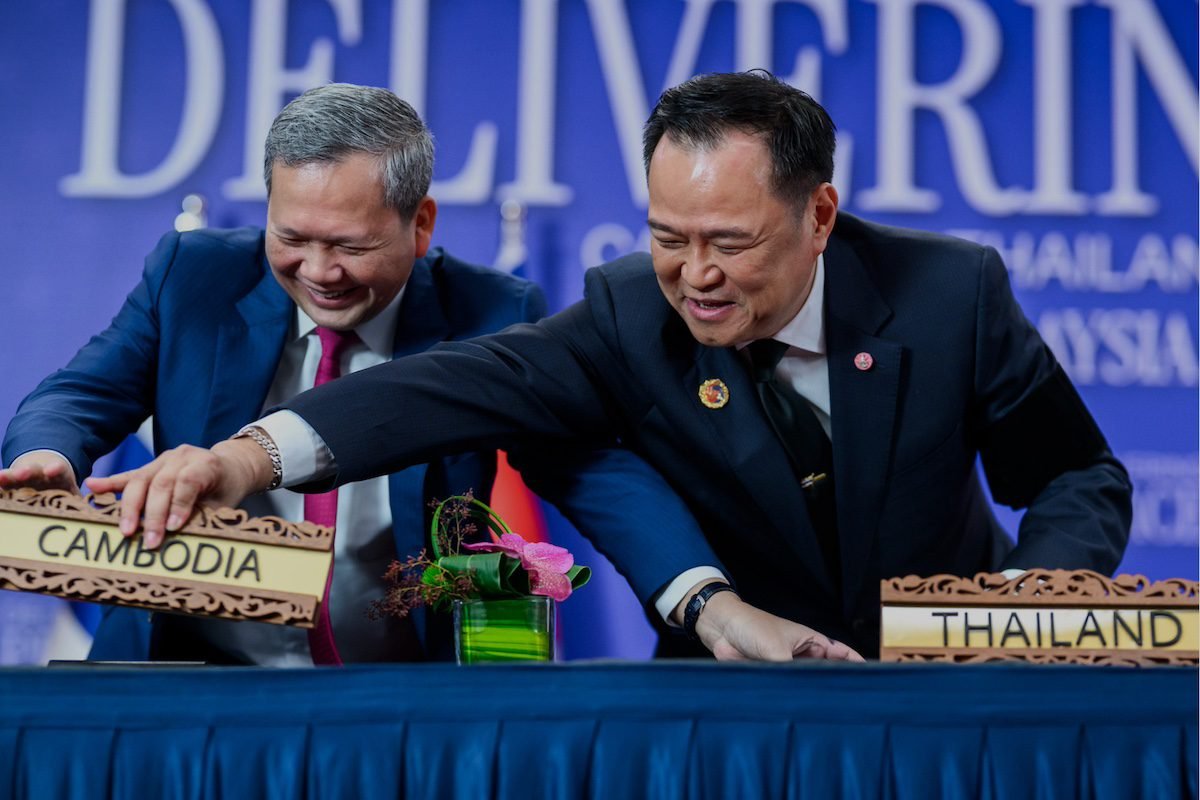
For Cambodia, maritime stability is a pressing concern, and it comes at a sensitive time in Cambodia-Thailand relations because of the dispute along our shared land border. In this context, Thailand’s threat to withdraw from a maritime agreement that maintains dialogue is particularly troubling.
For more than two decades, the 2001 Memorandum of Understanding between Cambodia and Thailand has been the only bilateral framework both governments have relied on to manage overlapping maritime claims linked to potential offshore oil and gas development.
While the dispute is not resolved, the MOU keeps two connected questions on a peaceful track: how to explore joint development of petroleum resources in the overlapping claims area, and how to negotiate a maritime boundary where delimitation is required.
Its value is practical: it allows Cambodia and Thailand to continue talking with a view to reaching an agreement while safeguarding their legal positions. Removing this channel makes dialogue harder and increases the risk of escalation.
This is why Thailand’s recent threat to withdraw from the MoU is significant. It would not resolve the maritime issue. It would make it more difficult to manage by undermining trust at a critical time and heightening the risk of misunderstanding.
This issue extends beyond Cambodia and Thailand. The waters between our countries are part of Southeast Asia’s broader maritime environment. Developments here influence regional confidence, affecting fishing communities, energy companies and investors monitoring Southeast Asia’s stability.
ASEAN has consistently advocated dialogue and peaceful dispute resolution. These principles are most important when they are most difficult to maintain. Cooperation is easy when relations are calm; the real test is during periods of domestic tension or unresolved claims.
Cambodia does not view the 2001 MoU as a concession by either side, nor as a threat to Thailand or Cambodia. It is a means for both countries to protect their interests while maintaining dialogue. Neighbors do not need full agreement to continue discussions.
Cambodia’s position is clear. We will defend our sovereignty responsibly and peacefully. We believe maritime claims should be resolved through dialogue and respect for international law. Agreements intended to prevent escalation should be upheld, not abandoned.
Maritime and border disputes are complex and require time to resolve. This is why countries need established channels for dialogue. Abandoning them does not solve disputes; it makes resolution more difficult.
Southeast Asia requires predictability and respect for agreements. ASEAN is strengthened when its members demonstrate that even challenging disputes can be managed through diplomacy and respect for the law.
Thailand should uphold the 2001 Memorandum of Understanding, resume dialogue, and work with Cambodia to resolve outstanding issues through negotiation and in line with international law.
Peace requires more than words. It relies on frameworks and commitments that prevent disputes from escalating. The 2001 MoU should be strengthened, not discarded.
Neth Pheaktra is the Minister of Information of the Royal Government of Cambodia. A journalist by training, he served as managing editor of the Khmer-language edition of the Phnom Penh Post and as chief of the Public Affairs Section of the Extraordinary Chambers in the Courts of Cambodia (ECCC). He previously served as Secretary of State at the Ministry of Environment.