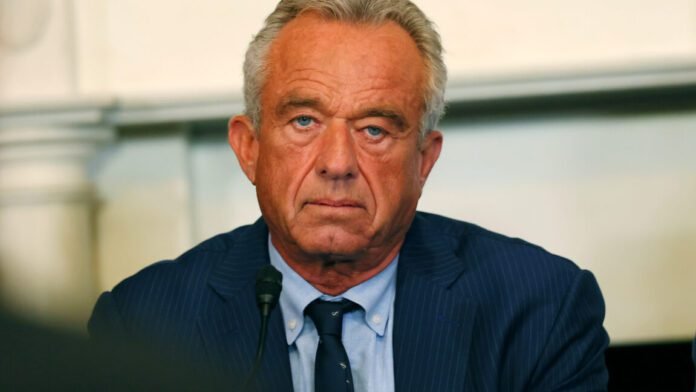
RFK Jr.’s hand-picked committee approves manufacture of peptides he uses
In a widely expected move, a committee organized by the Food and Drug Administration (FDA) has voted to endorse removing restrictions on the manufacture of peptides for human use. Thursday’s panel meeting saw a sharply divided group recommend lifting limits on four peptides; votes on three additional peptides are scheduled for today. The move comes despite a continuing lack of evidence regarding their safety and effectiveness.
The move had been telegraphed months earlier as peptide enthusiast and Health and Human Services Secretary Robert F. Kennedy Jr. took steps to ensure this outcome.
Like proteins, peptides are composed of amino acids that are chemically linked into a chain. Peptides differ merely by length; they’re often 10–20 amino acids long, in contrast to proteins, which can be hundreds or thousands. Some of them, such as insulin, are specifically made by targeted processing of a protein into shorter fragments, and the resulting peptide interacts with receptors that have evolved to send signals to cells based on its levels.
But a lot of peptides are just the result of the messy complexity of biology, where larger proteins may break down in a way that consistently produces a stereotypical pattern of fragments. Some of those fragments, being relatively short and flexible, may stick to other proteins in ways that trigger some sort of physiological response. Others may simply be digested and recycled without doing anything of note.
Understanding how a peptide is made and what downstream effects it triggers can take decades of research. In many cases, we have some evidence of what happens when we expose cultured cells to a peptide, but lack any indication of what might happen if an intact animal is. (Notably, transiting this same evidentiary gap is often where promising-looking drug candidates turn into failed ones.)
RFK Jr. and many like him, who fear the clearly defined and well-understood proteins in vaccines, are perfectly willing to inject various peptides in the complete absence of any safety data. However, unlike most of the peptide fans who share anecdotes online, Kennedy is in a position to turn his hobby into policy.
While the FDA has already used its standard processes to approve peptide drugs like insulin and some recently developed weight loss drugs, the lack of safety and efficacy data has kept most peptides off the market. The Biden administration also blocked their manufacture by compounding pharmacies, which make specialty drugs. But, earlier this year, Kennedy announced his interest in reversing that ban.
At the time of his announcement, Ars’ Beth Mole wrote, “Outside experts and watchdogs suspect that before the first meeting in July, Kennedy will work to stack the advisory board with questionably qualified allies who will come with a predetermined decision to ease access to the drugs—no rigorous scientific evaluation needed.” That’s exactly what came to pass. In June, Kennedy added members to the advisory group who, with one exception, had obvious interests in the manufacture and sale of the unapproved peptides.
Yesterday, those newly appointed members provided the decisive votes for overturning the ban, with all of the pre-Kennedy members voting against doing so. Despite Kennedy’s earlier claim that “independent experts will rigorously evaluate each substance on its scientific merits using full clinical, pharmacological, and safety evidence,” no such evidence was presented at the meeting.
According to The New York Times, when asked by a committee member whether the FDA had ever approved anything that had never been tested in humans before, an FDA official said it had not. That may be a critical factor in what happens next. The committee’s role is advisory, and the FDA could reject its recommendations. Doing so, however, would place the FDA’s experts in direct conflict with the wishes of Kennedy, who can simply fire them.
Spain Coach Slams Argentina as FIFA Opens World Cup Final Probe
Spain coach Luis de la Fuente has condemned Argentina’s conduct after the World Cup final, describing the post-match scenes as “intolerable and unacceptable”, after FIFA opened a disciplinary investigation into the incidents.
De la Fuente criticised several Argentina players for their behaviour following Spain’s victory, saying such actions were unacceptable “from players of that calibre”. He also praised his squad for remaining composed despite what he described as provocation and aggression during the closing stages of the match, which saw Argentina’s Enzo Fernández sent off.
“I want to highlight our behaviour. Our players kept their composure and acted like true professionals,” he said.
FIFA has since launched disciplinary proceedings over the incidents at MetLife Stadium.
Reflecting on Spain’s World Cup triumph, de la Fuente praised his players for overcoming demanding travel, humid conditions and limited recovery time. He singled out Golden Ball winner Rodri, saying doubting the midfielder was “an insult to footballing intelligence”, and hailed Lamine Yamal’s maturity throughout the tournament.
Looking ahead, the Spain coach said leading the national team at the 2030 World Cup would be “the greatest source of pride”, while stressing his immediate focus remains on Spain’s upcoming international fixtures.
As climate lawsuits advance, the oil industry enters ‘panic mode’
Could the oil industry be held responsible for fueling the extreme heat that led to a woman’s death?
That’s the question at the heart of a novel lawsuit in Washington state. Misti Leon’s mother died from overheating during the hottest day in state history in June 2021, when temperatures climbed to 108 degrees Fahrenheit. Scientists said the unusual heat dome that descended on the Pacific Northwest would have been “virtually impossible” without climate change. So last year, Leon sued Exxon Mobil, BP, Chevron, Shell, and other oil majors for wrongful death, alleging that they had known for decades that fossil fuel emissions would lead to destructive consequences, but deceived the public about it, delaying action that could have prevented her mother’s death. An estimated 1,200 people in the region perished from the heat during that simmering week in June.
Earlier this month, a King County judge ruled against the oil companies’ motions to dismiss Leon’s lawsuit, allowing it to proceed toward trial. The ruling was a signal that this kind of case has merit, said Mike Meno, the communications director at the Center for Climate Integrity, a nonprofit supporting climate accountability cases. “It’s the latest type of legal liability that the oil companies are absolutely terrified of and are going to fight like hell to try to escape,” he said.
More than a decade after investigations found that Exxon Mobil had known about the dangers of global warming since the 1970s but publicly downplayed the threat, lawsuits against oil companies have proliferated. There are nearly 40 of these cases pending across the country, according to Margaret Barry, who manages a climate litigation database at Columbia Law School’s Sabin Center. After years of delay tactics from the oil industry, at least five of these lawsuits — from Massachusetts, Vermont, Connecticut, the District of Columbia, and Honolulu — have proceeded to the discovery stage, in which both sides try to uncover evidence to bolster their case in court. That’s the last major step before a trial, when oil executives would be forced to defend their actions in front of a jury.
Some cases are on hold as judges wait to hear how the Supreme Court handles a lawsuit from Boulder, Colorado, this fall. The city and county of Boulder allege that Exxon Mobil and Suncor Energy violated state laws by concealing the dangers of their products and they want money to pay for the rising costs of improving infrastructure to deal with heat waves, wildfires, and floods. The outcome could affect existing climate lawsuits, or push plaintiffs to take different approaches.
Portland residents fill a cooling center at the Oregon Convention Center during the June 2021 heat dome. Nathan Howard / Getty Images
In the meantime, the industry has been mobilizing a counterattack against the lawsuits with the help of the Trump administration and Republican politicians. The American Petroleum Institute, the oil industry’s biggest lobbying group, has said that one of its priorities for 2026 was to “stop extreme climate liability policy.” The industry has begun challenging “attribution science,” a rapidly developing field that seeks to quantify how climate change, and even emissions from specific companies, have intensified extreme weather.
The flurry of activity suggests that the industry feels like it’s under threat, Meno said. “Quite simply, Big Oil is in panic mode.”
Republicans are trying to pass laws to grant oil majors immunity to these kinds of lawsuits, with success in several states so far. Utah, Iowa, Tennessee, Oklahoma, and Louisiana have recently signed laws shielding fossil fuel companies from lawsuits related to greenhouse gas emissions, while Montana and Utah (again) reformed existing laws to narrowly define what counts as a “public nuisance,” effectively blocking lawsuits against oil companies to recover damages from climate change under that legal theory. The effort has gone national: Republicans in both chambers of Congress introduced bills this spring that would give oil companies broad immunity from lawsuits seeking to hold them accountable for climate damages, with the backing of the American Petroleum Institute.
In April, an investigation from ProPublica revealed a coordinated effort behind these “liability shield” laws from conservative groups tied to the activist Leonard Leo. Evidence provided to Grist from the watchdog group Fieldnotes shows that Koch Industries and Exxon, in particular, have extensive ties to the organizations pushing for these laws, including the American Legislative Exchange Council and the American Tort Reform Association.
“If these companies have done nothing wrong and they think the law is on their side, why are they lobbying Congress for immunity?” Meno said.
Oil executives have also gotten help from the federal government, following an executive order from President Donald Trump last year directing the attorney general to prioritize blocking climate lawsuits by states. This May, the Justice Department responded to Minnesota’s climate lawsuit against Big Oil with a lawsuit of its own, just as the state’s case was moving into the discovery phase. It said Minnesota was undermining “American energy dominance” and attempting to regulate greenhouse gases, which should fall under the purview of federal law — echoing the oil industry’s well-known argument. In a related development, Robert Levy, a longtime Exxon lawyer, recently joined the Department of Justice in the newly dubbed “Energy and Natural Resources Division” (instead of the “Environment and Natural Resources Division”).
Read Next
As oil companies have worked to delay these lawsuits, the scientific backing supporting some of these cases has gotten stronger. A new, major report from the National Academies of Sciences, Engineering, and Medicine concludes that the existing science linking climate change to extreme weather has become increasingly robust, particularly for extreme heat, extreme cold, and heavy rainfall. Though the report doesn’t make recommendations about how the findings should be used, it has drawn an unusual level of scrutiny. Last month, ahead of the report’s release, the opposition research firm Argus Insight requested to see internal communications between the members of the panel working on the report and any emails they might have exchanged with academics and lawyers involved in researching legal strategies for climate court cases.
“We saw pushback to not the science itself, but the process,” said Carly Phillips, a senior scientist at the Union of Concerned Scientists’ climate litigation hub. “For me, that was really illustrative, because the science is really sound.” She sees the opposition as an attempt to discredit scientific evidence before it has a chance to be heard in court.
Earlier this year, Republican attorneys general pressured the National Academies of Sciences and the Federal Judicial Center, the research agency for federal judges, to remove a chapter on climate science from their updated reference manual for judges, but only the Judicial Center complied. Trump entered the debate on Sunday, ordering officials to review the conduct of the National Academies of Sciences. “Our Taxpayers should not be funding Climate Fraud, and Judges should never have relied upon it,” Trump wrote on Truth Social.
Big Oil ostensibly hopes to avoid the fate of Big Tobacco, which paid hundreds of billions of dollars to settle lawsuits demonstrating that companies lied about the health risks of smoking. As the legal theories for those seeking to hold oil companies accountable for global warming evolve, the fossil fuel industry has to keep up, Justin Anderson, a lawyer for Exxon, explained at a panel on climate litigation held by the Federalist Society in November.
“Why do they keep adapting and changing their theories?” Anderson asked. “It’s kind of obvious. I have to win every time. I have to win every case that is brought. They just need to find one they can get through.”
Indonesia doesn’t need China to keep its nickel industry afloat
This is the first of a multi-part serieson Indonesia’snickel industry.
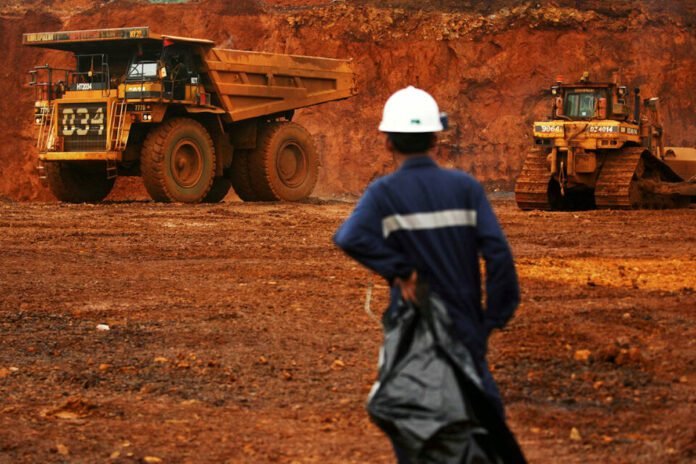
China’s nickel investors in Indonesia are sending a familiar warning: reverse regulatory uncertainty, or they’ll potentially walk. However, that tacit warning rests on an assumption — that Jakarta has no institutions capable of running its own nickel industry — that no longer holds.
In May, the China Chamber of Commerce in Indonesia sent an open letter to President Prabowo Subianto warning that abrupt policy shifts — from mining-quota cuts to new foreign-exchange retention rules — were undermining investor confidence.
Major Chinese smelters have recently throttled output and put expansion plans on hold in response. The underlying message seems to be that if Chinese firms lose patience, they will quit the country, dashing hopes for Indonesia’s downstream ambitions to capture more value from its mineral resources.
China’s tacit threat assumes Indonesia has no institutions of its own capable of carrying the industry forward without a major Chinese or other foreign partner directing it. But that assumption doesn’t square with what Jakarta has actually built over the past two years.
Danantara, Indonesia’s new sovereign wealth fund, announced plans in 2025 to develop 26 downstream projects worth roughly $12.4 billion, spanning mining, metals, energy and agriculture. All are explicitly aimed at keeping more value inside the country rather than exporting resources in raw or semi-processed form.
The state mining company MIND ID and a growing number of domestic private firms are positioned to take larger roles alongside Danantara — not as junior partners waiting on foreign capital to define the terms, but as co-owners structuring the projects themselves.
The area with the most room to grow this way is what industry analysts call the midstream — the stages between digging up ore and building a finished battery cell, including precursor materials, battery cathodes, specialty chemicals, recycling, process engineering, logistics and equipment maintenance.
These stages generally pay better and require more skilled work than mining or basic smelting. They are also exactly where a decade of Chinese investment has built the least, concentrating instead on nickel pig iron, ferronickel and, more recently, mixed hydroxide precipitate — the earlier, more commoditized end of the chain.
The cost of that gap shows up in Indonesia’s trade figures. The country is a net importer of advanced battery systems: An estimated 85% to 95% of domestic demand was met by imports as of 2026, with roughly 60% to 70% of that import value coming from China.
That means a country holding some of the largest nickel reserves on Earth is still buying back finished products built from cheaper chemistry elsewhere, because the domestic midstream never grew fast enough to intercept its own ore before it left the country in semi-processed form.
The chemistry has made the mismatch worse. Indonesia sold roughly 43,000 EVs in the most recent year tracked — most of them from Chinese brands including BYD, Wuling, Chery and Neta — and about 90% ran on lithium iron phosphate batteries, a chemistry that uses no nickel at all.
BYD’s new nickel-free Datang SUV drew 150,000 pre-orders in China in under two months this year, a sign that the same Chinese firms building Indonesia’s smelters are accelerating away from the nickel-heavy batteries Indonesia’s strategy assumed the world would keep buying.
Ferronickel output kept climbing anyway, meeting a market that increasingly didn’t need it for batteries — a large part of why prices collapsed even as export volumes hit records.
Danantara’s own conduct this past year shows that filling the midstream gap doesn’t require choosing sides. In May 2025, Danantara and Indonesia’s other sovereign fund, INA, signed a memorandum with France’s Eramet to build an integrated nickel-to-battery investment platform, with talks on specific projects, including further development at Weda Bay, continuing into the second half of the year.
Three months later, Danantara announced a separate cooperation agreement with China’s own GEM to develop a nickel processing hub. Signing with a French miner and a Chinese one in the same year is a reasonable description of what diversification actually looks like: not excluding any single country, but making sure Indonesian institutions have a real seat at the table regardless of which foreign partner shows up next.
None of this means Chinese capital has become irrelevant, or that domestic firms can immediately replace what a decade of China-led foreign investment built. Financing large industrial projects remains capital-intensive, and many Indonesian companies still lack the scale or established customer relationships to compete independently in global battery supply chains.
But MIND ID already has a track record worth noting. Under Indonesian mining law, foreign-owned mines must eventually divest majority ownership to Indonesian shareholders.
In July 2024, MIND ID did exactly that at nickel miner PT Vale Indonesia, buying a further 14% stake to become the controlling shareholder at 34%, without the mine’s output or its foreign technical partners disappearing.
It’s a working precedent for the model Danantara is now trying to scale across the midstream. The notion that Indonesia has no alternative to China or that Indonesia’s alternatives to China are still maturing are decidedly different claims — and only the latter is true.
Indonesia now has a sovereign fund actively financing dozens of downstream projects, a state miner with a real ownership track record, and, in the same year as its biggest quota cuts, new midstream partnerships with both Western and Chinese firms.
The more accurate question for Jakarta isn’t whether it can survive a Chinese exit that, despite Beijing’s grumbling, isn’t actually happening. It’s whether Danantara, MIND ID and domestic private capital can grow fast enough to make that question increasingly irrelevant.
Bhima Yudhistira Adhinegara is the executive director of the Center of Economic and Law Studies (CELIOS). Muhammad Zulfikar Rakhmat is the director of the China-Indonesia and MENA-Indonesia desks at CELIOS.
Violent Interests: Capitalism and Social Transformation in the Eastern Mediterranean
A French-Lebanese couple set out for Beirut where the man wanted to introduce the woman he wanted to marry to his family. However, as their passenger ship docked in Beirut port, the man’s father refused to allow the woman to disembark from the ship. A powerful and wealthy Greek Orthodox businessman, Musa Sursuq was opposed to his son, Jirjis Musa Sursuq, from marrying a French singer. As Kristen Alff describes, ‘He forbade his son from marrying the singer, telling Jirjis that he had already arranged for him to marry his first cousin Emilie.’ The world Musa grew up in, the newly acquired power and wealth acquired by his parents’ generation meant it was imperative for sons and daughters to marry within other newly wealthy Christian families or marrying cousins to strengthen business ties. Economic accumulation through marriage was the world of the 1860s, but by the time his son’s generation grew up in the 1890s, the children were no longer interested in arranged marriage as part of a business venture, as third generation wealthy children they were more interested in romantic love. The story of Lebanese families like the Sursuq family is the story of capitalism and Alff’s new book Violent Interests: Capitalism and Social Transformation In The Eastern Mediterranean, explores the changing nature of global capital through the 19th and 20th century rise of Beirut.
The book follows the Sursuq as well as fellow Greek Orthodox and Maronite Christian families of the Bustruses, Najjars, Trads, Tuwaynis, Khuris and Debbases. The aim is to locate Beirut as a key city not only as a place being shaped by capitalism, but one shaping global capitalism from the 1830s to the 1930s. These families developed a vast network of commercial interests from Beirut, Liverpool, Marseille and beyond. Non-Europeans as agents in expanding capitalism in both the East and West. The Sursuq family were celebrities in the late 19th and early 20th centuries, British and French tabloids wrote about their scandals, wedding announcements and legal suits with enthusiasm. When a marriage occurred between Sursuq and Bustrus families, British newspapers not only covered it, but the Russian Emperor became a godfather to their first-born son. In 1887, when a massive fire broke out in Paris’ Opera Comique in Bois de Boulogne, in which 131 people went missing, injured or died, one British newspaper only named members of the Sursuq family caught up in the fire. Arab families were transforming the world around them, in the English northern city of Manchester, 4 Arab trading houses were listed there in 1798 and by 1870, there were 400 of them.
BOOK REVIEW: A History of Modern Syria
Alff challenges previous historical works that argue Islamic law in the Ottoman World stunted the development of a capitalist economy, it is often argued that when Christians in the empire became exempt from local jurisdictions and came under European law in the 19th century, they acquired wealth which enabled them to build modern stock companies. However, as Alff shows, this is simply not true and that to understand the emergence of a capitalist class, we need to understand the intersections of Islamic law, Ottoman reform and European expansion in creating the conditions for them to come into being. By the 18th century, the Ottomans were building up Beirut as a commercial port hub, promoting cotton production in North Palestine and Silk production in Mount Lebanon. The agreement to allow Christians to use French law, facilitated the emigration of Christian families from parts of Syria to Mount Lebanon. Here they formed farming partnerships and these would become the precursor to joint stock companies formed later on.
‘A great degree of continuity in institutional form and social practice thus existed between the eighteenth-century shareholding schemes under the malikane system and the formation of family business…an early predecessor of the joint-stock companies in the Eastern Mediterranean.’ The story ties into northern Palestine as these Beiruti families owned vast landholdings there, but these faced a unique challenge as Zionist settlers began moving into the area. In the late 19th century, these Beiruti families sold some of their land to these European settlers, while others lost their landholdings in 1948. ‘Palestine…is representative of a case of capitalist expropriation in that its history rests on the dispossession of peasants of their land and subsistence rights for the sake of companies’ seemingly boundless drive for corporate profit in the late nineteenth century.’
Violent Interests forces us to rethink the historical relationship between the Eastern Mediterranean and capitalism. Too often the Levant has been seen as a place where capitalism happened too, while for many this may well be true, it ignores not only the fact many from the region shaped it, but also that it emerged as a combination of internal and external forces. The book offers us a way of thinking about socio-cultural, economic and political transformations of the region, while thinking about why we end up with different results in different places. Ultimately, it offers us better critical engagement in trying to understand how the world around us came to be and for that reason is an important read.
BOOK REVIEW: Imperial Iran in the Eighteenth Century: Identity and State Formation under Nader
Hegseth Is Pushing Testosterone. The VA Has Already Struggled With the Treatment.
Providing continuing hormone-replacement therapy at “the High-T Department of War,” as Secretary Pete Hegseth is calling it, may prove difficult for the federal government because the department in charge of healthcare for veterans has already documented a struggle to manage service members’ hormone therapy, The Intercept has found.
A person on testosterone therapy can’t just stop it abruptly. Dr. Adrian Dobs, a professor of medicine and oncology at Johns Hopkins University School of Medicine, told The Intercept testosterone therapy can suppress the body’s natural production of the hormone and sperm, as well as create medical needs that persist after treatment stops. “We’re sort of creating a dependency on testosterone,” she said.
Under Hegseth’s new initiative, service members age 30 and older are slated for annual testosterone screening, regardless of whether they have any symptoms, while troops under 30 may request screening during their periodic health assessments. Doctors and endocrinologists warned that this proactive screening could lead to overprescription of hormone-replacement therapy for people who don’t need it. This could affect their fertility in the short term, Dobs said, because “men who take testosterone will have a reduction in their sperm counts.”
And after a service member leaves the military, they may require continued medical care. That care could eventually fall to the Department of Veterans Affairs, which has previously struggled with the same treatment.
“Men who take testosterone will have a reduction in their sperm counts.”
In a 2018 review of testosterone replacement therapy, the VA Office of Inspector General found that providers often started patients on testosterone without adequately documenting symptoms or confirming low testosterone levels and frequently failed to conduct recommended follow-up after treatment began. Approximately 2 out of 3 patients did not get a documented discussion of the risks and benefits of the treatment before starting.
Dr. Alvin Matsumoto, a professor emeritus at the University of Washington School of Medicine and former attending physician and associate director at the VA Puget Sound Health Care System, said the findings show why testing for low testosterone is not enough to determine whether someone should receive treatment. Matsumoto helped develop the Endocrine Society’s clinical practice guidelines for testosterone treatment, which the inspector general found the VA had routinely violated in its 2018 review.
Testosterone levels can change depending on when a patient is tested, whether they have recently eaten, exercised heavily, or are sick, among other factors, Matsumoto said. In about a third of men whose testosterone initially tests low, a second test produces a normal result.
That creates a risk under a program that will routinely screen otherwise healthy troops and make testosterone therapy available to those subsequently diagnosed with a deficiency.
“Initiating testosterone therapy in men who have a single low testosterone [test] but no clinical manifestations of testosterone deficiency will likely result in treatment of some men who do not have hypogonadism,” Matsumoto told The Intercept.
Medical guidelines instead call for doctors to establish that a patient has symptoms and repeatedly low testosterone levels before beginning treatment. Matsumoto said those steps would need to occur either while a service member remains under Pentagon care or after they transition to Veterans Affairs.
The question becomes particularly important when those patients move between the two systems. Matsumoto said a VA provider inheriting a patient already receiving testosterone should review why treatment was started in the first place, including whether the patient had symptoms and repeatedly low testosterone levels.
But he does not expect that reassessment to routinely happen. Usually, “the diagnosis will be assumed to be correct,” Matsumoto said.
It’s a similar problem to one the inspector general identified in its review of VA care. Some providers appeared to be testing patients for low testosterone without first documenting symptoms suggesting a deficiency.
The inspector general made seven recommendations to bring VA practices up to standards, including repeat testing and monitoring. According to the inspector general, the VA implemented all seven recommendations and closed them as implemented, as the VA noted in response to questions from The Intercept.
Among the changes the VA implemented was a requirement that providers establish signs and symptoms of testosterone deficiency before testing a patient’s testosterone level for confirmation — a higher standard than Hegseth’s call for annual testosterone screening based on age alone.
“I would be against universal screening, which is what we’re talking about here,” said Dobs, a position consistent with guidance from the Endocrine Society, which represents physicians and researchers specializing in hormonal health.
The Pentagon’s new initiative presents a different question: What happens when service members arrive at the VA already receiving testosterone treatment initiated while they were on active duty?
The Intercept asked the VA whether it has the clinical capacity to continue testosterone treatment for veterans who begin therapy under the Pentagon’s new initiative, whether those prescriptions would automatically continue after separation or require a new VA evaluation, and whether the VA and the Pentagon have coordinated on transitioning those patients between the two healthcare systems.
The Department of Veterans Affairs did not answer any of those questions.
“VA provides testosterone testing and replacement therapy when medically necessary,” VA Press Secretary Quinn Slaven told The Intercept.
Defense Department personnel data from 2024 show roughly 451,000 active-duty troops were age 31 or older, a conservative figure that excludes 30-year-olds, who would also fall under Hegseth’s screening requirement. More than 1 million of the military’s 1.27 million active-duty service members were men.
“Here we have men who are in their prime of reproduction, and we’re causing a drop in their sperm counts when there really may not be sufficient benefit,” Dobs said.
“We’re causing a drop in their sperm counts when there really may not be sufficient benefit.”
The Pentagon did not provide The Intercept with the scientific evidence behind the mandate, say whether it assessed the fertility consequences that can follow testosterone treatment, or address safeguards to prevent unnecessary treatment.
Screening asymptomatic patients is “sort of opening up a can of worms,” Dobs said, citing the difficulty of interpreting test results and determining when treatment is warranted. She was particularly concerned about treating otherwise asymptomatic men whose levels fall within a low or low-normal range — a likely risk in a military overwhelmingly composed of young adults.
The Endocrine Society also recommends against starting testosterone therapy in men who are planning to father children in the near term.
In response to The Intercept’s questions, Defense Department officials pointed to Hegseth’s health and human performance directives, statements from Pentagon officials, and the “High-T Department of War” video.
“It’s not about artificial enhancement,” Hegseth said in his video. “It’s about restoring and optimizing your natural capabilities, protecting your longevity and ensuring you have the biological foundation required to sustain the fight.”
But testosterone treatment can interfere with overall health. Patients placed on testosterone may require continued clinical monitoring to ensure they are not receiving excessive amounts of the hormone. Testosterone can also increase the proportion of red blood cells in a person’s blood, requiring additional monitoring during treatment. It introduces a complex treatment regimen with “very little real proven benefit in this healthy population,” Dobs said.
And there’s the financial cost.
“Who is going to pay for this testosterone while they’re in the service, and who is going to pay for it after,” Dobs asked, “if they require it for many years afterwards?”
Healthcare Replacement Therapy
The virility program Hegseth introduced also intersects with a long-running gap in military reproductive healthcare.
In May, a Congressional Research Service report identified testosterone exposure among the factors that can contribute to infertility. Yet TRICARE, the health insurance military members have, generally does not cover assisted reproductive technologies, including in vitro fertilization, intrauterine insemination, and cryopreservation, which can easily cost tens of thousands of dollars.
Congress nearly expanded that coverage last year. Both the House and Senate versions of the fiscal year 2026 defense authorization bill included provisions requiring TRICARE coverage of certain assisted reproductive technologies. Neither provision survived the final legislation.
The Pentagon is now preparing to routinely screen hundreds of thousands of troops and offer potentially unnecessary testosterone therapy even as TRICARE generally excludes treatments for infertility, one of its potential consequences.
And the plan gives scant consideration to another massive population.
“Nobody’s discussing women,” Dobs said.
Rep. Chrissy Houlahan, D-Pa., an Air Force veteran and member of the House Armed Services Committee, raised the same concern.
“Testosterone is important for both men and women,” Houlahan told The Intercept. “But when [Hegseth] says ‘biological foundation,’ clearly, he has only one sex in mind.”
Houlahan pointed to years of congressional efforts to expand access to fertility treatment for service members and their families.
“This administration not only has opposed efforts to expand access to IVF for service members and their families but has rolled back policies that enable them to take time off to get the full suite of health care they need,” Houlahan said.
She has pushed for research into how military service affects women entering perimenopause and menopause, including the potential effects of toxic exposure, combat, military sexual trauma, and post-traumatic stress disorder. “There is little to no research” on how those risk factors affect women’s health, Houlahan said.
Hegseth has repeatedly framed the testosterone initiative around military readiness and lethality. But “if Secretary Hegseth was truly looking to improve readiness, he would consider ways to support all service members, not just 49% of the population,” Houlahan said.
She was blunter about what she believes the testosterone initiative says about Hegseth’s priorities.
“This announcement about testosterone proves that Secretary Hegseth is only concerned about reproductive health when it serves his own political and misogynistic agenda,” Houlahan said.
Team uses AlphaFold AI to redesign gene-editing proteins to make them safer
A couple of decades after the discovery of systems that could selectively target DNA, we’re starting to see the first therapies based on gene editing. One challenge these developments have faced is safety. While we can make them pretty specific to the gene we want edited, the human genome is very large, and even rare DNA sequences can appear a couple of times by chance.
As a result, all the original gene-editing systems had known rates of what are called off-target effects, in which they simply edit the wrong sequence. This may be a low-probability event, but edit enough cells—and therapies generally have to edit many—and errors become inevitable.
A lot of effort has gone into finding ways to minimize or eliminate off-target edits. In a recent issue of Nature, researchers described modifying the AI protein-folding software AlphaFold to help identify key areas of gene-editing proteins responsible for off-target effects. Those areas were then modified to reduce the problems.
Gene editing and off-target effects
Gene editing systems have three key components. The first is guide RNA, which can base-pair with the targeted genome sequence. It’s possible to design many guide RNAs that all target the same gene, so one approach to making the system safer is to pick sequences that don’t share much similarity with any other genomic locations. This is now widely used as part of the basic design process for a gene-editing system.
The second component is a Cas protein named after the CRISPR system’s Cas9 protein. It interacts with both the guide RNA and genomic RNA and helps enforce the specificity of the interactions.
If there are too many mismatches in the base pairing between the RNA and DNA, Cas9 (or other Cas family members) won’t stick there. A variety of approaches have led to improved Cas family members that have reduced the tendency to enable off-target edits.
The final key component of the system is the protein that interacts with Cas9 when it’s bound to DNA and modifies the DNA. In the original CRISPR system, this cut both strands of the double helix, producing damage that’s difficult to control. Researchers have since modified other proteins to interact with Cas9 but catalyze more subtle changes to DNA, such as lopping off a single base or making chemical modifications that alter how it base-pairs.
Overall, the length of the base pairing between the guide RNAs and the genome is on the order of 18 bases long. That should show up in random DNA sequences only about once in 70 billion bases, and our genome is only about 3 billion bases. By that measure, we should be good. But it turns out that Cas9 can tolerate a small number of mispaired bases without losing its ability to stick to DNA. The exact number and location of the bases where variations are tolerated can vary somewhat, making it difficult to identify in advance which guide RNAs might pose a danger.
One route to improving safety is to better understand how these off-target interactions occur.
Making contact
The team behind the new work, based at a variety of institutions in China, reasoned out their approach in advance. A perfectly matched DNA-RNA hybrid will have one structure, while one with one or more mispaired bases will have a slightly different structure. Evolution has optimized the structure of the Cas9 to stick to the former. But it apparently hasn’t prevented Cas9 from adopting slightly different conformations that can interact with mispaired structures.
If we can identify the portions of Cas9 that mediate these problematic interactions, we can modify and potentially block them.
The team’s first step was to build a large library of off-target editing sites. They did this by using a modified CRISPR system that converts the DNA base adenine to a related chemical, inosine, and then isolating any DNA fragments that contain it. They repeated this process with 10 different guide RNAs and analyzed a large number of modified DNA fragments from each to get a broad picture of the types of off-target sequences present.
The next step was to examine how the CRISPR complex interacted with them, using the AlphaFold AI-based protein-folding software. Updated versions were designed to handle interactions between proteins and nucleic acids, as well as complexes of multiple proteins. So the team fed AlphaFold versions of a target DNA sequence, along with a guide RNA, the Cas9 sequence, and an enzyme that chemically modifies bases and can stick to Cas9.
Unfortunately, it choked, placing one of the proteins in what was clearly the wrong location.
Undeterred, the team simplified things and fed AlphaFold only the DNA, RNA, and Cas9 protein, since the latter is the primary factor determining its sequence specificity. This worked much better, producing a structure that agreed with ones determined by experiments with actual nucleic acids and proteins.
By comparing the structures AlphaFold generated when fed different on- and off-target sites, the researchers found a general pattern. Many (about two-thirds) of the off-target sites caused the Cas9 protein to adopt a slightly different structure. But nearly all (over 95 percent) of them altered which amino acids contacted the RNA. So there are clearly some cases where Cas9 maintains its normal structure but amino acids within it flex around in ways that accommodate the mispaired bases of off-target sites.
Conveniently, AlphaFold was already set up to identify what is termed the “contact probability,” namely, the chance that any two items, such as amino acids or nucleotides, are within a very small distance (eight Angstroms). The researchers could take the output of the contact probability analysis for on- and off-target sites and compare them, identifying exactly which amino acids in Cas9 have altered contacts when there’s a mismatch between the guide RNA and the DNA. They termed this computerized analysis setup “ContactSeek.”
Better targeting
On its own, ContactSeek tended to produce a large list of amino acids that shift around when bound to an off-target site. So the researchers focused on regions of the Cas9 protein where these amino acids clustered, viewing this as a sign that these areas were sites that were adapting to the differences caused by mismatched bases. They then began to test versions of Cas9 with different amino acids at these sites.
In all, the researchers made 23 different swaps, putting a different amino acid into one of 10 key positions identified by their work with AlphaFold. This allowed them to find a variant with activity similar to the normal Cas9 at sites that matched the target sequence, while its off-target activity dropped from 28 percent to 5 percent. Similar results were possible when the researchers used different guide RNAs. They also showed that the approach worked for a similar system that used a different Cas protein (Cas12) to recognize the DNA/guide RNA combination.
As mentioned above, other research teams have used different approaches, such as directed evolution, to develop Cas9 variants that are less prone to off-target editing. When tested against these variants, the newly designed versions tended to produce similar or even slightly better activity and specificity. The big difference here is that the changes identified by this approach may be somewhat more specific to a given guide RNA/mismatch combination rather than more generally effective.
Of course, some of the individual changes identified here could potentially be combined with those in the previously developed Cas9 versions for even greater improvements, although that wasn’t tested here.
In any case, the work is potentially useful because it describes a general method for producing gene-editing systems tailored to prevent known off-target events. If that ends up being a bottleneck in developing a therapy, this work could be a significant breakthrough. But the researchers also suggest that the approach would be useful more generally for fine-tuning protein-DNA interactions, which could have applications far beyond gene editing.
Iran-Iraq-Pakistan ‘axis of sympathy’ signals a reshaping Southwest Asia
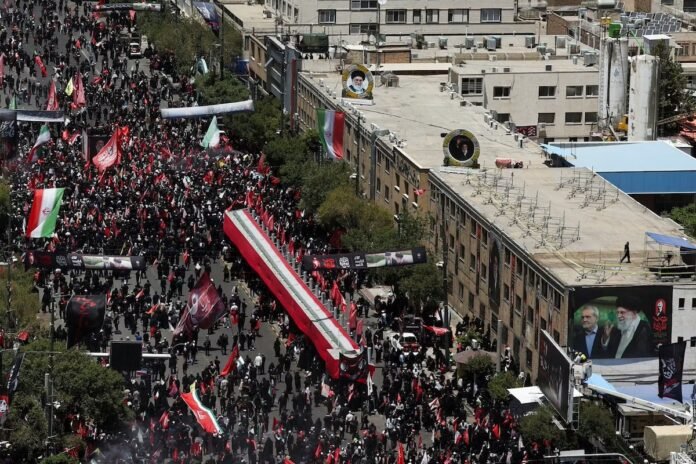
Earlier this month, the Supreme Leader of Iran, Ayatollah Ali Khamenei, was buried in his hometown of Mashhad after a four-day ceremony.
Many international delegations were present, but each country will have chosen their representatives with the utmost care. Sending high-ranking officials would go beyond mere diplomatic courtesy, and possibly signal an alliance.
Only two states sent their prime ministers to the funeral: Iraq and Pakistan, both of which share a border with Iran. This decision indicates an emerging “Axis of Sympathy” between the countries, a new Southwest Asian regional theater that breaks the simple binaries of the Middle East and South Asia.
India – South Asia’s biggest power and Pakistan’s rival – sent a delegation that did not include Prime Minister Narendra Modi. Modi had also failed to condemn Khamenei’s assassination in a joint US-Israeli airstrike on February 28.
Headlines like this fail to acknowledge a more profound geopolitical shift. One of the main consequences of the ongoing US-Israeli war with Iran is that is has forged a Pakistan-Iran alliance.
This was not always the case. In the 1990s, Pakistan and Iran fought one another in Afghanistan. As recently as 2024, Tehran and Islamabad exchanged fire over separatists in the Baloch-inhabited areas that straddle their shared border.
India and Iran were also closer in the past. In 2003, Iran agreed to allow India to develop a deep-water port in Chabahar, providing a transport corridor to Central Asia and Russia that bypassed Pakistan.
Khamenei’s funeral marked a major reconfiguration of all of these alliances.
Necropolitics, emotion and keeping Trump happy
Cameroonian scholar Achille Mbembe defines necropolitics as “the subjugation of life to the power of death.” Khamenei’s four-day funeral was not simply the burial of a human body – it was a necropolitical ceremony, choreographed by the Islamic Republic to gauge which nations were willing to send a “delegation of lamentation.”
Dominique Moisi’s 2009 book, The Geopolitics of Emotion, can help us understand the deep importance of these gestures, especially with the second Trump administration in full swing.
The nations and organizations of the world – from NATO to FIFA – now have to account for and preempt the US president’s tantrums. This extends Moisi’s “geopolitics of emotion” into a “geopolitics of mollification” – diplomatic structures that largely serve to appease Trump, massage his ego and avoid his wrath.
In practical terms, this means any nation sending a head of state to Khamenei’s funeral had to calculate Trump’s reaction. Only two states felt emboldened enough to send their prime ministers to the funeral – Pakistan’s Shahbaz Sharif and Iraq’s Ali Falih Kadhim al-Zaidi were both in attendance.
It is worth noting that India’s delegation was not an affront. The presence of Indian Shi’a general Ata Hasnain in particular showed respect for Iran’s Shi’a majority. But in forging alliances, geopolitical heft ultimately trumps religious sectarianism.
Pakistan, the diplomatic broker
Pakistan has wielded increasingly firm power in its dealings with Iran over the last year.
First, Pakistani mediation was what gave the Islamic Republic a diplomatic off-ramp during the 2026 conflict that erupted over 40 days in the Gulf. Pakistani officials brought both Iran and the US to the negotiating table in Islamabad.
Second, Pakistan insisted that the ceasefire also apply to Israeli operations in Lebanon. It achieved this, demonstrating that its influence can be felt on the shores of the Mediterranean.
Even with the US-Iran ceasefire broken as of mid July, Pakistan’s role was vital, and stood in stark contrast to India who, despite military ties to Israel, did not even ask for a ceasefire.
The India-Israel alliance runs deep. In addition to the strategic partnership trumpeted on Modi’s February 2026 visit to Israel’s parliament, the Knesset, many Indian Hindu nationalists are longstanding, fervent admirers of the Zionist nation-state model.
Geography matters
India argues that it is pursuing “multi-alignment.” Unlike its Cold War “non-alignment” policy, India today seeks to maintain cordial relations with every nation – even with rivals such as Iran and the US.
However, there is a major difference in the long-term viability of each alliance within the new Southwest Asian regional theater. India does not border the UAE and Israel, nor does the US. Iran and Pakistan, however, share a long border.
The rapprochement that emerged from the 2026 war means the two nations can actively benefit from the alliance. It will allow them to cooperate on, for instance, managing tensions with the Taliban in Afghanistan and Balochi separatists.
The emerging “Axis of Sympathy” is more symbolic than Iran’s harder Axis of Resistance. The Islamic Republic sees Iraq and Pakistan’s sympathy as part of its neighbors’ delicate balancing act, which will need to keep them on Tehran’s side.
The benefits are already clear. Pakistan allowed Iraq and Iran to achieve the common goal of preventing a prolonged conflict in the Gulf – a goal also shared by the Gulf Cooperation Council.
An extended war would benefit nobody in the Middle East or South Asia, but while countries from across these regions worked towards a ceasefire, it was Pakistan that brought about the first diplomatic breakthrough.
Pakistan and Iraq’s decision to send their highest government officials to Khamenei’s funeral does not amount to the two countries picking a side. But for Pakistan in particular, assertive brokering and strategic ties with Tehran and other powers are transforming alliances, signaling a huge shift in the power dynamics of Southwest Asia and beyond.
Do the Houthis Have the Capacity To Wage a Multi-Front War?
Political analyst Abdul Salam Mohammed told TML that continued Houthi pressure could compel Saudi Arabia to provide full backing to Yemeni government forces for a decisive ground offensive toward Sanaa, with direct US support
[SANAA] As tensions in the region escalate, including a renewal of fighting between the Houthis and Saudi Arabia, analysts question whether the Houthis’ capabilities and regional alliances can sustain a prolonged conflict on multiple fronts.
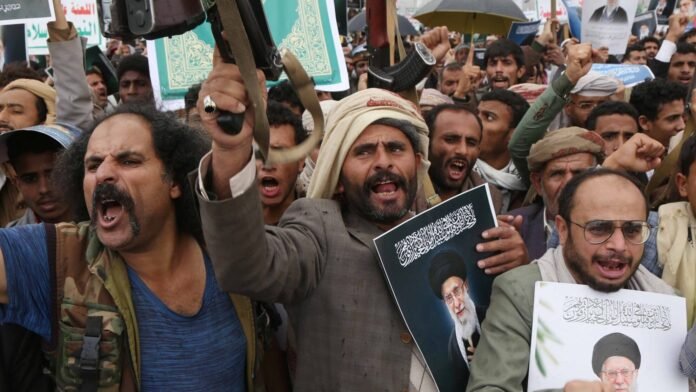
Saleh Hamdan*, a man in his forties employed by the General Corporation for Roads and Bridges, stands in Al-Sabeen Square in Sanaa, Yemen’s capital, waving his personal AK- 47 during a large demonstration organized by Ansar Allah, also known as the Houthis.
Exhausted after years of not receiving his salary and deteriorating living conditions, he shouts: “We are starving while our salaries are with Saudi Arabia. We have starved because Saudi Arabia is besieging us, blocking food, travel, and salaries.” Around him, relatives and people from his community insist that the Houthis should wage a direct war against Saudi Arabia to break what they describe as the “blockade.”
The demonstrations coincided with the Houthis’ announcement that they had carried out an attack using ballistic missiles and drones targeting Abha International Airport in southern Saudi Arabia. The Houthis also announced a ban on maritime navigation for Saudi vessels, a move that observers viewed as the beginning of a new round of military escalation.
Behind these developments lies the complex issue of Sanaa International Airport. While Yemen’s internationally recognized government says it does not oppose resuming Yemenia Airways flights under previously agreed arrangements, the Houthis insist on operating direct flights between Sanaa and Tehran via Iranian airlines, which analysts describe as an effort to use the airport issue to advance broader regional objectives.
Political analyst Abdul Salam Mohammed told The Media Line that decisions on war and major military operations—such as strikes deep inside Saudi Arabia or disrupting maritime navigation—remain tied to the operations room of Iran’s Islamic Revolutionary Guard Corps (IRGC).
He said the Houthis have connected their survival to Iran’s regional strategy, operating as Tehran’s most loyal proxy in the region, while the leadership in Sanaa is largely tasked with mobilization and carrying out operations on the ground.
Mohammed added that insisting on opening a direct Sanaa–Tehran air route and using the airport as leverage serves the broader agenda of Iran’s regional alliance by complicating international calculations and increasing the costs of the conflict.
Even if progress is made on reopening the airport or advancing negotiations over the UN-backed roadmap, Mohammed believes the Houthis’ leadership will find new justifications for continued escalation.
Indeed, the Houthis have found a reason for escalation.
In the early hours of Thursday, the Houthis announced they had targeted two Saudi oil tankers with missiles and drones in the Red Sea as part of what they described as a maritime “blockade” imposed on Saudi Arabia.
Meanwhile, the IRGC said the Strait of Hormuz was “completely closed,” and transit would require coordination with Tehran.
According to Windward, the maritime intelligence platform: “Five tankers heading toward Bab al-Mandeb reversed course as blockade threats rose. Four were carrying Saudi-origin cargo: crude, gas, oil, and naphtha, totaling an estimated 3.84 million barrels.”
Regarding the logistical and human resources needed to sustain a multi-front conflict for months, sources speaking to The Media Line said the Houthis estimate they have a registered force of more than 200,000 fighters, in addition to over 250,000 personnel affiliated with popular mobilization formations in areas under their control. These figures are estimates provided by a Houthi source and could not be independently verified.
The Houthis also depend on trained personnel within government institutions and universities, as well as tribal support estimated in the hundreds of thousands, although the extent to which tribal members would participate in a full-scale conflict remains uncertain.
A source working with the Houthis’ General Mobilization Forces told The Media Line that the Houthis are fully prepared for confrontation.
“The Ansar Allah are fully ready for this war, whether on the domestic front, against Saudi Arabia, or against any enemy by land, sea, or air. “The source added: “There will be no retreat this time unless all the rights of the Yemeni people are secured from Saudi Arabia,” describing the kingdom as “a house of glass that fears stones.”
In addition, the same source said the Houthis’ battlefield capabilities have become more cohesive, citing a unified command structure, an advanced missile arsenal, military aircraft, drones, one-way attack drone boats, and autonomous underwater vehicles operated under the supervision of specialists. He said these capabilities would enable the Houthis to withstand and manage a prolonged war of attrition.
He concluded: “We are the most experienced in this kind of warfare. Saudi Arabia, its allies, and even Israel understand the danger posed by this force. Bab al-Mandab, Saudi airports, and every other target are awaiting zero hour.”
In contrast, Abdul Wali Al-Kazmi, a member of the Moral Guidance Directorate at Yemen’s Ministry of Defense, told The Media Line that government forces are now at their highest level of military readiness after completing efforts to reorganize and unify the armed forces under a single command.
He said the internationally recognized government’s forces currently number about 400,000 fighters—a figure that also requires independent verification—and benefit from substantial air support and international backing.
The source said the government’s decision not to launch a comprehensive military operation to retake Houthi-controlled territory reflects the leadership’s commitment to peace, its desire to protect civilians and infrastructure, and Saudi Arabia’s continued efforts to advance the roadmap process while maintaining flexibility with Yemen’s political actors.
Nevertheless, Abdul Salam Mohammed believes the Houthis’ calculations could be undermined by a significant shift in Saudi policy.
He said Riyadh, whose strategy has focused on protecting its southern border and securing shipping lanes while keeping direct confrontation at a relatively low level, has begun reassessing its options in response to direct threats against its airports and critical infrastructure, as well as mounting pressure on maritime navigation through the Bab al-Mandab Strait.
According to Mohammed, continued Houthi pressure could ultimately compel Saudi Arabia to provide full political, military, and logistical backing to Yemeni government forces for a decisive ground offensive toward Sanaa, with direct US support, in an effort to reduce the Houthis’ military capabilities after it has come to be viewed as a threat to the global economy and energy security.
Alongside military mobilization, the Houthis have accelerated measures aimed at strengthening their domestic front. These include requiring medical personnel in government hospitals to sign pledges placing them at the disposal of the “Supreme Emergency Committee” for deployment to field support units, while instructing them to keep their mobile phones on and remain at their assigned locations.
The plan also includes training, through the Civil Defense Authority, employees of government institutions and private companies in evacuation procedures and firefighting, as well as converting warehouses and basements of strategic facilities and schools into undisclosed shelters and alternative accommodation centers in preparation for the possibility of intensive airstrikes.
A source in the Supreme Emergency Committee in Sanaa told The Media Line that these measures are precautionary steps intended to enhance preparedness and ensure the continuity of essential services and the resilience of the domestic front in the event of any escalation by what the source described as the “Forces of Aggression.”
As military and political tensions continue to intensify, Yemen appears to be approaching a critical phase, with the convergence of humanitarian challenges and regional strategic calculations, raising the risk of a broader conflict extending beyond the country’s traditional front lines.
As Israel prepares for October election the government is accelerating its land grab in the West Bank and Gaza
Israel is gearing up for an election at the end of October. And, with the Likud party of the prime minister, Benjamin Netanyahu, trailing in the polls, his government is pushing through measures which aim to dramatically expand Israeli control over Palestinian land on the West Bank and Gaza Strip.
The October 27 poll will be the first since Hamas’s October 2023 attack, the bloodiest assault on Israel since its creation, and the devastating war on Gaza that followed. It appears that with the failure of the war in Iran to achieve its strategic objectives, and amid continuing instability in Lebanon, Netanyahu’s government believe that territorial expansion will be one of its strongest electoral assets.
The expansion of settlements in the West Bank and the steady reduction of Palestinian-controlled territory in Gaza are not new developments. But the recent announcement by the defence minister, Israel Katz, of plans to establish three military-community outposts in northern Gaza marks a significant escalation. Finance minister Bezalel Smotrich, meanwhile, recently announced 1.3 billion shekel (£318m) in funding for dozens of new Israeli settlements in the occupied West Bank.
Such proposals are likely to resonate with Israel’s increasingly right-wing electorate. But they may also reflect a broader effort to consolidate territorial gains before a possible change in political leadership.
The focus of international attention has shifted since the end of February towards Iran and Lebanon. So, with less scrutiny of developments in Palestinian territories, the government appears determined, in the words of Hagit Ofran, from the Israeli activist group Peace Now, to “create facts on the ground” before voters go to the polls.
The increasing suffocation of Gaza
Israel already controls around 65% of the Gaza Strip, with Netanyahu aiming to seize 70%, despite the ceasefire agreement brokered in October 2025. Recent satellite imagery shows the construction of a more than 23km earth barrier designed to consolidate Israeli control over these areas.
Even before the war, Gaza was one of the world’s most densely populated territories. Roughly 2.2 million people lived within just 365 square kilometres, making it the fifth most densely populated territory globally. With the current population estimated at around 2.05 million, reducing the accessible territory to only 30% of the Strip would more than triple population density to nearly 19,000 people per square kilometre.
Meanwhile, around three-quarters of Gaza’s housing stock has been damaged or destroyed, while 1.4 million people require adequate shelter. The destruction of water, sanitation and waste infrastructure has left around 60% of the population exposed to sewage or human waste. More than 900,000 people live amid accumulated garbage that fuels rodent infestations and disease outbreaks. Chickenpox has spread through overcrowded displacement camps. People in tents report being bitten by rats.
The ambitious reconstruction proposals promoted by Trump’s Board of Peace, including “Project Sunrise”, which envisioned transforming Gaza into a futuristic high-tech city comparable to Dubai or Doha, appear to have been abandoned. They have been replaced by plans for a limited humanitarian zone, which will be capable of accommodating only a small fraction of Gaza’s displaced population. There has been little consultation with Palestinians themselves.
Meanwhile, the violence of the Israeli army in the Strip continues. More than 1,000 Palestinians have reportedly been killed since the ceasefire took effect. This includes documented shootings of civilians and children near the so-called Yellow Line. This is the line of occupation established by the Israeli army as part of the ceasefire, with soldiers reportedly operating under permissive ‘shoot to kill’ rules in this area. But most of those killed between July 13 and 20 died well away from this buffer zone. Clearly, more than nine months after the ceasefire, nowhere in Gaza can be considered safe.
Against this backdrop, defence minister Katz has openly reaffirmed the government’s objective of the large-scale expulsion of Palestinians from Gaza. This would be implemented, he said in May, “at the right time and in the right manner”.
The continued fragmentation of the West Bank
The simultaneous intensification of land seizures in the West Bank has attracted even less international attention. Since October 2023, the Israeli government has armed thousands of settlers and incorporated many into territorial defence units. This has further blurred the distinction between the Israeli military and armed settler groups.
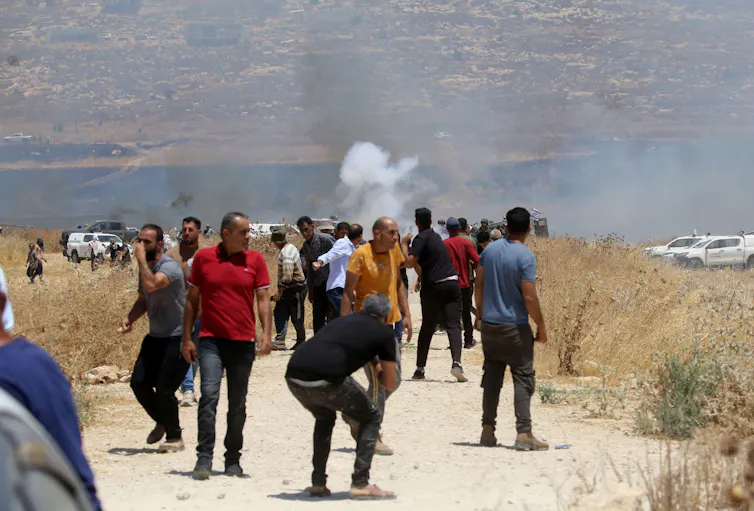
Israeli settlers attack Palestinian farmers as they try to put out a fire in wheat fields near the West Bank town of Beit Furik, July 23 2026.Nedal Shtieh/JNA via ZUMA Press Wire
Israeli human rights group B’Tselem has documented what it describes as the forced displacement of Palestinian communities on a scale unseen since Israel occupied the West Bank in 1967. Human rights organisations increasingly argue that military operations and settler violence operate in tandem, systematically displacing Palestinian communities.
Smotrich recently described this as a “revolution in settlement”. Following cabinet approval for 13 new settlements in the central West Bank, violence has intensified around newly established outposts. Settlement expansion and settler violence reinforce one another, creating conditions that encourage the displacement of Palestinians.
A pre-election territorial grab
The cumulative effect of these actions and policies raises profound legal and moral questions under the 1948 Genocide Convention. This defines genocide not only as killing members of a protected group but also as deliberately inflicting conditions calculated to bring about the group’s physical destruction, in whole or in part, when accompanied by the requisite intent.
The large-scale displacement of Palestinians and the continued killing and deterioration of living conditions have led a growing number of international legal scholars, UN experts and human rights organisations to argue that these policies warrant assessment through the legal framework of genocide.
Whatever the eventual legal determination, the humanitarian and political consequences for Palestinians continue to deepen as Israel’s current government accelerates its territorial project amid the countdown to the October election.