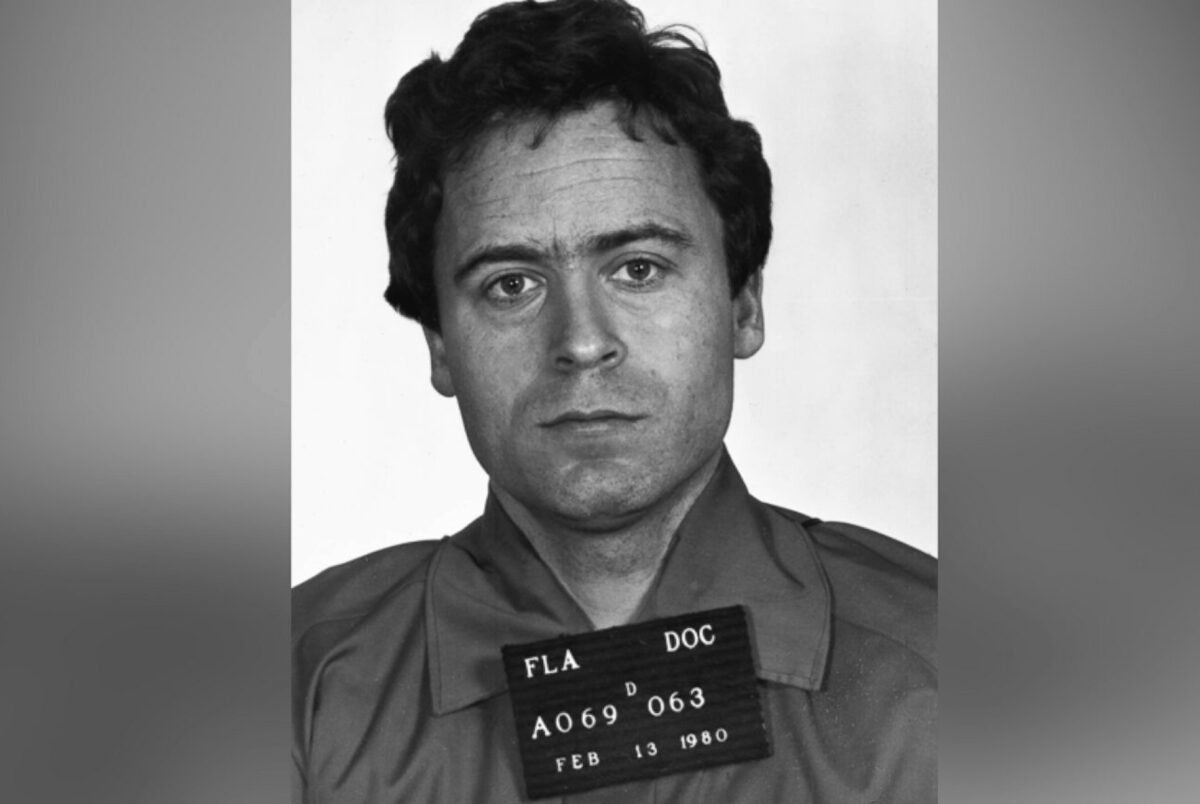
Nearly four decades after notorious serial killer Ted Bundy was executed, a stunning DNA breakthrough has exposed another horrifying chapter in his murderous past, finally solving a teenage girl’s killing that haunted investigators for more than half a century.
Utah authorities announced Tuesday, October 27, that Bundy was responsible for the 1974 murder of 17-year-old Melissa Ann Smith, whose body was discovered in a wooded area exactly 52 years earlier.
The revelation marks the second time this year that modern forensic technology has connected Bundy to a decades-old murder, raising renewed questions about how many victims the infamous killer may have left behind.
Smith, the daughter of Midvale Police Chief Louis Smith, disappeared on October 18, 1974, after visiting a local pizza parlor and restaurant. Despite an extensive investigation, the teenager never returned home.
Nine days later, a deer hunter discovered her body in the Summit Park area near Park City, Utah. Although investigators suspected Bundy might have been involved, they lacked the evidence needed to officially identify her killer.
For more than five decades, the case remained open.
That changed when investigators revisited evidence preserved from Smith’s murder and uncovered a critical DNA connection to another teenage victim.
In April, Utah authorities officially linked Bundy to the 1974 murder of 17-year-old Laura Ann Aime, who disappeared after leaving a Halloween party. Her body was discovered nearly a month later in American Fork Canyon.
Using advances in forensic science, investigators identified Bundy’s DNA in evidence from Aime’s case. On July 14, 2026, scientists discovered that DNA evidence from Smith’s case matched the profile recovered in Aime’s investigation.
The breakthrough was made possible by technology introduced at Utah’s state crime laboratory in 2023, allowing scientists to examine genetic material that had previously been too degraded or difficult to analyze.
Summit County Attorney Margaret Olson said the forensic findings, combined with similarities in the crimes, established Bundy’s responsibility for Smith’s death.
The announcement officially closed an investigation that had remained unresolved since 1974.
Salt Lake County Sheriff Rosie Rivera emphasized that the discovery demonstrates why preserving evidence can be crucial, even when a case appears impossible to solve.
“This case demonstrates the importance of preserving evidence,” Rivera said.
Authorities have notified Smith’s surviving relatives, who no longer live in the area. The family declined to attend Tuesday’s announcement.
Bundy was executed in Florida’s electric chair on January 24, 1989, after being convicted of three murders, including the 1978 killings of two women at Florida State University’s Chi Omega sorority house.
Although he confessed to approximately 30 murders committed during the 1970s, investigators have long suspected his actual victim count could be considerably higher. Some researchers have suggested the number might reach 100, although that estimate remains unverified.
In the days leading up to his execution, Bundy admitted involvement in additional killings, but many of his claims lacked sufficient evidence for investigators to confirm them.
And despite Tuesday’s major announcement, authorities say their investigation into Bundy’s possible victims is far from finished.
Detectives are still examining the disappearance of 16-year-old Nancy Wilcox, who vanished in Utah in October 1974. Bundy claimed responsibility for her death, but investigators have not independently established his involvement.
Salt Lake County Detective Ben Pender warned that solving Smith’s murder does not mean the investigation into Bundy’s crimes is over.
For Smith’s family, however, the discovery finally provides an answer to a question that remained unresolved for 52 years.
And for investigators, the latest breakthrough raises a haunting possibility: Even decades after his death, Ted Bundy’s remaining secrets may still be waiting to be uncovered.