
Growing up in Pyongyang, I believed the stories I was told about my home country. They were so powerful that, even as a young boy, I dreamt of becoming a military officer like my father. I imagined that one day I would march proudly in a North Korean uniform before Kim Il Sung. Because the communist regime taught us that he was immortal, such a dream was readily believable.
When Kim Il Sung died of a heart attack in 1994, I could hardly comprehend it. The man we had been taught to regard as our “Eternal Father” was mortal after all. His body, draped in the flag of the Workers’ Party, was placed in a glass sarcophagus for the entire country to see, exposing the first crack in the regime’s mythology.
When my father expressed skepticism about the regime’s future, our entire family was expelled from Pyongyang. We left behind a life of relative comfort in the nation’s capital and were sent to an impoverished rural area in the northeast. My parents told me we were taking a vacation. What we found instead was a place filled with starving people. With no government rations, children searched desperately for anything they could eat. For the first time, I encountered communism’s suffering – not in a history book or a political speech, but in the hollow faces of children abandoned by the regime I had once worshipped.
Soon, my parents disappeared as well, and my life was consumed by hunger and fear. At 12 years old, I was living on the streets alongside other boys who became my brothers. We begged, stole food, fought and climbed onto cargo trains in search of places where we might find something to eat. Every day was a struggle to survive. Every night brought the possibility that one of us might not wake up.
Those years of hardship stripped away any love I still felt for the regime that ruled my homeland.

But only after I escaped did I fully understand how powerful it can be for North Koreans to encounter the truths the government has worked so hard to conceal. A single piece of information can create doubt. Doubt can become judgment. Judgment can become courage. Information gains its greatest power when people can make sense of it, share it and act on what they learn.
That is why the democratic world must pair efforts to reach people inside North Korea with sustained investment in young North Korean escapees. Information alone is not enough. North Koreans also need people who can interpret it, give it meaning and transform it into a vision for change. Escapees can turn information into understanding, understanding into agency and agency into leadership.
The regime understands the danger of that process. In footage released in 2022, two North Korean teenagers were sentenced to 12 years of hard labor for watching and sharing South Korean films and music videos. Their public trial took place before roughly 1,000 students– a calculated warning to an entire generation. Amnesty International has documented severe punishments for North Koreans who consume South Korean television and K-pop, including imprisonment in labor camps and, in some cases, execution. No government secure in its legitimacy would fear a television drama or a song, but Kim Jong Un knows where outside ideas can lead.
For decades, international partners have supported North Korean voices and fostered emerging leaders in the North Korean escapee community. Chief among them has been the National Endowment for Democracy (NED). This work rarely produces immediate headlines or appears on the evening news. It lacks the spectacle of a missile launch or a summit between world leaders. But it is vital. It helps North Koreans question government narratives, form independent judgments and discover that other futures are possible.
With NED’s support, North Korean escapees created a platform where emerging leaders could organize around a common cause and develop a shared vision for our homeland. That work has transformed scattered voices into a growing movement for human rights, dignity and democratic change. It has shown young escapees that they are not merely survivors of North Korea’s brutality. Instead, they can become leaders capable of shaping its future.
I was once a boy who dreamt of marching before a dictator. I later became a starving child on the streets. Today, I am a free man who understands that the regime’s greatest weapon is not its missiles or its army. It is the lie.
America should help more North Koreans begin the journey from obedience to doubt, from doubt to understanding and from understanding to action. That means supporting independent information, investing in escapees who can guide, organize and inspire others, and refusing to abandon the North Korean people simply because change may not come quickly. Kim Jong Un fears ideas because he knows the truth can outlive any dictator—and eventually bring down the lies that sustain him.
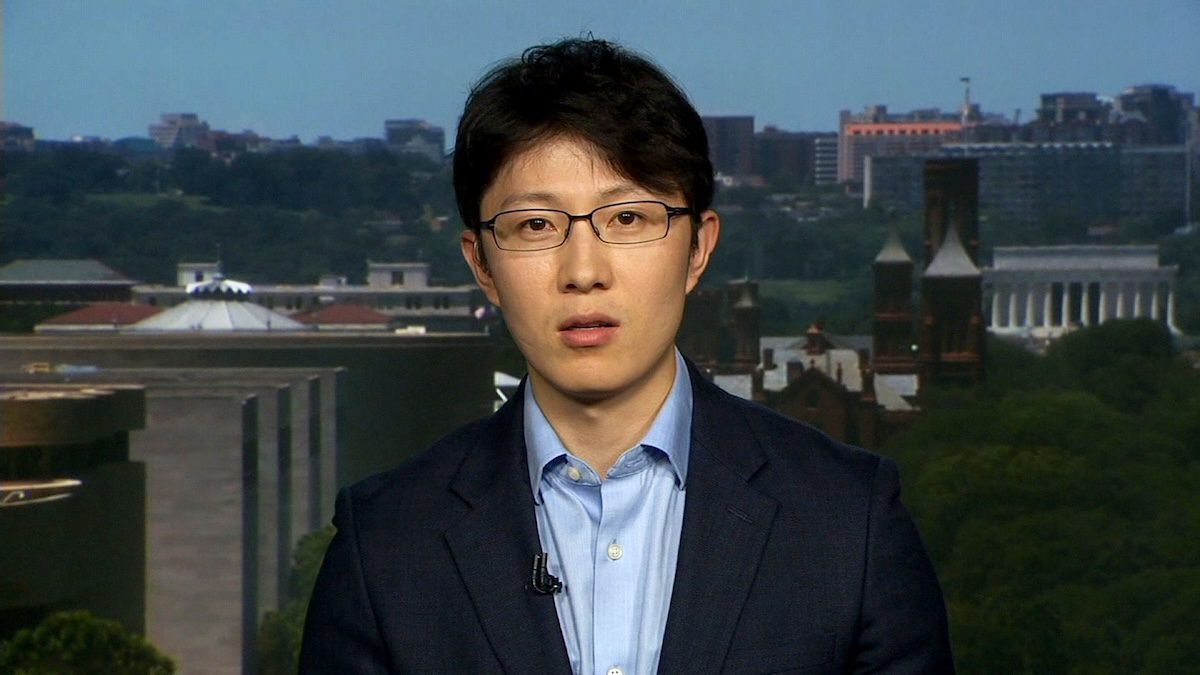
Sungju Lee is author of Every Falling Star: The True Story of How I Survived and Escaped North Korea. He is a Fulbright scholar and doctoral candidate at the Carter School for Peace and Conflict Resolution at George Mason University.