Kyiv reports new territorial gains in Donetsk as Moldova investigates a suspected drone incursion and Ukraine presses governments to close Russian cultural centers over alleged espionage and propaganda
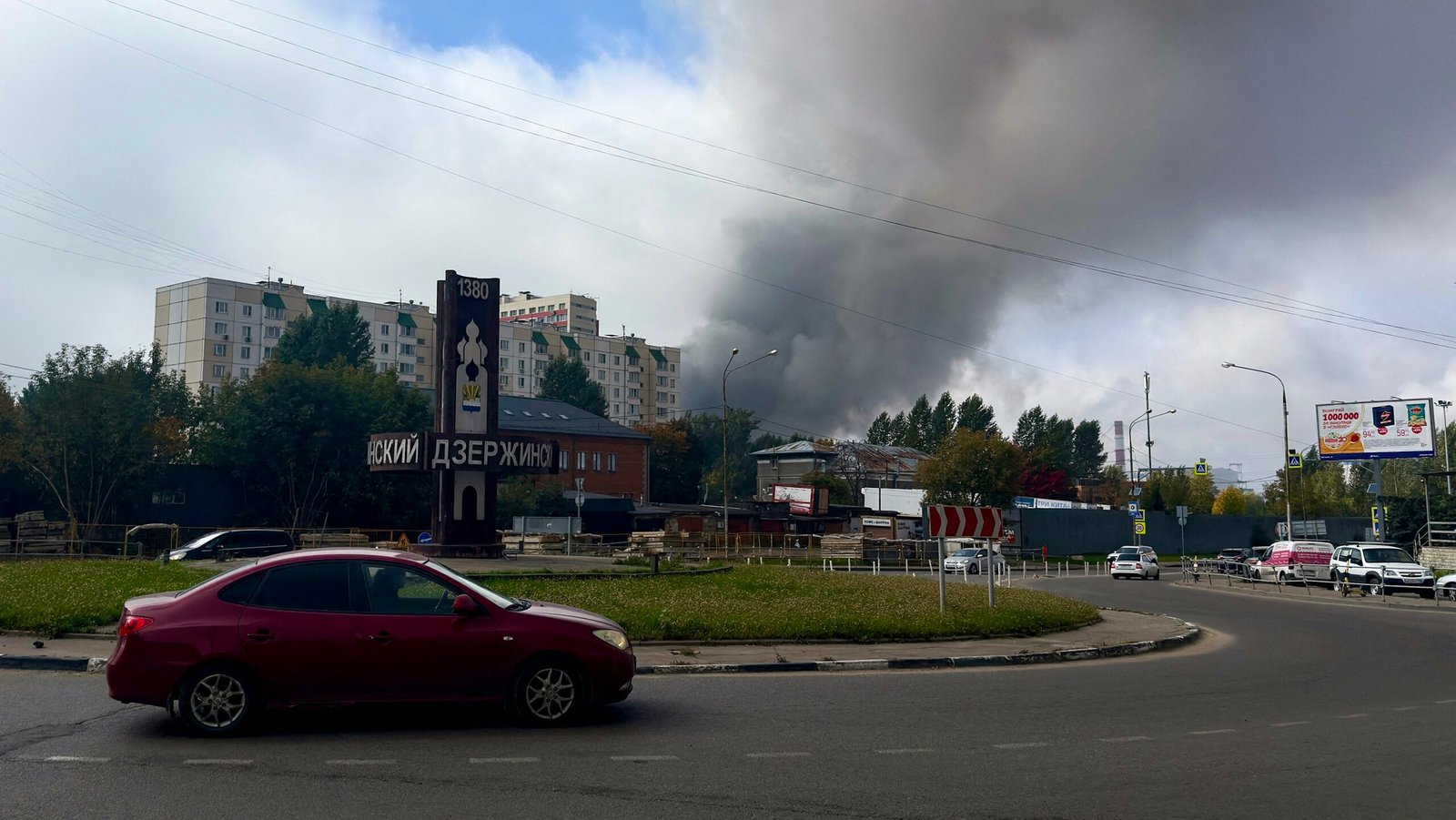
Ukraine struck a Moscow oil refinery with long-range weapons on Sunday, September 20, targeting a facility its military said supplies Russian forces, as Russia held the final day of parliamentary voting and Ukrainian authorities reported deadly Russian attacks around Kyiv. The exchanges accompanied Ukrainian claims of territorial gains in eastern Ukraine and fresh concerns about security beyond the battlefield.
Russian authorities reported two deaths and 20 injuries in the Moscow region. Moscow Mayor Sergei Sobyanin described the assault as unprecedented and alleged that its purpose was to disrupt the election. President Volodymyr Zelenskyy said Ukrainian forces used domestically produced drones and missiles, including Flamingo and Pelican missiles, against oil and logistics facilities.
Regional officials said roughly 400 people were evacuated from an apartment building in Ramenskoye. Sobyanin acknowledged damage at the Moscow refinery but did not provide a detailed assessment.
Ukraine’s General Staff said the attack damaged several processing installations at the Gazpromneft-Moscow refinery. Zelenskyy said Ukrainian weapons also struck a logistics facility in the Voronezh region. Russian aviation authorities temporarily restricted airport operations near Moscow.
The refinery attack forms part of Ukraine’s campaign against facilities supporting Russia’s war effort. Kyiv has developed long-range weapons to reach military and industrial targets well beyond the front line, while Moscow has repeatedly attacked Ukrainian cities and energy infrastructure.
Russia’s three-day State Duma election was its first parliamentary vote since the February 2022 invasion. President Vladimir Putin has presented it as a measure of support for the war. United Russia was expected to retain control, with most antiwar candidates excluded.
Election officials reported turnout above 50% by early Sunday afternoon and said voting continued despite cyberattacks. Initial results were expected Sunday evening, with fuller results Monday. The campaign took place under restrictions that expose critics of the armed forces to lengthy prison terms.
Ukrainian authorities, meanwhile, said Russian drone attacks killed a woman and three children in the Kyiv region. A mother and two children died when a home was struck; another girl died in a hospital following a separate attack.
Governor Tymur Tkachenko reported damage at 31 locations across five districts. Fastiv sustained the heaviest damage, including to residential, industrial, agricultural, and utility properties.
Ukraine also announced progress on the ground. Brig. Gen. Andrii Biletskyi, commander of the 3rd Army Corps, said troops had reclaimed another 40 square kilometers, about 15 square miles, near Lyman in northern Donetsk during Operation Vivaldi.
“Shandryholove and Derylove have been liberated. Drobysheve is under full Ukrainian control,” Biletskyi said.
The operation became public on September 15, although Ukrainian attacks in the area had been tracked for months. The corps described coordinated assaults intended to penetrate Russian positions while protecting Ukrainian flanks. The reported gains could complicate Russian efforts to advance around Lyman, but the territorial claims lacked independent confirmation.
Neighboring Moldova reported a separate overnight security incident involving an unidentified aircraft resembling a drone near Berezlogi and Dereneu. The Foreign Ministry condemned the unauthorized flight as a violation of national airspace. It did not identify the aircraft’s origin or operator.
Police investigated reports of an airborne explosion but initially found no debris, impact marks, or fires confirming that an object had fallen or exploded on the ground. Authorities were continuing their investigation, and no connection to either side’s overnight attacks had been established.
Ukraine’s diplomatic response to Russian activity abroad extended beyond airspace concerns. Foreign Minister Andrii Sybiha said Saturday that Kyiv had approached governments about restricting or closing Russian House cultural centers, alleging that Moscow uses the network for disinformation, destabilization, and espionage.
“Our shared European home is not the place for ‘Russian houses’ promoting war propaganda,” Sybiha said.
The appeal followed German measures against the Berlin center after an attempted explosive-drone attack at Leipzig/Halle Airport that Germany attributed to Russia. Moscow denied responsibility.
Rossotrudnichestvo, the Russian agency operating the centers, has been under European Union sanctions since 2022. Germany has given notice terminating the agreement governing the Berlin institution, which is due to expire in mid-2027, and ordered Russian personnel to leave. Russia responded to German measures by ordering the closure of Germany’s consulate in St. Petersburg and Goethe-Institut cultural centers.