
By her own admission, Marjorie Steele doesn’t get along with many people in the climate movement. She runs a Michigan-based activist group that advocates against large-scale industrial development. Though she considers herself a political independent, her opposition often puts her into conflict with both climate advocates and Trump-aligned conservatives. She spends most of her time these days focusing on data centers, but she founded the activist group Economic Development Responsibility Alliance to oppose a Chinese electric vehicle battery plant near the city of Big Rapids. She has also campaigned against solar farms, battery storage systems, and transmission lines, one of which is being built on the property adjacent to hers.
“When the progressives look at me and say, ‘You’re MAGA’ because of the green energy issue, it really hurts me,” Steele told Grist. As she has crossed the state opposing new development projects, she has encountered fierce pushback from climate-conscious progressives.
There has been one notable exception. Earlier this year, when she was in Lansing to lobby state lawmakers for a data center ban, she met William Lawrence, a Democrat who is running for U.S. Congress in Michigan’s 7th District. She knew that Lawrence was a co-founder of the Sunrise Movement, one of the nation’s most prominent climate organizations, so she wasn’t sure how he would receive her. The two sat down to eat Jimmy John’s, and she spoke to him at length about what she sees as the negative consequences of clean energy development, including noise pollution and the destruction of prime farmland.
“I let him have it,” she said. “I just gave him the whole spiel rather forcefully. And he listened and he asked amazing questions. He’s clearly actual grassroots, otherwise he wouldn’t be at my table, because mainstream establishment politicians do not like talking to me.” A few weeks later, she saw Lawrence do an interview where he seemed to be repeating many of her points. The Economic Development Responsibility Alliance later endorsed him, something it seldom does for major-party candidates.
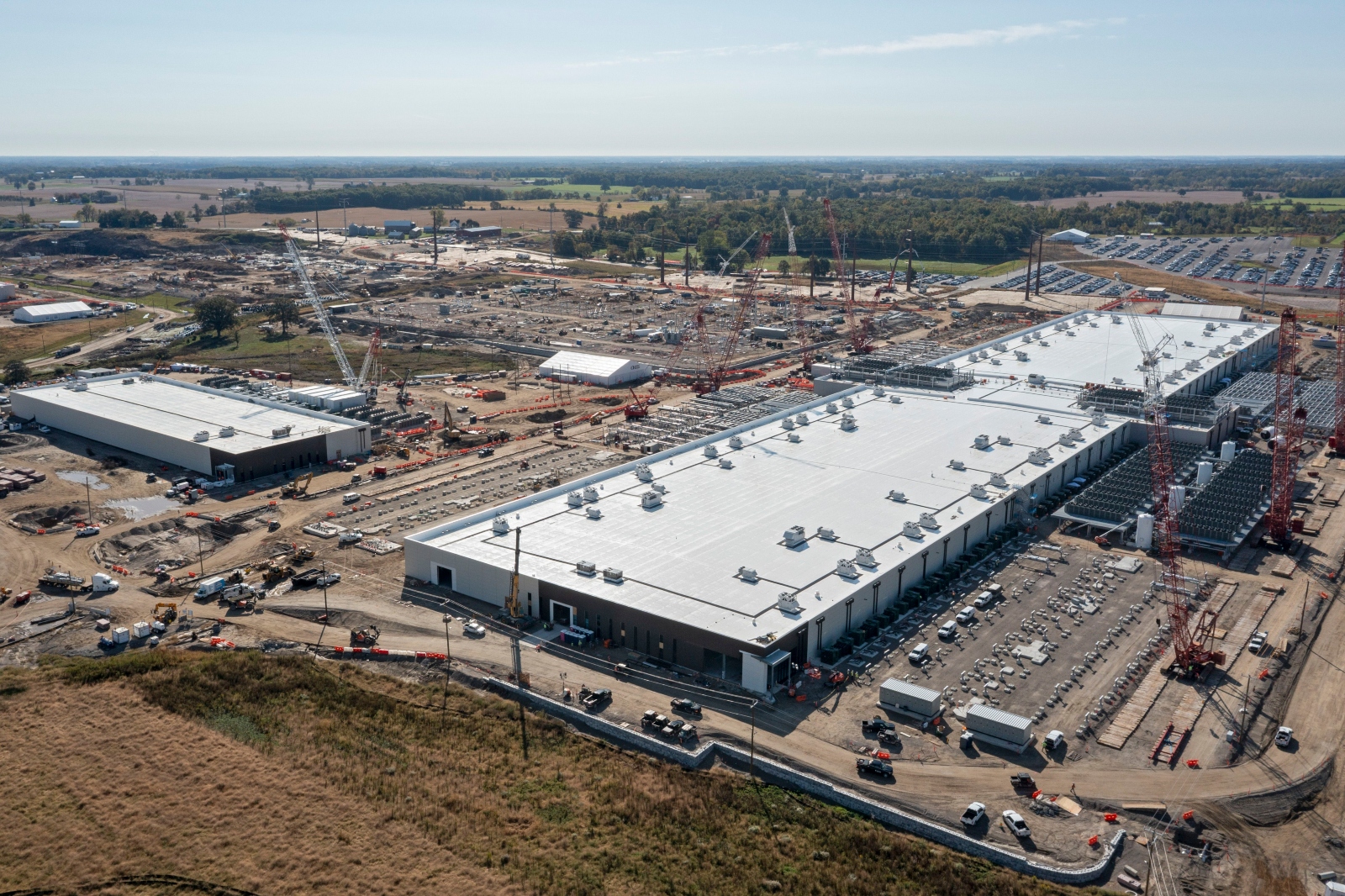
Like many parts of the country, the Lansing area has experienced a fierce uproar against the data center boom. Several hyperscale projects have appeared in communities across the state, including a $16 billion Oracle-OpenAI campus being built near Ann Arbor, and more than a dozen local governments have attempted to ban them. Local backlash tanked a smaller proposal in Lansing called Deep Green earlier this year, despite the developer’s promises to recycle waste heat and use minimal water. Activist fears about these data centers run the gamut from water and power usage to noise and light pollution, and the coalition appears to span partisan lines, from MAGA conservatives to progressives. It also includes many people, like Steele, who don’t want renewables built in their backyards, either.
The race in Lansing represents a test of whether major party candidates can channel these anti-development sentiments into electoral victory. Lawrence emerged from the mainstream climate movement and, like many Democrats, wants to see new restrictions on data center development. But running in Lansing has also required him to make common cause with skeptics of solar and clean energy. As Lawrence sees it, the stakes are extraordinarily high. The success of his coalition-building effort could determine not only control of the House of Representatives but also the success of the country’s efforts to ditch fossil fuels.
“I think it’s all up in the air right now,” he said. “It’s really hard to tell which way it will lean…It is genuinely cross-partisan. People do not believe that anybody at the top of business and government is looking out for them.”
The 7th District, which encompasses Lansing and a swath of its suburbs, is one of the few true swing districts in the country. Moderate Democrat Elissa Slotkin won it three times by slim margins, but Republican Tom Barrett won it back by a narrow margin when Slotkin vacated the seat to run for the U.S. Senate in 2024, and he’s running for reelection this year.
On paper, the 36-year-old Lawrence is not a good fit for such a purple seat. He is tall and lanky, with a cerebral speaking style, and projects the image of a graduate student much more than that of a farmer or an auto worker. He co-founded the Sunrise Movement in 2015 on the theory that solving climate change required disruptive activism and sweeping government intervention. In November 2018, he and his fellow founders organized a sit-in at Nancy Pelosi’s congressional office calling for a Green New Deal that would see massive public investment in clean energy. He was once a member of the Democratic Socialists of America, though he now says he no longer considers himself a socialist, and in since-deleted tweets from 2020 he called for “free and open migration” as well as police abolition.
Yet Lawrence secured 40 percent of the vote in the Democratic primary in August, beating two centrist candidates who appear to have split the moderate vote between them. Since then he has secured an endorsement from the Democratic Party’s congressional leaders, who tried to defeat him in the primary. He has also kept pace with Barrett on fundraising in what has become one of the most expensive House races, as Barrett has pulled in money from major Republican PACs as well as the American Israel Public Affairs Committee.
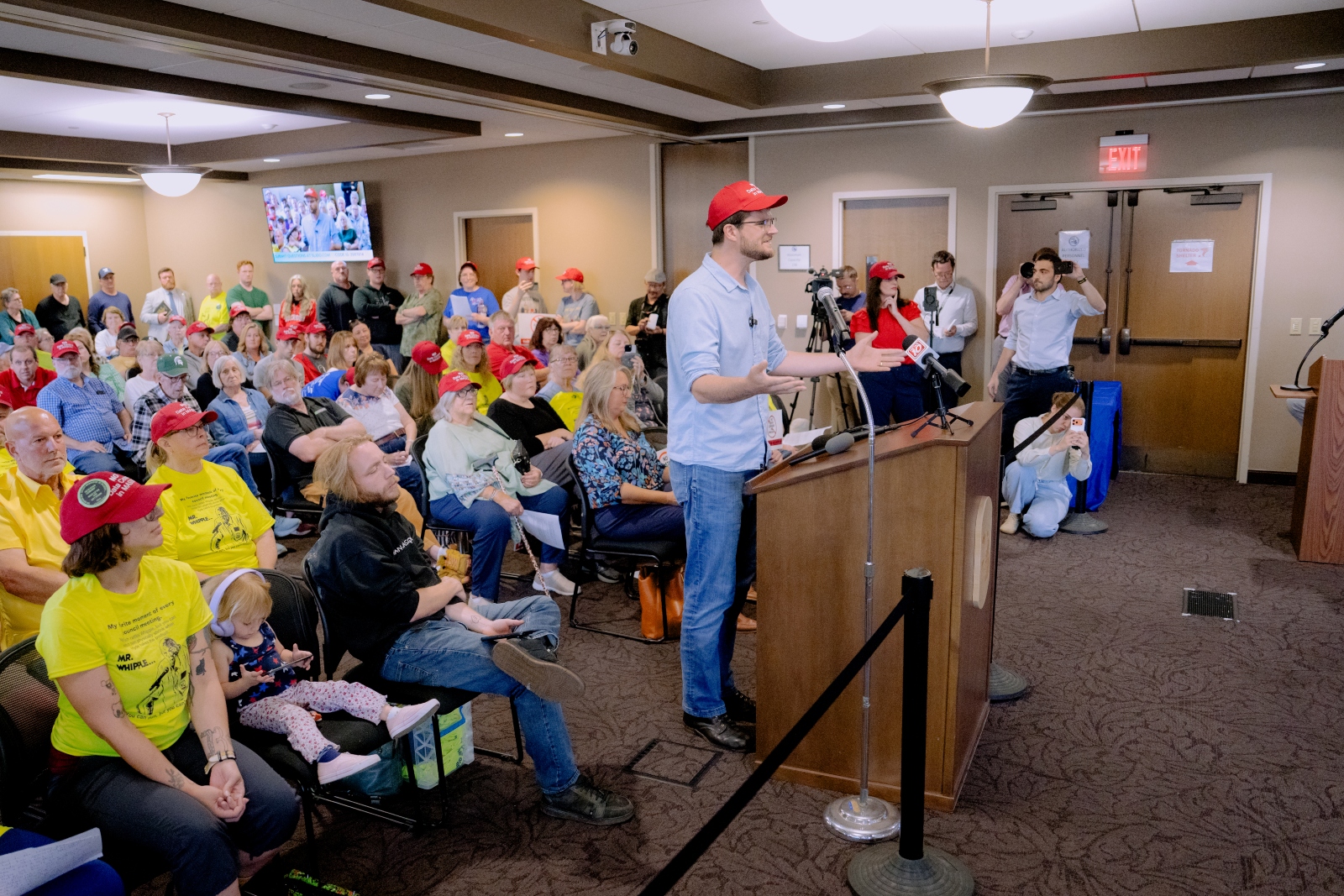
 in particular around data centers: Last month, he showed up to a city council meeting in the town of Mason to oppose a potential data center proposal, joining locals who appeared at the meeting wearing crimson-red baseball caps.
But the anti-development opposition in areas like Lansing is not only about data centers. It also extends to solar farms, battery storage systems, and transmission lines that carry renewable energy to cities. These technologies are some of the cheapest and most effective solutions for replacing fossil fuels on the power grid, but they also take up a lot of land, which makes them more likely to produce pushback from locals.
“We’ve definitely seen some bleed over from data center opposition to all types of infrastructure development,” said Ed Rivet, who runs the Michigan Conservative Energy Forum, a right-leaning group that advocates for clean energy. He said this “infrastructure fatigue” is “unfortunate … because these other types of projects will have tangible benefits for customers in terms of cost, reliability, and cleaner energy.”
Solar has become a particular source of controversy in Michigan, which aims to transition its power grid fully to clean energy by 2040. After several local governments passed zoning laws that banned new solar farms, the state legislature in 2023 passed a law that preempted those statutes. Developers can now apply for direct approval from the state if they don’t succeed in securing a local permit.
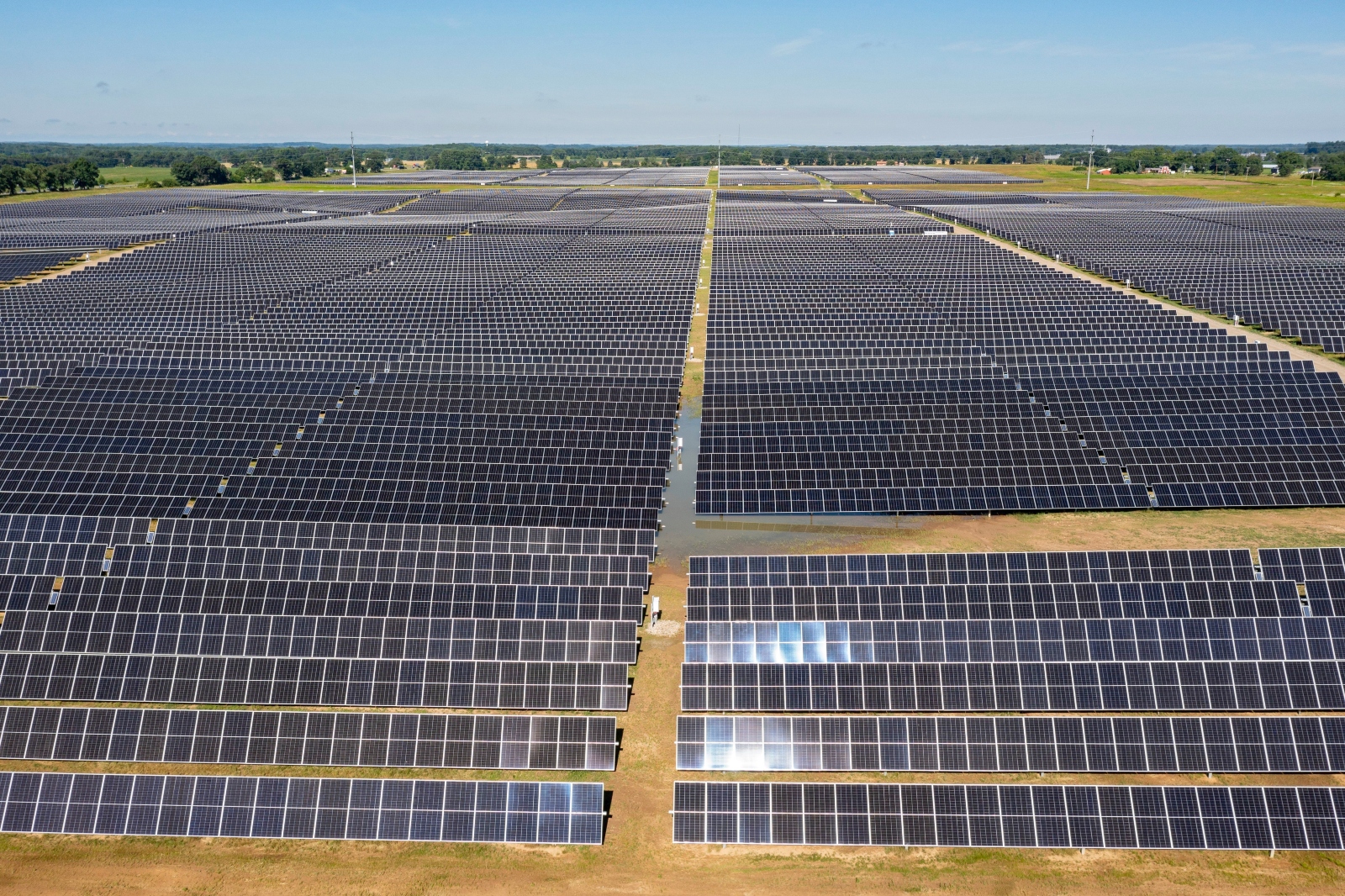
The first project permitted under this state law, Assembly Solar, just finished construction on the eastern edge of Lawrence’s district, outraging many locals. Lawrence told Grist that a homeowner in the area took him on a tour of the solar farm last month and showed him how it has disrupted the area’s agrarian lifestyle. More projects are already underway in his district under the state authority. Lawrence has criticized this policy in a number of public fora — he said in a radio appearance that wind and solar critics have “some good points” and that the state solar preemption has allowed utilities to “build mega projects without community buy-in.”
 agrivoltaic projects that allow for continued farming of cropland under solar panels.
“I don’t want to make it seem like green energy is a big boogeyman,” said Steele. “We’re solutions-oriented.” Her group has envisioned an “agricultural renaissance community” that would feature small businesses, farmland, open park space, and light manufacturing, perhaps powered by community solar.
 limit solar and wind construction, and activist groups on the Eastern Seaboard have organized against offshore wind proposals. Lawrence is far more open to acknowledging this problem than many climate activists, who sometimes dismiss anti-renewable opposition as astroturfing by conservative groups.
Not everyone is convinced that Lawrence’s vision of a cross-partisan coalition is possible. Barrett, the Republican incumbent, has also cast himself as a skeptic of data centers. It’s unclear that Lawrence’s strength on the issue will convince Republicans to cross partisan lines en masse, said Jean Hardy, a professor at Michigan State University who has studied local government decisions around data center development.
“Data center opposition is so bipartisan at this point that I don’t think it’s an issue that is going to activate people to switch sides or is going to organize independents in a particular way,” he said.
But Lawrence believes that Democrats have to channel this opposition, and not just in order to win an election in Lansing. As he sees it, fixing the American model of economic development is a necessary step in order to transition to clean energy. Unless voters feel that energy infrastructure is benefiting them, and that they have a say in what their communities look like, any attempts to build clean power at scale will be bound to fail.
“The question is who can effectively connect the big ‘no’ that we’re all saying to data centers into an affirmative ‘yes’ about what we want to build,” he said.