The Flydubai incident exposes gaps in pilot vetting, cockpit security, and international information-sharing that airlines and governments must address before the next crisis
The Flydubai account is still fresh in the minds of the passengers who owe their lives to true heroes and a sequence of remarkable events that are still unfolding.
It is one of those amazing stories in which fact is more sensational than fiction.
It is also an event that security institutions should have been ready for.
We live in an incredibly fast-paced universe where technology, speed, data, intelligence, and knowledge all converge. The lessons learned from the September 11 attacks should have been implemented and constantly updated at every major airport and airline around the world.
The sheer amount of security preparation in the aviation industry is phenomenal.
Airports screen passengers, scan luggage, limit liquids, strengthen cockpit doors, and use increasingly sophisticated technology to identify threats before an aircraft ever leaves the ground.
Israel stands as a leader in this field and has helped shape aviation-security practices around the world.
And yet, 25 years after 9/11, we are still being reminded that security cannot become routine.
We learned how to protect the cockpit from passengers.
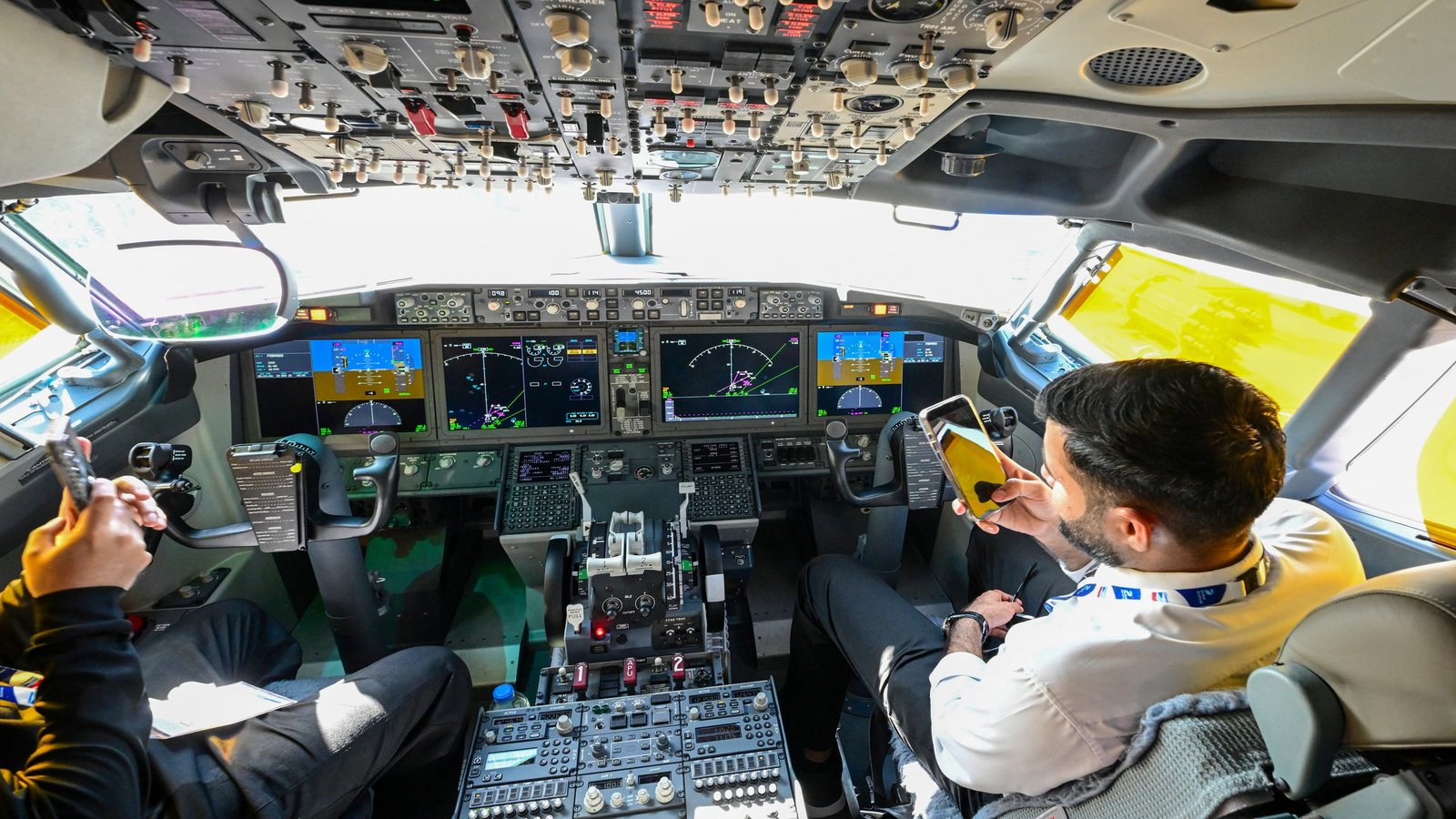
We also have to protect an aircraft from a threat that may already be inside the cockpit.
That is one of the most serious lessons emerging from the Flydubai incident.
Current reporting indicates that the co-pilot attacked the captain with an emergency crash axe kept inside the cockpit before the aircraft plunged thousands of feet. The wounded captain, along with crew members and passengers, reportedly helped avert a catastrophe, and the plane ultimately landed safely in Saudi Arabia.
How many times have we all flown and wondered how easy it would be to use almost anything as a weapon?
Airport security stops passengers for water bottles, scissors, and ordinary items because they can potentially be used as weapons.
Yet right inside the cockpit sat an axe.
The issue is not that emergency equipment should disappear. It exists for a reason. But security experts now need to look again at how that equipment is stored and accessed when someone already inside the most secure area of an aircraft becomes the danger.
The larger question, however, lies in the vetting—not only of passengers, but of crew members themselves.
That process cannot be something that happens once, when someone is hired, and is then considered finished.
A pilot can pass background checks and medical evaluations and still change over time. Personal circumstances change. Behavior changes. Psychological conditions can emerge. Ideological views can change. Warning signs can appear years after someone has been cleared.
Ongoing review is crucial when hundreds of lives may depend on one individual.
There must also be a way for fellow pilots, crew members, and employees to raise serious concerns and know those concerns will be heard.
Too often, after something goes terribly wrong, we hear that someone had concerns beforehand.
The time to hear those voices is before the tragedy, not afterward.
This is not the first warning the aviation industry has received.
In 2015, Germanwings Flight 9525 was deliberately crashed into the French Alps by its co-pilot, killing all 150 people aboard.
That tragedy raised enormous questions about pilot fitness, medical privacy, and the responsibility of airlines and regulators. It should also have taught us that the insider threat cannot be ignored.
September 11 was a wake-up call in 2001. One of the most devastating terrorist attacks of this century should have been enough of an alarm to keep the aviation industry constantly looking for the next vulnerability.
But as time passes, it is easy to slide into routines and lose sight of some of the most obvious details a hijacker, terrorist, or other bad actor might exploit.
International aviation makes the issue even more complicated.
A pilot can come from one country, train in another, work for an airline based somewhere else, and fly passengers into yet another country.
No government or airline necessarily has the entire picture.
Information-sharing becomes critical.
Considering that the UAE and Israel are partners in the Abraham Accords and have built extensive diplomatic, commercial, and security ties, aviation-security cooperation should be among the areas where communication is strongest.
If important information exists about someone entrusted with an aircraft, there must be an effective way for the relevant authorities to share it.
This should not become a political blame game.
It should become a lesson.
Airlines have a tremendous amount at stake: lives, public trust, financial losses, and the confidence of passengers who step onto a plane believing the people flying it have been properly screened and remain fit to fly.
But the public also needs to have a role in its own safety.
A debate will begin over how much passengers should know about the pilots to whom they are entrusting their lives.
Should passengers know the names of the pilots flying their aircraft? Should airlines provide greater transparency about who is in the cockpit and the standards being used to continually determine that person’s fitness to fly?
We routinely know the identity of someone driving us in a taxi or rideshare vehicle. Yet when we board an aircraft and place our lives in the hands of the people sitting in the cockpit, we generally know nothing about them.
That does not mean passengers should become investigators or judge anyone by appearance.
But transparency deserves to be part of the conversation.
Passengers should have a role in their own safety while being able to trust that the airline, aviation authorities, and security agencies are doing the job they themselves cannot do.
Whether you call what happened aboard this flight a Flight of Miracles, divine intervention, or extraordinary luck is not the takeaway.
Security agencies need to rethink how they are operating. Airlines need to rethink how pilots are assessed throughout their careers. Governments need to make certain that crucial information does not disappear between jurisdictions.
Aviation security must never assume yesterday’s solution will stop tomorrow’s threat.
The Flydubai flight has awakened a security establishment that, over time, may have succumbed to routine.
It is time to learn a lesson from a disaster averted.
Each passenger on that flight lived to share an unforgettable story.
Next time, we may not be that lucky.