Tesla published its quarterly financials ahead of an investor call this afternoon. The maker of electric vehicles has become an increasingly polarized brand but a valuable one: $1.21 trillion at the time of writing. And we knew from its delivery announcement earlier in April that the first quarter of 2026 was rather rosy, with sales growing by a little more than 6 percent compared to the same three months in 2025. As a result, it was a more profitable quarter than last year, making $477 million in net income.
Revenue increased by 16 percent year over year to $22.4 billion. Automotive revenue grew by the same percentage to $16.2 billion, and Tesla saw a 42 percent increase in services (like Supercharger fees) and other revenue. But its energy storage business shrank in Q1, and revenues from this division fell by 12 percent to $2.4 billion.
An operating margin of 4.2 percent is far from the double-digit margins Tesla once boasted. But things were twice as bad in 2025. Although the company brought in more money from automotive sales, it only made $380 million from selling regulatory credits, compared to $595 million in Q1 2025. It also made less money from leasing. Operating expenses rose due to spending on AI and part of the $1 trillion compensation package that shareholders approved in November for CEO Elon Musk.
Part of Musk’s compensation is now tied in part to the number of active full self-driving subscriptions, helped by Tesla recently ending the practice of selling the system outright in favor of a $99 per month fee. As such, it now reports active FSD subscriptions, which have reached 1.3 million, an increase of 51 percent compared to the same period last year.
Although reports surfaced earlier this month about a possible small Tesla EV, the company makes no mention of it in its future automotive plans, noting only that it is “focused on optimizing our vehicle product portfolio, with an emphasis on vehicles designed for a fully autonomous future.”
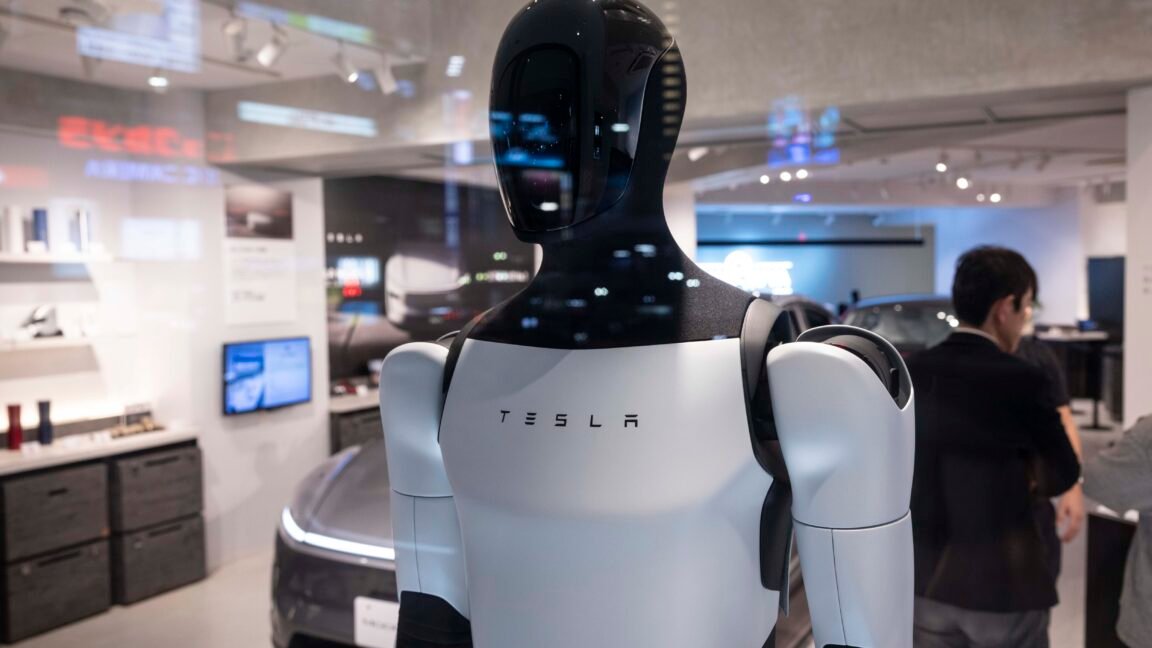
It’s less vague about humanoid robots, though: Q2 is when it starts adding capacity to its factory in Fremont, California, to build Optimus robots at a rate of 1 million per year. If that sounds like far too few robots, the Texas production line will be capable of 10 million a year, Tesla says.