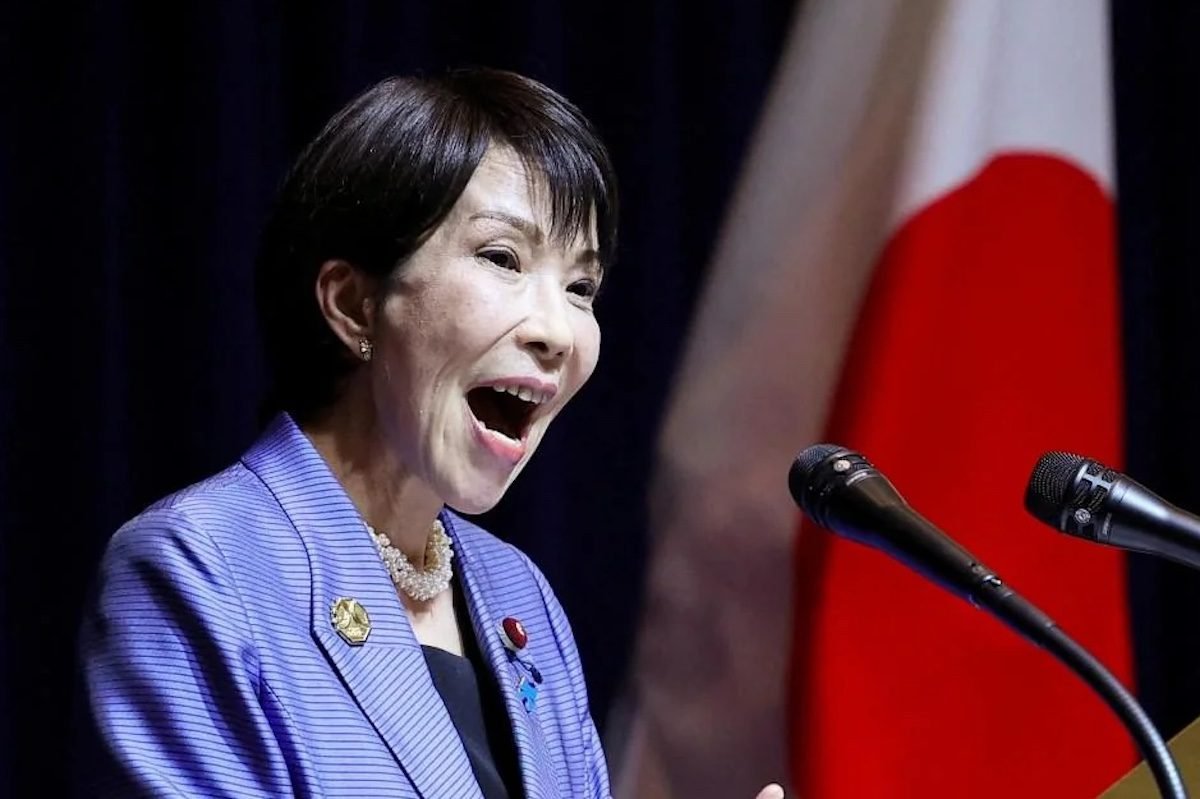

Sanae Takaichi has done something few Japanese leaders manage. She’s reached her first anniversary in office more popular than her predecessors, and she looks well placed to keep the job.
In a country that has burned through five prime ministers in a decade, this counts for a lot. Popularity, though, is only one of two votes a Japanese leader needs to win. The other is cast every day in the government bond market, and on that ballot, her result is far less certain.
Her food sales-tax cut, due in April, is the clearest test. Families squeezed by rising prices will feel it at the checkout, and politically it’s a smart move. Yet it carries a bill of roughly 5 trillion yen (US$32 billion) a year, and so far nobody has said who will pay it.
Japan’s public debt is already well over twice the size of its economy. A country carrying a load like this can borrow cheaply only for as long as lenders believe the numbers add up. Opening a large and possibly permanent hole in revenue, with no credible plan to fill it, tests their patience.
Bond markets rarely deliver their verdict in one dramatic moment. Yields drift higher, demand at auctions softens and the cost of servicing old debt creeps up as it’s rolled over at new rates. By the time politicians notice, their room to maneuver has already shrunk.
Her wider agenda then starts to collide with itself. Takaichi wants aggressive spending to revive growth and a bigger defense budget to deal with an increasingly tense neighborhood, not least rising tensions with China over Taiwan.
Both depend on the state borrowing at affordable rates. If the tax cut pushes yields up, every other priority becomes more expensive to fund.
Households wouldn’t escape either. Higher yields feed through to mortgage rates, and many Japanese homeowners have known borrowing costs near zero for most of their adult lives.
A family could save on groceries in the spring and lose more than it saved on its home loan by the following year. Relief at the till, paid for with pain on the mortgage statement, would be a poor trade, and voters would quickly work it out.
None of this makes the tax cut wrong. Living costs are a genuine strain, and a government that ignores them soon loses the public. What matters is whether Takaichi treats funding as an afterthought or as the policy’s core.
Markets would respond to specifics, namely spending she’s prepared to trim, revenue she’s prepared to raise elsewhere, and a timeline showing the cut won’t quietly become another permanent addition to the deficit.
Even a fixed end date would signal discipline. Vague assurances are likely to be priced as exactly what they are.
Her political position makes this harder. The resignation of a cabinet minister over a vote-buying scandal is the first serious dent in her administration.
A leader whose authority rests on public goodwill will find it tough to pick fights with her own party over spending restraint while that goodwill is under pressure.
There’s an obvious temptation in that situation: keep giving voters what they want and hope growth arrives in time to cover the cost. Japan has tried versions of this before. The growth tends to turn up late, if at all. The debt always turns up on schedule.
Takaichi does have one advantage her predecessors lacked. She has the public’s trust and a realistic prospect of staying in office long enough to see a plan through.
A prime minister expecting to last a year can promise almost anything, because someone else inherits the bill, whereas a prime minister expecting to be around for several years has to live with the consequences. This should give her every reason to be credible, and markets know it.
Global investors are watching closely, and for good reason. Japan is one of the world’s largest creditor nations, and its bond market helps set the tone for borrowing costs across Asia and beyond. A disorderly rise in Japanese yields would travel far beyond Tokyo.
My view is that Takaichi will likely put some kind of funding framework on the table before April, because the cost of staying silent rises every week the question goes unanswered.
Whether it’s convincing is another matter. A plan built on optimistic growth assumptions would buy her at most a few months. She’s already shown she can read the country’s mood better than most of her recent predecessors and win over voters.
Her next task is to read the mood of the people who lend Japan its money, a far smaller and far less sentimental audience.
Nigel Green is founder and CEO of de Vere Group.