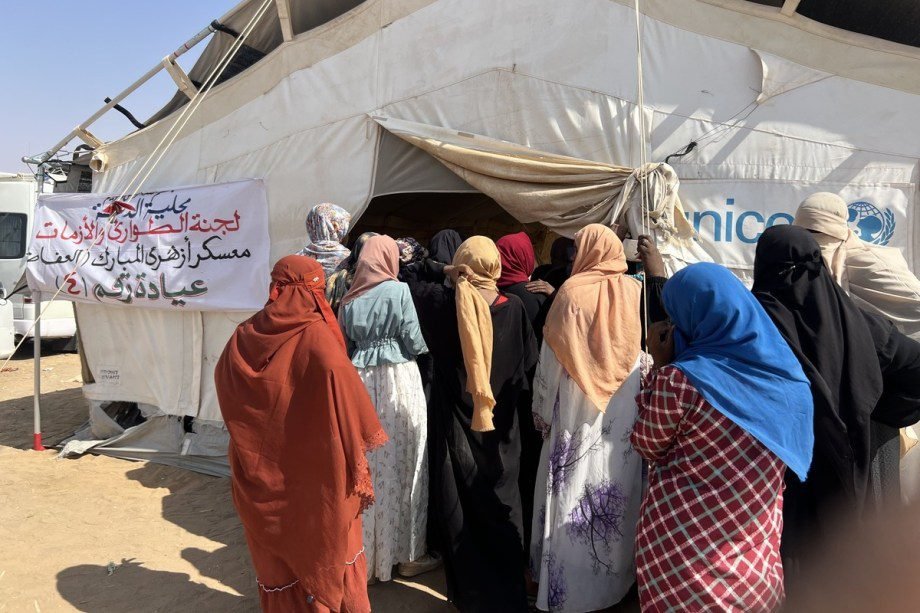
Attacks attributed to Sudan’s Rapid Support Forces (RSF) near the country’s western border with Chad have destroyed several villages and forced thousands of civilians to flee, according to survivors and the United Nations.
The violence occurred in North Darfur, where the RSF has been fighting the Sudanese Armed Forces since April 2023.
The UN has previously accused the RSF of carrying out massacres against non-Arab communities in Darfur, including members of the Zaghawa ethnic group.
According to the International Organization for Migration (IOM), more than 3,500 people were displaced on Friday from the village of Wadi Fungo in the Um Buru area of North Darfur.
Speaking to Agence France-Presse (AFP), Issa Ibrahim, 35, said dozens of RSF vehicles entered his village of Umm Marahik last week. “They fired cannons at houses,” he said.
READ: UAE allocates $30m in emergency aid for Sudan’s El Obeid city
After sending his wife and children across the border to Chad, Ibrahim said he witnessed widespread destruction. “Houses were burned, and people were lying dead in the streets with no one to bury them,” he said.
He added that neighbouring villages, including Aruru and Ana Baji, had also been destroyed. “They were completely burned down. Bodies were lying on the ground,” he said.
Another survivor, Mohammed Adam, 43, told AFP that two of his brothers were killed during an attack on the village of Qurbu. “They burned houses and killed people, except for those who managed to escape,” he said. The two men spoke to AFP after reaching the border town of Al-Tina, using satellite internet because telecommunications in the area had been disrupted.
The RSF had not immediately commented on the allegations. Sudan has been engulfed in conflict since April 2023, when fighting broke out between the Sudanese Armed Forces and the RSF.
The United Nations describes the conflict as one of the world’s worst humanitarian crises, with tens of thousands of people killed and millions displaced both within Sudan and across its borders.
READ: IOM warns El Obeid risks becoming ‘another El Fasher’ as fighting intensifies in Sudan