NEW YORK – US Treasury yields are pressing against their highest levels since 2007, and Asia’s policymakers know what that usually means: turbulence ahead.
This week’s $42 billion auction of 10-year notes cleared at 4.683%, the richest yield since the eve of the global financial crisis. Investors are demanding higher yields to fund Washington’s borrowing as the national debt approaches $40 trillion – and President Donald Trump’s repeated intrusions into the Federal Reserve’s independence only sharpen unease in Tokyo and Beijing, the two largest foreign holders of US debt.
Asia sits squarely in the blast radius of any Treasury market shock. In 1997, 2007, and 2013, surging US yields hit export-dependent, dollar-reliant Asian economies hardest, and there’s little reason to think this cycle breaks the pattern.
A few strong auctions don’t guarantee durable demand for long-duration US debt, warns Michal Stanczy of Allspring Global Investments. The mechanics are familiar: Capital rushes into dollars, Asian currencies slide, exports slow, inflation edges up, financial conditions tighten and central banks are forced to raise rates they’d rather avoid.
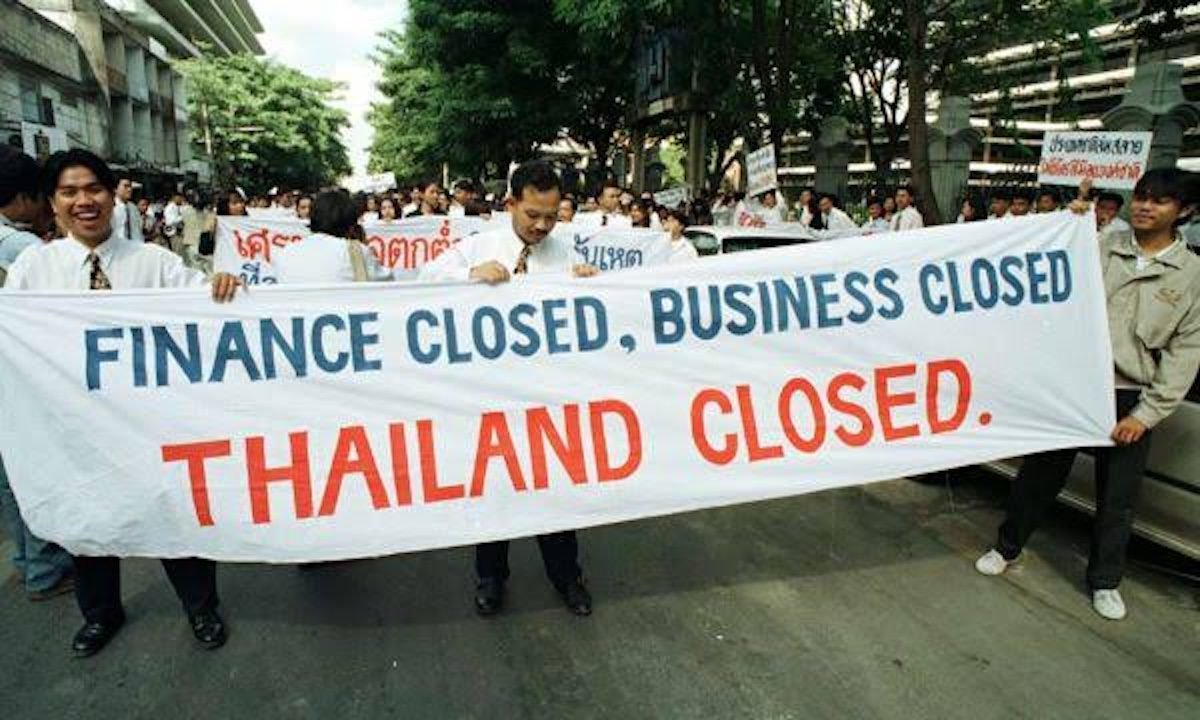
The 1997 Asian financial crisis traced back to the Fed’s 1994–95 tightening, when Alan Greenspan doubled short-term rates within a year; the resulting dollar surge shattered Asia’s currency pegs and forced Thailand, Indonesia and South Korea into IMF bailouts. The 2013 “taper tantrum” produced Morgan Stanley’s “fragile five“: Brazil, India, Indonesia, South Africa, and Turkey.
What’s different in 2026 is the mix of triggers stacking on top of a familiar dynamic – elevated oil prices and risk premiums after the Iran war, a fresh round of Trump tariffs against allies and rivals alike, a pressure campaign against the Fed that injects a kind of policy uncertainty rarely seen in a G7 economy and artificial intelligence exuberance propelling stocks skyward.
Despite swelling debt, sticky inflation, and an active trade war, the dollar keeps climbing anyway.
Topping the list of this year’s currency casualties are Indonesia’s rupiah and India’s rupee, down 7.2% and 6.2% year to date, as capital that might otherwise support local markets instead pours into US assets. AI-driven volatility is compounding market stress from Seoul to Tokyo to Shanghai, where valuations had climbed on AI optimism. Moody’s Analytics expects the turbulence to outlast the initial shock.
The Fed, meanwhile, is now a wildcard. US hiring cooled sharply – payrolls fell by 23,000 in July, with 103,000 jobs erased through revisions – giving the Fed room to hold steady. PNC’s Kurt Rankin says the report strengthens the case for staying put as inflation pressure eases.
Citigroup’s Veronica Clark sees little sign that higher input costs are reaching consumer prices, though a rebound is possible in August. New Fed Chair Kevin Warsh was appointed on the expectation he’d steer policy toward aggressive rate cuts, but the data haven’t cooperated, and he hasn’t bent to Trump’s preferences so far.
Having watched the Powell-era standoffs up close, Warsh appears intent on keeping the Fed independent rather than remaking it into a more pliant institution – though that resolve may be tested if job growth keeps cooling and markets grow more volatile. Six months out, nobody knows for certain where he lands, or how Trump reacts if his own pick doesn’t deliver.
Yet with many Fed board members more focused on upside inflation risks than worries about slowing growth, Warsh could face an unruly mutiny if he tried to pivot back to rate cuts. “Our base case remains for the Federal Open Market Committee to hike in December,” says Britney Jackson, economist at BNP Paribas Securities. “Risks to our call are for an earlier move.”
Meanwhile, the Bank of Japan’s glacial pace of hiking rates above 1% is weighing on the yen and undercutting last month’s joint US-Japan intervention meant to support it.
Defending a currency takes sustained firepower and a credible commitment to raise rates, argues BlackRock’s Rick Rieder – something markets aren’t yet pricing in from the BOJ: “You’ve got to get monetary policy to a place that people believe that you’re going to raise the rate,” he tells Bloomberg.
Tokyo’s benchmark rate remains far below the Fed’s 3.5%–3.75% range, even as Prime Minister Sanae Takaichi’s government – once dismissive of higher rates as “stupid” – appears to be coming around to the idea.
As the yen flirts with 40-year lows, the rupiah has dropped below levels seen in the 1997–1998 crisis as Jakarta and Bank Indonesia scramble to stem outflows. UOB Kay Hian’s Suryaputra Wijaksana says the US-Iran war is materially straining Indonesia’s external accounts, a pressure likely to persist through year-end.
Indonesian President Prabowo Subianto’s twin fiscal and current-account deficits, paired with inward-looking policies since taking office in October 2024, have left the economy exposed just as global risk appetite fades. The political weight is heavy: Prabowo is a protégé of Suharto, the dictator toppled in 1998, and his successors – most notably Joko Widodo – spent 25 years repairing the damage.
Prabowo’s ouster of respected Finance Minister Sri Mulyani Indrawati in September 2025, followed by greater state intervention and central bank meddling, rattled investors enough that index giant MSCI is now considering a downgrade of Indonesia from developing to frontier market status.
Last month’s sudden departure by BI Governor Perry Warijiyo for “personal reasons” hardly helped. The rupiah bears are likely to believe it least of all – fueling fresh fears about central bank independence. That, with Oxford Economics’ Artie Lam counting the country among those facing the most pressure to rein in spending as currency and yield moves erode its fiscal space.
India’s Goldilocks story, meanwhile, is unraveling. A weaker rupee is driving up the cost of oil and other imports, fueling inflation and pushing investors toward the exits, while dollar-denominated debt becomes more expensive to service. The rupee – Asia’s worst performer in 2025 – has fallen further, trading around 95 to the dollar.
The February 28 US-Israel strike on Iran and the oil shock that followed were unforeseeable, but Prime Minister Narendra Modi’s government has had more than a decade to address the deficits that turned an external shock into a broader crisis.
Washington’s own math is making things worse. This year the US crossed a dubious threshold: US$1 trillion in annual interest payments on federal debt, which the Committee for a Responsible Federal Budget now calls the “new norm” as debt climbs to 100% of GDP. As the Trump administration ramps up issuance to cover widening deficits, it needs its biggest foreign creditors to keep buying – and those creditors sit mostly in Asia.
Japan holds nearly US$1.2 trillion in Treasuries; China holds US$659 billion. That raises an uncomfortable question: why would Tokyo or Beijing continue to increase exposure to US debt at such a precarious moment? Tradition is one answer – major trading economies need dollar reserves – but Washington’s fiscal trajectory gives both governments reason to hesitate, and any sign of that hesitation could ripple unpredictably through global markets.
Leverage questions abound. Asia’s Treasury holdings have long attracted speculation about their use as leverage. Morgan Stanley MUFG economist Takeshi Yamaguchi has raised the question of whether Japan might treat its holdings as a bargaining chip. This echoes former Finance Minister Katsunobu Kato’s comment last May that everything on the table should be considered leverage – and reaching back to 1997, when Prime Minister Ryutaro Hashimoto told a New York audience Japan had been tempted to sell large volumes of Treasuries to make a point during tense auto trade talks.
For now, Takaichi has stayed deferential toward Trump, wary of provoking him. But Trump’s push for a weaker dollar sits awkwardly against her “Sanaenomics” plan to revive wage growth – a strategy that depends on a weak yen and the BOJ’s ultralow rates, conditions that would be hard to sustain if Trump actively pursued dollar depreciation.
For Asia’s largest holders of US debt, Washington’s fiscal path is becoming impossible to ignore. With US debt out of control and yields climbing, investors and Asia’s central banks are rethinking just how much Treasury exposure they’re willing to carry.