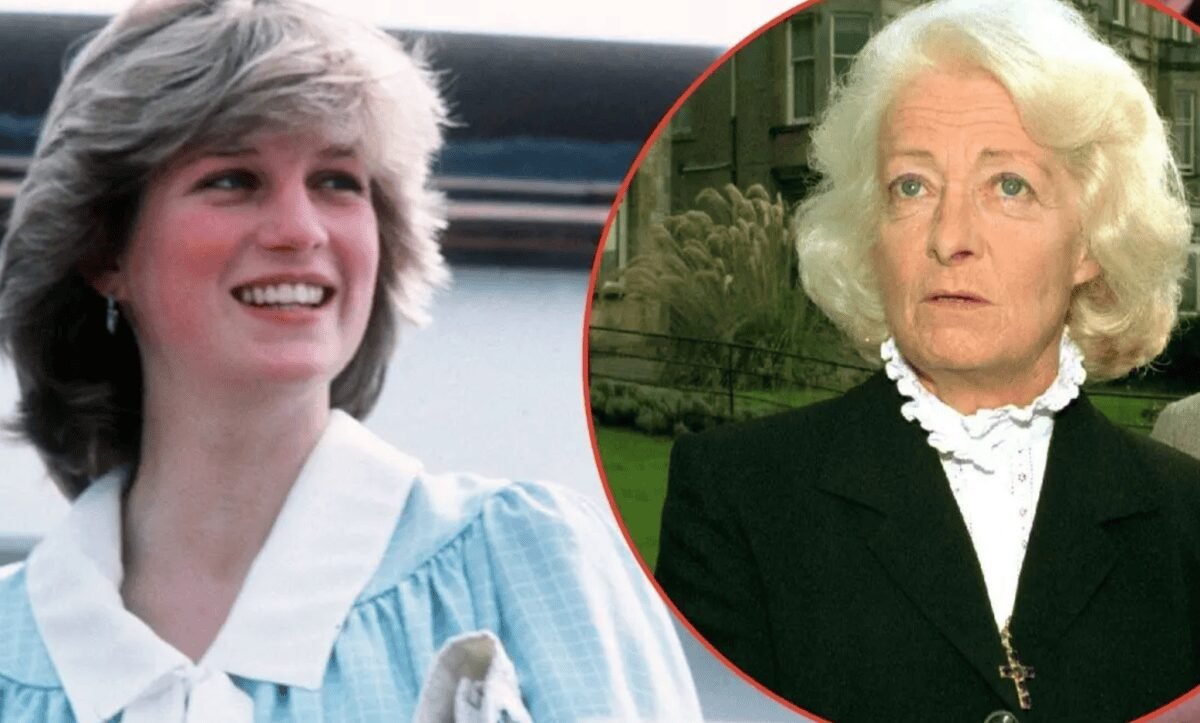
Princess Diana’s mother became deeply disillusioned with the Royal Family after her daughter’s death and eventually described herself as a republican, according to revelations in a new royal biography.
Frances Shand Kydd, who died in 2004 at age 68, reportedly grew increasingly bitter toward the monarchy in the years after Diana was killed in a Paris car crash on August 31, 1997.
The claims appear in royal biographer Ingrid Seward’s new book, Catherine & Diana: The Inside Story of How the Princesses of Wales Shaped the Modern Monarchy, released September 24.
Seward, the editor-in-chief of Majesty magazine and a longtime royal commentator who interviewed Diana shortly before her death, writes that Frances’ feelings toward the institution changed dramatically after losing her daughter. The book examines both Diana and Catherine, Princess of Wales, and their relationships with the monarchy.
According to excerpts attributed to Frances and published around the book’s release, Diana’s mother became openly hostile toward the Royal Family.
“The Royal Family are a disgrace,” she reportedly told a friend, before criticizing what she saw as coldness and selfishness inside royal life.
Another excerpt indicates Frances said she had not considered herself a republican before Diana married into the Royal Family, but that her views later changed.
It was a striking shift for a woman whose own family had been closely connected to the monarchy for decades.
Frances was the daughter of Ruth Roche, Baroness Fermoy, who was a longtime confidante and Woman of the Bedchamber to Queen Elizabeth the Queen Mother. Frances’ first husband, John Spencer, later became the 8th Earl Spencer.
Diana herself grew up with close proximity to the royals before marrying then-Prince Charles in 1981.
But everything changed after Diana’s death.
Diana’s Death Left Her Mother Devastated
Diana died at age 36 following a car crash in the Pont de l’Alma tunnel in Paris. Her death triggered extraordinary public mourning across Britain and around the world.
Her funeral was held at Westminster Abbey on September 6, 1997, before her coffin was taken to the Spencer family estate at Althorp, where she was privately buried on an island in an ornamental lake.
The Royal Family’s official historical account confirms that Charles, William, Harry, Prince Philip and Diana’s brother Charles Spencer walked behind her coffin during part of the funeral procession.
For Frances, however, Seward claims the period surrounding the funeral became another source of pain.
According to the book, she believed Diana’s family had been forced to fight for a meaningful role in the arrangements.
“We almost boycotted the service,” Frances reportedly said. “We had to fight for what we got.”
The account should be viewed as Frances’ recollection rather than an independently established account of the funeral negotiations. Royal and Spencer family memories of the days following Diana’s death have sometimes differed.
The official Royal Family record says Diana’s body was brought back from France by then-Prince Charles and Diana’s sisters, Lady Sarah McCorquodale and Lady Jane Fellowes. Her coffin later remained privately at St. James’s Palace before being taken to Kensington Palace and then Westminster Abbey.
Queen Elizabeth II also delivered a nationally televised address on September 5, describing Diana as an “exceptional and gifted human being” and praising her devotion to William and Harry.
Frances Said She Never Heard From the Queen
Despite that public tribute, Seward writes that Frances felt personally abandoned.
“The Queen did not get in touch after Diana’s death,” Frances is quoted as saying. “I did not see or hear from her.”
There does not appear to be an independently published palace record confirming or disproving private contact between the two women during that period, so the claim remains Frances’ reported account.
Her concerns soon extended to her relationship with her grandsons.
In July 1998, less than a year after Diana’s death, Frances visited then-Prince Charles at Highgrove.
Contemporary reporting described the visit as a two-day stay during which Frances spent time with Charles and Prince Harry while Prince William was away with friends.
The meeting suggested that relations were not completely severed immediately after Diana’s death, even as Frances apparently remained anxious about how much contact she would have with William and Harry.
Seward writes that Frances later complained that much of her communication with the boys consisted of letters and emails.
For a grandmother who had already lost her daughter, the prospect of becoming distant from Diana’s sons appears to have added to her resentment.
A Complicated Mother-Daughter Relationship
Frances’ grief was also complicated by the fact that she and Diana were reportedly not speaking during the months immediately before the princess died.
Contemporary reports after Frances’ own death noted the strain between the two women, although Diana’s brother later pushed back against suggestions that they were permanently estranged.
At Frances’ funeral in 2004, Charles Spencer said disagreements between the two had been typical tensions between a mother and daughter.
He also pointed to Diana’s will as evidence of their underlying bond, saying Diana had named her mother as an executor and a principal guardian for her sons.
That distinction is important because the relationship between Diana and Frances has often been portrayed in far more dramatic terms than the surviving record supports.
Frances Retreated to Scotland
After Diana’s death, Frances largely lived away from the royal spotlight on the Scottish island of Seil near Oban.
She had converted to Roman Catholicism years earlier and became heavily involved with her local church and charitable work.
Obituaries published after her death described a woman who had found a degree of peace through her faith despite decades of family turmoil and intense public scrutiny.
Friends said she helped with church life in the Oban area, including preparing meals and assisting visiting clergy.
Still, Diana’s death remained an enormous emotional burden.
Seward writes that Frances at one point told a friend she no longer prayed for peace because she did not believe she would find it.
Instead, she reportedly prayed simply for the ability to cope.
Frances died at her home on Seil on June 3, 2004, following a long illness.
Prince William and Prince Harry publicly said they were “very upset” by their grandmother’s death and would miss her greatly. William later gave a Bible reading at her funeral in Oban.
Buckingham Palace also confirmed at the time that Queen Elizabeth had sent a private message of condolence to Earl Spencer.
Nearly three decades after Diana’s death, the new accounts offer another glimpse into just how deeply the tragedy affected those closest to her — and how differently members of the Spencer and Windsor families remembered the painful years that followed.




