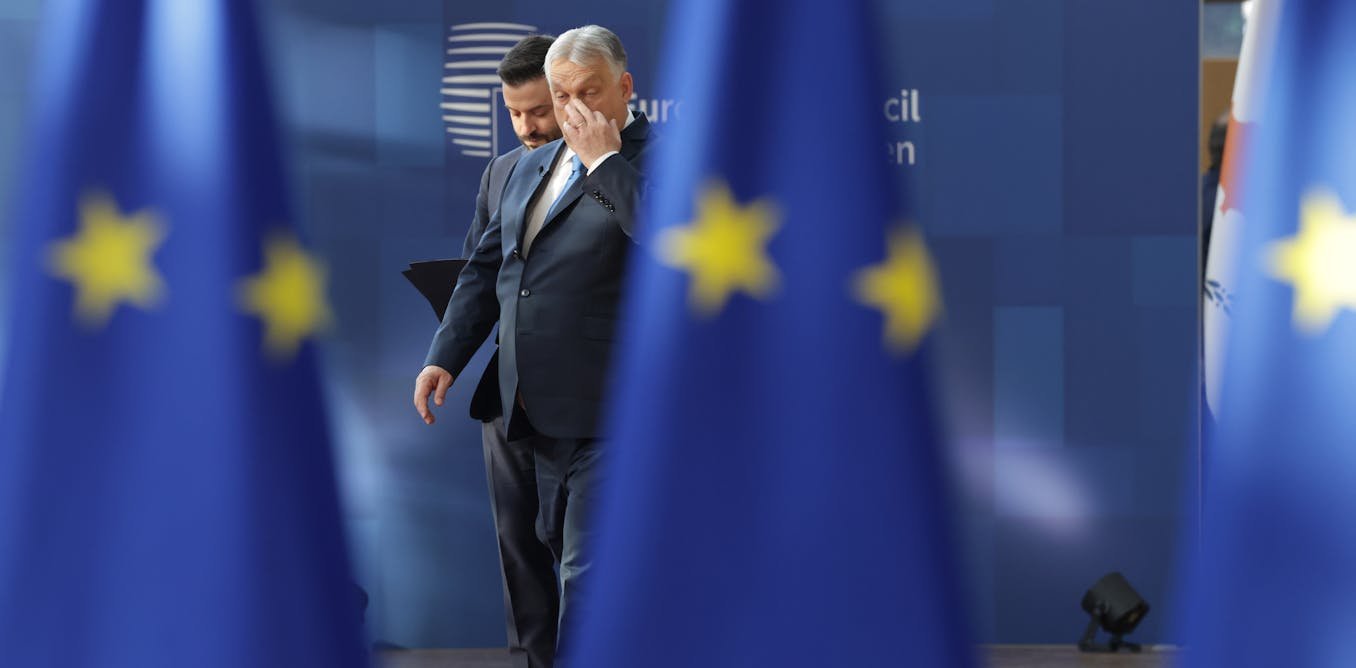
Hungary’s Tisza party won parliamentary elections on April 12, bringing an end to the 16-year tenure of Viktor Orbán as prime minister. The result is a seismic one for Hungarian domestic politics. But it is also a major development in the trajectory of Hungary’s relations with the EU.
Throughout Orbán’s term, but particularly since the full-scale Russian invasion of Ukraine in 2022, he was consistently a thorn in the side of the EU. He flouted European norms, values and legislation as he went about building what he called an “illiberal state”.
One example was his 2011 decision to lower the mandatory retirement age for Hungarian judges and prosecutors from 70 to 62. This forced a large proportion of the country’s judiciary into retirement, allowing Orbán to replace them with party loyalists. The European Court of Justice ruled against the change in 2013, but many of Orbán’s appointees remained in their positions.
Orbán’s continued defiance of EU policies eventually resulted in the suspension of his Fidesz party from the powerful European People’s Party grouping in the European parliament. Its membership of the alliance was terminated two years later. The European Commission’s 2022 decision to withhold €30 billion (£26.1 billion) in funds from Hungary caused relations to plummet further.
And Orbán subsequently sought to leverage the EU’s need for solidarity and unanimity to support Ukraine and sanction Russia. Hungarian obstinance and disruption became so frequent that the country has been described by some political figures in Europe as not being aligned with European or Ukrainian interests when it comes to Russia.
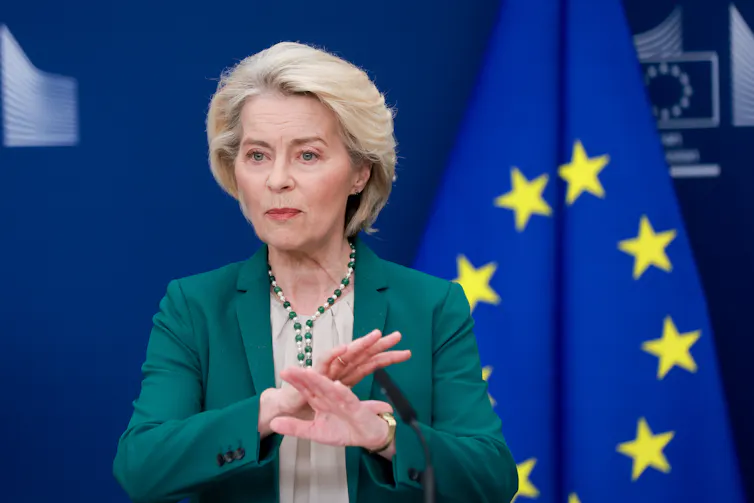
In a thinly veiled reference to Orbán during a 2024 parliamentary speech, the president of the European Commission, Ursula von der Leyen, said: “There are still some who blame this war not on the invader but on the invaded. Not on Putin’s lust for power but on Ukraine’s thirst for freedom. So I want to ask them: would they ever blame the Hungarians for the Soviet invasion of 1956?”
A true low point in EU-Hungary relations was reached in early April 2026 when leaked audio recordings showed Orbán and his foreign minister, Peter Szijjarto, actively coordinating with the Russian government. The recordings show that Szijjártó had used breaks in closed EU ministerial sessions two years earlier to call his Russian counterpart, Sergei Lavrov, and brief him on the state of internal discussions.
Szijjártó is also accused of sharing confidential documents with Lavrov relating to minority language requirements in Ukraine’s EU accession negotiations. The French foreign minister, Jean-Noël Barrot, has described this as a “betrayal”. Had Orbán managed to prevail in the recent elections, the relationship between the EU and Hungary is likely to have reached a breaking point.
Rupture or continuity?
As it is, EU officials will be breathing a sigh of relief. The incoming prime minister, Péter Magyar, has a huge incentive to restore Hungary’s relations with the EU – if for no other reason than to secure the release of roughly €17 billion in allocated EU funds that are still suspended. Warmer relations would also help Hungary access a possible further €17 billion in discounted defence loans.
Given the global economic ramifications of the war in Iran and the costs Magyar will incur as he reforms and dismantles Orbán’s oligarchic economic system, his government will rely on these funds to ease some of the budgetary pressures they will face.
However, unfreezing these funds is not a foregone conclusion. Von der Leyen has already announced that reforms will need to be made in order to achieve this and has presented Hungary’s incoming government with 27 conditions that will need to be satisfied.
Some of these reforms will be relatively easy for Magyar to achieve. For instance, tackling corruption was an explicit part of Tisza’s election manifesto. However, other EU funds that were suspended due to infringements on LGBTQ+ rights or asylum procedures will be more politically costly to access.
Hungarians remain deeply conservative and more eurosceptic than the average European. According to a 2025 survey conducted on behalf of the European Commission, only 55% of Hungarians consider the country’s EU membership to be “a good thing”. This is lower than the EU average of 62%. Reforms that are seen to be at odds with Hungarian values may thus provoke domestic resistance.
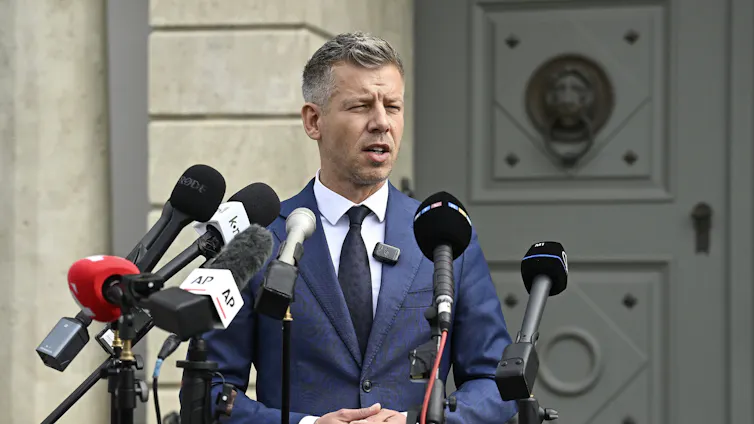
Perhaps of most global interest will be how Magyar approaches the war in Ukraine. He has indicated an interest in rapprochement with Ukraine as part of his broader goal of realigning Hungary with the EU and Nato. Most notably, he has stated that Orbán should lift his veto on the provision of a €90 billion EU loan to Ukraine.
However, there may also be more continuity with the Orbán regime than those in Brussels might like. Magyar has stated that he intends to continue importing Russian energy until at least 2035 and that he will need to put any future possibility of Ukrainian EU membership to a referendum.
In a country where opinion polls show 50% of voters – and 36% of Tisza voters – see Ukraine as a threat, such a referendum would be highly likely to upend the entire process of Ukraine’s EU accession.
Orbán’s downfall is undoubtedly a positive for EU-Hungary relations. However, while Magyar himself has asserted his determination to restore a friendly relationship, this reset will face multiple sizeable tests over the coming months and years.