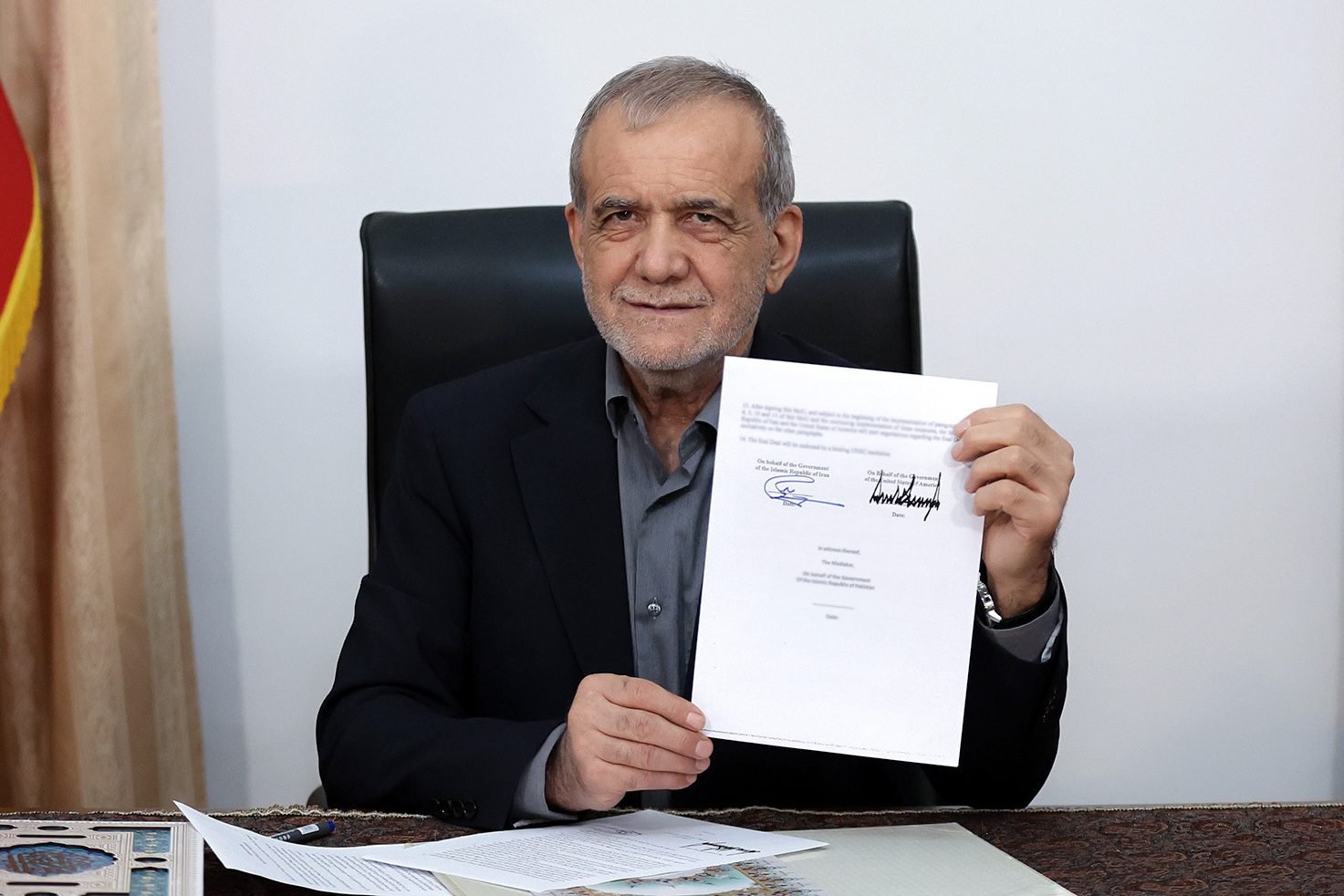
Strategic exhaustion has pushed both sides toward a preliminary deal that may stabilize markets while preserving deep security risks
The memorandum of understanding signed between Washington and Tehran this month is more than a diplomatic effort to stop the fighting; it is a formal acknowledgment of the end of a brutal 110-day conflict that destabilized global energy markets and security. The agreement marks a new reality on the ground, one that neither side could afford to ignore.
How did we arrive at this point? Simply put, both sides reached a state of strategic exhaustion. Washington grew weary of the war’s mounting economic costs, while Tehran faced existential pressure on its regime and its ability to project power. We are looking at a “settlement of necessity.” Iran has accepted international oversight in exchange for keeping its nuclear program under International Atomic Energy Agency monitoring on its own soil, while Washington has chosen this path to stabilize global markets, moving away from the “maximum pressure” strategy that once aimed to fundamentally overturn the status quo.
The memorandum is not a unilateral US venture; it is backed by the Gulf states, which were active participants in its drafting. For these regional powers, the deal offers a chance to reset the regional security architecture. This shift also places a heavier burden on them to play a direct role in brokering sustainable solutions.
A clear example of this challenge is the Strait of Hormuz. While the memorandum opens a 60-day period in which free commercial transit through the Strait of Hormuz is expected to resume, the path forward remains clouded by uncertainty. The Gulf states now find themselves needing to engage more deeply in negotiations to turn this short-term waiver into a long-term, predictable arrangement. The ambiguity over what happens after those 60 days leaves the region waiting for more concrete guarantees.
A close look at the memorandum’s other terms reveals a delicate balancing act. Both sides are attempting to limit the other’s room for maneuver. Tehran appears to have secured immediate maritime relief and the prospect of sanctions and economic benefits, while Washington is trying to preserve leverage through conditionality and follow-on negotiations. The memorandum has moved the table from direct confrontation to a high-stakes negotiation, with each side scrambling to lock in gains within the framework of its new commitments.
Although the memorandum does not explicitly mention ballistic missiles or regional proxies, President Trump has emphasized that these issues will be front and center throughout the next 60 days. These two months are a “pivotal phase,” intended to flesh out the security and political substance of the agreement and transform this general framework into a binding, clearly defined accord.
For Israel, this agreement creates a precarious dilemma. The ceasefire in Lebanon, which lacks a credible mechanism for dismantling Hezbollah’s military capabilities, and the implicit acceptance of Iran as a “threshold nuclear state,” have triggered deep anxiety in Tel Aviv. Israel currently feels caught in a strategic vice: Its greatest ally is prioritizing regional stability, while Israel is left facing complex security challenges on its own borders and sensing a potential withdrawal of the full-throated international support it has long relied on.
Will a final, comprehensive deal be reached? Success depends entirely on Washington’s resolve to hold the line. The US will likely attempt to tie sanctions relief, frozen-asset access, and the proposed $300 billion private-sector reconstruction and development fund to tangible progress on nuclear and security issues. Yet the question remains: Will this gamble pay off? We will likely see progress on technical benchmarks, such as international monitoring and financial transparency, but dismantling the strategic capabilities Iran has built over the years remains a much taller, and arguably unlikely, order in the near term.
Israel, for its part, may not be willing to wait out the 60-day clock. It may find itself forced to act “outside the box” to protect its core security interests. This prospect creates the potential for a direct collision with the new American vision for the region, one in which de-escalation has become Washington’s top priority.