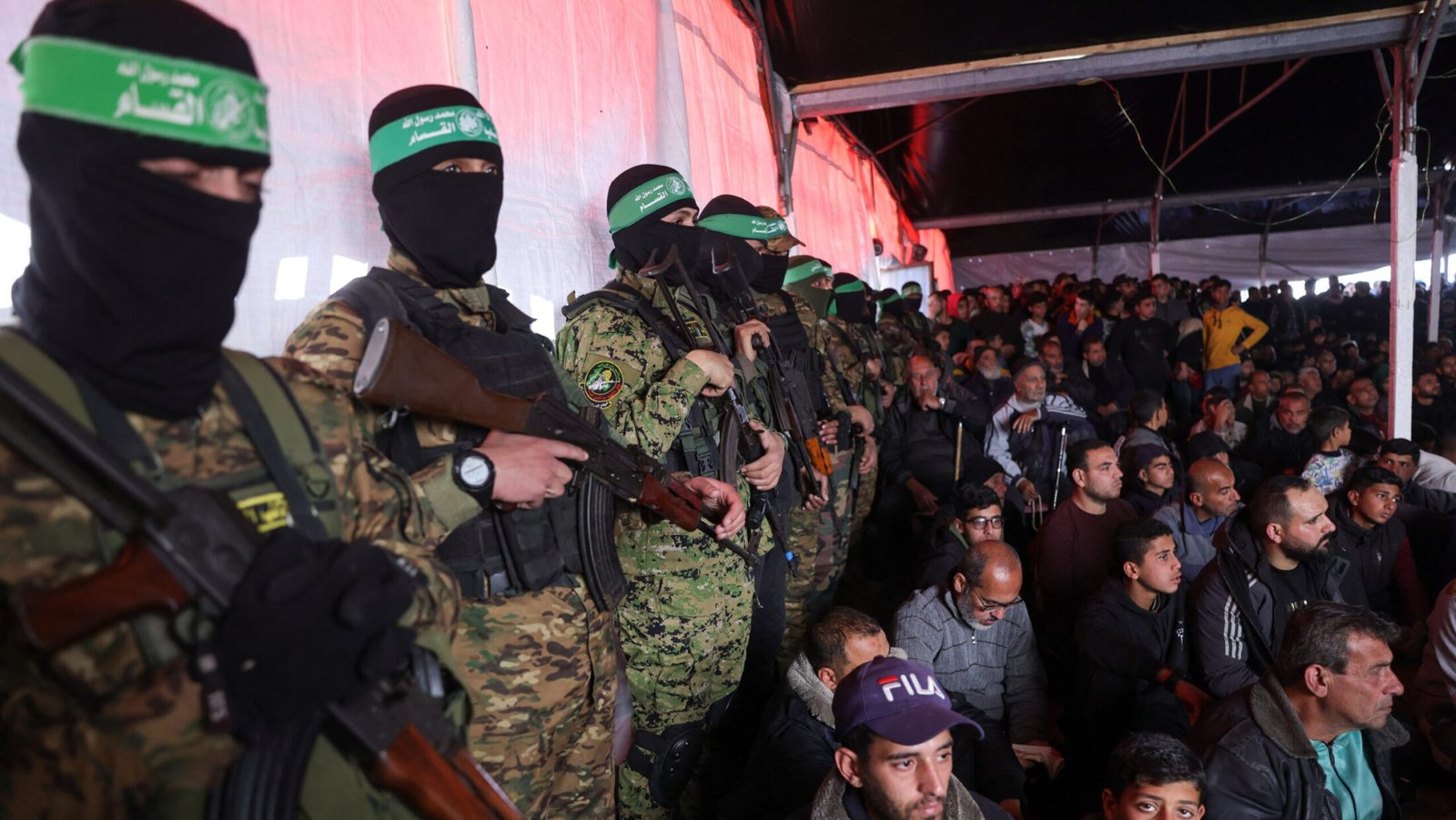
Nikolai Mladenov’s newly announced Gaza agreement offers a rare glimmer of hope amid years of bloodshed and despair. At its core is a straightforward proposition: the phased disarmament of Hamas and other Palestinian terror organizations in exchange for the eventual withdrawal of Israeli forces from the Strip. This is not abstract diplomacy. It is a practical recognition of what people on both sides of the border have long understood. Israelis and Gazans alike desperately want Hamas’s weapons taken away, Gaza demilitarized, and a new form of leadership to take root—one rooted in respectful coexistence rather than endless jihad.
The desire for this outcome runs deep. Many Israelis, still reeling from the horrors of October 7, when Hamas invaders massacred civilians in border communities, see demilitarization as the only reliable way to restore security to the kibbutzim and towns that face Gaza. They have no appetite for indefinite military operations. Popular rhetoric aside, neither the Israeli public nor the military wants to remain in Gaza indefinitely. What they want is simple: the absence of a genocidal terror organization on the other side of the fence, armed with rockets, tunnels, and an ideology of annihilation. Gazans, too, have every reason to support this. Years of rule by a movement that prioritizes tunnels and rockets over schools, hospitals, and prosperity have exacted a terrible toll. A Gaza free of Hamas’s military apparatus could finally begin to rebuild and choose life over perpetual conflict.
Yet history teaches caution. Hamas has a well-documented record of tactical pauses. The Islamic concept of hudna—a temporary cessation of hostilities—has been invoked when jihadist forces find themselves at a disadvantage, only to be broken once strength is regained. If the current peace deal amounts to nothing more than another hudna, it will fail.
What is required instead is genuine, complete disarmament: every long-range rocket, every remaining AK-47, maps of the entire tunnel network, and the locations of weapons manufacturing sites, all handed over under independent international verification. Only then does the plan become something more than a pause. Only then does it become a foundation for lasting change.
Israel’s actions will hinge entirely on whether that verification occurs. The absence of an immediate official Israeli endorsement is understandable in the current political climate. With elections approaching, any government is wary of appearing to accept international dictates that place civilians at risk. No responsible leadership will sign onto an arrangement that leaves the core threat intact. But once Hamas’s arsenal is demonstrably gone and the Strip is verifiably demilitarized, Israel has every incentive to withdraw. There is no strategic or public desire to remain. The moment the threat disappears, the justification for military action disappears with it. Before October 7, Israel was not conducting operations inside Gaza. The pattern of cause and effect is clear: rockets, tunnels, and invasions produce defensive responses. Remove the cause, and the response ends.
This is not a call for endless war. It is a call for realism. Israel will continue to defend its citizens against those who use Gaza as a launchpad for attacks for as long as that threat exists. The alternative—hoping that an armed Hamas will somehow transform into a peaceful neighbor—has already been tested and found disastrous. The same logic applies to the broader region. Palestinians in Gaza possess agency. They are not condemned by fate to endless cycles of terrorism. They can choose prosperity, dignity, and coexistence instead of the ideology that has repeatedly invited destruction. That choice begins with the surrender of the weapons that make peaceful politics impossible.
The President Trump plan does not resolve every grievance in the region. Violence in Judea and Samaria remains a separate challenge requiring consistent law enforcement against all perpetrators, Israeli and Arab alike. The two-state solution, long championed in Western capitals, finds little residual support among those who would actually have to live with it. But those larger questions need not obstruct the immediate, achievable goal in Gaza. Disarmament is the necessary first step. Without it, nothing else is possible. With it, withdrawal becomes realistic, reconstruction becomes conceivable, and a different future becomes imaginable.
The plan’s success will not be measured by signatures on paper or statements at press conferences. It will be measured by whether the weapons are collected, the tunnels mapped and sealed, and the verification process held to rigorous standards. If that happens, Israel will have every reason to step back, and Gazans will have a genuine opportunity to rebuild without the shadow of a terror dictatorship dedicated to war. Both populations have waited long enough for that chance. The responsibility now rests with those who hold the guns: hand them over, allow the process to be verified, and let the possibility of coexistence finally take root. Anything less returns everyone to the same deadly cycle that has already claimed far too many lives.