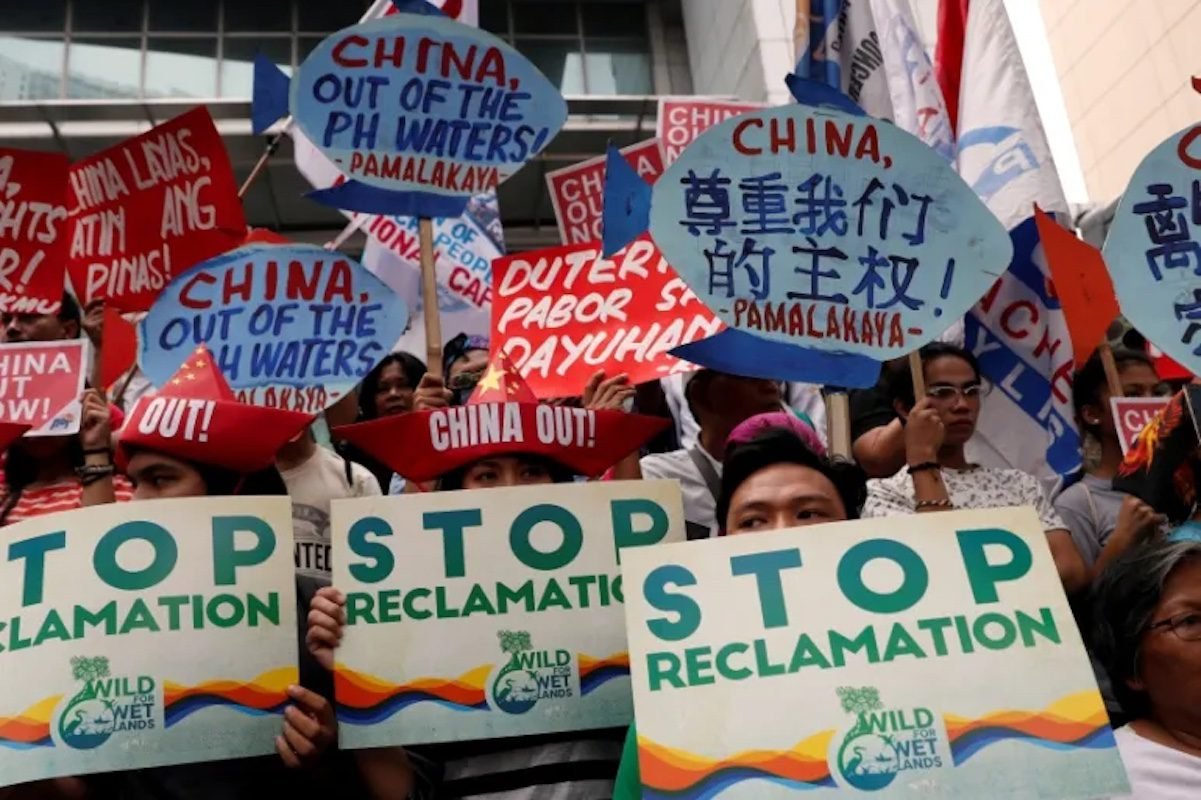
Foreign influence operations in the Philippines have drawn increasing concern, ranging from soft power diplomacy to covert manipulation of institutions. Much of the alarm focuses on China, with analysts pointing to specific areas of penetration.
Media manipulation is a frontline issue. Partnerships with Manila-based media executives have reportedly cultivated pro-China narratives, raising doubts about editorial independence. The education sector has also become a channel: thousands of teachers from mainland China now staff Chinese-language schools, embedding cultural and ideological influence.
The United Front Work Department leverages diaspora ties with Filipino-Chinese communities to advance Beijing’s interests. Economic engagement adds another layer: investments in local zones such as Cagayan create dependencies that risk becoming political leverage. Information warfare, through influencers and automated bots, localizes foreign narratives — reshaping discourse and undermining democratic institutions.
Yet there is no universally accepted definition of “foreign influence operations.” Scholars, policymakers and practitioners differ. Broadly, the term refers to organized efforts by states or non-state actors to shape perceptions and behaviors in ways that advance their interests.
These efforts may include public diplomacy, cultural exchange, media campaigns and economic inducements, or covert activities such as disinformation and espionage. Some view them as legitimate tools of statecraft; others see them as coercive.
Recognizing this contested nature is essential. Foreign influence operations are not inherently malign, nor are they exclusively attributable to China. Their impact depends on intent, transparency and effect.
China’s operations in the Philippines are often portrayed as threatening, yet they are more complex than alarmist narratives suggest. Beijing employs a wide spectrum of tools: media messaging that frames maritime disputes in its favor, United Front activities that cultivate ties with Filipino communities and academics, and economic leverage through investments and trade.
Cultural diplomacy through scholarships, language programs and tourism represents a softer form of influence that fosters mutual understanding. These initiatives are not inherently malign; they can enrich bilateral ties. The challenge lies in distinguishing legitimate engagement from unlawful manipulation.
The risks are real. Espionage networks targeting defense institutions, cyber intrusions into government systems and covert funding of local actors highlight genuine vulnerabilities. Such operations can erode trust in democratic institutions and compromise national security.
But alarmism is counterproductive. Overstating the threat risks fueling xenophobia and undermining bilateral cooperation. A balanced assessment recognizes the dangers without collapsing all engagement into hostility.
Unlawful and coercive operations — bribery, covert manipulation, interference in domestic politics — must be firmly resisted. But singling out China alone perpetuates Sinophobia. All forms of unlawful foreign influence, whether from China, the United States or any other country, must be rejected when they undermine Philippine sovereignty.
Philippine society is not passive in the face of external pressure. Its pluralistic media, vibrant civil society and critical academic community actively resist foreign malign manipulation. Investigative journalism exposes covert activities, while NGOs and universities scrutinize foreign influence.
Government agencies, though resource-constrained, continue to monitor espionage and cyber threats. This underscores a critical point: foreign influence operations succeed only when societies allow them to. By strengthening transparency, accountability and public awareness, the Philippines can blunt external manipulation while ensuring unlawful operations are exposed and neutralized.
China is not the only country practicing foreign influence operations in the Philippines. The United States, through its long-standing alliance, also shapes Philippine opinion and policy via military cooperation, development assistance, media partnerships and cultural programs.
Japan, Australia and South Korea likewise conduct influence operations, often framed as cooperative initiatives: Japan through infrastructure and maritime security, Australia via defense and education, and South Korea through cultural diplomacy and defense ties. Each pursues its own strategic interests while cultivating goodwill.
Recognizing that multiple powers conduct influence operations helps the Philippines avoid selective outrage. It underscores the need for a consistent, sovereign-centered approach — one that evaluates all external engagements through the lens of national interest. Doing so lets the Philippines distinguish between constructive cooperation and coercive influence, ensuring engagements serve long-term development and security goals.
Opportunities must also be recognized. China remains the Philippines’ largest trading partner, offering economic benefits that cannot be ignored. Educational exchanges expose Filipino students to Chinese language and culture, fostering mutual understanding.
Cultural diplomacy through festivals, art exhibitions and tourism enriches bilateral ties beyond geopolitics. To categorically reject all Chinese initiatives would be self-defeating and risk lapsing into Sinophobia. Pragmatic nationalism — accepting beneficial exchanges while rejecting coercive tactics — offers a confident assertion of sovereignty.
The Philippines can continue to nurture its alliance with the United States while strengthening partnerships with other states for security guarantees and development support. Balancing these relationships is not a contradiction but a necessity for a genuinely independent foreign policy.
Foreign influence operations in the Philippines are undeniable, but they are not uniformly malign. They range from espionage and covert funding to cultural diplomacy and economic engagement.
The Philippines must avoid simplistic narratives that cast all engagement as hostile. Instead, the task is to distinguish constructive influence from coercive influence. Unlawful operations must be resisted unequivocally, regardless of origin.
The Philippines must therefore reject all forms of foreign interference that weaken or compromise its interests — without singling out any one country, including China — and instead uphold a consistent, impartial policy that advances national interests and safeguards sovereignty.
Rommel C. Banlaoi, PhD, is director of the Philippines‑China Studies Center at Diliman College and President of the Philippine Society for International Security Studies. He also served as President of the Philippine Association for Chinese Studies.