
It is ironic to see the Islamic Republic of Iran burying its slain supreme leader and the United States celebrating its 250th independence anniversary in the same week. Both sides have used mourning and commemoration occasions to claim victory in a war that has led to a fragile 60-day ceasefire to negotiate a final deal.
The Iranian supreme leader Ayatollah Ali Khamenei was deliberately killed in a US-Israeli bombing on the first day of war on February 28.
In Islam, a dead person should be buried within a very brief period, but Khamenei’s body was preserved for more than four months. He could not be farewelled sooner because Iran was under US-Israeli bombardment, and this was not conducive to large gatherings to honor him.
Iran’s Islamic government wanted to repel the US-Israel aggression before it could unfold an elaborate public burial ceremony. But it had the opportunity to eulogize and bury him earlier after the intermittent ceasefire came into effect on April 8. This would have entailed the same degree of risk as it has taken this week.
The burial was scheduled at the same time as the US’ grand celebration of its Independence Day. Some may see it as a coincidence, but it could equally be viewed as another effort by the Islamic government to upstage the US.

Iran’s post-Khamenei leaders – led by Khamenei’s son, Mujtaba, who has not been seen in public, reportedly wounded in the attack on his father – have been fully aware of America’s plans to mark its 250th birthday.
US President Donald Trump, whom the Iranians despise for joining Israeli Prime Minister Benjamin Netanyahu in unleashing a war of choice, has been very vocal about the independence jubilee for months. He has said he wants to showcase America’s “Golden Age”, and he has now used the celebration to again claim total victory in the war with Iran.
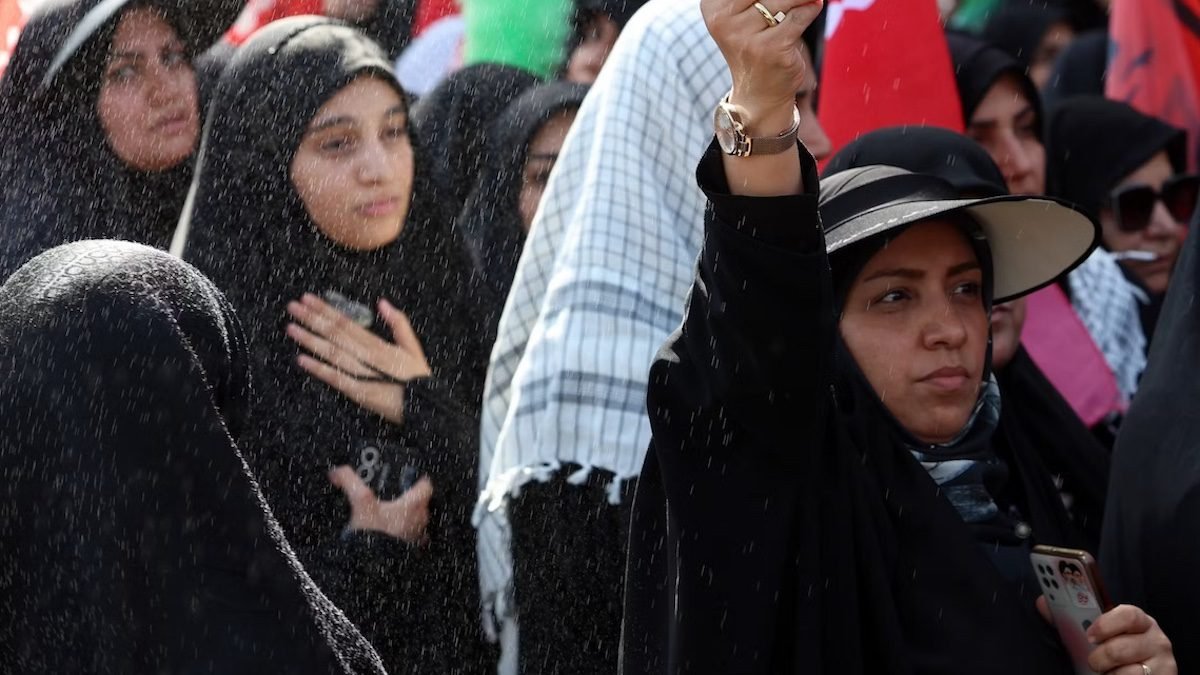
One can reasonably assume Tehran shrewdly planned Khamenei’s burial to coincide with the US event. The Iranian mourning has been arranged in ways that surpasses the US festivities. It has been well-choreographed for mass participation and attendance by foreign political and religious dignitaries from around the world, especially friendly countries.
It has accorded Khamenei the highest respect for his four decades of iron-fisted rule as a marja, or source of emulation in the Shia Islamic hierarchical system.

It also underscores several other critical messages to domestic and international audiences. These include:
- the Islamic government has survived the war and emerged more united and stronger than before the conflict
- the Islamic Republic is not as unpopular and isolated as its enemies, the US and Israel in particular, have painted it to be
- the republic remains resilient and capable of defending itself against any internal strife and foreign aggression
- the republic remains steadfast in confronting its adversaries any time with victory on its side.
Indeed, the massive turnout to mourn Khamenei and the number of foreign delegations attending the processions surprised even Trump, who said he thought “people hated” the supreme leader.
Khamenei will now be enshrined as an exceptional religious authority, thinker and political leader who built the Islamic Republic as a strong and defensible power. But while the Islamic system can be expected to remain entrenched in Iran, there is an urgent need for its structural reformation.
Most citizens’ demands for political and social freedoms and better conditions of living have not dissipated. Instead, they bubble away underneath. There is uncertainty about the direction the US-Iran negotiations, and Iran’s political and economic trajectory, may take.
But should the two protagonists reach a lasting settlement that involves a resolution of the dispute over Iran’s nuclear program, the Strait of Hormuz and the Israeli occupation of southern Lebanon, as well as the lifting of sanctions, unfreezing of Iranian assets and reintegration of the Iranian economy into the international system, the public will have more reasons for their demands to be met.
President Masoud Pezeshkian and National Assembly Speaker Bagher Ghalibaf have indicated a desire for change. But the main force to watch is the widely influential Islamic Revolutionary Guard Corps (IRGC). Its control of the Strait of Hormuz – a product of the war – has bequeathed it with extra veto power in the system.
For now, Tehran and Washington may each claim victory from their concurrent mourning and celebrations. But the deal they may or may not reach in the coming weeks will be hugely consequential for both sides, and the world.
Amin Saikal is emeritus professor of Middle Eastern Studies, Australian National University; The University of Western Australia; Victoria University
This article is republished from The Conversation under a Creative Commons license. Read the original article.

Amin Saikal, professor of political science and director of the Center for Arab and Islamic Studies (Middle East and Central Asia) at the Australian National University, is the author of Iran Rising: The Survival and Future of the Islamic Republic.