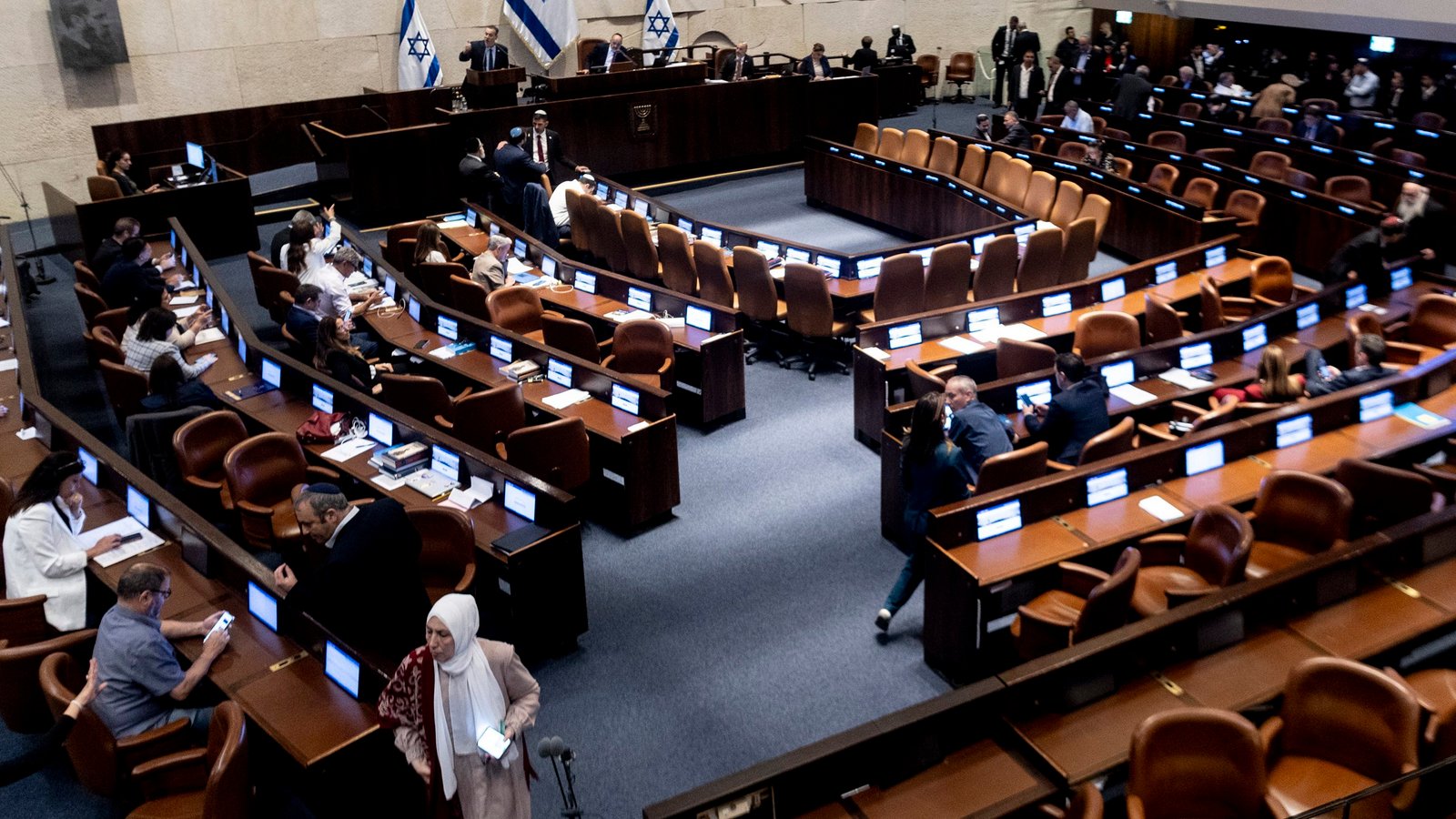
Gabriel Colodro captures the moment Prime Minister Benjamin Netanyahu tried to celebrate a Lebanon security understanding and instead stepped straight into Israel’s next election fight. The issue is not only Hezbollah, Lebanon, or Washington’s mediation. It is the ultra-Orthodox draft crisis, and whether Netanyahu can credibly promise a “broad national government” while keeping his current coalition alive through a deal that slows enforcement against yeshiva students who ignore military call-up orders.
The political collision is sharp because Israel is still at war, soldiers are still being killed, and the burden of service has become a national fault line. Netanyahu says his future coalition will be open to anyone who accepts principles such as Israel as the nation-state of the Jewish people, individual rights, a free economy, defense independence, draft understandings, judicial compromise, and rejection of Palestinian statehood. His critics hear something else: a unity pitch from a leader still bound to ultra-Orthodox parties that resist broad military service.
Likud lawmaker Moshe Saada defends the freeze on arrests as practical politics, arguing that coercion will not bring haredim into the army and that economic pressure would work better. Yesh Atid’s Moshe Tur-Paz calls the arrangement “disgraceful,” saying Netanyahu is trying to keep ultra-Orthodox parties locked to him before the election while Israel’s security needs grow more urgent.
The numbers make the drama worse for Netanyahu. A Channel 12 poll found 62% opposed the ultra-Orthodox deal, while the current coalition bloc remained short of a majority. Gadi Eisenkot, Naftali Bennett, Yair Golan, Benny Gantz, and others are all circling the same question from different angles: Can there be a broad government with Netanyahu still leading it?
Colodro’s full report shows how one draft deal turned “unity” from a campaign slogan into a stress test. He lays out the real choice now facing Israeli politics: whether national service, coalition survival, and postwar governance can fit inside the same government—or whether one of them has to break.