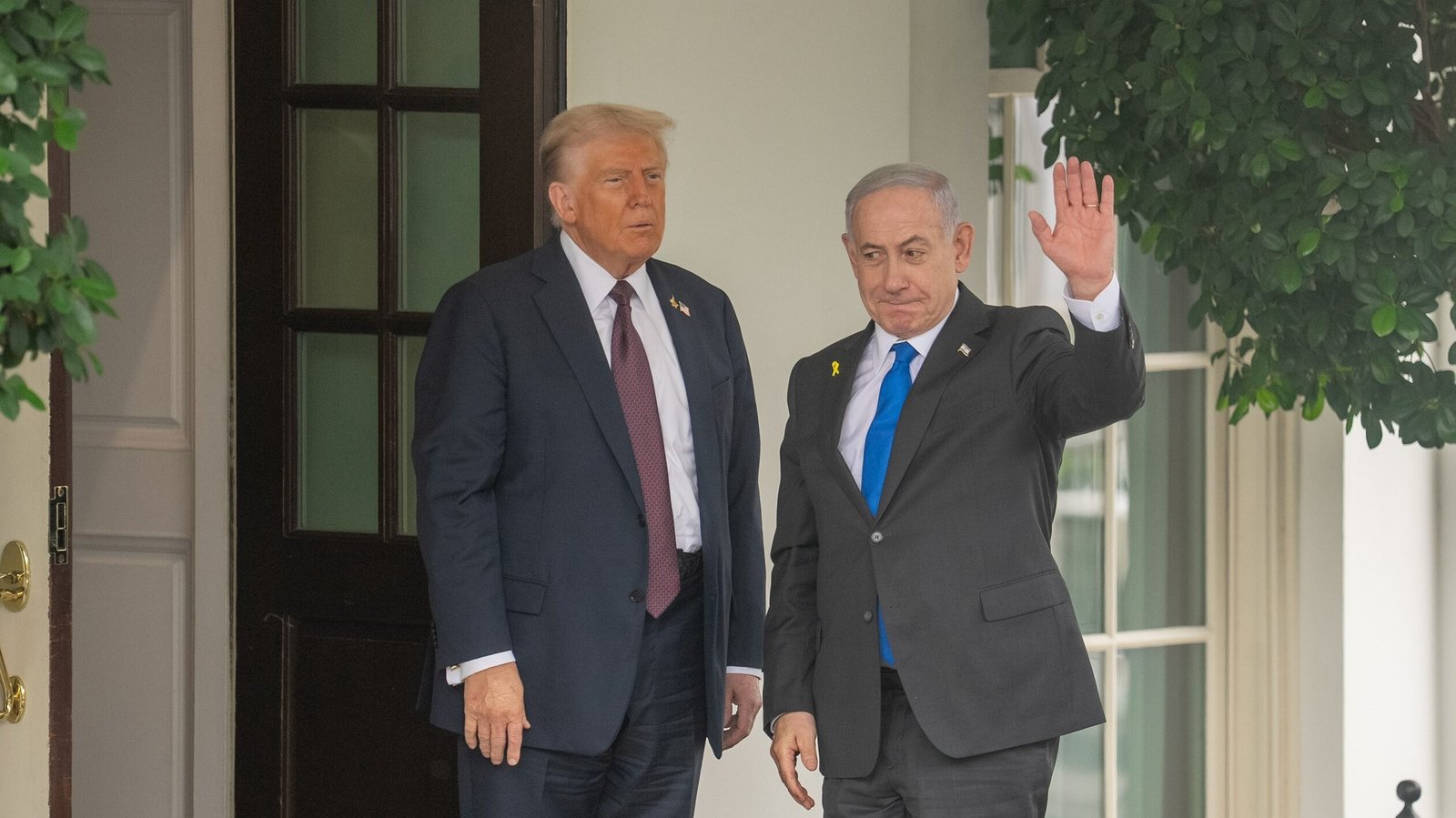
Israeli Prime Minister Benjamin Netanyahu arrived in Washington, DC, ahead of a meeting with President Donald Trump that both leaders have framed around one overriding issue: Iran.
Before departing Israel, Netanyahu said Tehran would top the agenda, describing the visit as an opportunity to address Israel’s security while discussing broader regional developments.
“In these complex times one must act with both great determination and great wisdom,” Netanyahu said in a Hebrew-language video statement. “We will discuss all the issues on the agenda, first and foremost Iran. Of course, our goal is to safeguard our security while also expanding the circle of peace around us.”
“I am embarking on this mission with one clear objective,” he said, “to ensure the security, strength, and future of our beloved State of Israel.”
The visit comes during a pause in direct US-Iran military operations after nearly two weeks of nightly strikes. President Trump has said the United States remains “locked and loaded” but suspended military action as negotiations continue, adding that the talks include “major points of agreement.” After Iranian officials denied negotiations were underway, President Trump dismissed their statements as “fake news,” saying they need “better public relations people.”
Netanyahu is also expected to arrive with fresh intelligence assessments. The New York Post, citing a source in Jerusalem, reported that he plans to brief President Trump on Iran’s nuclear activity at the Pickaxe Mountain facility, along with evidence that Tehran is rebuilding missile and drone capabilities damaged in US strikes and is not negotiating in good faith.
Those concerns echo a Wall Street Journal report that Israeli intelligence believes Iran transferred thousands of uranium-enrichment centrifuges into deep tunnels beneath Pickaxe Mountain following the June 2025 war, creating new concerns about a potential rapid nuclear breakout.
The meeting also follows a series of policy disagreements between Washington and Jerusalem. The Trump administration has expressed frustration over continuing Israeli strikes in Lebanon, has signaled it may go ahead with military aircraft sales to Turkey, rejected Netanyahu’s objections to a civilian nuclear deal with Saudi Arabia, and welcomed Israeli decisions to allow a multinational security force into Gaza and redeploy some forces in southern Lebanon.
Separately, Iranian Foreign Ministry spokesman Esmail Baghei said recent talks with Oman and Pakistan over the Strait of Hormuz did not involve Washington.
“These talks have no connection with the United States. They are a bilateral matter between Iran and Oman, and they are continuing,” Baghei said.