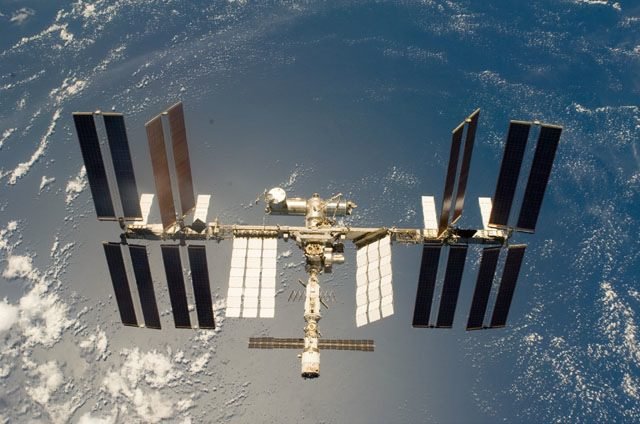
NASA on Friday released a much-anticipated “request” to the US commercial space industry to develop private space stations that, as early as 2030, will succeed the International Space Station as a place for astronauts to live in low-Earth orbit.
In a cover letter accompanying the 360-page “request for proposals,” NASA stated its plan: “This will ensure NASA has a sustained human presence in LEO for crew members to perform science and exploration.” Several private companies that have worked for years on designing and developing such stations have been keen to learn exactly what capabilities NASA is seeking. These new documents finally provide some answers.
NASA’s solicitation can be found here. Industry responses are due back to NASA on December 8. NASA said it plans to select “two or more” contractors in this phase of the competition, and intends to make a final decision in April.
In LEO to stay
“We’ve made it clear that NASA will never give up its presence in low Earth orbit,” NASA Administrator Jared Isaacman said in a statement that accompanied the release of the new documents. “We will continue to need a place to conduct research, develop technologies, train crews, and prepare for missions to the Moon and Mars. Commercial space stations may provide that capability while creating new opportunities for American industry and allowing NASA to concentrate more of our resources on the near-impossible missions ahead.”
Bidders for this funding phase will certainly include Axiom Space, Voyager Space, and Vast Space. Blue Origin won an earlier round of funding from NASA, but questions remain about the company’s commitment to the program. SpaceX appears unlikely to bid, at least for now. Phase 1 winners will be guaranteed at least $100 million.
Future phases of the contract will be worth billions. NASA said Phase 2 of this “Commercial LEO Destinations” competition, kicking off next year, will include funding for development and certification of space stations, and Phase 3 will include the purchase of at least four missions for NASA astronauts to the private space stations.
But how to get there?
One of the most closely watched elements of the NASA request was its provisions for crewed transportation to the stations. In earlier discussions with potential space station providers, NASA had indicated it may leave acquiring transportation to the contractors—basically saying it was their responsibility to sell an end-to-end service to the space agency.
This is problematic because SpaceX has said it plans to retire the Crew Dragon spacecraft as soon as possible, and almost certainly when the International Space Station is deorbited in 2030 or 2032. SpaceX, which has the only operational US vehicle for such transportation, has not offered to sell seats to private space station operators. This led NASA, two weeks ago, to provide an additional $359 million to support Boeing’s ongoing efforts to certify its Starliner spacecraft for crewed missions to low-Earth orbit.
But in the new request for proposals (RFP), the space agency goes further in support of would-be space station operators. As part of their bids, contractors do not need to provide proof of a signed contract with Boeing (or another transportation provider), or even a letter of intent. NASA is even offering to “furnish” transportation for the first four NASA service missions to the private stations, likely meaning it will help broker deals between the private companies and Boeing.
Notably, in the new documents, NASA assigns an explicit price to crew and cargo missions. For 2030, it estimates a four-seat crew flight will cost $325 million, and a cargo flight $300 million. In offering to furnish these initial flights, NASA is taking a significant burden off private space station providers, which are already undertaking a challenging task in constructing, testing, and flying orbital space stations.
Early industry reactions
The potential bidders were still reviewing the lengthy proposal on Friday afternoon, but several offered their initial thoughts on the new NASA documents.
“The release of the RFP is an important milestone,” Marshall Smith, the chief executive of Voyager’s Starlab space station, said. “We appreciate that NASA has incorporated both industry and government feedback. We believe Starlab has the strongest business plan and technical solution to be America’s next space station and we look forward to competing.”
Axiom Space said it also welcomed the release of the final RFP.
“Our team is actively reviewing the RFP now and is energized for the next steps in the process,” an Axiom Space spokesperson said. “With years of experience executing human space flight missions and developing orbital hardware, we are confident the proposal we provide NASA will demonstrate that Axiom Space is the clear choice to meet NASA’s objectives in low-Earth orbit.”