Three months ago, during a flashy event at its Washington, DC, headquarters, NASA announced that it was shifting the focus of its lunar plans from an orbital space station to a Moon base on the surface.
As part of this, officials said work would be paused on the Lunar Gateway planned to orbit the Moon. Of the two elements that were furthest along, NASA also revealed that one of them—the Power and Propulsion Element—would be repurposed to serve as a core module for a nuclear-electric propulsion demonstration in deep space.
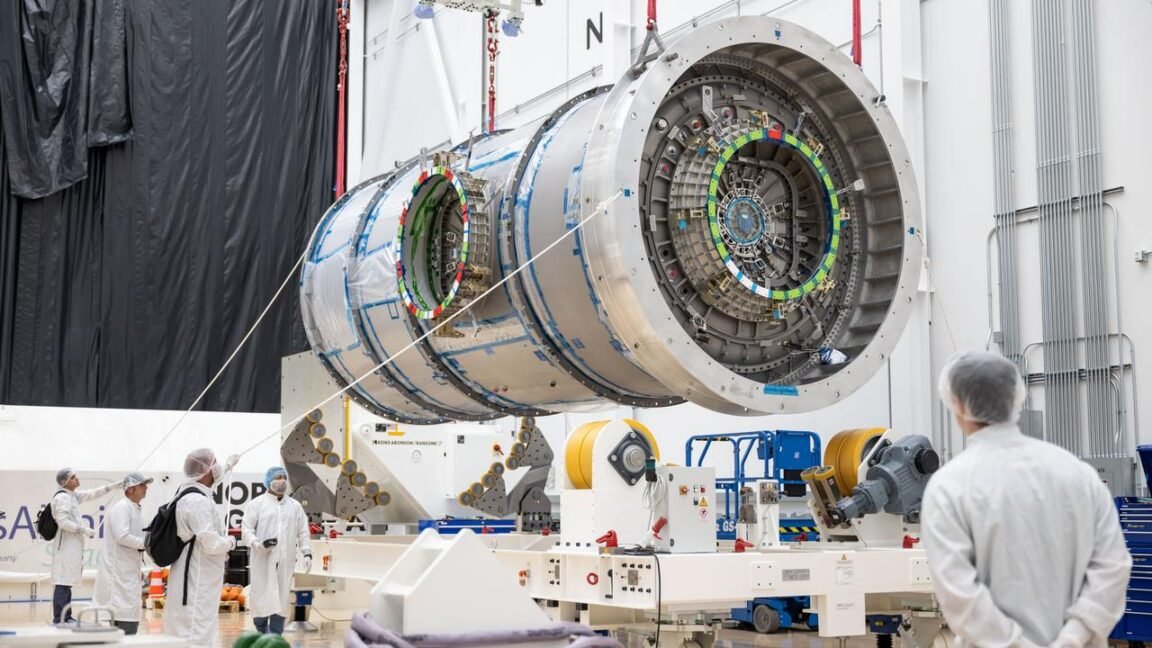
Less was said about the fate of the other major component, the Habitation and Logistics Outpost (HALO). This is the large pressurized module, 6.1 meters long, in which visiting astronauts would spend the majority of their time when visiting the Lunar Gateway. NASA has awarded contracts worth $1.1 billion to Northrop Grumman to design, build, and integrate the habitation module with the Power and Propulsion Element.
After the NASA announcements in March, Northrop Grumman began lobbying NASA and others to include the HALO module as part of NASA’s Moon Base plans. However, Ars has learned this is now unlikely to happen.
Last week, a key contractor for the HALO module, Paragon Space Development Corp., was told to stop working on the space vehicle, two sources told Ars. In 2022, Paragon received a contract worth more than $100 million to develop the life-support system for HALO.
NASA and Northrop find other projects
Publicly, no one is confirming the stop-work order or that this is the end of the line for HALO.
“HALO can be repurposed for a variety of lunar missions and it’s the most mature technology to support a deep space or lunar habitat,” a Northrop Grumman spokesperson told Ars. “Northrop Grumman and our supplier partners will continue to work with NASA as they explore how to best utilize these resources.”
However, the spokesperson added that most Northrop employees affected by any changes to HALO could be reassigned to other positions. “We are reassigning most affected employees across existing opportunities and programs within our Space portfolio,” the spokesperson added.
Two sources also indicated that the decision to stop development of the HALO module has not caused a rift between NASA and one of its major contractors. “NASA has come to good terms with Northrop on how they’re going to contribute to the Moon base,” a space agency source said.
It is unclear why work on HALO has stopped now. Possibly, NASA decided it did not need the large module for the lunar surface. Fully outfitted, the HALO module has a mass of 8 or 9 metric tons. This is a large mass to get to the lunar surface, and may be inconsistent with NASA’s walk-before-you-can-run approach to developing lunar surface hardware. It’s also possible that the corrosion issue observed with HALO will take more time and cost too much to remediate.
Regardless, the HALO work stoppage is another nail in the coffin of the Lunar Gateway, as if the project were not dead enough already.