One week ago, more than 200 miles above the Earth, a refrigerator-size satellite making its way toward an attempted rescue of NASA’s $500 million Swift gamma-ray observatory suddenly spun out of control.
It didn’t look good. The spacecraft, named Link, was rotating on multiple axes, rendering it unable to maintain a reliable communications link with the ground and complicating efforts to arrest the spin. Two of the satellite’s three reaction wheels, used for pointing, also stopped working. Through sporadic radio contact, engineers discovered a problem with some of the spacecraft’s cold gas thrusters used for finer attitude control.
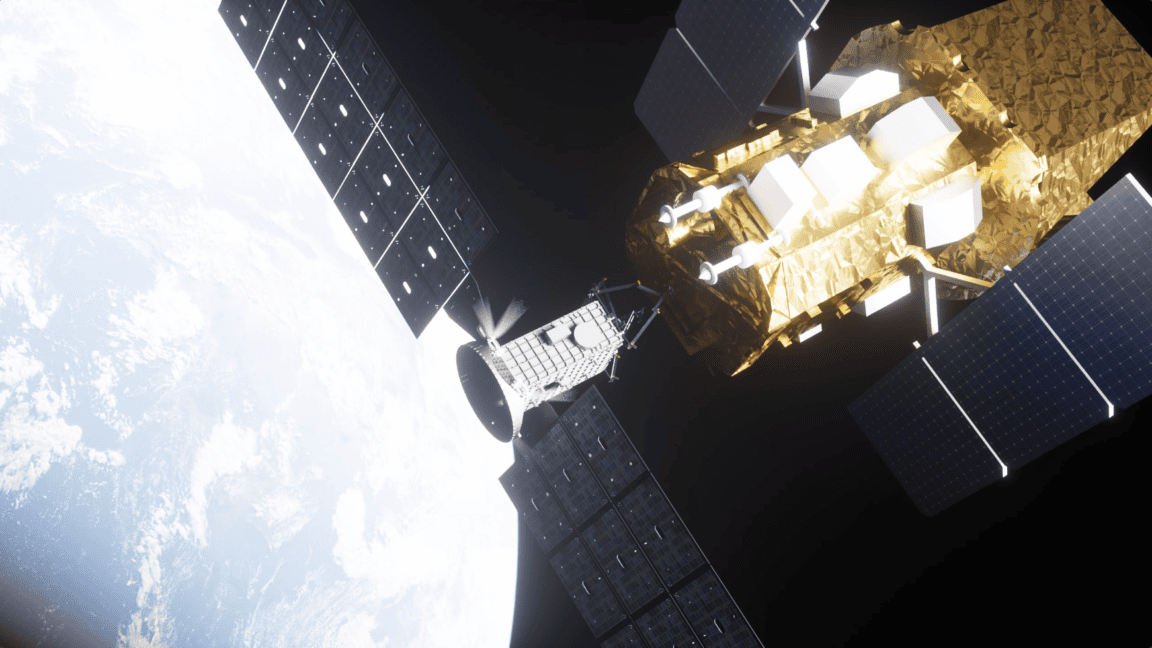
The Link satellite is built, owned, and operated by Katalyst Space Technologies, a satellite servicing startup that won a $30 million contract from NASA to fly up to the Swift observatory, grab onto it, and boost its orbit before succumbing to aerodynamic drag and burning up int he atmosphere.
The clock is ticking. In a few months, Swift will be too low for Katalyst to complete the rescue. This is the first time NASA has contracted with a commercial company to service one of its satellites. The space agency gave Katalyst less than a year to put the mission together. The Link satellite launched July 3 to begin the pursuit of Swift, and the mission proceeded mostly according to plan until last Saturday.
“When this happened, it was during one of the passes without comms,” said Ghonhee Lee, CEO of Katalyst, said in an interview with Ars. “We were, immediately prior, in a very stable configuration.”
Katalyst’s ground team, working from a control center near Denver, hurried to find a fix and recover the Link satellite. The good news was the spacecraft’s other systems remained healthy, including its power supply, three xenon-fueled electric thrusters, and the rendezvous and robotics hardware the Link satellite needs to capture Swift.
Keeping at it
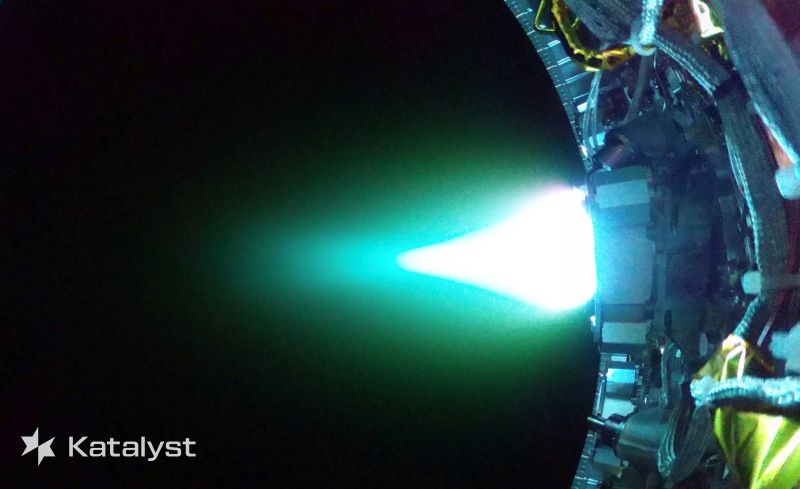
Ars spoke with Lee, Katalyst’s chief executive, on Friday afternoon as the company’s ground team worked to stabilize the spacecraft. The first step involves using the satellite’s plasma engines to gradually slow the spin. The engines are primarily designed for orbit-raising, but they’re also suitable for attitude control because they can vector their thrust with a two-axis gimbal.
Link’s electric propulsion system is efficient but low in thrust, meaning it takes time to generate enough of an impulse to regain full control of the satellite’s pointing.
“We’ve been able to use the thrusters to point in the opposite direction of the rotation rate and affect the attitude control that way, which has been highly effective,” Lee said.
This has worked well so far. As of Friday, the spacecraft had cut its spin rate in half, from about 9 degrees per second to approximately 4 degrees per second. Officials hope to further reduce the spin rate, allowing Katalyst to improve communications with the spacecraft.
“Once we are in a more stable configuration, with much more high-bandwidth comms, we’ll be able to use that to downlink all the rich data (about the condition of the spacecraft),” Lee said. “We do know the states of the reaction wheels and the thrusters and things like that. So our GNC team—guidance, navigation, and control team—has been very hard at work with NASA, essentially remapping all of the control algorithms to be able to have an updated controller ready to go for when we are able to stabilize the spacecraft.”
Katalyst may eventually be able to recover the satellite’s two inoperable reaction wheels, but the team’s priority is restoring control by uplinking a new algorithm to manage its orientation through a combination of its one remaining reaction wheel and thrusters.
Engineers aren’t sure yet what caused the emergency with the Link spacecraft last weekend. It could have been an internal problem with the satellite or a collision with space junk. Lee said two cameras on the satellite will look for signs of damage after ground teams stabilize it.
Whatever the cause, Katalyst’s mission control team lost contact with Link for more than 24 hours after it spun out of control. The satellite then automatically reset itself, just as it was supposed to do.
“This was built-in fault protection logic saying, “Hey, if I haven’t heard from anybody in 24 hours, there must be something wrong. I’m going to toggle the power, turn it on and off again,’” Lee said. “It’s just built in. However, that shutdown mode is ungraceful. It basically pulls the plug on everything, and that creates some downstream effects for sensitive systems such as the reaction wheels.
“Basically, there was a big thermal spike that came about as a result of this that over-temperatured the upstream electronic circuits that control the reaction wheels, which ultimately led them to being inoperable,” Lee said.
The problem with the spacecraft’s cold gas thrusters seems to be a “separate issue,” Lee said. But engineers don’t have all the data in hand to make a final determination.
“These things all happened at once, so it’s hard to delineate between what contributed to creating the situation and what was the consequence of the situation, and that’s something we’ll have to investigate with all the data,” Lee said.
Nevertheless, Lee said Katalyst still aims to move Link toward NASA’s Swift observatory, perhaps around the end of August.
“We’re very committed to pursuing this mission,” Lee said. “We’re working side by side with NASA. I just came from a technical working meeting with their controls team, where we’re reviewing the algorithms. It seems like there’s nothing that is preventing us from reestablishing three-axis control of the spacecraft with the remaining reaction wheel, with the remaining thrusters, as well as the electric propulsion.
“It’s not the original mode that we expected to control the spacecraft with, but it seems like we will have sufficient stability and controllability of the spacecraft,” Lee said. “With this, we believe we’ll be able to do the rendezvous with Swift. We believe that we’ll be able to go and do things like the inspection of Swift within a close approach of a few dozen meters. And as it stands right now, we have not made a formal assessment, but we believe that a capture of Swift, an attempted capture of Swift, is very much in the cards.”