The Iran war has delivered a profound and systemic shock to the Gulf, fundamentally challenging two assumptions that have underpinned regional stability for the better part of a century.
For decades, the Gulf’s economic model thrived on a perception of stability, reinforced by push factors like tax exemptions, flexible regulatory regimes and a dynamic, diversified start-up ecosystem.
Simultaneously, the region’s security architecture rested on a traditional oil-for-security arrangement, maintained by a dense network of American military bases and hardware.
Yet, both pillars have been materially weakened by nearly two months of war, during which missile and drone strikes have targeted all Gulf states. This reality has ushered in a painful phase of strategic reassessment of Washington’s reliability as a security guarantor, forcing regional capitals to look toward the East with newfound urgency.
In this post-war period, a turn toward diversification appears not only plausible but increasingly necessary for survival. China, whose economic footprint in the Gulf has expanded significantly through trade, investment, and infrastructure engagement, stands out as the most logical partner for deepening ties.
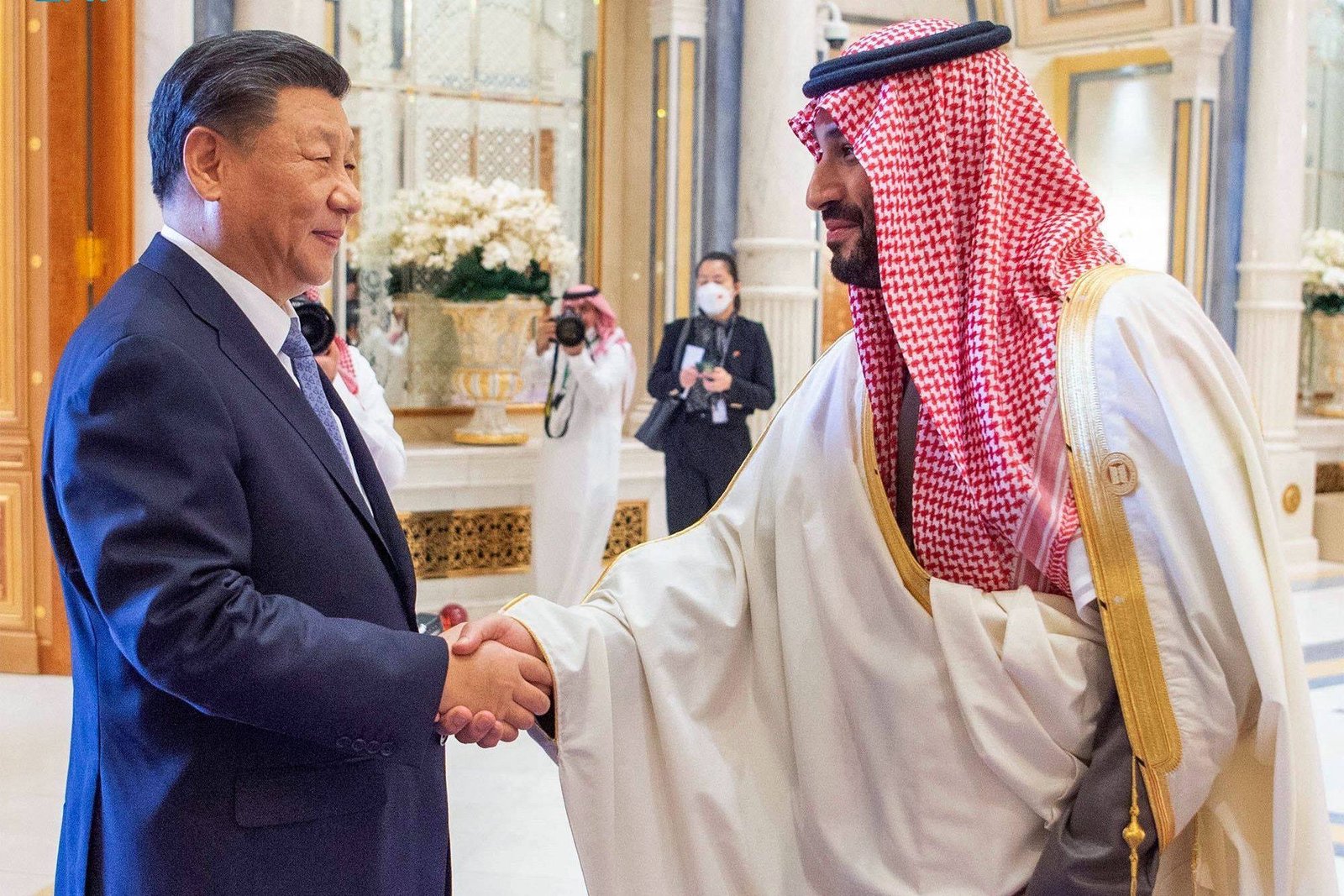
While the relationship is not without its limitations, the sheer scale of Chinese economic involvement provides a gravity that is becoming impossible to ignore. In 2023, following Xi Jinping’s landmark visit to Riyadh for the Gulf Cooperation Council (GCC) Summit, the partnership began to manifest as a comprehensive strategic alignment.
Last year, multilateral trade between China and the GCC reached approximately US$300 billion, underscoring China’s position as the region’s primary trading partner. While historically these investments remained limited to the energy sector and port projects, the post-war environment is pushing both sides to explore much deeper integration.
The future of this economic partnership is likely to be defined by three critical sectors where Chinese dominance and Gulf capital find a natural synergy. The first is green energy, a field where China is currently the undisputed leader, having over 80% of the global solar manufacturing capacity.
China’s exports of wind turbine generators jumped about 50% in 2025, and its dominance in the EV market, which now accounts for 70% of global production, aligns with the long-term objectives of Gulf nations trying to transition away from hydrocarbon reliance.
For the Gulf, partnering with Chinese firms is about securing the technology needed to transform their own power grids and transportation sectors with Chinese brands like BYD, Geely, and Changan.
The second area of cooperation is being facilitated by the expansion of the BRICS+ framework, which provides a platform for financial integration that could eventually serve as a hedge against the Western financial system. Although moving to a fully yuan-based trade system is difficult due to the hegemonic nature of the petrodollar, new mechanisms are already being tested.
For instance, the mBridge project, involving the central banks of China and the UAE, is experimenting with a digital currency platform to settle cross-border payments without Western intermediary banks. Such experiments allow the Gulf to diversify its financial risk while maintaining traditional ties.
The third area for cooperation is found in China’s flagship connectivity project, the China-Pakistan Economic Corridor (CPEC). This project represents an investment of roughly $62 billion and serves as a primary tool to bypass the Malacca Dilemma, the strategic vulnerability in which approximately 80% of China’s oil imports must pass through the Strait of Malacca.
By investing in CPEC and the Gwadar Port, Gulf countries can develop deals that integrate their own maritime routes with land corridors into Central Asia. This allows the Gulf states to position themselves as central nodes of a new, multipolar trade map, particularly as China continues to import 42 % of its crude oil from the Middle East, with Saudi Arabia providing 14 % and the UAE providing 7 % in 2025.
However, it is important to recognize that this growing closeness has clear boundaries, particularly when one considers the vast structural disparity in military commitments. The post-war context has provided a wake-up call, but this should not be mistaken for a desire to fully replace the United States with China.
The Gulf leadership is far too pragmatic to trade one form of dependency for another, and the security domain remains the most significant hurdle. The US maintains a formidable presence of roughly 40,000 to 50,000 personnel across approximately ten countries in the region, with the Al Udeid Air Base in Qatar alone hosting over 10,000 troops.
In contrast, China’s military presence is confined to a single logistical support base in Djibouti, emphasizing Beijing’s traditional foreign policy of non-interference. Even in defense procurement, the numbers highlight a gap that cannot be bridged quickly. While China has become a more prominent arms exporter, it still ranks far behind the US in regional market share.
According to SIPRI, the US accounted for 54 % of all arms imports to the Middle East between 2021 and 2025, with Saudi Arabia serving as its largest global recipient, taking in 12 % of total US exports.
In comparison, Chinese arms exports to the region between 2016 and 2025 were estimated at approximately 732 million TIV (a unique SIPRI index for calculating trends in defense exports known as Trend-Indicator Value), which was a mere fraction of the $19.5 billion TIV exported by the US over the same timeframe.
While Chinese drones are attractive for their lack of political strings, they do not yet offer the integrated air defense systems that the US military provides.
The post-war reality is not about a radical shift from Washington to Beijing. It is about the pursuit of strategic autonomy as middle powers. The Gulf states view China not as the new America, but as a necessary hedge. By diversifying their security and economic portfolios, they are opting for a multipolar insurance policy that is far less risky than relying on a single, fraying umbrella.
Nor is the logic of finding alternatives to Western dominance about replacement; it is about building a more resilient, multipolar foundation that is less costly and more lucrative for the region’s long-term survival. This shift toward the East is a calculated, pragmatic response to a changing global order where the old certainties of the oil-for-security pact no longer seem to hold.
Burak Elmali is a researcher at TRT World Research Centre in Istanbul, Turkey.