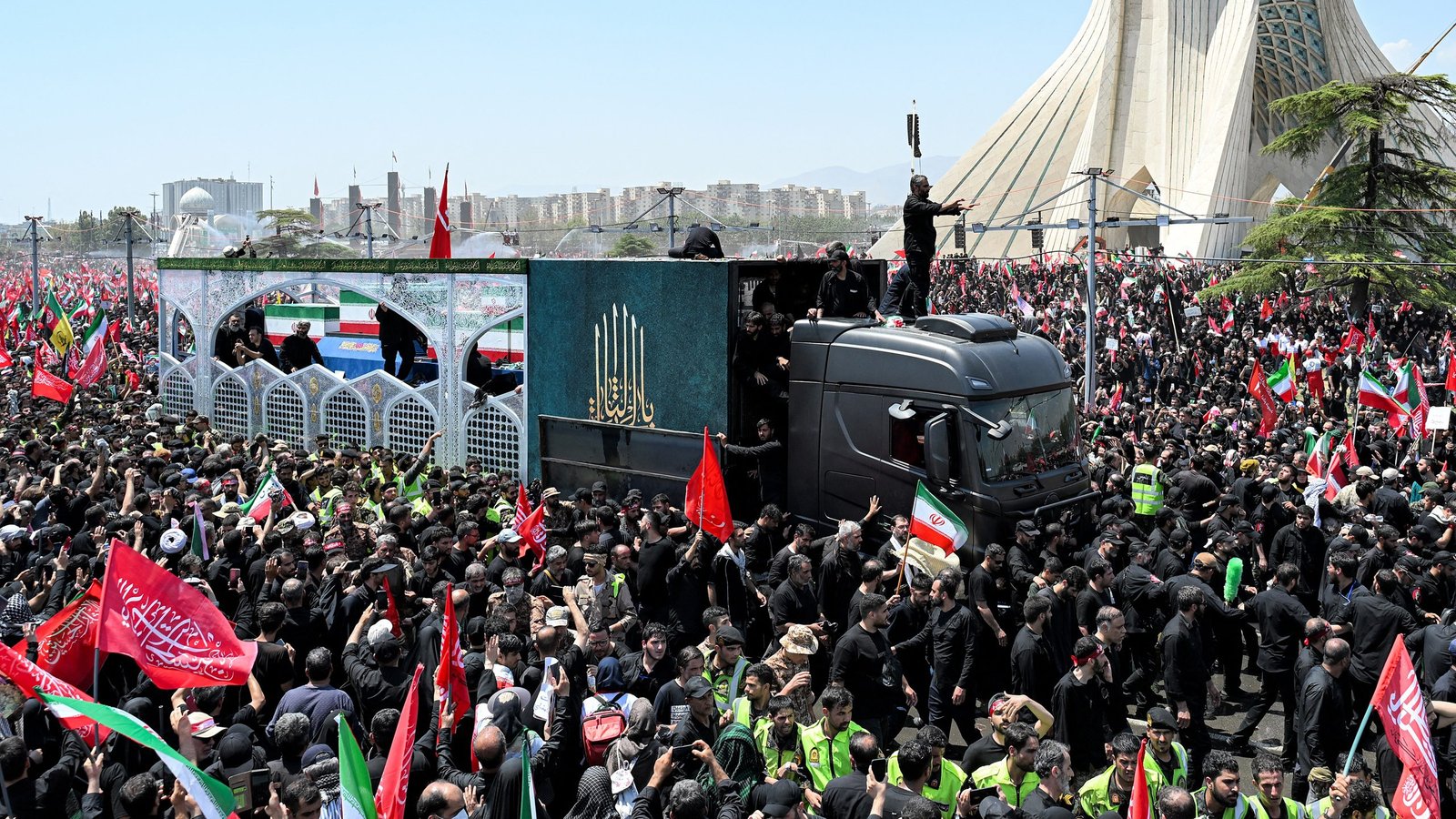
Giorgia Valente’s report turns Ali Khamenei’s funeral into something far larger than a story about coffins, prayers, and mourning crowds. The ceremonies, which began in Tehran and moved through Qom before later stages in Najaf, Karbala, and Mashhad, are presented as a carefully staged test of the Islamic Republic’s postwar strength: part ritual, part diplomatic theater, part succession drama. Khamenei, 86, was killed on February 28 in US-Israeli strikes that also killed several family members, and Iran’s rulers have used the funeral route to fuse national grief with Shia history and regional messaging.
The spectacle is crowded with symbols. Mourners waved anti-US and anti-Israel banners, officials prayed behind the coffins, and analysts described the event as a loyalty test designed to show that the regime could still mobilize people after the war. Yet the article does not take the crowd at face value. It notes that turnout can reflect devotion, but also state pressure, transport, food, public holidays, and the old machinery of mass mobilization.
The diplomatic choreography is just as revealing. Pakistan sent Prime Minister Shehbaz Sharif and senior security officials; Turkey, China, Russia, Saudi Arabia, Qatar, Oman, and others sent representatives at varying levels. That mix gave Tehran a stage on which to sort friends, rivals, cautious neighbors, and armed partners. Reported Qur’anic recitations for different delegations added another layer, with analysts reading the verses as religious diplomacy delivered with a sharp edge.
The most gripping tension, though, is what was missing. Mojtaba Khamenei, Ali Khamenei’s son and Iran’s current supreme leader, did not appear publicly at the central funeral ceremonies. Analysts told Valente that the absence raised questions about injury, security fears, and the visibility of Iran’s succession. The full article catches the Islamic Republic doing what it has long done best: turning mourning into power projection, while revealing more vulnerability than it intended.