You are here: Home / All RECIPES / Irish Potato Farl: A Timeless Taste of Irish Comfort
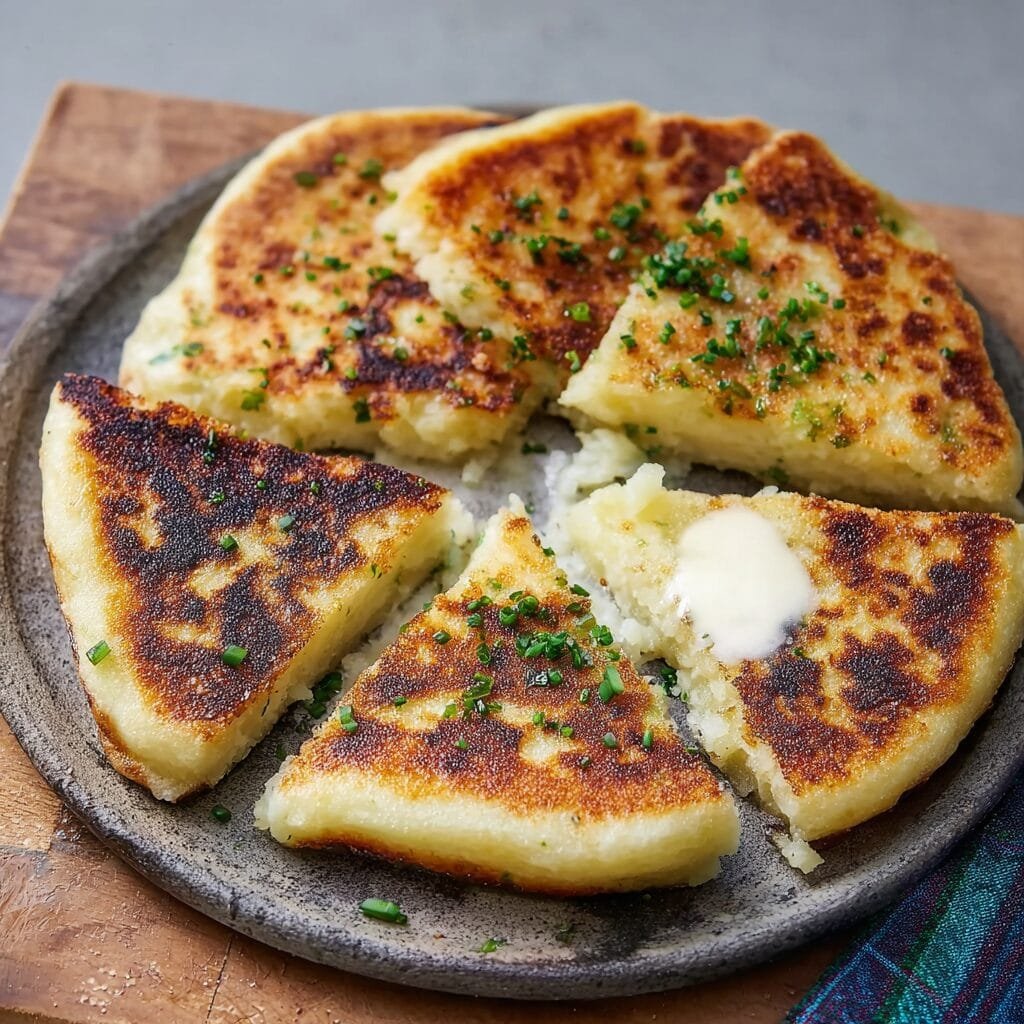
Irish Potato Farls are a treasured classic from the heart of Ireland’s home kitchens. Soft and tender on the inside with a beautifully golden, griddle-crisp exterior, these humble potato breads embody the comforting simplicity of traditional Irish cooking.
Made with just a handful of pantry staples, potato farls are wonderfully versatile and incredibly satisfying. They’re a staple of the iconic Irish breakfast, but they’re just as enjoyable toasted with butter, paired with eggs, or served alongside soups and stews. Best of all, they’re traditionally made using leftover mashed potatoes—making them both economical and deeply rooted in Ireland’s resourceful culinary heritage.
A Taste of Irish Tradition: What Is a Potato Farl?
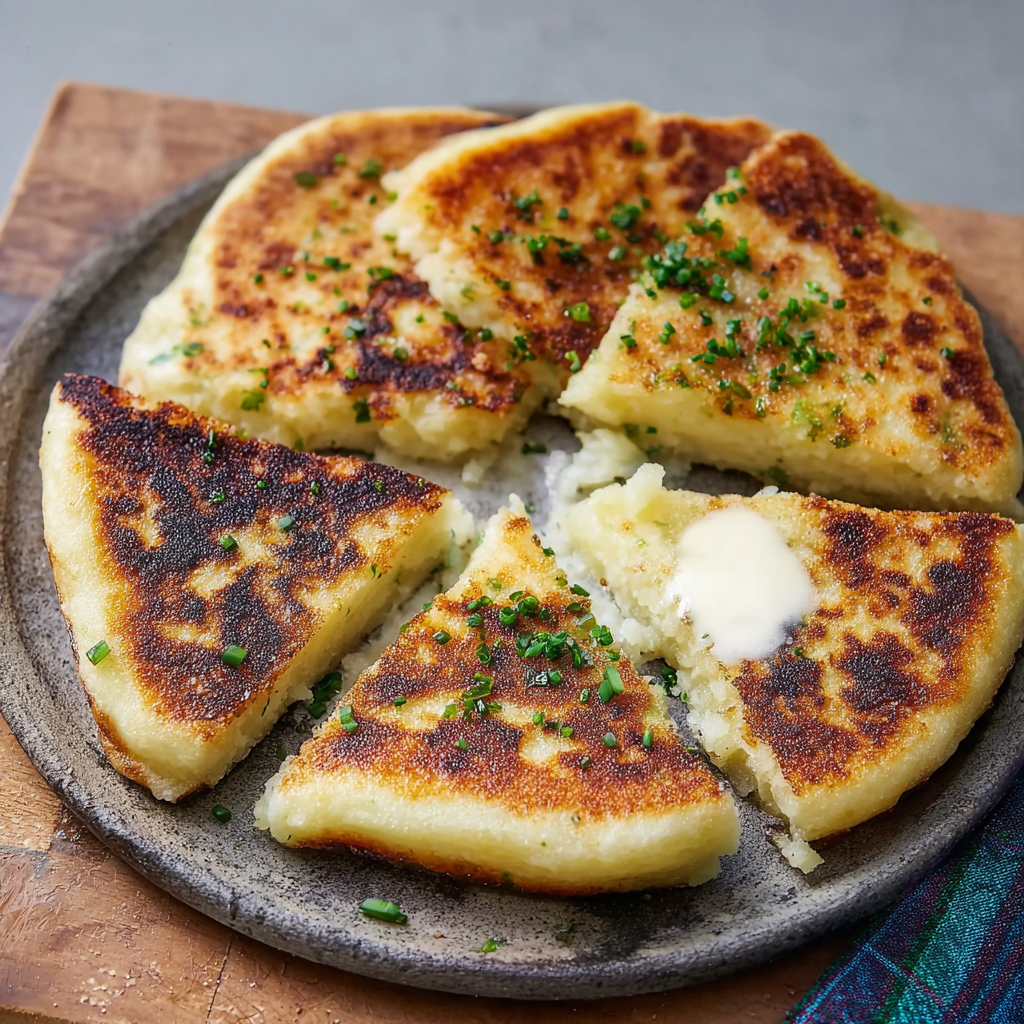
Potato farls hold a special place in Irish cuisine, particularly in Northern Ireland where they are a key component of the famous Ulster Fry. The word “farl” comes from the Gaelic term “fardel,” meaning quarter, which refers to the traditional shaping method—rolling the dough into a circle and cutting it into four wedges before cooking.
Dating back centuries, farls were originally cooked on open-hearth griddles in rural Irish homes. This simple method created a flatbread that was easy to prepare, filling, and perfect for feeding families using minimal ingredients. The result is a potato bread with a creamy interior and a lightly crisp, golden crust.
Cultural Significance of Irish Potato Farls
Potato farls are more than just a breakfast item—they represent resilience, frugality, and home cooking at its best. During times when potatoes were a dietary cornerstone in Ireland, making use of every leftover scrap was essential. Farls emerged as a clever and comforting solution, transforming yesterday’s mashed potatoes into a warm, nourishing meal.
Today, they remain a beloved culinary heirloom, passed down through generations. Whether cooked by grandparents on a cast-iron skillet or served at family gatherings and holiday breakfasts, potato farls bring a sense of nostalgia and connection to the table.
Modern Versatility and Everyday Appeal
Despite their old-world origins, Irish potato farls fit effortlessly into modern kitchens. They require no yeast, no rising time, and no special equipment—just mashed potatoes, flour, butter, and salt. From start to finish, they can be ready in under 30 minutes.
Farls are endlessly adaptable:
- Serve them with fried or poached eggs for breakfast
- Top them with smoked salmon and crème fraîche for brunch
- Pair them with sausage, beans, or grilled tomatoes for a hearty meal
- Enjoy them with butter and jam as a simple snack
They can also be made ahead, frozen, and reheated, making them perfect for meal prep or busy mornings.
Texture and Flavor Profile
One of the reasons potato farls have stood the test of time is their irresistible texture. When cooked properly, the inside stays soft and creamy thanks to the mashed potatoes, while the outside develops a lightly crisp, golden crust from the hot griddle.
Their flavor is mild, buttery, and comforting—subtle enough to complement both savory and sweet toppings. Fresh off the pan with a pat of melting butter, a potato farl is proof that simple food can be deeply satisfying.
Nutritional Considerations and Adaptations
While traditional potato farls are hearty rather than “light,” they can easily be adapted to suit different dietary needs. Using mashed potatoes without added cream or excess butter keeps them lighter, and gluten-free flours such as oat or rice flour can be substituted if needed (though texture may vary).
You can also enhance their nutritional value by mixing in:
- Fresh herbs like chives or parsley
- Grated vegetables such as carrots or zucchini
- A small amount of cheese for added protein and flavor
Regional Variations and Similar Dishes
Potato farls are especially popular in Northern Ireland, where they’re widely available and commonly served as part of an Ulster Fry. In Scotland, similar griddle breads are known as tattie scones, while in other cultures, potato-based flatbreads appear in different forms—such as Norwegian lefse, Indian aloo paratha, or Irish boxty.
Each variation reflects the same principle: transforming humble ingredients into something comforting and nourishing.
Homemade vs. Store-Bought
While store-bought potato farls are available in some specialty shops, homemade versions are far superior. Freshly made farls offer better flavor, texture, and customization—and they’re an excellent way to reduce food waste by repurposing leftover mashed potatoes.
The hands-on process of mixing, shaping, and pan-frying also makes them a wonderful recipe to prepare with family, especially children. It’s simple, tactile, and deeply rewarding.
Serving Ideas and Pairings
Potato farls are incredibly flexible and can be enjoyed at any time of day:
- Breakfast: Eggs, bacon, sausage, grilled tomatoes
- Lunch: Open-faced sandwiches with avocado, cheese, or smoked fish
- Dinner: Served alongside soups, stews, or roasted meats
For creative twists, try topping farls with hummus and roasted vegetables, huevos rancheros, or even kimchi and a fried egg. Pair them with strong Irish tea, coffee, or—if the occasion calls for it—a pint of stout.
Why Irish Potato Farls Endure
What makes potato farls truly special isn’t just their flavor—it’s their story. They represent generations of home cooks turning leftovers into comfort, nourishment, and tradition. In a world of processed convenience foods, farls remind us that some of the best meals come from simple ingredients and time-honored methods.
They require no fancy tools, no complex techniques—just a warm pan and a little care.
Conclusion
Irish Potato Farls are far more than a breakfast side—they’re a symbol of heritage, simplicity, and good home cooking. With their soft interior, crisp exterior, and endless serving possibilities, they deserve a place in any kitchen.