Syria’s delisting as a state sponsor of terrorism was a long time coming.
The country had, after all, been on the U.S. State Department list of proscribed nations since it was created in 1979 – the only nation originally listed still on it.
That was until Aug. 24, 2026, when U.S. Secretary of State Marco Rubio formally rescinded Syria’s designation as a state sponsor of terrorism.
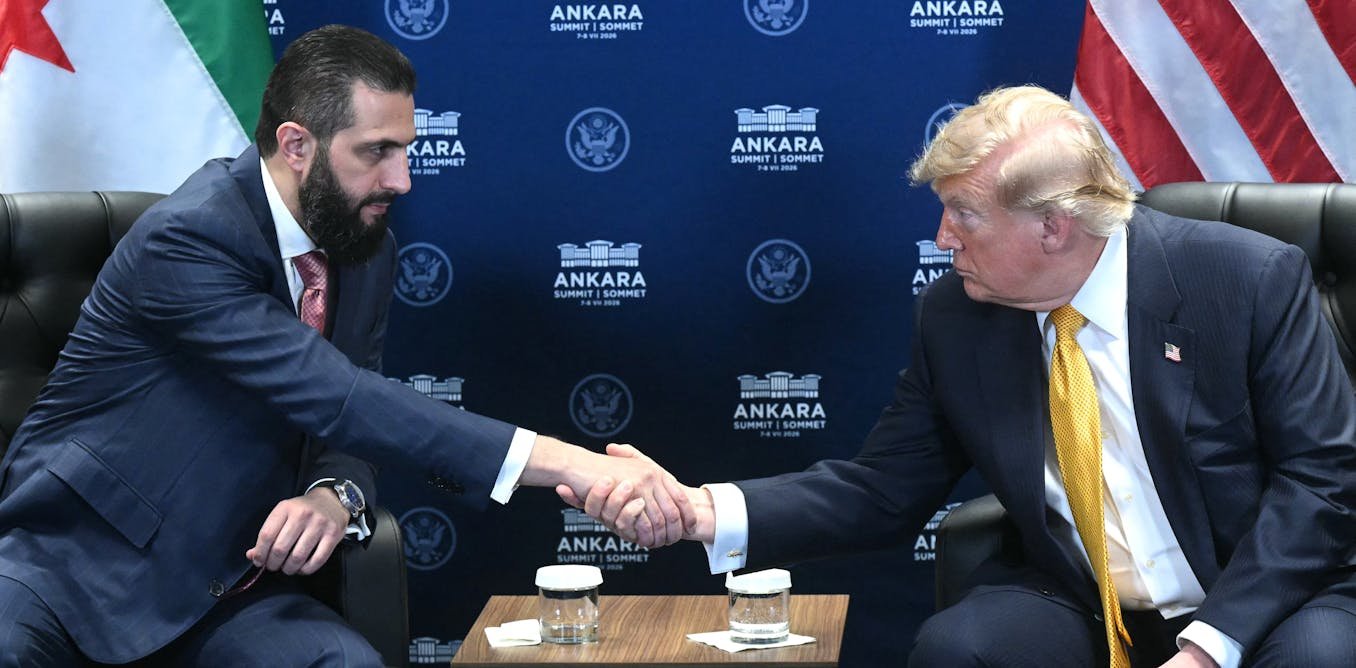
The shift removes barriers to American investment in Syria. But for the U.S. administration, it is also a bet on an unlikely figure.
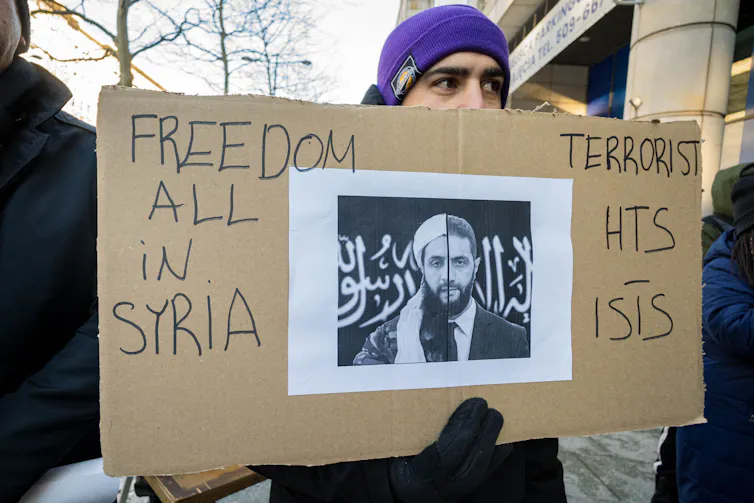
Syrian President Ahmed al-Sharaa was a designated terrorist until November 2025 – it was my office within the State Department that designated him in May 2013 under the name Muhammad al-Jawlani.
In delisting Syria, the U.S. administration is wagering that the former Islamist militant has changed and can work with the U.S. in areas of foreign policy, economics and even possibly defense.
The rise and fall of a designation
When the State Department created the state sponsor of terrorism list in December 1979 under the Export Administration Act, Syria joined fellow Middle Eastern countries Libya, Iraq and South Yemen on it.
By then, longtime Syrian leader Hafez al-Assad had turned Damascus into a headquarters for the Palestinian groups that opposed any negotiated settlement with Israel. The Popular Front for the Liberation of Palestine General Command, the Abu Nidal Organization and Palestinian Islamic Jihad all operated from Syrian soil, and Hamas kept its external leadership in Damascus until 2012.
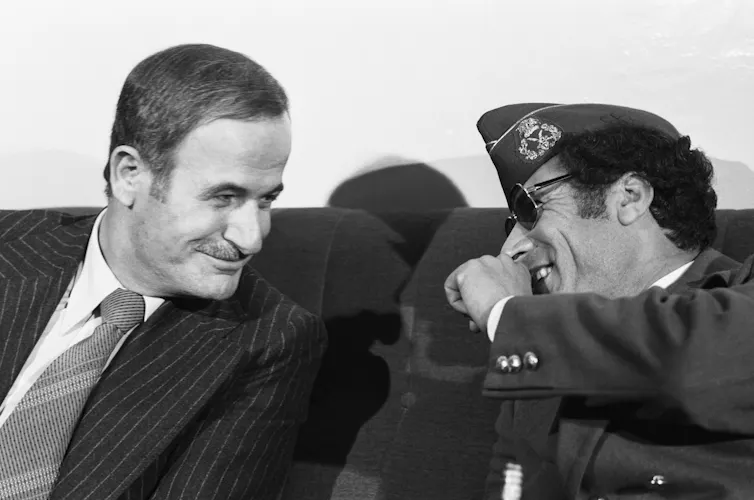
Syria was also the land bridge for Iranian weapons bound for Hezbollah in Lebanon. When I ran the State Department’s Office of Counterterrorism Finance and Designations from 2008 to 2018, Syria appeared in every annual Country Reports on Terrorism, and the entry rarely changed.
The Syrian civil war that began during that period eventually saw the demise of the Assad regime – Hafez’s son Bashar had continued his father’s hard-line legacy after coming to power in 2000. But it also saw the rise of al-Sharaa as head of the Nusra Front, al-Qaida’s Syrian branch. Islamic State group founder Abu Bakr al-Baghdadi tasked al-Sharaa with building a beachhead in Syria for the terrorism network.
But when al-Baghdadi announced in April 2013 that the Nusra Front would be folded into the Islamic State group, al-Sharaa refused and pledged allegiance to al-Qaida’s Ayman al-Zawahiri instead. He then broke with al-Qaida in 2016.
Ten years on, al-Sharaa was received at the White House as a head of state, and the State Department removed him from the terrorist list.
A new course rife with risk
The U.S. bet extends beyond one man. Syria’s security services were built from Hay’at Tahrir al-Sham, the successor group to the Nusra Front that al-Sharaa led to power in Syria. Hay’at Tahrir al-Sham was delisted by Rubio on the same day as Syria’s rescission.
Likewise, Syrian Interior Minister Anas Khattab, who was a founding member of the Nusra Front, was delisted as a global terrorist on the same day as al-Sharaa.
The International Crisis Group estimates that some 5,000 foreign fighters remain under arms inside state forces. And the Soufan Center warned in January that hard-liners within those services could break ranks and join the Islamic State group or other jihadist organizations. The Combating Terrorism Center at West Point reports that veteran foreign jihadists now openly call al-Sharaa a sellout.
In short, al-Qaida’s alumni are not adjacent to the Syrian state – they are inside it. The Trump administration is betting that working with that grouping is worth the risk. Yet critics fear the consequences for the U.S. of allying with a Syria with such a high prevalence of former militants.
Another important implication is that once a country is removed from the State Department list, getting it back on is bureaucratically cumbersome.
It requires the secretary of state finding that a government has repeatedly provided support for acts of international terrorism. “Repeatedly” is the operative word. In my experience a designation needs a documented pattern, an intelligence record that survives interagency review, and a decision at the top of the government. Even on the quickest timelines, like for Cuba in 2021, it is a cumbersome process. And until that designation were to go back into effect, sanctions relief would keep flowing.
The strategic case for delisting
Supporters of delisting, however, have a reasonable geostrategic argument to make. The Assad family tied Syria to Moscow for half a century – bases at Tartus and Khmeimim gave the Kremlin its only military footprint on the Mediterranean.
A Syrian government that is friendly with the West and accepts American security assistance has less reason to lean on Russia. And every step Damascus takes toward Washington is a step away from Moscow.
Yet, the Trump administration cashed in Washington’s best chip with Syria’s removal from the state sponsor of terrorism list. Russia, for the time being, still has boots on the ground in Syria, and al-Sharaa visited Vladimir Putin in October 2025.
If the Trump administration had waited until the end of 2026 to remove Syria from the state sponsor of terrorism list, it could have ensured that Russia vacated the military bases in Syria first.
But the U.S. president is keen to rush Syria into becoming an ally to Washington, not least because it would further isolate Iran, denying Tehran the influence it had under the Assad regime.
The remaining calculi
The Trump adminsistration’s policy shift could also have major domestic repercussions. Trump has been photographed with al-Sharaa in Riyadh and in the Oval Office. Those images are an asset while Syria adheres to Washington’s wishes. But they are a liability the moment it does not.
And the record already holds warnings. Government-aligned forces killed Alawite civilians on the Syrian coast in March 2025 and Druze civilians in Suwayda in July 2025. These were abuses of state power under al-Sharaa’s authority.
For Syria, the calculus is mostly positive. The State Department’s prior designation carried a ban on defense exports, controls on dual-use goods, limits on foreign assistance, and financial restrictions that made international banks treat Syria as untouchable.
Comprehensive sanctions ended in June 2025; the designation was the last major legal barrier to American investment.
The delisting also opens the door to a counterterrorism partnership. Syria joined the coalition against the Islamic State group in November 2025 and has run operations against the terrorist group, al-Qaida and Hezbollah networks.
Al-Sharaa’s past with the Islamic State group is the reason he wants it destroyed; the group spent years trying to kill him after the 2013 split. His hatred of the Islamic State group appears genuine, and American cooperation with Damascus against the terrorist network will benefit the Syrians who suffered most under its rule.
One further consequence deserves consideration. Syria is the first state to leave the list after a once-designated terrorist replaced a designated regime. Other individuals classified as terrorists by the U.S. might well notice that the road from the list to the Oval Office can be short – and rewarding.