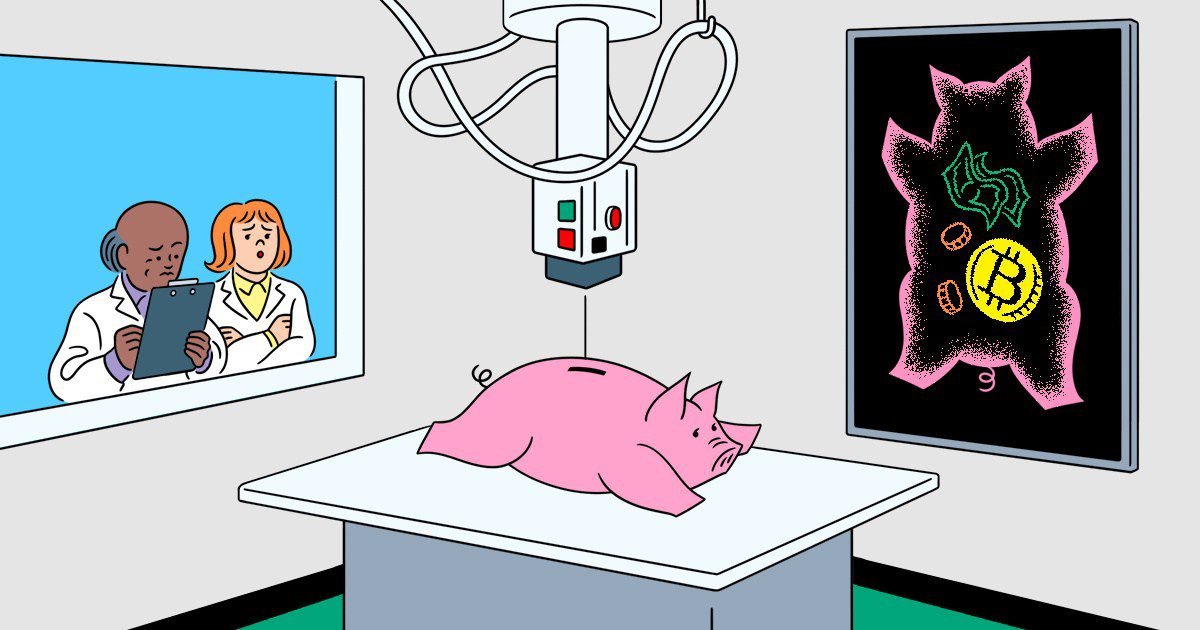
The rules governing your retirement plan may be changing.
As we reported in July, President Donald Trump wants to encourage 401(k) plans to invest more in private equity, real estate and cryptocurrency, which can be complex and risky. To pave the way, the Department of Labor has proposed rules that would make it harder for employees to hold companies liable for how they oversee retirement plans.
Employers are required to serve the best interests of their employees when choosing investment options. Under the proposed changes, a company that follows a certain process would get the benefit of the doubt in court, making it harder for workers to sue over the management of their 401(k).
A spokesperson for the Department of Labor did not respond to requests for comment. In an announcement from March, the department said the proposed rule change will “democratize access to alternative investments in 401(k) plans” and “lower litigation risks” for employers who are acting with good judgment.
The new rules, expected to be finalized this year, also raise broader questions: What investment options are already offered in people’s retirement accounts, and what are people paying in fees?
We’ve asked the public to send us their annual 401(k) disclosures so we can understand the range of funds and fees people have in their accounts. (Want to send us yours? Here’s how.) So far, we’ve heard from more than 200 people, many of whom also asked us questions about their plans. To find the answers, we spoke with eight economists, lawyers and retirement benefit experts.
If you have questions about your specific retirement plan, experts recommend talking to a fee-only financial planner who will serve as a fiduciary (which means they must provide advice in your best financial interest, not theirs). You can check a financial adviser’s qualifications by searching here.
Table of Contents
How could the proposed changes affect my 401(k)?
How do I know if my 401(k) is in good shape?
How can I tell if I’m paying high fees?
How can I compare my 401(k) to plans offered by similar companies?
What if I don’t like my retirement plan?
How could the proposed changes affect my 401(k)?
Under the Labor Department’s proposed rule change, employers who show that they’ve considered a set of six factors when choosing investments and document their reasoning when building a plan should have greater protection from a potential lawsuit.
That liability tends to sit with your employer because they have final say over your plan’s investment options, even though companies usually hire firms like Fidelity or Vanguard to run the plan, and those firms often suggest which funds to include.
A company could document its reasoning for choosing to offer certain investment options and still act imprudently, said Tim Hauser, who was the deputy assistant secretary at the Labor Department’s Employee Benefits Security Administration until last December. In his three-plus decades there, he encountered cases in which companies “generated a lot of paper” to explain their reasoning but, ultimately, didn’t make wise financial decisions based on the information available to them.
Monique Morrissey, a senior economist for the Economic Policy Institute, wrote in a June letter that the proposal would “gut protections for retirement savers” and prioritize maximizing investment returns over balancing risk. She cited a 2025 AARP survey finding most Americans don’t think it’s important to be able to access private market investments or cryptocurrency in their retirement accounts.
But Bonnie Treichel, the founder of Endeavor Retirement, a consulting firm for retirement advisers, said the proposed rules are a framework not a mandate. Employers could offer these investments, but that doesn’t mean they’ll rush to add riskier investment options.
To find out if the rule change may affect your 401(k), ask your plan administrator, often someone in your human resources department, whether the company plans to offer new investment options. (The plan administrator is often listed on the same document that lists your fees; find out how to access that information in the form on this post.)
How do I know if my 401(k) is in good shape?
For many people, a 401(k) only needs close attention when starting a job, when leaving a job and when closing in on retirement. The rest of the time, it mostly runs itself. Still, experts we interviewed said it’s worth checking in on the plan once a year as fees and fund options can change.
A healthy account comes down to three basics: how much you save, how much risk you take and how much you pay in fees, experts say. Only the first is entirely up to you. The other two you manage from a menu of options your employer builds.
The more you save — and the earlier you start — the more time your money has to grow. Companies often offer to match part of your contribution, so if you can swing it, experts advise putting in at least enough to collect the full match. Otherwise you’re leaving money on the table.
You also control what your savings are invested in, based on the menu of investment options your plan offers.
Each fund you invest in carries a different level of risk. Stocks are more volatile than bonds, for example, and a balanced investment portfolio weighs the level of risk depending on how far you are from retirement. Younger investors decades away from tapping into their retirement fund may invest more in stocks, while older workers may prefer to have more in bonds.
The “easy button” is to choose a target-date fund that’ll automatically reallocate your investments to reduce your risk by shifting from stocks to bonds, or other less volatile investments, as you approach retirement.
“For most people, this is all the money they have,” said Jean-Pierre Aubry, an associate director at the Boston College Center for Retirement Research. “It’s not money you want to play around with.”
How can I tell if I’m paying high fees?
Compounded over time, even small differences in fees have a huge impact on your retirement savings. By the Labor Department’s own math, 1% in additional fees can shrink a nest egg at retirement by 28%.
Federal law requires employers to make sure employees are paying reasonable fees. Since 2012, the Labor Department also requires companies to send a disclosure form to employees listing all funds and fees. (That’s the annual disclosure we’re asking people to send to us. If you want to send us yours, find instructions on the form in this post.) Still, the Government Accountability Office found nearly 4 in 10 people don’t fully understand the fees they’re paying on their retirement plan.
The number you should watch for is each fund’s expense ratio: the fees firms charge employees for owning or investing in a fund, taken as a percentage of the money you have in it. An expense ratio of 0.5% means you pay a $5 fee per year for every $1,000 you’ve invested. To find the fees you’re paying, look for your annual disclosure on your plan’s website or ask your HR department. (See instructions for your specific plan here.)
If most funds on your 401(k) menu have an expense ratio over 1%, that should be a “red flag” that it’s a high-cost plan, said Christine Benz, director of personal finance and retirement planning at Morningstar.
Even 0.75% or 0.5% is “actually pretty high by 401(k) standards,” said Quinn Curtis, a law professor at University of Virginia who has studied the litigation around 401(k) fees.
The cheapest options are typically index funds, which mirror a slice of the market like the S&P 500 instead of paying a manager to pick stocks. Workers are gravitating to these passive, low-cost investments and the firms are competing to win over investors, which is driving down fees even more. Most index fund fees are under or around 0.1%, Benz said. If your index fund is charging several times that, experts say it’s worth asking why or finding another option.
When you check your 401(k) plan once a year, make sure you’re still in the funds with the lowest available fees, Aubry said.
And be wary of offers for personalized portfolios at the click of a button, Treichel said. These services often charge additional fees.
“Nothing in life is free,” she said. “So, if it looks free, look further.”
How can I compare my 401(k) to plans offered by similar companies?
There’s no easy way. No free database exists where you can, say, type in your employer name and see how its 401(k) investment options compare to what other companies offer. But there are a few general trends to be aware of.
The size of your company matters. Smaller companies tend to get offered retirement plans with higher fees, according to research. Larger companies have more employee money and therefore leverage, and tend to negotiate lower fees. So, if you work for a smaller company, experts said you may want to be especially vigilant about your plan’s investment options.
Other signs of a good plan: your employer pays some or all of the administrative costs and your employer offers a matching contribution, experts said.
And more choices don’t necessarily mean better ones. Most people don’t have the time or the expertise to understand the investment funds available to them, Curtis said. A well-designed retirement plan gives workers a curated set of low-cost investment options that’ll “meet the needs of most investors.”
What if I don’t like my retirement plan?
Start with your plan administrator, often someone in your company’s HR department, experts say. Tell them that you aren’t happy with the investment offerings and the associated fees, and lobby for additional options.
If you believe the people overseeing your 401(k) plan have been careless, disloyal or negligent, resulting in a smaller nest egg for your retirement, you can contact the Department of Labor, Hauser said. An employee benefit adviser should follow up with you to learn more and may refer your case to the enforcement division for further investigation.
Under federal law, you can also file a lawsuit against your employer.
But Hauser said it may be difficult for the average person to police the options in their 401(k) plan. Much of the responsibility falls on employees, whether or not they are well-versed in investing, he said. That can mean people invest in their retirement fund for decades before they notice the high fees that cut into their potential retirement savings.
“People consistently underestimate the impact of even small differences in fees,” Hauser said.







 has become the financial tool many Americans rely on for their retirement. We asked experts for their advice on how to take stock of your retirement plan.)