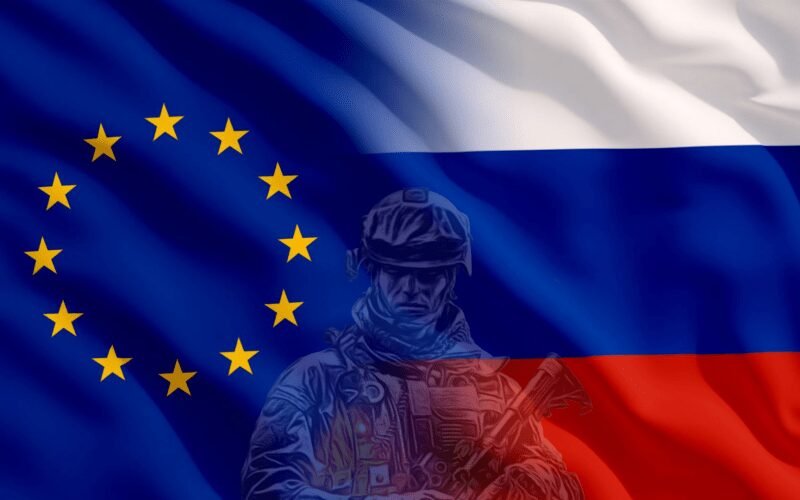
European Union ambassadors are due to meet on Wednesday in an effort to break a deadlock over a 21st package of sanctions against Russia, while the Venice Biennale has launched a legal challenge against the EU’s decision to withdraw €2 million in funding over the return of Russia to its 2026 edition.
The latest sanctions package, aimed at increasing pressure on Moscow over its invasion of Ukraine, focuses heavily on Russia’s banking sector. It would add about 215 individuals and entities to the sanctions list, including 94 financial institutions. Nearly 90 of those are banks, bringing the total number of sanctioned Russian lenders to more than 100, or over half of the country’s internationally connected banks.
The measures are intended to tighten restrictions on Russia’s financial system after many companies continued conducting international business through smaller regional banks and cryptocurrency networks despite earlier sanctions that disconnected major Russian banks from the SWIFT international payments system.
EU diplomats said Greece remains the main obstacle to adopting the package. Athens is seeking changes to planned restrictions on Russian liquefied natural gas (LNG), arguing that a proposed transfer ban would simply shift business to competitors outside Europe without reducing Russian revenues. Greece is Europe’s largest LNG carrier operator and one of the world’s leading shipping players.
The package also proposes maintaining the oil price cap on Russian crude at $44.10 per barrel for another six months. EU envoys agreed last week to temporarily freeze the cap until July 23 while negotiations continue. A scheduled review could otherwise have raised the cap following the Iran war, potentially increasing Russia’s oil earnings.
Diplomats had expected negotiations over future sanctions to become easier following the departure of Hungary’s Viktor Orban, who had repeatedly delayed measures supporting Ukraine and targeting Russia. Instead, new divisions have emerged as the European Commission seeks to close remaining loopholes in sanctions and further reduce Moscow’s energy revenues.
Separately, the Venice Biennale said it would contest the European Commission’s decision to revoke a €2 million grant after organisers confirmed Russia would return to the prestigious cultural event in 2026 for the first time since the invasion of Ukraine in 2022.
The funding, administered through the European Education and Culture Executive Agency (EACEA), was withdrawn following legal advice and a recommendation from Brussels.
Commission spokesperson Thomas Regnier said cultural events financed with EU taxpayers’ money should uphold democratic values, dialogue, diversity and freedom of expression, which he said are not respected in present-day Russia.
The Biennale rejected the Commission’s reasoning, arguing that the grant supports projects run by its cinema department and is unrelated to Russia’s participation in the exhibition. Organisers said they would challenge the decision before the relevant authorities.
Biennale President Pietrangelo Buttafuoco defended allowing Russia’s return, describing the festival as “a space of coexistence for the whole planet” without censorship.
Organisers added that the loss of EU funding would not significantly affect the Biennale’s finances or its planned activities.
Although Russia returned to this year’s exhibition, public access to the Russian pavilion has been limited. Visitors were allowed inside only during four days of press previews, while for the remainder of the six-month event the building has remained closed, with audiences viewing video projections on its exterior as live music is broadcast from inside.