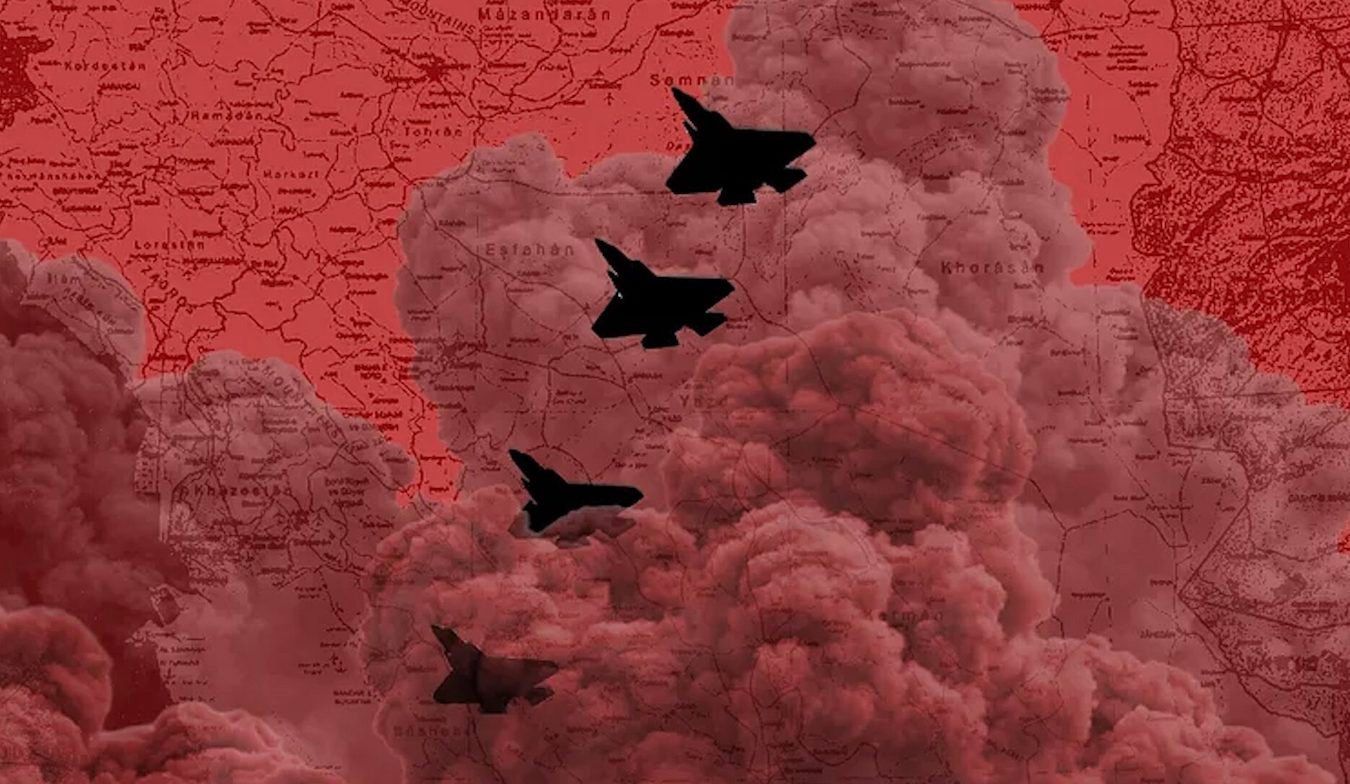

Every few months, someone — a general, a think tank, a cable news panel — declares that the world is edging toward a third world war.
It happened after Russia invaded Ukraine in 2022. It happens again whenever Chinese warships circle Taiwan, whenever Israel and Iran trade strikes, whenever Washington escalates in Venezuela. The phrase “World War III” gets deployed less as analysis than as a mood — a way of signaling that things feel unmoored.
And things do feel unmoored. But feeling unmoored and marching toward a global conflagration are not the same thing, and conflating them is itself a kind of policy error because it tends to justify exactly the interventionist reflexes that make regional conflicts worse rather than contained.
What’s actually happening in 2026 is not the slow ignition of a single global war. It’s the slow unwinding of the postwar American-led order, playing out simultaneously in half a dozen theaters that don’t yet cohere into one fight. That’s a different, and in some ways more dangerous, problem — because it’s harder to name, harder to deter, and harder to bring to a close.
Start with Ukraine. The war is now well into its fifth year, and the frontier between “proxy war” and “direct NATO-Russia confrontation” has gotten blurrier — deeper strikes, longer-range weapons, more explicit nuclear signaling out of Moscow. That is genuinely the most dangerous single vector for the kind of miscalculation that turns a regional war into something larger.
But “dangerous vector” is not the same as “inevitable trajectory,” and it’s worth noticing that neither Washington nor Moscow has behaved, over four-plus years, like a government actually seeking direct war with the other.
Both sides keep finding the edge of escalation and stopping short. That pattern is not a guarantee, but it is data, and data is what a lot of WWIII talk conveniently ignores.
Then there’s Taiwan — perpetually the “most dangerous flashpoint,” and yet, going into 2026, several serious risk assessments actually moved Taiwan down their list rather than up, judging a near-term crisis less likely in the wake of renewed high-level contact between Washington and Beijing.
That should complicate any narrative of steadily converging global war. Threats that get talked about constantly are not automatically the ones that materialize.
The Middle East remains combustible in the way it has been combustible for decades — Gaza, Iran, a widening rift between Washington’s unconditional backing of Israel and a growing list of Western governments recognizing Palestinian statehood. That rift matters less as a war-trigger and more as a symptom: the American security consensus that used to paper over regional frictions is thinning out even among close allies.
And then there’s the theater that gets the least “WWIII” framing but arguably says the most — Venezuela, where a US-driven regime-change campaign just toppled a government outright.
This is the pattern realists have been warning about for a generation: not a bipolar showdown between superpowers, but a great power increasingly willing to act unilaterally, unconstrained by the institutions and alliance discipline that used to slow such things down. Add Greenland, add Sudan, add the Ethiopia-Eritrea border, add Thailand-Cambodia, and you get less a single war than a world in which the referee has left the field.
That’s the more honest diagnosis: not a countdown to global war, but the erosion of the guardrails — alliance commitments, deterrence signaling, diplomatic bandwidth — that have historically kept regional conflicts regional.
A genuine world war requires great powers choosing direct confrontation with each other. What we have instead is several great and middle powers each pursuing narrower, more transactional aims, occasionally colliding, usually not on purpose.
The danger in over-diagnosing “World War III” isn’t just inaccuracy. It’s that the framing tends to produce the very policies — maximalist commitments, reflexive military posturing, treating every regional dispute as an existential test of resolve — that make the smaller fires harder to put out.
The more useful question isn’t “are we close to world war,” but “which of these unraveling threads is most likely to draw in a great power that doesn’t actually want to be there.” Ukraine still tops that list. Everything else is, for now, a symptom of disorder rather than a step toward global war.
This article was originally published on Leon Hadar’s Global Zeitgeist and is republished with kind permission. Become a subscriber here.