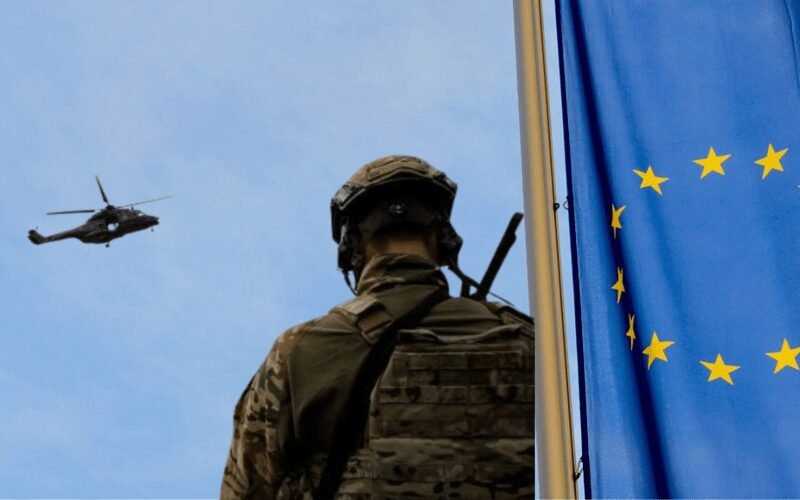
European Parliament and Council negotiators have reached a provisional agreement on a package of measures designed to strengthen the European Union’s defence readiness by accelerating investment, simplifying procurement procedures and reducing regulatory barriers for the defence industry.
The legislative package, part of the EU’s “Omnibus V” simplification measures, seeks to support up to €800 billion in defence investment over the next four years under the ReArm Europe Plan/Readiness 2030 initiative.
The agreement includes measures to speed up approval procedures for defence-related projects such as the construction of new production facilities and the expansion of existing sites. Under the deal, national authorities will have a default period of 42 working days to decide on permit applications once they are deemed complete.
In exceptional cases involving complex projects or concerns related to environmental protection or worker safety, authorities may extend the deadline by up to 60 additional working days. The total duration of the permit-granting process would be capped at 102 working days.
If authorities fail to issue a decision within the applicable deadline, the principle of tacit approval would apply. Member states would also be required to establish single points of contact for defence project developers, introduce digital tracking systems and report annually to the European Commission on permitting activity.
The agreement also seeks to facilitate the movement of defence-related products across the EU by introducing a new general transfer licence. Member states will be required to publish these licences, providing greater certainty for companies operating across borders.
On defence procurement, negotiators agreed to raise the threshold for applying EU procurement rules, extend the maximum duration of framework agreements from seven to ten years and provide greater flexibility for member states to carry out joint procurement projects.
Parliament and Council also committed to examining future measures that could give the European Commission a greater role in facilitating intra-EU transfers of defence products and considering EU preference criteria in procurement.
The package includes changes to the European Defence Fund (EDF) aimed at simplifying its management and implementation. The revised rules prioritise projects demonstrating high standards of excellence, quality and efficiency while expanding support for small and medium-sized enterprises.
Negotiators also agreed to extend enhanced EDF funding provisions to projects developed under the Structure for European Armament Programme (SEAP), which forms part of the European Defence Industry Programme.
In a move intended to deepen cooperation with Kyiv, the agreement allows costs linked to testing activities carried out in Ukraine, an EU candidate country, to qualify for EDF funding.
The deal additionally confirms that member states may apply certain exemptions from EU environmental and chemical regulations when justified on defence grounds.
The provisional agreements must now receive formal approval from both the European Parliament and the Council before becoming law.
The European Commission first presented the Defence Readiness Omnibus package in June 2025 as part of broader efforts to strengthen Europe’s defence technological and industrial base, increase cooperation among member states and improve the bloc’s ability to respond to growing security challenges.