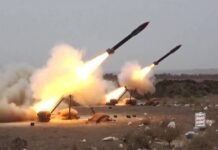
The Strait of Hormuz is back at the center of global attention because it has become one of the main pressure points in the war that began on February 28, when the United States and Israel launched strikes on Iran, saying they were responding to what they described as an escalating threat from Tehran’s nuclear program and regional military posture. Since then, the conflict has spread beyond direct military exchanges to include threats to some of the world’s most important shipping routes. On April 12, President Donald Trump announced that the US Navy would begin blockading ships tied to Iranian maritime trade after talks in Islamabad failed to produce a broader settlement.
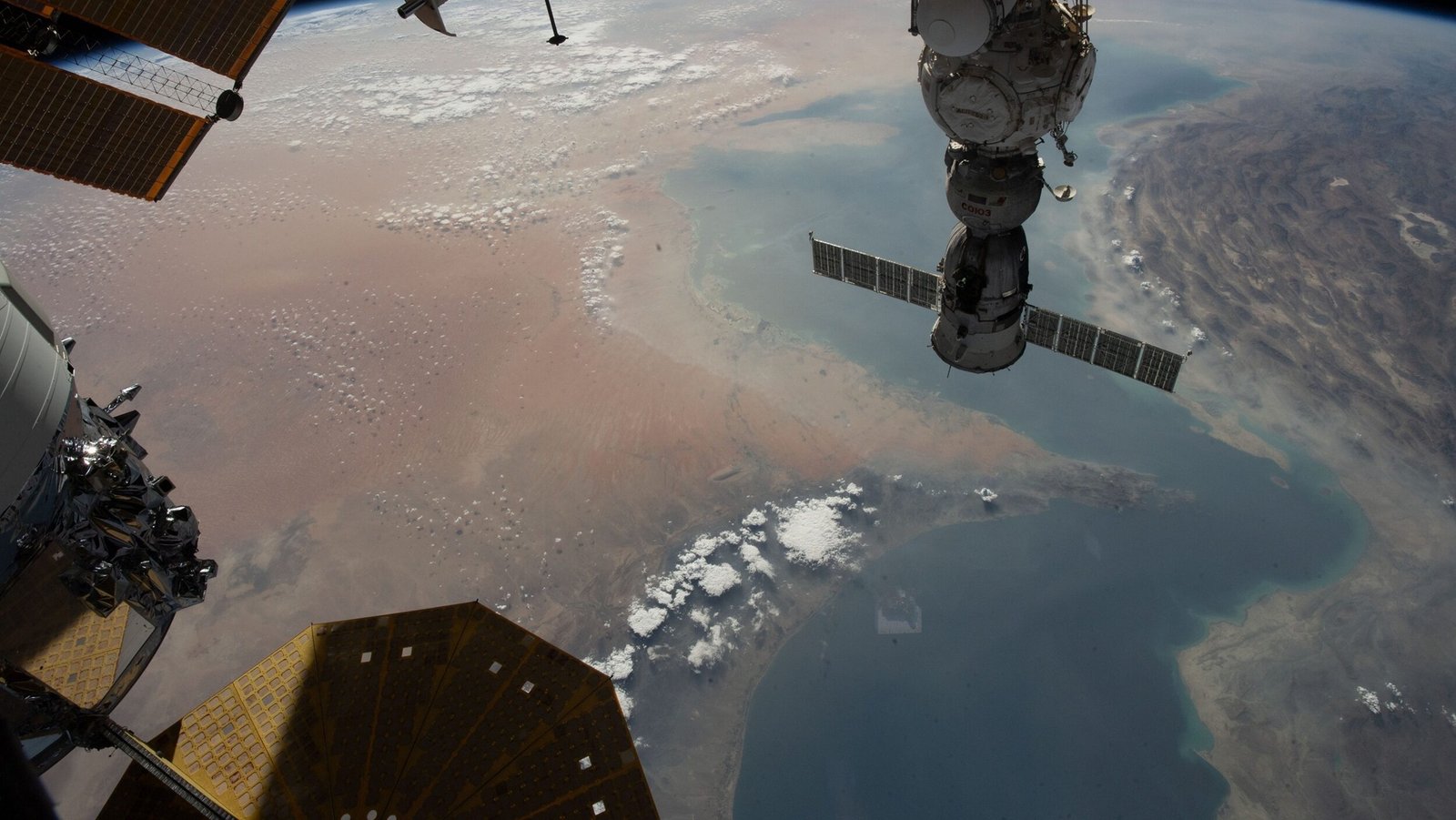
Hormuz matters because it is one of the world’s most important maritime choke points. It is the narrow outlet from the Persian Gulf to the Gulf of Oman and the Arabian Sea, and in normal times it carries roughly one-fifth of the world’s oil and liquefied natural gas flows. The shipping lanes lie mostly in Omani territorial waters and partly in Iranian waters, but the passage itself is governed by international maritime law. That geography makes the strait difficult to seal completely for a long period, but relatively easy to disrupt in ways that can quickly affect energy markets, insurance costs, and global trade.
The leverage of closing the Strait of Hormuz should be used
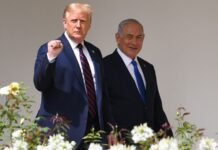
Statements from Tehran and Washington matter because both governments have treated Hormuz as part of the broader confrontation. Iran’s new supreme leader, Ayatollah Mojtaba Khamenei, said in March that “the leverage of closing the Strait of Hormuz should be used,” presenting the waterway as a strategic pressure point against the United States and Israel. President Trump, after the failed Pakistan talks, said the US Navy would begin blockading the strait “effective immediately,” while the White House has separately said any Iranian effort to stop maritime traffic would be “completely unacceptable.”
… completely unacceptable …
As of April 15, the clearest way to describe Hormuz is that it is not formally closed in the classic legal sense, but it is heavily disrupted in practice. UK Maritime Trade Operations has said no official closure has been communicated through recognized maritime safety channels. At the same time, Reuters reported on April 15 that traffic remains far below normal, that the US blockade has already turned back multiple vessels, and that at least one sanctioned Chinese-linked tanker reversed course after trying to navigate the new conditions.
That distinction between a formal closure and a functional disruption is important. A waterway does not need a universally recognized closure notice to become extremely difficult or risky to use. Mines, naval patrols, electronic interference, interdiction risk, war-risk insurance, and general uncertainty can sharply reduce shipping traffic even without a formal legal shutdown. That appears to be the current situation in Hormuz: not a universally recognized closure, but a serious narrowing of safe and commercially viable passage. The precise operational scope of the US blockade and the durability of the disruption could still change quickly as the conflict evolves.
The Red Sea is being discussed for a related reason. It is the other major maritime choke point in the region. If Hormuz is the Gulf’s export outlet, the Bab el Mandeb at the mouth of the Red Sea is the southern gateway to the Suez Canal. There is no full blockade there now, but US maritime authorities still warn that the Houthis pose a live threat to commercial vessels in the Red Sea, Bab el Mandeb, Gulf of Aden, Arabian Sea, and Somali Basin. The Houthis, the Yemen-based armed movement aligned with Iran, have previously targeted shipping as part of broader regional confrontations, including in connection with the Gaza war. A Houthi leader told Reuters in late March that the group was ready to join the war on Iran’s side “if needed,” raising the possibility that traffic through both Hormuz and the Red Sea could come under simultaneous pressure.
That is the most serious escalation risk: pressure on Gulf energy exports through Hormuz combined with renewed disruption to Red Sea shipping. One shock pushes up oil and gas prices. Two shocks at once begin to ripple through freight rates, insurance premiums, delivery schedules, and supply chains. That is why governments, traders, and shipping companies far from the Gulf are watching developments in both waterways so closely.
The historical context helps clarify what chokepoint crises can and cannot achieve. Before the current war, the Strait of Hormuz had never been fully closed, even though Iran had threatened to do so many times. During the 1980s Tanker War, Iran and Iraq attacked merchant shipping on a large scale, hitting hundreds of vessels and killing more than 400 mariners. The United States and several European states responded by escorting ships and working to keep the lanes open. That episode showed that a chokepoint can be badly disrupted without being durably sealed. The crisis eased through outside naval protection and the eventual winding down of the Iran-Iraq War.
A different precedent is the Strait of Tiran in 1967. Egypt’s closure of the strait helped trigger the Six-Day War after international efforts to reverse the move failed. That case showed how control over a strategic waterway can become a direct trigger for a wider regional war. The closure was tactically powerful, but it did not produce a stable negotiated gain. Instead, it helped accelerate a conflict that transformed the regional order and pushed navigation rights into later diplomacy.
The Suez Canal offers another lesson. It was physically closed for years after the 1967 war, causing serious economic and military consequences. Over time, the world adjusted by rerouting shipping around the Cape of Good Hope and reshaping trade patterns. Suez reopened only after diplomacy, disengagement arrangements, and extensive mine-clearing and salvage operations. That example shows that long maritime closures can endure, but they usually end only when the political and military situation changes.
The broader lesson is that chokepoints are effective tools for exerting pressure but poor tools for producing clear and lasting political outcomes. They can unsettle markets, affect civilians far from the battlefield, and draw outside powers deeper into a conflict. Sometimes they influence negotiations. Just as often, they widen the confrontation. As of April 15, Hormuz remains heavily disrupted, the Red Sea remains under credible threat, and both waterways are central to the strategic contest now unfolding.