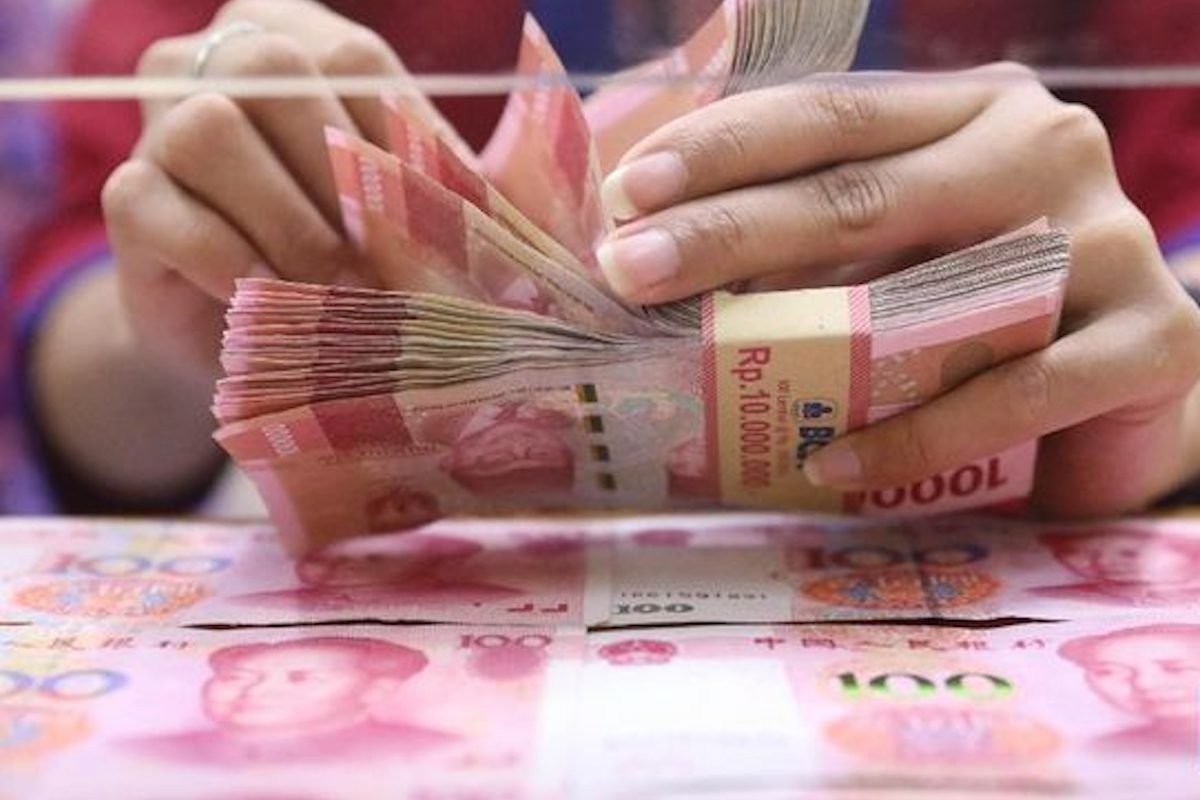
A landmark agreement allowing China to issue sovereign bonds in Indonesia’s domestic market on a reciprocal basis signals a deliberate push for regional financial integration.
The reciprocal sovereign bond issuance agreement between China and Indonesia marks a strategic breakthrough. For the first time, China will be allowed to issue yuan-denominated sovereign bonds directly in Indonesia’s domestic capital market, with Indonesia receiving similar rights in China’s market.
This goes beyond typical swap lines or cross-listings; it represents an institutionalized opening between two of Asia’s largest debt markets.
Historically, investors fleeing geopolitical turmoil have gravitated toward the deep liquidity and perceived stability of US debt. However, the prolonged Middle East conflict has introduced a dual shock: energy price spikes that rekindle inflation in Western economies, and a growing realization that US fiscal trajectories are themselves under strain.
In this context, Chinese government bonds offer a compelling alternative. China’s relatively contained inflation, a current account surplus and a managed exchange rate provide stability that contrasts with the volatility seen in commodity-driven emerging markets.
Moreover, the People’s Bank of China has maintained a more predictable monetary policy than the Federal Reserve, which is caught between rate-cut expectations and sticky inflation.
As global funds — sovereign wealth funds, central banks and institutional investors — reallocate portions of their portfolios into CGBs, Beijing can finance its domestic restructuring, including deleveraging local government debt and supporting strategic sectors, at lower yields.
This influx of safe-haven demand effectively subsidizes China’s transition toward a consumption- and technology-driven economy, reducing its reliance on volatile foreign direct investment.
Energy market volatility has also accelerated interest from Gulf oil exporters who, seeking to diversify their dollar-denominated assets, view CGBs as a hedge against both Middle East instability and potential US sanctions. This creates a positive feedback loop: China gains stable financing while energy-supplying nations gain a geopolitical hedge.
The geoeconomic consequences for China are immediate and multi-layered. First, the agreement creates a direct channel for absorbing Indonesian rupiah liquidity into yuan-denominated assets, deepening offshore yuan markets without requiring full capital account convertibility.
Second, it reduces transaction costs for bilateral trade and investment, as Indonesian institutions can hold Chinese government paper as collateral for rupiah-yuan settlement.
Third, it sets a precedent for other ASEAN nations. If Indonesia — a notably protectionist economy with a history of resource nationalism — accepts Chinese sovereign issuance, it signals to Malaysia, Thailand and Vietnam that financial integration with China is compatible with national economic sovereignty.
For China, the agreement advances the long-term goal of internationalizing the renminbi. Unlike swap lines that merely provide emergency liquidity, a reciprocal bond market creates a durable, two-way asset relationship.
Indonesian pension funds, insurers and banks that buy CGBs become structural holders of yuan assets, creating natural demand for hedging instruments, custody services and eventually a deeper renminbi bond ecosystem across Southeast Asia.
This moves China closer to its ambition of building an alternative Asian financial architecture that operates parallel to — and potentially independent of — the dollar-based system.
The combination of CGBs as a safe haven and the Indonesia agreement carries significant geopolitical weight. At the strategic level, China is steadily eroding the dollar’s “exorbitant privilege.”
When Middle Eastern oil exporters and Southeast Asian central banks shift reserves into CGBs, they reduce their need to hold US Treasuries for liquidity purposes. While the shift is incremental, the trajectory is clear: China is offering a politically risk-diversified asset to a world weary of weaponized finance — following the freezing of Russian assets — and US fiscal brinkmanship.
In the Asia-Pacific, China gains enhanced leverage over regional financial governance. Indonesia’s agreement is not merely technical; it reflects Jakarta’s strategic calculation that deeper integration with China’s financial system offers stability and growth.
For China, this translates into soft power: being able to issue debt on another nation’s home turf signals trust and institutional equivalence. It also complicates any potential US-led financial decoupling.
If ASEAN central banks already hold CGBs as reserves, they face prohibitive costs in joining coalition-style sanctions against China. Reciprocal bond issuance thus acts as a financial insurance policy against geopolitical coercion.
However, the consequences are not uniformly positive for China. Greater safe-haven status invites scrutiny. Global investors will demand transparency about China’s local government debt, shadow banking risks and property sector troubles.
Any default or forced restructuring in the provincial bond market could rapidly reverse CGBs’ safe-haven status, triggering capital flight. Additionally, the Indonesia agreement exposes China to competition: Indonesian sovereign bonds issued in China’s market might offer higher yields, potentially diverting domestic Chinese savings away from local government projects.
For the broader international system, China’s rise as a debt safe haven and its deepening Asian financial integration signal the emergence of a multipolar reserve-asset landscape. Global safety will no longer be synonymous with US Treasuries alone.
The geoeconomic consequence is potentially more resilient global liquidity — investors have alternatives — but also greater fragmentation. Two distinct spheres of safe assets could emerge: a dollar bloc anchored in New York and London, and a renminbi bloc anchored in Shanghai and Hong Kong, with Indonesia acting as a bridge.
China’s global interest lies in managing this transition without provoking a dollar crash or a destabilizing reversal in capital flows. The prudent path involves continued reciprocity: as Indonesia opens its market to Chinese bonds, China must further open its capital account, allowing foreign investors to hedge and exit without friction.
If Beijing succeeds, it will have transformed its debt from a source of domestic concern into a tool of geoeconomic statecraft — one that offers stability to a volatile world while quietly reshaping the financial order in its favor.
The Middle East crisis and the Indonesia agreement are not isolated events; they are accelerants of a long-term shift whose consequences will define the next decade of global finance.
Bob Savic advises on sanctions, supply chains and geopolitical risk and is co-author of the new book “Multipolarity and the Changing Global Order” published by Springer.