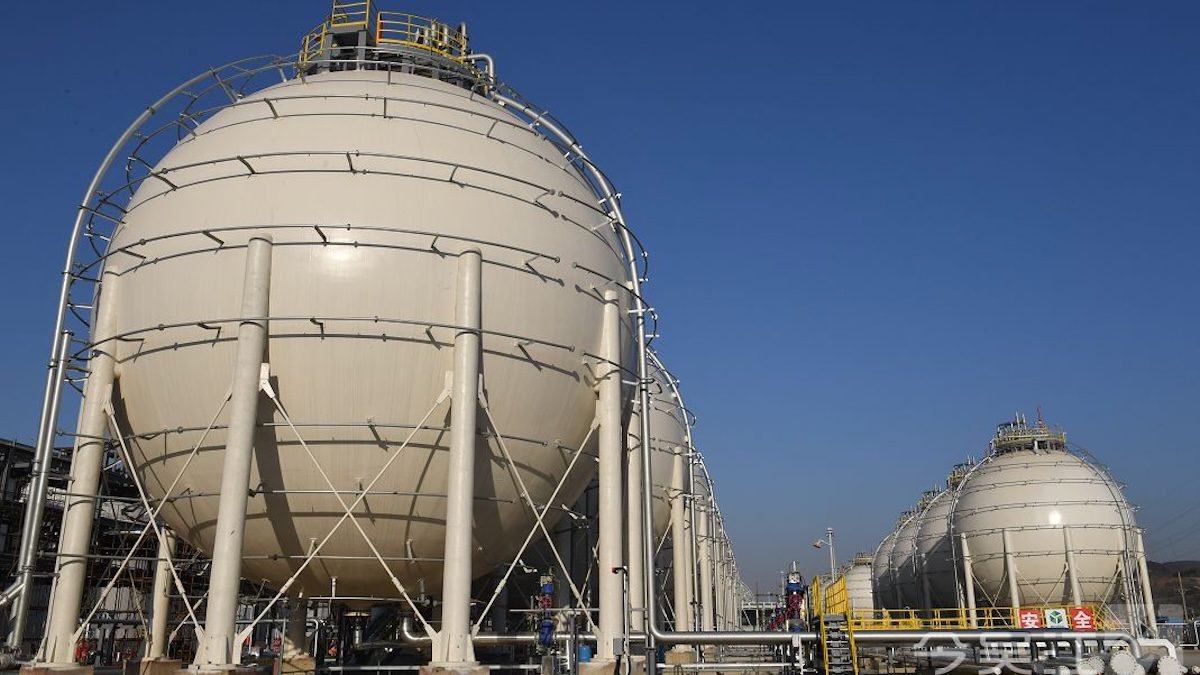
China has invoked a five-year-old legal instrument for the first time to block the enforcement of United States sanctions on five mainland “teapot” oil refiners, including the newly sanctioned Hengli Petrochemical (Dalian) Refinery, which was accused of buying Iranian crude despite US restrictions.
Citing the Rules on Counteracting Unjustified Extraterritorial Application of Foreign Legislation and Other Measures or the “Blocking Rules,” the Chinese Ministry of Commerce said on May 2 that US sanctions placing the five Chinese petrochemical firms on the Specially Designated Nationals (SDN) list, along with asset freezes and transaction bans, “shall not be recognized, enforced or complied with” in China.
It said Chinese companies and banks must not participate in such sanctions, but did not clarify whether the prohibition extends to Hong Kong, where a significant share of China-Iran oil transactions is settled.
The five US-sanctioned Chinese oil refiners and the dates of the US measures are:
- Shandong Shouguang Luqing Petrochemical Co Ltd (March 20, 2025)
- Shandong Shengxing Chemical Co Ltd (April 16, 2025)
- Hebei Xinhai Chemical Group Co Ltd (May 8, 2025)
- Shandong Jincheng Petrochemical Group Co Ltd (October 9, 2025)
- Hengli Petrochemical (Dalian) Refinery Co Ltd (April 24, 2026)
“Since March 2025, OFAC has designated multiple China-based teapot refineries that have collectively processed billions of dollars’ worth of Iranian-origin oil, ultimately benefitting the Iranian regime,” the US Department of the Treasury’s Office of Foreign Assets Control (OFAC) said on April 28.
“Financial institutions should be on notice that the department is leveraging the full range of available tools and authorities and is prepared to deploy secondary sanctions against foreign financial institutions that continue to support Iran’s activities,” it said.
Chinese commentators and state media said the first use of the Blocking Rules, which were passed five years ago, reflects Beijing’s “measured and justified” approach to handling foreign-related legal disputes, marking a shift from keeping legal tools in reserve to deploying them in practice against unilateral sanctions.
“The Blocking Rules were invoked because the US has frequently abused unilateral sanctions and long arm jurisdiction, acting as a ‘world police’ and using sanctions to restrict the normal economic and trade activities of Chinese companies,” Liu Chunsheng, an associate professor at the School of International Trade and Economics at Central University of Finance and Economics, told the Hong Kong China News Agency. “In essence, this is a form of economic and trade bullying aimed at forcing other countries to comply.”
“The rules are one such legal tool to counter unreasonable external sanctions, protect the legitimate overseas business rights of Chinese companies, safeguard the security of industrial and supply chains and maintain a fair international economic and trade order,” he said.
He added that China has also set an important example, providing a useful reference for other countries, especially developing economies, to respond to such economic sanctions and trade bullying.
“Since 2025, the US has imposed sanctions on Chinese refining, shipping and port companies over their involvement in Iranian oil trade, freezing assets and banning transactions,” said Cui Fan, a professor at the School of International Trade and Economics at the University of International Business and Economics and chief expert at the China Society for World Trade Organization Studies.
“It has ignored Chinese companies’ claims to legitimate rights, expanded the scope of sanctions and adopted increasingly aggressive measures,” he said.
“If China allows this to continue, this will disrupt the stability of China’s energy supply chain and harm its energy security and development interests,” he said. “In this context, using the Blocking Rules is a necessary step to safeguard China’s national and corporate interests, while the framework also provides institutional mechanisms to protect the lawful rights of Chinese citizens, legal entities and other organizations.”
He pointed out that the US Treasury’s SDN list now includes about 18,900 entities and individuals, including more than 1,100 linked to mainland China and over 400 connected to Hong Kong, and that the so-called 50% rule extends the impact to a wide network of affiliated companies.
The United States’ 50% rule means that any entity owned, directly or indirectly, 50% or more by one or more sanctioned parties is also treated as blocked, even if it is not explicitly listed, effectively preventing the use of subsidiaries or affiliates to circumvent restrictions.
The dispute has further fueled political tensions between Beijing and Washington ahead of US President Donald Trump’s planned meeting with Chinese President Xi Jinping in China on May 13 and 14. The two leaders are expected to discuss a range of issues, including the ongoing conflicts in Ukraine and Iran, as well as trade frictions and export control measures.
Bank of Kunlun
On April 15, Treasury Secretary Scott Bessent said the US had sent letters to two Chinese banks warning them of the risk of secondary sanctions if they are found to be supporting transactions tied to Iran. He did not disclose the names of banks.
On April 24, the OFAC added Hengli Petrochemical (Dalian) Refinery to the SDN list, describing it as one of Tehran’s most valued customers. It also sanctioned around 40 shipping firms and vessels alleged to be operating as part of Iran’s so-called shadow fleet. On April 28, it warned financial institutions about secondary sanctions risks associated with China’s independent “teapot” refineries.
Despite Washington’s strong warnings, Beijing did not back down. On May 2, it invoked the Blocking Rules, a legal framework adopted at the end of Donald Trump’s first term in January 2021. The rules empower the Ministry of Commerce to lead an interagency working mechanism, together with the state planner and other departments, to assess whether foreign laws and measures constitute improper extraterritorial application.
The mechanism considers four main factors:
- whether the measure violates international law or basic norms of international relations
- potential impact on China’s sovereignty, security and development interests
- potential impact on the lawful rights and interests of Chinese citizens, legal entities and other organizations
- other relevant factors
The rules also allow companies and banks to apply for exemptions. Parties seeking to comply with a restricted foreign measure must submit a written request to the Ministry of Commerce outlining the reasons and scope. The ministry typically makes a decision within 30 days, or sooner in urgent cases.
Some observers said such an arrangement could allow large banks with global operations and US-based assets to comply with US sanctions, while smaller local banks continue to settle Iranian oil trade transactions and face the associated risks.
Zhou Chengyang, a Chinese current affairs commentator, told Sputnik that “teapot” refiners such as Hengli are expected to continue settling crude purchases in renminbi, using a mix of strategic reserves and market-based procurement to diversify settlement channels and ensure the security of their oil supply operations.
In July 2012, OFAC added China’s Bank of Kunlun to its SDN List for its role in settling Iranian oil trade transactions, thereby kicking it out of the global SWIFT system.
In 2019, the bank was also placed on OFAC’s Correspondent Account, or Payable Through Account (CAPTA) Sanctions list, a non-SDN designation that restricts foreign financial institutions from maintaining or opening US correspondent accounts for the entity. While the SDN list imposes a full asset freeze, the CAPTA list focuses on limiting access to the US financial system.
Chinese media said that despite US sanctions, the Bank of Kunlun has continued to settle oil transactions linked to Iran and Russia through China’s Cross-Border Interbank Payment System (CIPS). The bank has relied on a barter-like clearing mechanism in which payments are offset through matched trade flows rather than direct dollar transfers.
In practice, Chinese importers and Iranian buyers settle accounts via reciprocal credits through partner banks, allowing trade to proceed without using US dollars.
Read: China defends firms as US sanctions Hengli over Iran oil
Follow Jeff Pao on X at @jeffpao3