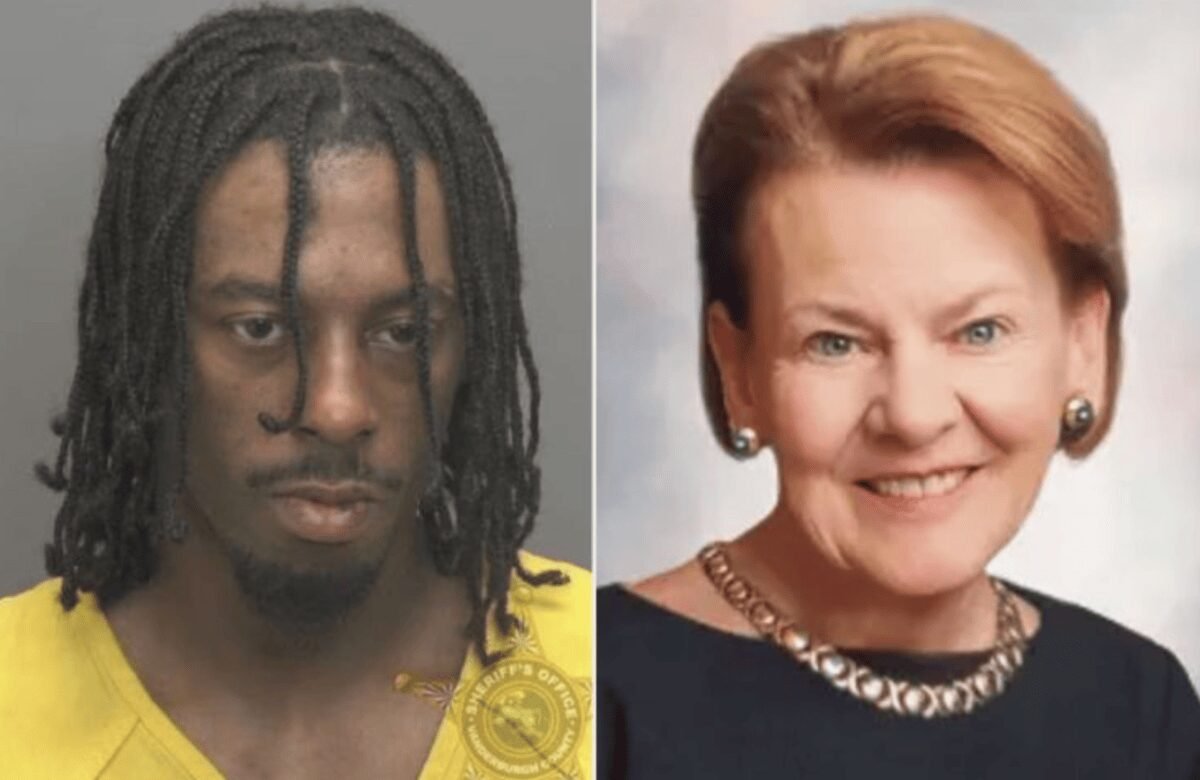
A beloved Indiana real estate agent who spent nearly three decades helping families find their dream homes was murdered inside her own house by a convicted felon who had been released from prison just six months earlier.
Now, more than a year after the killing shocked her community and raised troubling questions about the state’s prison release system, 35-year-old Jamerus Parkman has pleaded guilty to murdering Susan Haynie, 74.
Parkman entered guilty pleas to murder and burglary on Friday, October 23, just three days before his trial was scheduled to begin. His decision brought an unexpected end to a case that had sparked public outrage and ultimately inspired a new Indiana law.
The disturbing crime unfolded on August 27, 2025, when emergency responders were called to Haynie’s home on East Gum Street in Evansville shortly before 5 p.m.
What initially appeared to be a medical emergency quickly developed into something far more sinister.
Haynie was discovered dead in her basement. Investigators eventually determined that she had been strangled, and evidence suggested her body had been moved from another part of the house.
Police believe Parkman entered the residence through an unlocked door before attacking Haynie. There were no obvious signs of forced entry, according to reports about the investigation.
As detectives examined the killing, they uncovered surveillance footage showing a man matching Parkman’s description moving through neighboring yards and approaching homes in the weeks before Haynie’s death.
In one particularly unsettling incident, investigators said surveillance video captured a man believed to be Parkman attempting to enter another residence while wearing a mesh bag over his head.
The investigation took a major turn when authorities searched Parkman’s hotel room and recovered electronic devices and other evidence.
Data extracted from a tablet reportedly placed him in and around Haynie’s property for several hours on the morning she was killed. Preliminary forensic testing also identified Parkman’s DNA on Haynie and her DNA on property recovered from his room.
Although Parkman initially denied involvement, prosecutors charged him with murder and burglary in September 2025.
Even more alarming to the community was the discovery that Parkman had an extensive criminal history and had only recently returned to the streets.
He had been sentenced to 35 years in prison in 2012 following a series of crimes involving burglary, robbery and attempted rape. Despite that lengthy sentence, he was released on parole in February 2025 after serving roughly 13 years.
Just six months later, Haynie was dead.
The revelation triggered anger among residents and renewed scrutiny of how authorities monitor people convicted of serious violent crimes after their release.
Evansville police officials said their department had not been notified when Parkman returned to the community. The disclosure prompted questions about whether better communication between correctional officials and local police could have helped prevent the tragedy.
Haynie’s death eventually inspired Indiana House Bill 1250, which was signed into law in March 2026 and took effect in July.
Known as the Susan Haynie Law, the legislation requires state correctional officials to provide at least seven days’ advance notice to designated local law enforcement and prosecutors before releasing certain serious violent offenders. It also strengthens notification procedures for registered crime victims.
For those who knew Haynie, however, the case represents far more than a failure in public safety.
A longtime Evansville resident, Haynie built a successful 28-year career in real estate, helping thousands of clients buy and sell homes throughout southwestern Indiana.
Her obituary remembered her as a generous, compassionate woman whose friendships and devotion to her community extended well beyond her professional accomplishments.
Friends described someone who loved bringing people together and making ordinary occasions memorable.
She also left behind children, grandchildren and a community determined to ensure her death would not be forgotten.
Parkman is scheduled to return to court on December 2, 2026, for sentencing.
Although his guilty plea has resolved the question of criminal responsibility, the case continues to leave Evansville confronting a painful question: Could Susan Haynie still be alive if authorities had known a dangerous repeat offender had returned to their neighborhood?