Caritas Italia assisted 282,539 people in 2025, equivalent to the same number of family units as its support is directed at the needs of entire households, according to its annual report on poverty in Italy.
The figure is the highest ever recorded and represents a 1.7% increase compared with 2024. The report is based on information from 3,520 digitalised services across 206 Italian dioceses, covering 94.5% of all dioceses and around half of Caritas services nationwide.
According to the report, poverty is increasingly losing its exceptional and temporary nature, becoming a “structural normality.” It said there has been no decline compared with the period before the COVID-19 pandemic, indicating that poverty is becoming a stable condition for many families.
Among the most significant trends identified is the growing number of older people seeking assistance. Over the past decade, the number of people aged over 65 supported by the Caritas network has risen by 191%, compared with an overall increase in users of 48%.
The report said this reflects an increasingly close link between economic hardship, population ageing, health vulnerabilities, weakening family networks and social isolation. It also noted a rise in the number of people living alone, whose share increased from 23.8% to 32.9% over the same period.
Caritas said health-related needs, including psychological support, have increased by 69%. The report also highlighted the growing presence of working poor, particularly among people aged 35-44, where they account for 31.7% of those assisted, and those aged 45-54, where the figure is 31%. In 2015, the phenomenon stood at 13.3%.
Families with children remain the largest group seeking assistance, with 52% of those supported living with minor children.
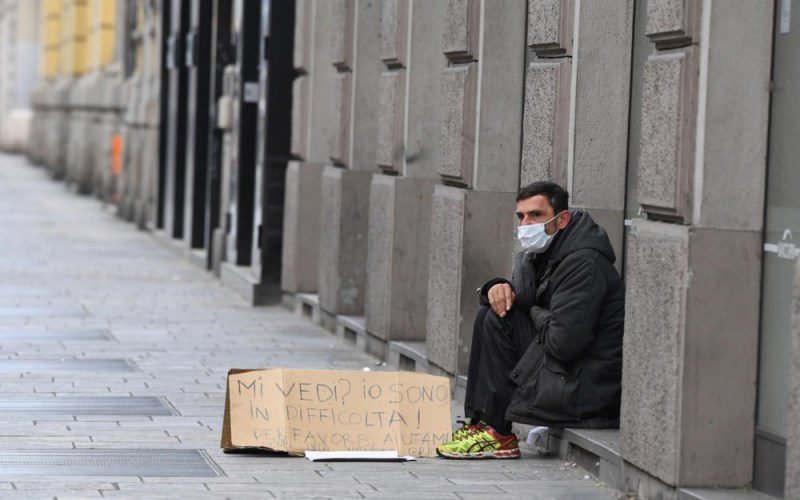
Housing also remains a major concern, the report said. More than 24,000 homeless people were assisted, while growing numbers of households are struggling with rent, utility bills, routine housing costs and inadequate living conditions.
The report also recorded a post-pandemic high in chronic poverty and the intensity of poverty, indicating that many people assisted are moving further away from the minimum threshold of economic wellbeing and are remaining in poverty for longer periods.
At the same time, the share of people experiencing poverty for the first time fell to 37.6%. The report said the increase in average household ISEE income, from €4,315 to €4,974, should not be interpreted as an improvement in economic conditions, but rather as evidence that more families with slightly higher incomes are still experiencing hardship and require support.