A quiet but seismic shift is playing out across China’s globally dominant electric-vehicle supply chain, one with major implications for Indonesia’s EV-reliant nickel industry.
BYD’s new Datang SUV recently racked up 150,000 pre-orders in a 53-day in China, marking a pre-order record for any BYD model and all booked without a single gram of nickel in the premium EV’s battery.
For nearly a decade, the industry’s working assumption was simple: killing range anxiety in long-range EVs required high-nickel ternary batteries. That market assumption, however, just collapsed in China.
Datang’s global rollouts for Europe and Southeast Asia aren’t scheduled to begin until around the turn of the year. But their robust reception in China has already rattled Indonesia’s bet on nickel as a source of long-term leverage over the global EV supply chain.
Different kind of flagship
The gap between this luxury launch and BYD’s historical volume drivers shows how far the brand’s margins have grown. More than a decade ago, the automaker leaned heavily on its now-discontinued F3 compact sedan to build scale.
The F3 retailed for about 50,000 yuan, or roughly US$6,900, forcing the company to chase razor-thin margins through sheer unit volume.
The Datang is a completely different animal. Its price band runs from 239,900 to 309,900 yuan, or roughly $36,000 to $46,500. By that math, a single Datang generates the top-line revenue of five to six F3s.
Across its initial 150,000 pre-orders, that puts the aggregate sales value roughly in line with 900,000 entry-level cars — a significant and highly lucrative margin pivot achieved entirely on a manganese-rich, nickel-free battery.
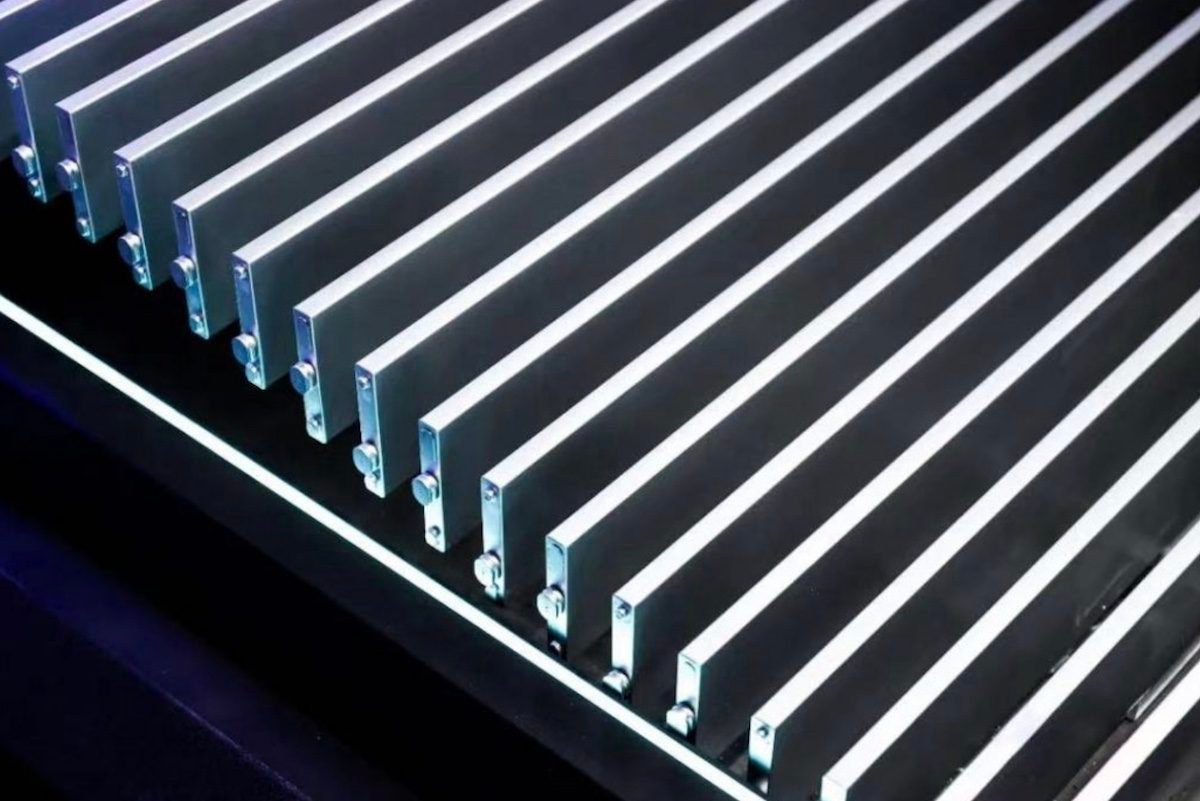
Every Datang runs on what BYD calls its second-generation Blade Battery, which analysts believe — based on patent filings and its 3.8-volt platform — uses Lithium Manganese Iron Phosphate, or LMFP, chemistry.
BYD has not officially confirmed the cathode material, and a regulatory filing for an earlier Blade 2.0 vehicle described a standard LFP pack, so the transition isn’t fully settled. Either way, the formulation drops nickel and cobalt in favor of lithium, iron, phosphorus and manganese.
On paper, BYD rates Datang’s top-tier pack at 950 kilometers of CLTC range. On the asphalt, its top-tier option, a 130.15-kWh pack, reportedly delivers real-world highway range well above 600 kilometers — within striking distance of what drivers expect from a comparable gasoline-fueled SUV.
This technological inflection point could terminally upend Indonesia’s nickel strategy. For years, Indonesia has pursued an OPEC-style mineral cartel, attempting to weaponize its vast nickel reserves to try to extract outsized profits from the global EV transition.
But cartels need captive buyers, and Jakarta’s bid to dominate high-margin battery supply chains depends on a specific technical dependency the market is now actively engineering around, if not out of existence.
Resource nationalism and policy volatility
Regulatory reversals have already undercut Indonesia’s marquee industrial investments. Chinese battery-maker CATL’s integrated $6 billion nickel mining, refining and cell-manufacturing complex was designed as a showcase for the country’s downstream ambitions. Instead, it has become a case study in sovereign risk.
Throughout 2026, a string of abrupt, penalizing mandates has shaken cross-border investor confidence: sudden mining-quota cuts, arbitrary export levies, rigid foreign-exchange retention rules and last-minute policy reversals have all shifted the ground beneath foreign capital.
Major Chinese nickel smelters are already throttling output, and planned ambitious capacity expansions are now on hold.
Appetite for a nickel-centric industrial model has cooled fast, hitting major capital commitments from Japan’s Sumitomo Metal Mining, LG Energy Solution and Singaporean resource houses. With the Indonesian rupiah recently touching a record low of over 18,000 per dollar, Fitch Ratings cut the country’s sovereign credit outlook to negative, reflecting broader capital flight.
Conventional market analysis tends to treat these regulatory shifts as temporary friction. The reality, though, is that Indonesia’s policy instability has accelerated a technical substitution already underway in EV battery-making.
There is a common misconception among industry watchers that solid-state batteries will rescue nickel demand by replacing legacy formats; in truth, advanced solid-state pipelines remain deeply committed to high-nickel cathodes, modifying only the electrolyte layer rather than cathode chemistry.
The real existential threat to Indonesia’s model is the rapid, mass-market scaling of manganese-rich platforms like LMFP, as BYD’s Datang launch shows, which can compete with, if not aggressively displace, high-nickel ternary cells even in premium vehicles.
Automakers increasingly treat de-nickelization not just as cost-cutting, but as a geopolitical hedge against unpredictable resource-exporting governments like Indonesia’s.
This accelerating technical shift leaves major investments structurally isolated. Within Southeast Asia’s domestic auto markets, the real growth is going to low-cost, zero-nickel systems — split between sodium-ion platforms and manganese-rich chemistries — that suit the region’s tropical climates and mainstream household budgets.
As a result, CATL’s 15-gigawatt-hour high-nickel ternary facility depends almost entirely on premium export markets in Europe and North America. But that niche is shrinking: automaking giants including BMW, Volkswagen and Volvo are aggressively diversifying their cell procurement to reduce exposure to Indonesian supply chains and environmental, social and governance (ESG) risks.
Rising geopolitical pressure compounds those risks. Strict US Foreign Entity of Concern rules and Inflation Reduction Act tax credits explicitly bar Chinese-majority joint ventures from subsidy eligibility, undercutting the export rationale that justified CATL’s multi-billion-dollar Indonesian investment in the first place.
Payback clock is ticking
That project is arguably running out of time. With phase-one production pushed to late 2026 and full capacity delayed until 2031, the facility faces an unforgiving financial window.
The US IRA subsidy window closes in 2032, leaving at most six years of subsidized, high-margin operations — well short of the eight-to-10-year runway large battery plants typically need to break even.
That has created an asset-liability mismatch in a decade-long capital expenditure project that relies on a fleeting, highly politicized window rather than on durable market demand.
As manganese-rich cathodes and sodium-ion batteries gain share across China and other emerging markets, long-term demand for specialized high-nickel cells is shrinking year over year.
Indonesia’s mining sector generates more than $32 billion a year in overseas revenue, yet remains tied to low-margin, primary downstream processing. In trying to force more value retention domestically, Jakarta keeps tightening rules on foreign operators — squeezing the same margins that attracted capital in the first place. But while policy cycles can turn, technology shifts generally don’t.
Battery-industry forecasts broadly agree that manganese-rich, nickel-free cathodes will dominate mainstream EV production by decade’s end. BYD’s second-generation LMFP lineup is early market proof: the Datang matches gasoline-comparable highway range without a gram of nickel.
As automakers worldwide cut nickel from their cell designs, Jakarta’s pricing power narrows while its nickel OPEC ambition becomes a fast-fading dream.
Steel fallback falls short
Optimistic backers point to a pyrometallurgical fallback: the operational flexibility of local Rotary Kiln Electric Furnace, or RKEF, facilities, which could in theory be reverse-converted from battery-grade nickel matte back into raw Ferronickel (FeNi) or Nickel Pig Iron (NPI) for stainless steel production.
That, however, would represent a severe commercial downgrade. Trading high-margin, energy-transition feedstock for the cyclical, low-margin economics of bulk steelmaking undercuts the entire investment case for Indonesia’s nickel push.
It’s true that Western and Chinese steel mills, facing scrap shortages, are absorbing regional nickel intermediates. Wood Mackenzie’s Global Nickel Supply-Demand Outlook puts traditional stainless steel demand at roughly 72% of total global nickel supply, serving as a vital demand floor.
Yet that floor offers cold comfort. BYD’s second-generation LMFP blade battery is simply the vanguard of a broader zero-nickel transition. With both sodium-ion and high-voltage manganese platforms scaling simultaneously across major automotive platforms, long-term passenger vehicle nickel demand faces a steep decline.
For business owners, regional officials and mining operators in Central Sulawesi or North Maluku who bet on an EV-driven windfall, the outlook has narrowed. The prospect of sustained, speculative resource rents has given way to the hard realities of a competitive, thin-margin commodity processing market.
No local RKEF optimization can reverse an industry-wide pivot away from nickel.
CATL’s Indonesian albatross
CATL’s $6 billion Indonesian nickel project is largely a bet on Jakarta’s bid to build an OPEC-like nickel cartel — a bid that looks increasingly doomed.
That was seen in the reported collapse of an Indonesia-Philippines nickel alliance over clashing commercial interests, which will further weaken Jakarta’s leverage over global nickel supply.
S&P Global commodity analysis found that Jakarta’s own mining-quota cuts triggered faster nickel output growth in the Philippines, Madagascar and parts of Africa, eroding its pricing power still further.
Indonesia retains steady low-grade nickel demand from stainless steel production, but its ambition to monopolize high-value EV battery materials has collapsed.
Jakarta’s aggressive resource nationalism has clearly backfired, pushing global automakers to accelerate nickel-free battery development. BYD’s 150,000 domestic pre-orders for the nickel-free Datang show how far nickel’s role in premium EVs has already shrunk.
The episode is a warning and a lesson for resource-dependent Southeast Asian economies: mineral wealth doesn’t guarantee lasting economic leverage. Technology shifts and diversified supply chains can quickly erase temporary commodity windfalls.
Reserves alone are no substitute for investment in talent and domestic innovation. Resource wealth buys short-term prosperity, while homegrown industrial technology and innovation are what deliver long-term economic strength and resilience.
Ju Liang is an independent policy analyst with over 20 years of experience in Southeast Asia, specializing in regional supply chain economics and commodity policy governance. He is based at Yunnan Agricultural University, China. All opinions expressed here are the author’s own.